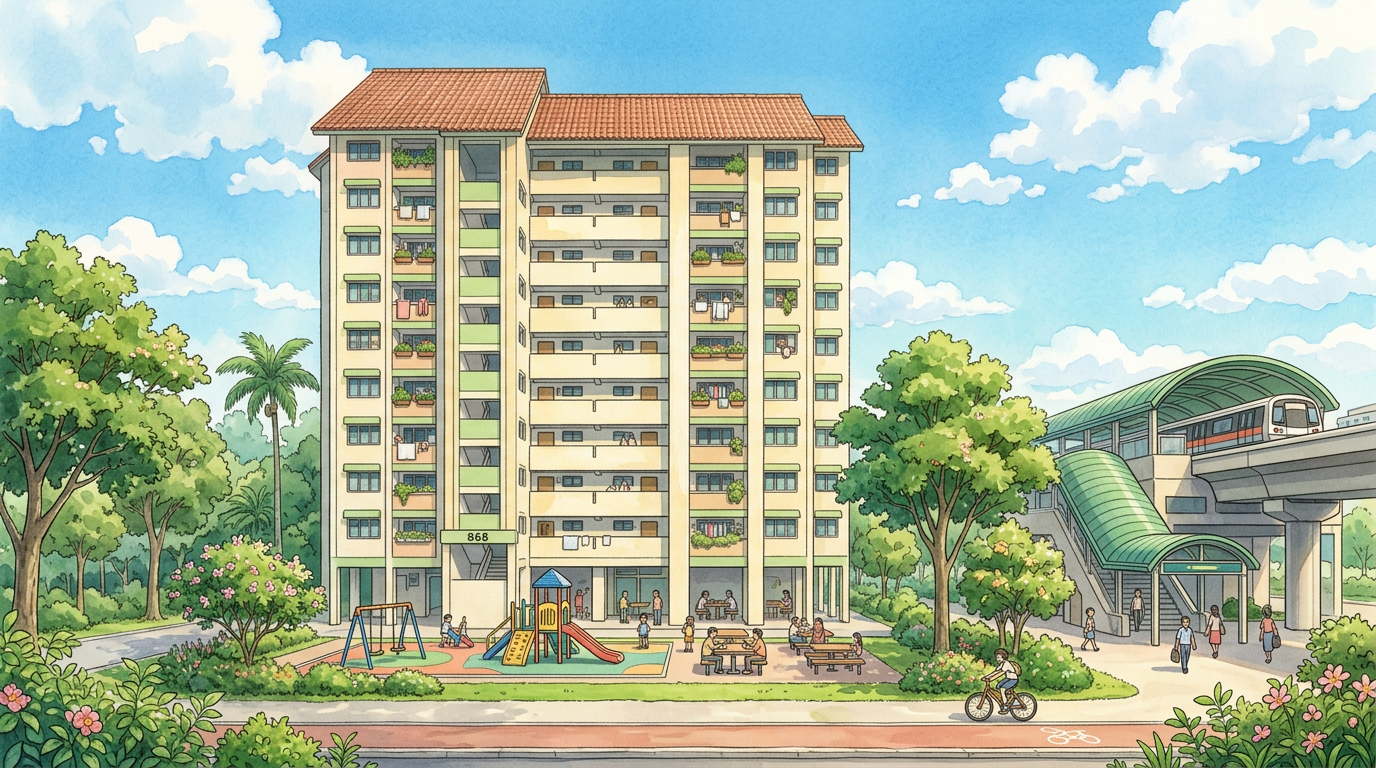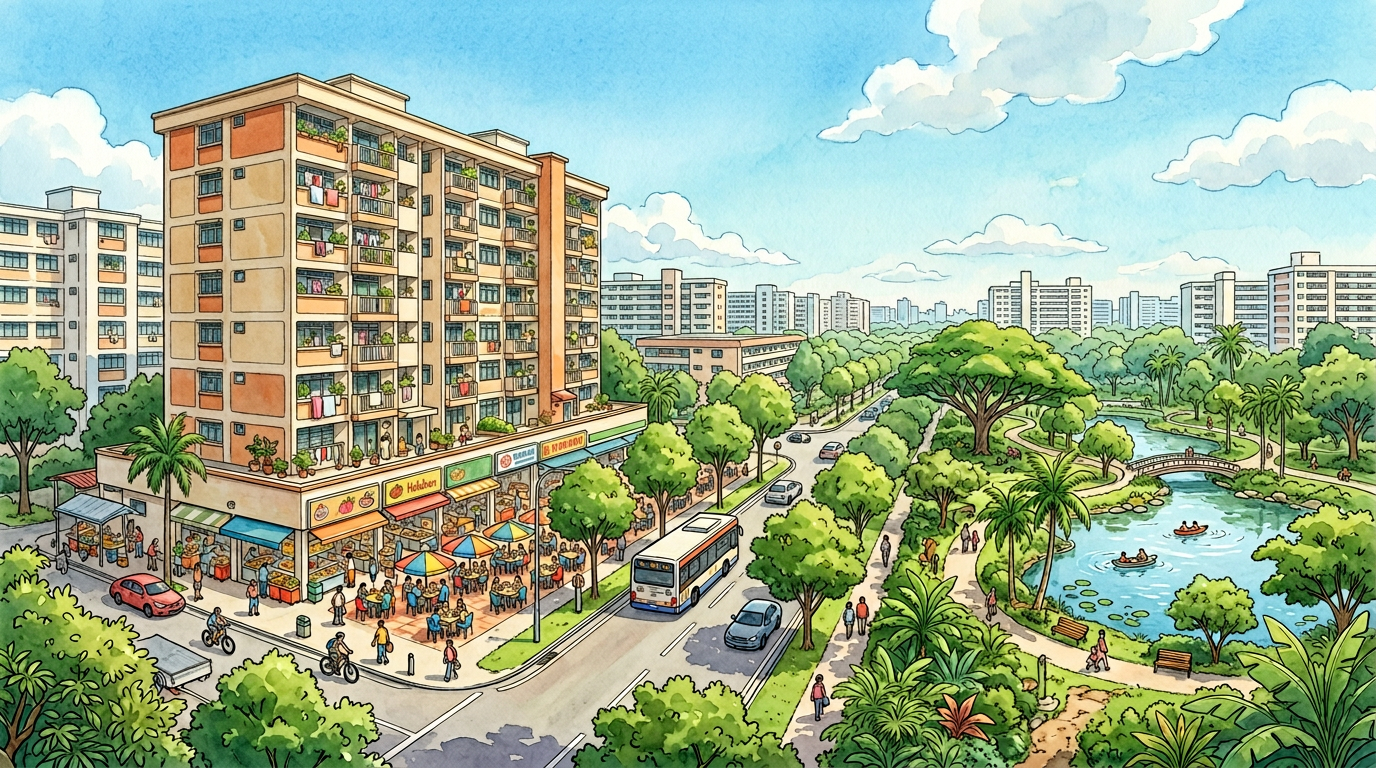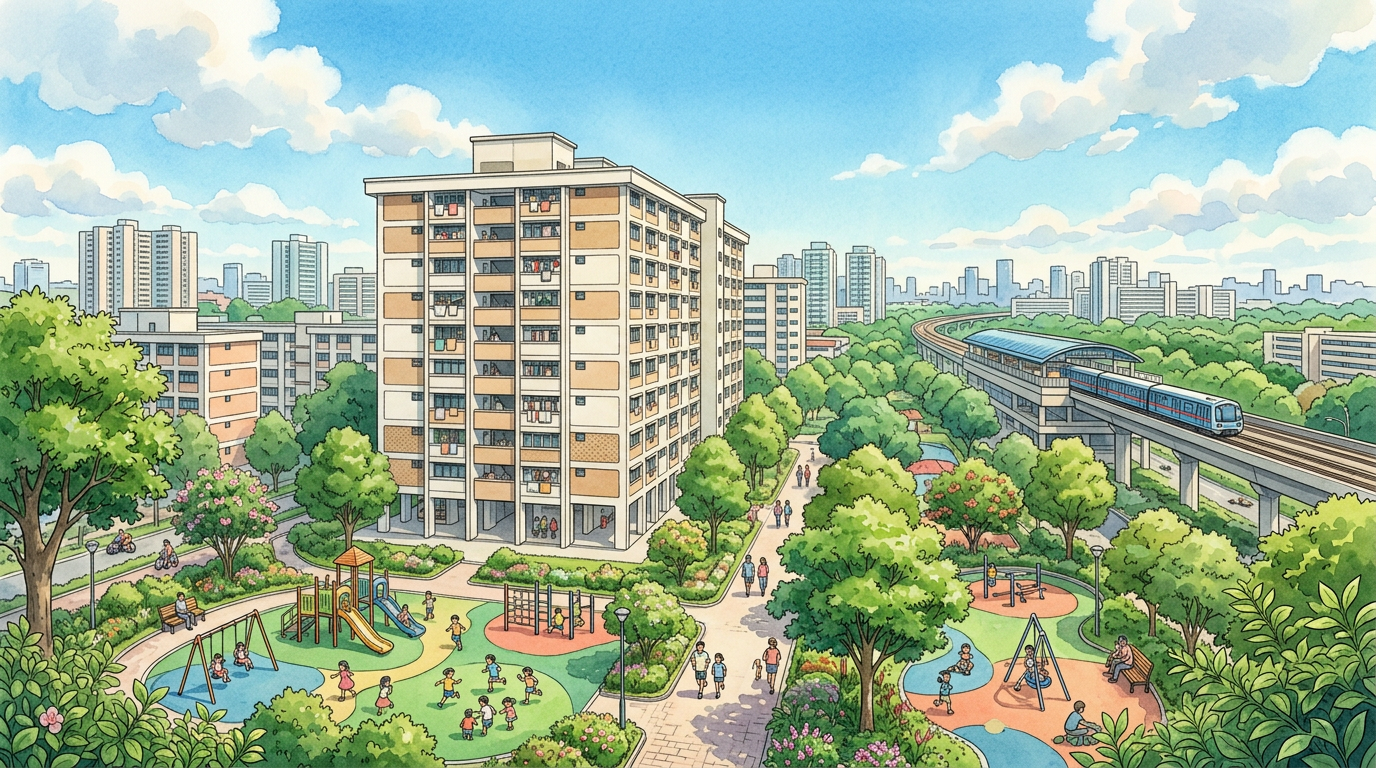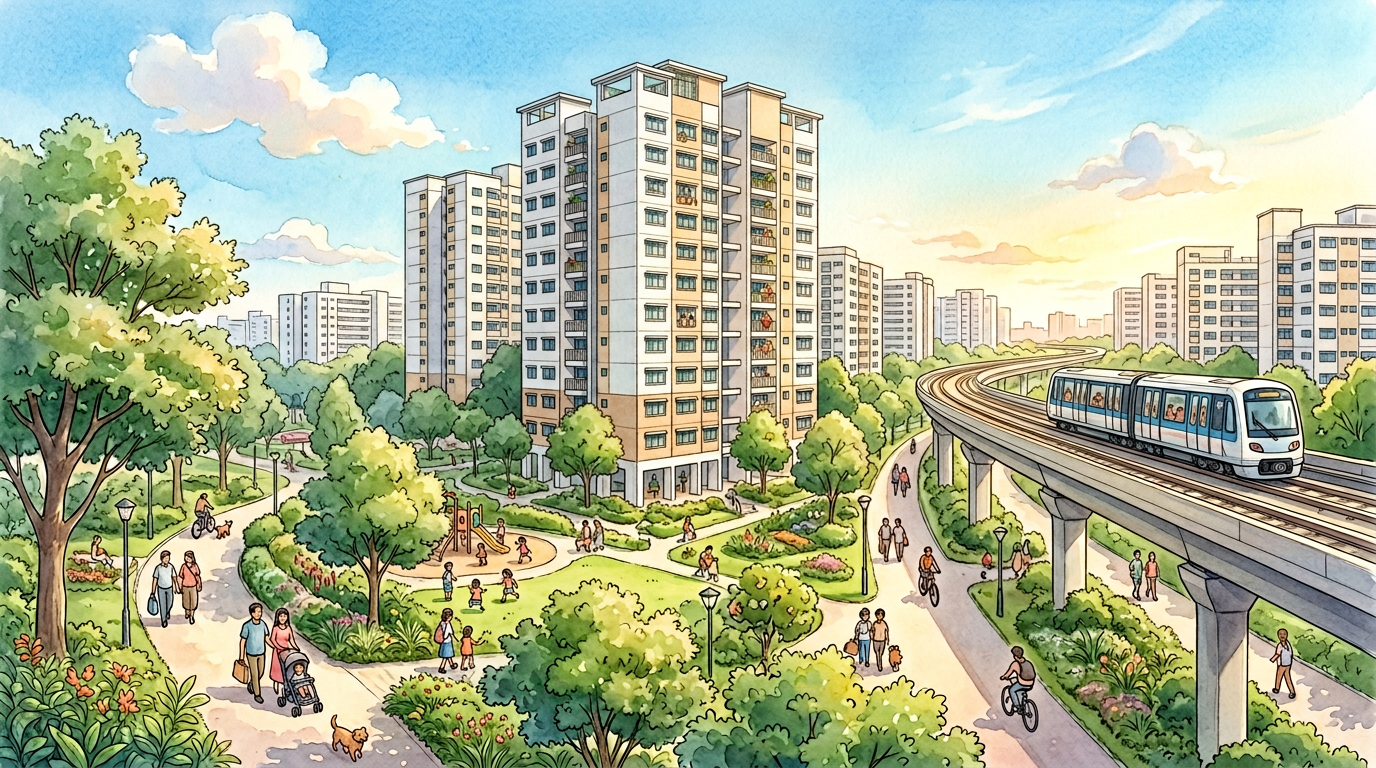
268A Boon Lay Drive HDB for rent offers affordable, convenient living in Jurong West, Singapore's largest HDB town in the west. This definitive Homejourney guide covers everything tenants need: current rental prices, HDB rules, amenities, transport, and practical advice for a safe, trusted rental experience.
Homejourney prioritizes your safety with verified listings and transparent information, helping you find the perfect Jurong West rental at 268A Boon Lay Drive.
Table of Contents
- 1. Overview of 268A Boon Lay Drive
- 2. Available Rental Options
- 3. Why Rent at 268A Boon Lay Drive
- 4. HDB Rental Rules Explained
- 5. Transport and Commute
- 6. Nearby Amenities for Tenants
- 7. Rental Costs and Budgeting
- 8. Complete Tenant Guide
- 9. FAQ
1. Overview of 268A Boon Lay Drive
Block 268A Boon Lay Drive is part of Boon Lay Court, a 99-year leasehold HDB development built in 2002 in Jurong West.[2][8] This 3-, 4-, and 5-room HDB block stands in one of Singapore's most vibrant western towns, known for its family-friendly vibe, excellent connectivity, and proximity to Jurong Point shopping mall and the Chinese/Japanese Gardens.
Jurong West offers HDB rent options that appeal to young professionals, families, expats, and students due to affordability and convenience. Tenants choose HDB over private rentals for lower monthly rent, strong community ties, and essential amenities within walking distance. Homejourney verifies all listings to ensure a safe search for 268A Boon Lay Drive for rent.
Insider tip: Mid-floor units (7-12 storeys) in this block offer great views and breezes, ideal for families avoiding ground-level noise.[2]
Jurong West as a Rental Hotspot
Jurong West is Singapore's largest HDB estate in the west, housing over 100,000 residents. Its mix of hawker centres, parks, and schools makes it perfect for rent flat seekers. Recent resale data shows strong demand, with 5-room units transacting at $588K-$623K, indicating stable rental values.[2]
2. Available Rental Options at 268A Boon Lay Drive
Rental choices at 268A Boon Lay Drive include whole flats and rooms, catering to different budgets. Current listings show room rentals around S$800 for 150 sqft spaces.[6] For whole flats, expect competitive rates based on Jurong West trends.[3][9]
| Flat Type | Typical Size (sqm) | Monthly Rent Range (2026) | Availability Notes |
|---|---|---|---|
| 3-Room | 68-90 | S$2,200 - S$2,650 | Ideal for couples/small families |
| 4-Room | 90-102 | S$2,800 - S$3,200 | Family favorite, renovated options available[3] |
| 5-Room | 111-120 | S$3,200 - S$3,500 | Spacious, high demand[9] |
Room rentals: Common rooms S$500-S$700; Master rooms S$800-S$1,000 (14 sqm avg).[3][6]
Action: View HDB flats for rent near 268A Boon Lay Drive on Homejourney for verified listings.
3. Why Rent at This Location
268A Boon Lay Drive combines affordability with lifestyle perks. The neighbourhood's mature estate feel fosters community, with well-maintained common areas and low crime rates typical of Jurong West HDBs.
Safety is paramount—Homejourney's verified agents ensure secure viewings. Local families praise the block's quiet environment and proximity to parks for kids.
Neighbourhood Character
- Community vibe: Multi-generational residents create a welcoming atmosphere for expats and locals.
- Safety: Well-lit precincts and active grassroots committees.
- Maintenance: Regular HDB upkeep; consider Aircon Services ">Aircon Services for post-move servicing.
4. HDB Rental Rules Explained
HDB rentals have strict rules—different from private properties. Always verify with HDB.gov.sg.
Whole Flat Subletting
- Owner must complete 5-year Minimum Occupation Period (MOP).
- HDB approval required; no fixed subletting limit but monitored.
- Minimum 6-month tenancy.
Room Rental (Bedroom Subletting)
- Allowed during MOP if owner resides in flat.
- Max occupants: 4-room (6 persons), 5-room (8 persons).
- Popular for students/expats.
Non-Citizen (NC) Quota
Each block has an NC quota (typically 8-10% for bedrooms, 34% block-wide). If full, no foreign tenants allowed. Check Straits Times Housing News ">Straits Times Housing News or HDB site. Homejourney flags quota status in listings.
| Rental Type | Key Rules | Tenant Impact |
|---|---|---|
| Whole Flat | Post-MOP, HDB approval | Stable for families |
| Room | Owner must stay, occupancy limits | Budget-friendly for singles |
| Non-Citizen | Quota check required | Expats verify first |
5. Transport and Commute
Excellent connectivity defines Boon Lay Drive. Nearest MRT: Boon Lay (EW27) is 8-10 min walk (Exit A).[8]
- Bus stops: Boon Lay Dr - Blk 268 (5 min walk); routes 99, 240 to CBD (40 min).
- Commutes: CBD (40-45 min), Orchard (50 min), Changi Airport (1 hr via bus/MRT).
- Cycling: PCN nearby to Jurong Lake Gardens.
Insider tip: Take bus 199 from block stop to IMM for shopping (5 min).
6. Nearby Amenities for Tenants
Everything you need is close—perfect for daily life in Jurong West HDB rental.
Food and Groceries
- Hawker centres: Boon Lay Food Village (10 min walk), Yuhua Market & Hawker (15 min).
- Supermarkets: NTUC FairPrice at Jurong Point (12 min walk), wet market at Blk 270 (5 min).
Shopping and Healthcare
- Jurong Point Mall: 1 km (shops, cinema, Giant hypermarket).
- Polyclinic: Jurong West (15 min walk).
- Hospital: Ng Teng Fong General (bus 10 min).
Schools and Recreation
- Schools: Jurong West Pri (8 min), Boon Lay Sec (12 min).
- Parks: Jurong West Sports Complex (swimming, gym; 15 min).
- Chinese Garden MRT/LRT nearby for families.
7. Rental Costs and Budgeting
Budget wisely for Boon Lay Drive rentals. Whole 4-room: S$2,800-S$3,200; rooms S$650-S$900.[3][9]
| Expense | Monthly Estimate (4-Room) |
|---|---|
| Rent | S$3,000 |
| Utilities | S$150-300 |
| Internet | S$35-50 |
| Total | S$3,200-S$3,500 |
Cheaper than nearby private rentals by 30-40%. Air-con adds S$50-100/month.
8. Complete Tenant Guide
Step-by-step for renting at 268A Boon Lay Drive.
- Search: Use Homejourney's property search.
- Check: NC quota, flat condition, appliances.
- Lease: 12-24 months; 1-2 months deposit. Stamp via IRAS.
- Move-in: Inventory checklist; agent present.
- Issues: Small Claims Tribunal for disputes.
Schedule a viewing: Contact an agent on Homejourney.
Related: See 138C Lor 1A Toa Payoh Rental Tips: Lease & Move-In Guide | Homejourney ">138C Lor 1A Toa Payoh Rental Tips: Lease & Move-In Guide | Homejourney for more tips.
9. FAQ: Jurong West HDB Rental Questions
What is the rent for 268A Boon Lay Drive HDB flats?
4-room: S$2,800-S$3,200; 5-room: S$3,200-S$3,500; rooms S$650-S$900 (2026).[3][9]
Can foreigners rent at 268A Boon Lay Drive?
Yes, if NC quota allows. Check HDB website.
Nearest MRT to 268A Boon Lay Drive?
Boon Lay MRT, 8-10 min walk.
Minimum HDB rental period?
6 months.
How to check NC quota for Jurong West?
Visit HDB.gov.sg or ask Homejourney agents.
Is 268A Boon Lay Drive family-friendly?
Yes—near schools, parks, and hawker centres.
Ready to rent? Homejourney guides you safely: Browse 268A Boon Lay Drive for rent. Our verified platform ensures trust and transparency for your Jurong West for rent journey.