
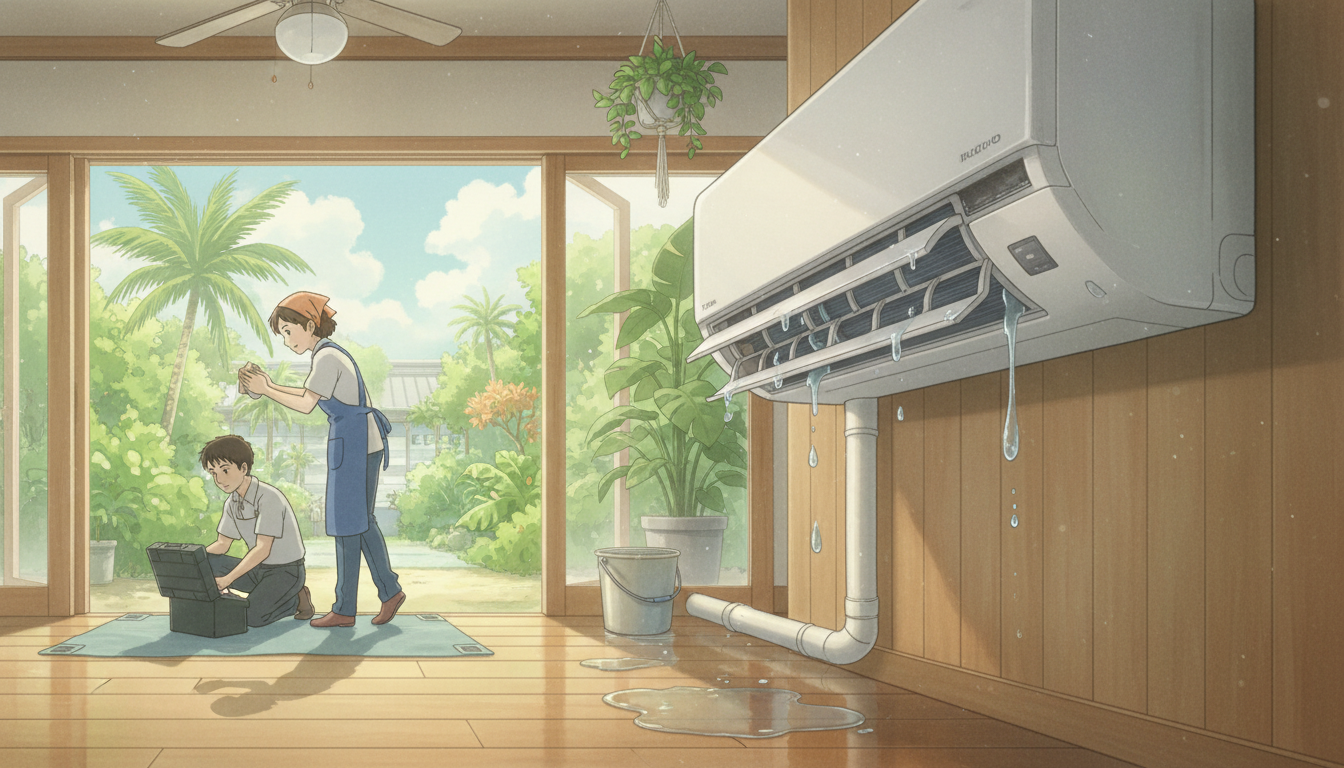
Aircon leaking water is one of the most common issues Singapore homeowners face, especially in our humid tropical climate. This comprehensive pillar guide from Homejourney reveals the top causes of AC dripping, step-by-step aircon water leak fixes, and how to prevent future condensation problems—all while prioritizing your safety and trust through verified service providers.
Whether you live in an HDB flat, condo, or landed property, understanding why your aircon leaks water empowers you to act fast and avoid costly water damage. Homejourney verifies all technicians, offers transparent 2026 pricing, and connects you with BCA-registered pros for reliable aircon water leak fix services. Bookmark this definitive resource for Singapore's hottest home maintenance issue.
Table of Contents
- Executive Summary
- 7 Most Common Causes of Aircon Leaking Water in Singapore
- How to Diagnose Your Aircon Water Leak
- Safe DIY Fixes for Aircon Dripping (HDB/Condo Approved)
- When to Call Pros: Chemical Wash vs General Servicing
- Aircon Servicing Costs in Singapore 2026
- Prevention: Keep Your AC Leak-Free Year-Round
- HDB & Condo-Specific Aircon Regulations
- Book Trusted Repairs via Homejourney
- FAQ: Aircon Leaking Water Singapore
Executive Summary: Why Aircon Leaks Happen in Singapore
Singapore's 80-90% humidity causes excessive condensation in air conditioners, making aircon leaking water inevitable without proper maintenance[1][2]. The top causes include clogged drain lines (affecting 60% of cases), dirty filters, and poor installation—issues that worsen during peak dry seasons when ACs run nonstop.
This 2026 guide analyzes real Singapore cases, provides BCA-compliant fixes, and integrates Homejourney's verified booking platform. Expect to save S$200-500 annually through preventive care. For urgent AC dripping, Homejourney offers same-day service with upfront pricing—no surprises, just trust.
7 Most Common Causes of Aircon Leaking Water in Singapore
High humidity accelerates condensation buildup, but specific faults trigger leaks. Here's a breakdown based on Singapore technician reports[1][2][3].
1. Clogged Condensate Drain Line (Most Common)
Dust, algae, and mold block the drain pipe, causing water backup—especially in HDBs where pipes run long distances[1][2]. In Singapore's climate, clogs form every 3 months[1].
2. Dirty or Clogged Air Filters
Restricted airflow freezes evaporator coils, leading to excess meltwater overflow[1][4]. Clean every 2-4 weeks in humid Singapore[1].
3. Frozen Evaporator Coils
Low refrigerant or poor airflow causes ice formation; melting ice floods the unit[1][3]. Common in overworked units during 35°C heatwaves[4].
4. Full or Damaged Drain Pan
High humidity overflows pans; cracks from age cause direct leaks[1][6]. Inspect annually to prevent mold in condo false ceilings.
5. Poor Installation or Misalignment
Unlevel fan coil units (FCU) or upward drain pipes trap water—leading cause in new HDB renovations[2][3][5]. BCA requires proper leveling[2].
6. Low Refrigerant Levels
Leaks drop gas pressure, icing coils and causing drips[4]. Professional top-up needed; DIY illegal under Singapore regs.
7. Faulty Condensate Pump or Float Switch
Pumps fail from debris; switches don't shut off units, leading to overflows[1]. Rare but critical in high-rise condos.
| Cause | Singapore Frequency | Fix Time |
|---|---|---|
| Clogged Drain | 60% | 30 mins |
| Dirty Filter | 25% | 15 mins |
| Frozen Coils | 10% | 2-4 hrs |
How to Diagnose Your Aircon Water Leak in 5 Steps
- Turn Off Power: Safety first—unplug to avoid shocks, per BCA guidelines.
- Check Filter: Remove and inspect for dirt. Black/grey = replace.
- Inspect Drain Pan: Look for water level or cracks under FCU cover.
- Examine Drain Pipe: Trace outdoor pipe for clogs or upward slope.
- Run Test: Dry unit, run 30 mins, check for new drips.
Insider tip: In HDBs like Punggol, check for neighbor pipe interference—a common oversight causing shared leaks.
Safe DIY Fixes for Aircon Dripping (HDB/Condo Approved)
For minor condensation problems, try these BCA-safe steps[1]. Stop if unsure—call pros via Homejourney.
Fix 1: Clean Dirty Filter (15 Mins)
- Power off AC.
- Remove filter.
- Vacuum dust, wash with soap.
- Dry fully, reinstall[1].
Fix 2: Clear Clogged Drain Line (30 Mins)
Use wet/dry vac on outdoor end; flush with vinegar-water mix every 3 months[1]. Avoid bleach—harms HDB pipes.
Fix 3: Thaw Frozen Coils
Off for 4 hours, clean filter, ensure vents clear[1]. Low gas? Book gas top-up.
Warning: Never handle refrigerant—requires BCA-licensed techs. Homejourney verifies all.
When to Call Pros: Chemical Wash vs General Servicing
DIY fails for deep clogs or installation issues. Choose services wisely.
- General Servicing (S$22/unit): Filter clean, drain check, gas inspection. Every 3 months.
- Chemical Overhaul (S$110/unit): Disassemble, deep clean coils/pans. For persistent leaks.
- Gas Top-Up (S$80): Refrigerant refill + leak seal.
Homejourney lets you compare verified pros instantly. See Homejourney aircon services for same-day bookings.
Aircon Servicing Costs in Singapore 2026
| Service Type | Price (1 Unit) | HDB/Condo Notes |
|---|---|---|
| General Service | S$22 | Min 3 units for HDB |
| Chemical Wash | S$110 | Dries in 4 hrs |
| Gas Top-Up | S$80 | Includes pressure test |
Prices from Homejourney-verified providers (2026 rates). Save 20% bundling with cleaning via app.
Prevention: Keep Your AC Leak-Free Year-Round
- Service quarterly—more in March-Oct heat.
- Monitor humidity <60% with dehumidifiers.
- Insider: Use AC covers in monsoon to block algae[1].
- Schedule via Homejourney for reminders and 10% off repeats.
HDB & Condo-Specific Aircon Regulations
HDB requires BCA-registered installers; no pipe mods without approval. Condo MCSTs mandate drip trays. Reference HDB guidelines for safe fixes. Homejourney pros handle all compliance.
Book Trusted Aircon Repairs via Homejourney
Homejourney prioritizes your safety with vetted BCA pros, real reviews, and guarantees. Book in minutes at https://www.homejourney.sg—compare quotes, read HDB owner feedback, get urgent fixes. Pair with property search at Property Search for new homes.
Related: Choose Best Moving Company: DIY vs Professionals | Homejourney for post-move maintenance.
FAQ: Aircon Leaking Water Singapore
Why is my aircon leaking water but still cold?
Clogged drain or full pan—water overflows despite cooling[1]. Clean ASAP.
How much to fix aircon water leak in HDB?
S$66-220 for 3 units general service; chemical S$330[Homejourney 2026].
Is aircon leaking water dangerous?
Risks mold, electrical shorts, floor damage. Act within 24hrs.
Can I fix aircon leak myself in condo?
Filters yes; drains risky—call pros to avoid MCST fines.
Aircon leaking after chemical wash?
Rare; indicates installation fault. Re-inspect with spirit level[2].
How often service to prevent leaks?
Every 3 months in Singapore humidity[1].
Facing aircon leaking water? Start your safe fix with Homejourney today—verified, transparent, trusted.