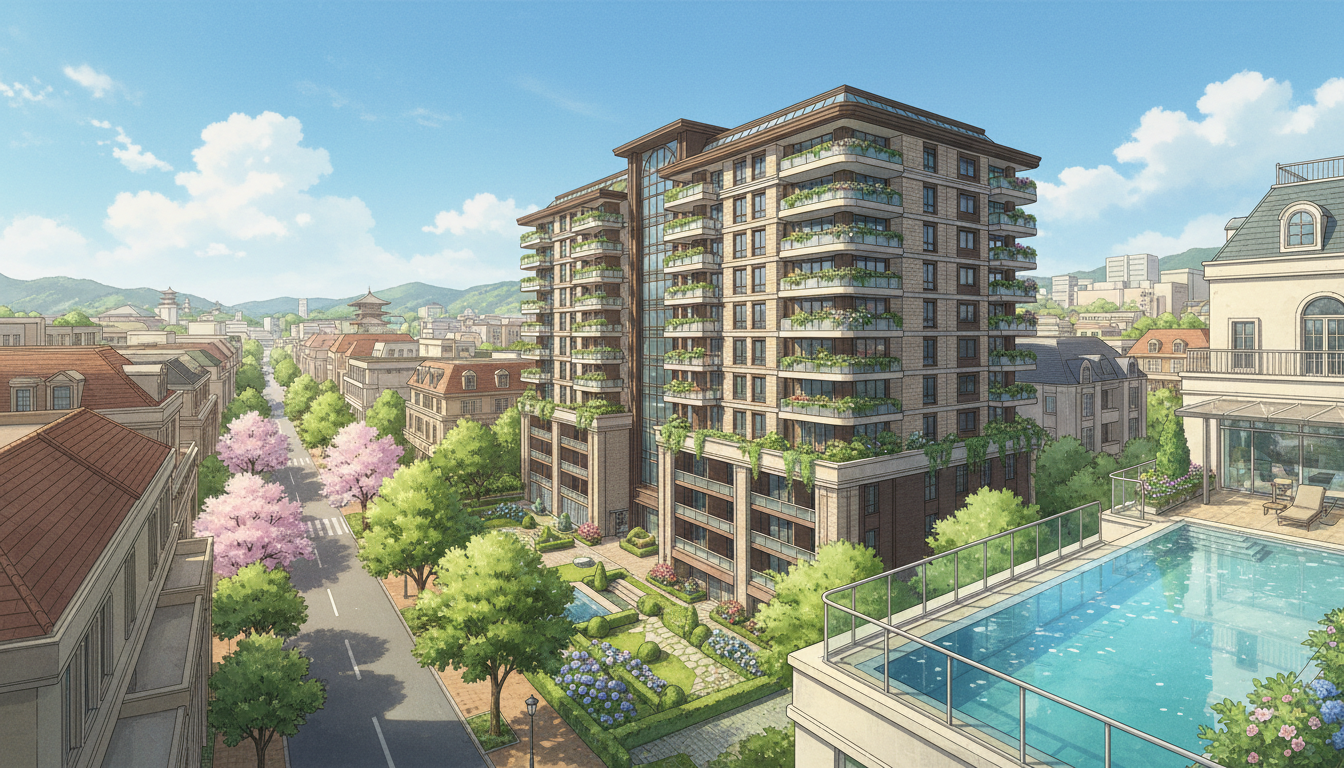
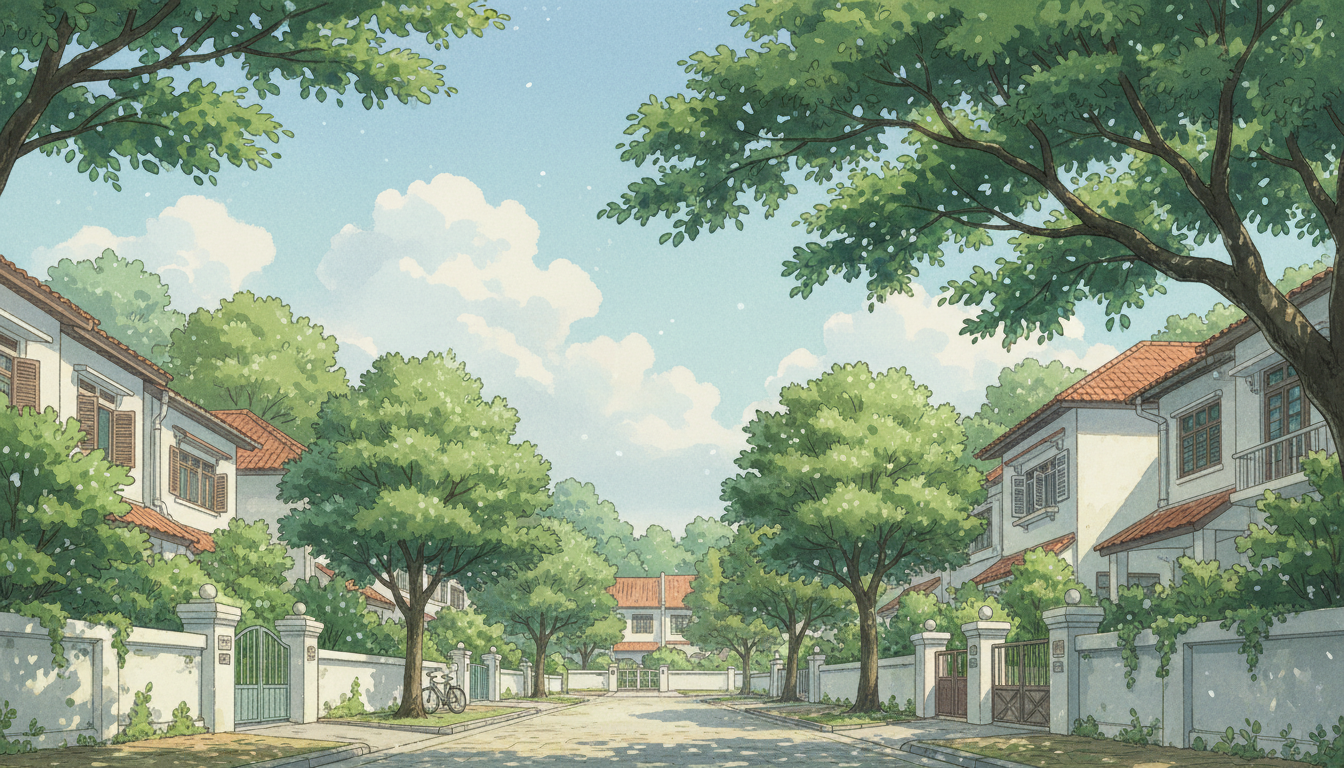
Serangoon Park for sale offers rare freehold landed homes in prime District 13 (D13), along Jalan Riang near Macpherson and Potong Pasir. This definitive Homejourney guide covers available units, prices, location perks, financing, and buying steps for buyers seeking Singapore condo for sale alternatives in landed form. Trust Homejourney's verified listings for safe, transparent property decisions.
Table of Contents
- 1. Property Overview
- 2. Available Units for Sale
- 3. Why Buy at Serangoon Park
- 4. Price Analysis for Buyers
- 5. Location Advantages
- 6. Financing Guide for Buyers
- 7. Buying Process
- 8. Investment Potential
- 9. FAQ
Property Overview
Serangoon Park is a prestigious freehold landed enclave featuring terrace and semi-detached houses along Jalan Riang, Wolskel Road, and Sommerville Road in District 13.[1] These homes occupy plots around 385 sqm, offering spacious living for families and investors in Macpherson-Potong Pasir.[1] Buyers love the quiet, leafy surroundings combined with urban accessibility, making it a top choice for D13 properties.
Developed in a mature estate, Serangoon Park stands out for its freehold tenure, ensuring long-term value without lease decay concerns.[1] Recent transactions highlight its appeal, with units renovated for modern living.[4] Homejourney verifies all Serangoon Park for sale listings, prioritizing user safety through transparent data and agent vetting.
Developer Reputation and History
While specific developer records for older freehold enclaves like Serangoon Park trace back to private landowners, the area's stability reflects strong historical demand.[1] URA records confirm consistent resale activity, underscoring its enduring quality.[8] As a Homejourney user, access detailed transaction history via our project analysis for verified insights.
Available Units for Sale
Current available units at Serangoon Park include 4-6 bedroom terrace houses, corner terraces, and semi-detached options, typically 2,400-4,500 sqft built-up.[1][4] Popular configurations feature 5 beds, 6 baths, with prices from S$2,231 psf for standard terraces to S$2,720 psf for corner units.[1][4]
Expect absolute prices starting at S$5.5M for mid-sized terraces up to S$12M+ for larger semi-Ds, based on 2026 market data.[1][4] Most sought-after are renovated 5-bed corner terraces with private gardens.[1] View all units for sale at Serangoon Park on Homejourney for real-time verified listings.
| Unit Type | Size (sqft, built-up/land) | Price Range (S$ psf) | Avg Price (S$ million) |
|---|---|---|---|
| Terrace (4-5 beds) | 2,700/2,400 | S$2,200 - S$2,500 | S$5.8 - S$7.2 |
| Corner Terrace (5 beds) | 3,200/2,800 | S$2,500 - S$2,720 | S$7.5 - S$9.0 |
| Semi-Detached (5-6 beds) | 4,500/3,500 | S$2,100 - S$2,800 | S$9.5 - S$12.5 |
Table: Typical Serangoon Park units for sale (2026 estimates based on recent psf).[1][4] Prices fluctuate; check Homejourney for latest.
Why Buy at Serangoon Park
Buyers choose Serangoon Park for its freehold status, spacious layouts, and family-friendly vibe in a low-density enclave.[1] Unique features include large private gardens, potential for renovations like private pools, and proximity to nature reserves.[1] Lifestyle perks: quiet streets ideal for children, yet minutes from city buzz.
Insider tip: Units on Jalan Riang offer better airflow and greener views—locals prefer these for natural ventilation.[1] For upgraders from HDB or condos, the space upgrade is transformative. Homejourney's verified agents ensure safe viewings.
Lifestyle Benefits
- Spacious interiors for multi-generational living
- Private car porches and backyards for BBQs
- Low maintenance with mature landscaping
- Community feel in established neighborhood
Price Analysis for Buyers
In 2026, Serangoon Park psf averages S$2,135, ranging S$1,399-S$3,389 based on recent sales.[1] Highest: S$3,389 psf for a premium 1,652 sqft unit (Feb 2025); historical low S$269 psf (2004).[1] Compared to nearby Serangoon Gardens (S$2,500+ psf), it's competitively priced for freehold.[4]
Appreciation: Steady 3-5% annual growth, outperforming some D13 condos amid cooling measures.[9] See detailed price trends and transaction history on Homejourney. Disclaimer: Prices are market estimates; consult professionals for valuations.
| Area | Avg PSF (2026) | YoY Change | Key Comparable |
|---|---|---|---|
| Serangoon Park | S$2,135 | +4% | Terrace, freehold |
| Serangoon Gardens | S$2,500 | +3.5% | Semi-D, 999-yr |
| Potong Pasir Condos | S$1,900 | +0.5% | Resale units |
Location Advantages
Serangoon Park boasts excellent connectivity: 10-min walk (800m) to Woodleigh MRT (NEC line) or Bartley MRT.[4] Driving to CBD: 15 mins via KPE. Schools within 1km: Maris Stella Kindergarten (Primary), PLMGSS (Secondary).[4]
Amenities: NEX Mall (groceries, dining) 1.5km away; NTUC FairPrice, Cold Storage nearby.[1] Parks: Bishan-Ang Mo Kio Park 2km for jogs. D13's mix of landed prestige and urban access appeals to expats and families.
Schools and Amenities
- Primary: Maris Stella (1km walk)
- Secondary: PLMGSS, Zhonghua Sec (1.5km)
- Shopping: NEX, NTP+ (groceries)
- Transport: Woodleigh MRT Exit A (10 mins)
Link to similar D13 analysis: One Devonshire D09: Units, Prices, Amenities & Investment Guide | Homejourney ">D09 Amenities Guide for regional insights.
Financing Guide for Buyers
For a S$7M terrace, expect 25% downpayment (S$1.75M), with loans up to 75% LTV for PRs/Singaporeans.[6] Monthly: S$15,000-20,000 at 3% interest (30-yr tenure). Use CPF for downpayment/stamp duties.
ABSD: 0% first-timers, 17% second property (2026 rates). Check your buying power with our mortgage calculator. Homejourney links to vetted banks for best rates.
Estimated Payments
| Unit Price | Downpayment (25%) | Monthly (3%, 30yr) |
|---|---|---|
| S$6M | S$1.5M | S$19,200 |
| S$8M | S$2M | S$25,600 |
| S$10M | S$2.5M | S$32,000 |
Buying Process
- Search & Shortlist: Use Homejourney property search.
- View & Offer: Schedule via trusted agents.
- Option to Purchase: Pay 1% option fee; 14-day exercise period.
- Financing & Legal: Submit docs (income proof, CPF statements).
- Completion: 8-12 weeks; pay stamp duties.
Required docs: NRIC, payslips, tax assessments. Homejourney guides you safely, avoiding pitfalls.
Investment Potential
Rental yield: 2.1% average, with terraces fetching S$8,000-15,000/month (S$3.50-6 psf).[1][2] Strong tenant demand from expats near MRTs. Capital growth: 4-6% projected, boosted by D13 infrastructure.
Outlook: Limited freehold supply drives appreciation. Compare to Cashew Estate Investment Returns: Rental Yield Analysis | Homejourney ">Cashew Estate yields. Post-purchase, explore Aircon Services ">aircon services for tenant-ready homes.
FAQ
What is the average price of Serangoon Park for sale?
Avg S$2,135 psf in 2026, S$5.5M-S$12M absolute.[1]
Is Serangoon Park freehold?
Yes, all units are freehold terrace/semi-D.[1]
Nearest MRT to Serangoon Park?
Woodleigh MRT, 10-min walk.[4]
Rental yield for Serangoon Park investments?
2.1% average; S$8K-15K/month.[1][2]
ABSD for buying Serangoon Park as second property?
17% for Singaporeans; use Homejourney calculator.[6]
How to view units safely?
Schedule with Homejourney agents for verified viewings.
Ready to buy? Start with Serangoon Park listings. Homejourney ensures trust through verification and support every step.