Landed Housing Development Price Trends and Market Analysis 2026
Landed housing developments in Singapore are experiencing a significant shift in 2026, with prices rising despite broader market cooling in other segments. While the Core Central Region (CCR) saw prices fall by 3.2% in Q4 2025, landed home prices surged 3.5% during the same period, signaling a fundamental reshaping of property value perception across the island.[1] This divergence between traditional prime districts and suburban landed properties represents one of the most important market trends for buyers and investors to understand this year.
The landed housing segment is becoming increasingly attractive as buyers recognize that well-connected suburban locations offer superior liveability at more accessible price points than ever before. Understanding these price trends is essential for making informed investment decisions in 2026.
Why Landed Housing Prices Are Rising in 2026
The primary driver of landed housing price appreciation is fundamentally simple: land costs have skyrocketed. Developers bidding for land in suburban areas have pushed prices up by over 26%, with land now trading at approximately S$1,140 per square foot in outer regions.[1] This cost structure directly translates to higher selling prices for completed developments.
Developers operating with razor-thin margins—often in single digits—cannot absorb these escalating land costs. When a developer purchases land at premium prices, they have no choice but to pass those costs to buyers. This economic reality means that even if developers wanted to offer cheaper units, their profit margins would disappear entirely. The result is that suburban launched prices are predicted to reach S$2,400 per square foot in 2026, representing a meaningful increase from previous years.[1]
Additionally, the supply pipeline for new private launches is tightening dramatically. In 2025, Singapore saw approximately 25 major launches. In 2026, this number is expected to drop to just 19 projects, representing a 17% decrease in total new private units hitting the market—down to around 9,500 units.[1] Basic economics dictates that when supply contracts while demand remains firm, prices move upward, not downward.
Market Segmentation: Understanding the Landed Housing Landscape
The Singapore landed housing market is not monolithic. District 09 properties—encompassing premium areas like Orchard and River Valley—operate in an entirely different market segment compared to developments on Makepeace Road or other suburban landed estates. Understanding these distinctions is critical for accurate price analysis and investment decision-making.
Premium District Landed Homes in D09 command significantly higher prices due to proximity to the Central Business District, established infrastructure, and brand prestige. These properties appeal to high-net-worth individuals and international buyers seeking trophy assets. Price appreciation in this segment is driven by scarcity, location prestige, and capital inflows from global investors seeking safe-haven assets in Singapore.[2]
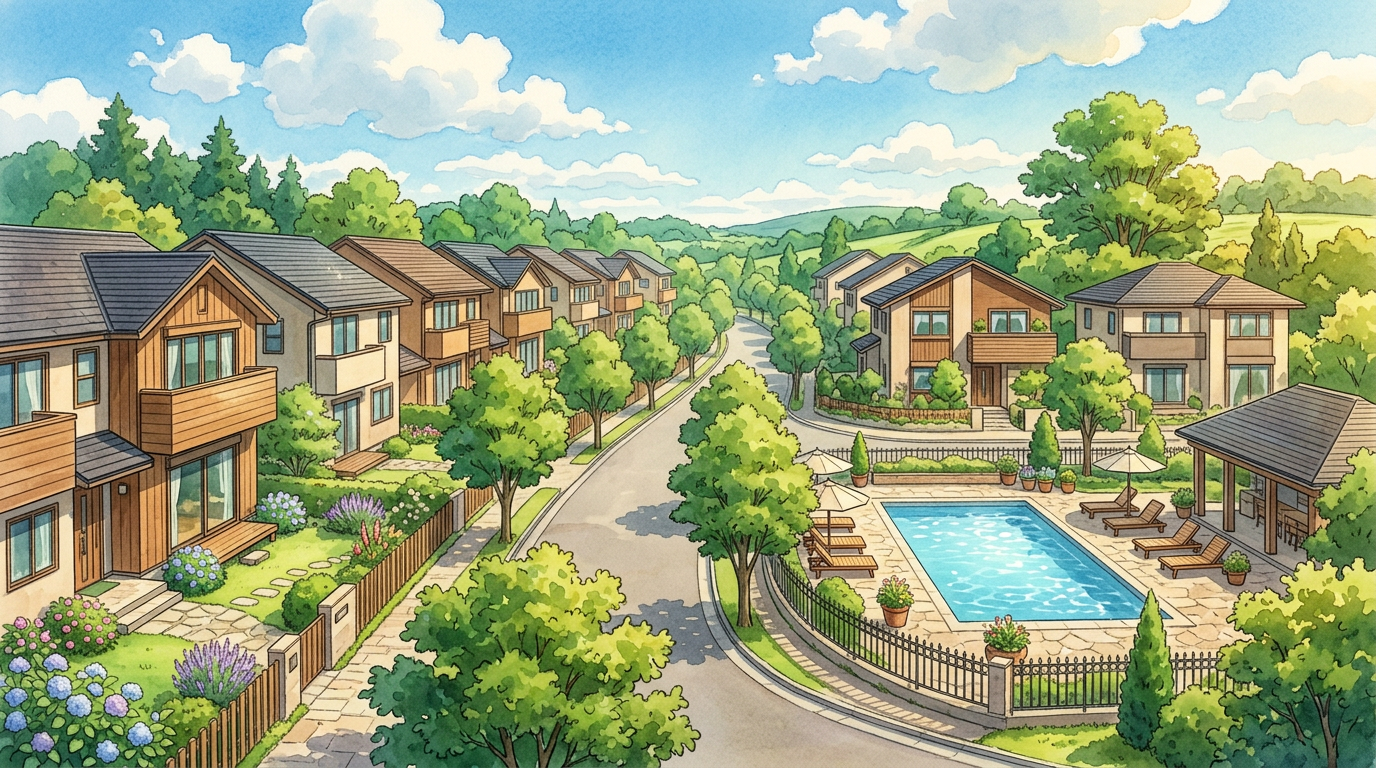
Suburban Landed Developments represent the growth opportunity in 2026. As buyers reassess value propositions, suburban landed homes with excellent MRT connectivity, modern amenities, and community infrastructure are attracting serious attention. These developments offer better value for money while maintaining strong capital appreciation potential due to ongoing infrastructure improvements and population growth.
Price Trends by Development Stage
New launch landed properties are experiencing the most significant price increases. Developments like Sanja Close and Woodlands Drive 17 (both Executive Condominium projects) are already trading below the S$800 per square foot mark, while other OCR developments such as Lakeside Drive and newer projects show substantially higher land costs reflected in their pricing.[3]
Resale landed properties are showing more moderate price movements. The resale market saw transaction volumes drop 9.8% in 2025, with only 26,042 units changing hands compared to 28,876 in 2024.[1] This slowdown reflects buyer caution amid macroeconomic uncertainty, but it also means that well-positioned resale landed homes are becoming scarcer and more valuable as inventory tightens.
The gap between new launch prices and resale prices is narrowing, which benefits sellers of older landed properties while challenging buyers seeking bargains. This compression suggests that the landed housing market is maturing and becoming more efficient in price discovery.
Investment Potential and Capital Appreciation Outlook
For investors evaluating landed housing developments, several factors support positive long-term appreciation:
- Population Growth: Singapore's population has reached 4.2 million residents, with further growth expected.[3] This sustained population increase underpins housing demand and supports price appreciation across all residential segments.
- Unemployment Stability: Unemployment rates among residents and citizens remain exceptionally low at 3.0% and 2.8% respectively.[3] Strong employment supports mortgage serviceability and reduces default risks.
- Economic Resilience: Singapore's GDP growth is forecast at 2.2% in 2026, providing a stable macroeconomic foundation.[2] This stability attracts both domestic and international capital.
- Safe-Haven Appeal: Singapore continues to demonstrate safe-haven appeal amid global uncertainty, driving continued capital inflows from international investors.[2] This external demand supports property prices across all segments.
Rental yield potential for landed housing remains attractive in suburban locations with strong connectivity. Properties near MRT stations or major transport hubs command rental premiums that support positive cash flow for investor-owners. The combination of capital appreciation and rental income creates compelling investment returns for patient capital.
Comparing Landed Housing to Other Residential Segments
The divergence between landed housing and other segments is stark. While CCR properties depreciated 3.2% in Q4 2025, landed homes appreciated 3.5% during the same period.[1] This reversal of traditional market dynamics reflects a fundamental shift in buyer preferences toward value and liveability.
Condominiums in suburban locations are also experiencing strong demand, but landed housing offers distinct advantages: larger land parcels, typically more privacy, potential for future redevelopment, and often better value per square foot. For families prioritizing space and outdoor areas, landed housing provides superior liveability compared to high-rise condominiums.
HDB resale flats remain the most affordable segment but face their own challenges. With 4,600 BTO flats launching in February 2026 alone, HDB supply is increasing, which may moderate price growth in that segment.[1] Landed housing, by contrast, faces constrained supply and rising development costs, creating a more favorable price environment for sellers and investors.
Price Expectations for 2026 and Beyond
Analysts are predicting that new private home prices could hit fresh highs in 2026.[1] For landed housing specifically, this means:
- New launches will command premium pricing reflecting elevated land acquisition costs
- Resale landed properties will appreciate as new launch prices set new market benchmarks
- Suburban landed homes will continue outperforming CCR properties as value-conscious buyers shift their focus
- Developments with strong connectivity and modern amenities will command price premiums
However, price growth is unlikely to match the frenetic pace of the post-pandemic years. Instead, expect a period of what analysts call "uncomfortable stability"—prices moderating in some segments while rising in others, with the gap between good buys and poor buys widening significantly.[1] This environment rewards informed buyers who understand micro-market trends and specific location advantages.
Key Factors Influencing Your Landed Housing Investment Decision
When evaluating landed housing developments in 2026, focus on these specific factors:
- Location Specificity: Stop analyzing "market averages" and start analyzing specific micro-trends. A development on Makepeace Road in D09 operates in a completely different market than a suburban landed estate. Proximity to MRT, CBD access, and neighborhood quality matter enormously.
- Developer Track Record: With construction costs elevated and margins compressed, developer reputation and financial stability are critical. Ensure your developer has a proven track record of timely project completion and quality construction.
- Supply Pipeline: Understand what other developments are launching in your target area. Oversupply can dampen price appreciation, while constrained supply supports values.
- Financing Costs: Interest rates are expected to ease in 2026, supporting market expansion.[2] Lock in favorable mortgage rates early, as rates may not remain at current levels indefinitely. Use Bank Rates to compare current mortgage offerings and calculate your monthly payments with Mortgage Rates .
- Resale Liquidity: Ensure the development has strong resale market activity. Landed homes in well-connected areas with established communities sell faster than properties in emerging neighborhoods.
Frequently Asked Questions About Landed Housing Price Trends
Will landed housing prices continue rising in 2026?
Yes, prices are expected to continue appreciating, though at a more moderate pace than 2021-2024. New launch prices will likely reach fresh highs due to elevated land costs, while resale prices will follow upward as new launches set market benchmarks. However, price growth will vary significantly by location and development quality.
Why are landed homes outperforming CCR properties?
Buyers are reassessing value propositions and recognizing that well-connected suburban locations offer superior liveability at more accessible prices. This flight-to-quality in suburban areas, combined with constrained supply, is driving stronger price appreciation compared to traditional prime districts where prices are moderating.
What's the difference between new launch and resale landed housing prices?
New launches command premium prices reflecting current land acquisition costs (up 26% in suburbs). Resale properties trade at lower absolute prices but are appreciating as new launch prices set new market benchmarks. The gap between new and resale is narrowing, suggesting the market is becoming more efficient.
Is 2026 a good time to buy landed housing?
2026 presents a mixed picture. If you're buying for long-term investment and can secure favorable financing, now is a reasonable time to enter the market. However, if you're hoping for significant price declines, you'll likely be disappointed. Focus on specific locations with strong fundamentals rather than waiting for a market crash that may not materialize.
Which landed housing locations will appreciate most in 2026?
Developments with strong MRT connectivity, proximity to employment centers, established community infrastructure, and limited nearby supply will appreciate most. Suburban landed homes in well-planned estates with good schools and amenities will outperform isolated properties without these advantages.
Making Your Landed Housing Investment Decision
The landed housing market in 2026 rewards informed, strategic buyers who understand micro-market dynamics rather than trying to time the overall market. The gap between a good buy and a poor buy has never been wider, and headline market numbers mask important underlying trends.[1]
Start by clearly defining your investment objectives: Are you buying for owner-occupancy or investment returns? What's your timeline? How much can you afford? Then focus intensely on specific locations and developments that align with your criteria. Visit Property Search to browse available landed housing units and compare specific properties. For detailed analysis of particular developments, explore Projects to understand market positioning and price trends.
When you're ready to move forward, connect with experienced property agents through Homejourney who understand landed housing market dynamics and can provide personalized guidance for your specific situation. Homejourney's commitment to user safety and trust means you'll receive verified information and transparent advice to make confident decisions.
The landed housing market in 2026 is not a buyer's market or a seller's market—it's a market that rewards those who do their homework and make decisions based on specific location fundamentals rather than broad market sentiment. By understanding these price trends and focusing on the factors that truly drive value, you can position yourself to make a successful landed housing investment.