
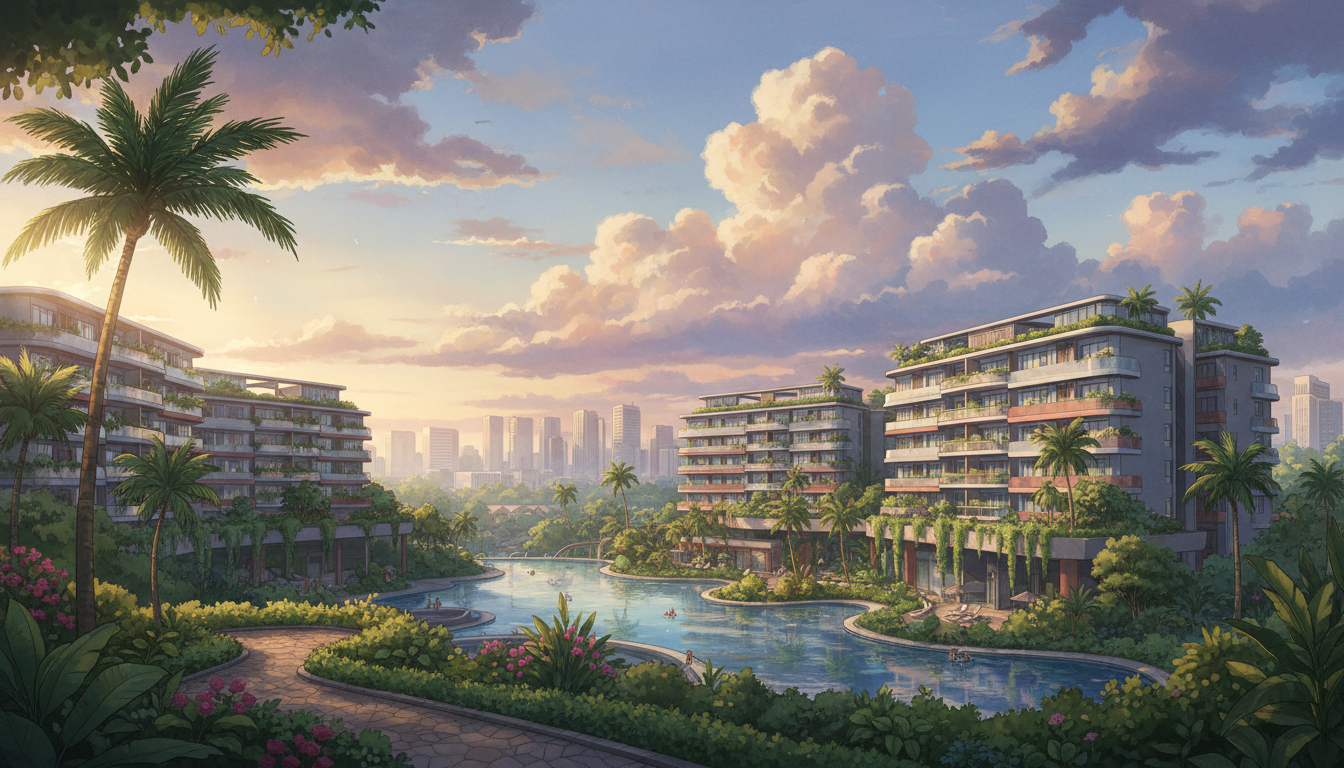
Landed Housing Development in District 17 represents one of Singapore's most compelling opportunities for buyers seeking spacious landed homes in the vibrant Changi-Loyang corridor. With 9 units currently available for sale and a proven track record of appreciation, this development attracts first-time buyers, upgraders, and savvy investors alike. Homejourney has compiled this comprehensive guide to help you navigate your purchase with confidence and transparency.
Executive Summary: Why Landed Housing Development Matters
Landed Housing Development stands as a beacon of opportunity in District 17, where landed property prices have remained relatively stable compared to other Singapore districts, yet the area is experiencing significant infrastructure improvements that promise future appreciation.[3] As of February 2026, this development offers 9 available units with a proven 11.1% sales track record, indicating strong buyer confidence.[2]
For Homejourney users prioritizing safety and transparency, Landed Housing Development represents a verified, established development with clear transaction history. The district's transformation—driven by projects like the Tanah Merah MRT upgrade and new lifestyle hubs—positions early buyers to benefit from both immediate lifestyle value and long-term capital appreciation potential.[3]
Property Overview: Landed Housing Development
Location: Jalan Chelagi, District 17 (Changi-Loyang area)
Property Type: Landed Housing Development
Current Availability: 9 units for sale
Tenure: Freehold
Market Position: Established development with strong buyer demand
Landed Housing Development has established itself as a desirable address for families and investors seeking the perfect balance between suburban tranquility and urban convenience. The development's appeal lies in its spacious plots, modern construction standards, and prime location near Changi Airport—one of the world's leading aviation hubs—while maintaining proximity to East Coast Park's recreational amenities.[3]
What makes this development particularly attractive to Homejourney users is its transparent transaction history and verified pricing data. Unlike speculative new launches, Landed Housing Development offers buyers the confidence of an established market with clear precedent for valuations and resale potential.
Developer Reputation & Track Record
Landed Housing Development's successful sales history—with 1 unit sold out of 10 total units (11.1% sold as of December 2025)—demonstrates consistent buyer interest and developer credibility.[2] The development attracts a diverse buyer base including upgraders from HDB flats, young professionals seeking their first private property, and expatriate families relocating to Singapore.
Available Units for Sale: Current Inventory
As of February 2026, Landed Housing Development offers 9 units available for purchase, representing a significant opportunity for serious buyers. The development comprises primarily terraced houses and semi-detached properties, ranging from 4 to 7 bedrooms with land sizes between 1,700 and 3,400 square feet.
Unit Types & Configuration
- Semi-Detached Houses: 5-7 bedroom units with 3,000-3,500 sqft built-up area and 2,100-2,400 sqft land area
- Terraced Houses: 4-6 bedroom units with 2,900-3,200 sqft built-up area and 1,700-2,000 sqft land area
- Premium Detached Homes: Rare 6-8 bedroom units with 6,000+ sqft built-up area and 3,300+ sqft land area
Current Price Range
Landed Housing Development units command prices between S$2.78 million and S$13.5 million, with price per square foot ranging from S$1,621 to S$2,754 psf.[1] This pricing reflects the premium location, spacious configurations, and strong market demand in District 17.
| Unit Type | Bedrooms | Built-up Area | Price Range | PSF Range |
|---|---|---|---|---|
| Semi-Detached | 5-6 | 3,500-3,764 sqft | S$5.06M - S$5.90M | S$1,756 - S$2,754 |
| Terraced House | 4-6 | 2,971-3,200 sqft | S$2.78M - S$5.88M | S$1,721 - S$2,646 |
| Premium Detached | 6-8 | 6,186-10,000 sqft | S$11.2M - S$13.5M | S$1,621 - S$2,043 |
Disclaimer: Prices shown are based on current market data as of February 2026 and may vary based on specific unit features, condition, and market conditions. For the most current pricing and availability, visit Homejourney's property search to browse all available units at Landed Housing Development.
Why Buy at Landed Housing Development: Key Advantages
1. Spacious Living with Land Ownership
Unlike condominium living, Landed Housing Development offers true land ownership with built-up areas ranging from 2,971 to 10,000 square feet. This translates to multiple living spaces, generous gardens, and the freedom to modify and renovate without condo management restrictions. Families particularly appreciate the ability to create outdoor entertainment areas, swimming pools, or extended landscaping.
2. Freehold Tenure & Perpetual Ownership
All units at Landed Housing Development are freehold, meaning you own the property indefinitely with no lease expiry concerns.[1] This tenure structure provides peace of mind for long-term residents and strengthens resale value compared to leasehold properties that depreciate as lease periods shorten.
3. Prime District 17 Location
District 17 encompasses the prestigious Changi-Loyang corridor, offering residents the rare combination of tranquility and connectivity. The area is known for its relaxed environment, tree-lined streets, and strong community feel—yet remains minutes from major employment hubs, shopping centers, and international schools.[3]
4. Proximity to Changi Airport & East Coast Park
Located near Singapore's world-class Changi Airport, the development appeals to expatriate families and business professionals requiring convenient airport access. Simultaneously, East Coast Park—Singapore's largest coastal park—offers 15 km of beachfront recreation, cycling paths, and family-friendly activities just minutes away.[3]
5. Stable & Appreciating Market
District 17 boasts relatively stable property values with strong fundamentals. Unlike speculative markets, this district attracts serious long-term buyers, creating a stable foundation for both lifestyle and investment purposes.[3] The area is positioned for continued appreciation as infrastructure improvements materialize.
6. Established Community
Unlike new launch developments, Landed Housing Development is an established community with mature landscaping, proven resident satisfaction, and active neighborhood networks. This maturity provides immediate lifestyle benefits and community integration.
Price Analysis & Market Trends: Understanding Your Investment
Current Market Positioning
Landed Housing Development commands premium pricing reflecting its location, spacious configurations, and freehold tenure. The median price per square foot across available units is approximately S$2,100 psf, positioning the development at the upper-middle range of District 17's landed property market.[1]
This pricing reflects several factors: the development's established reputation, proximity to Changi Airport, freehold tenure, and the limited supply of comparable properties in the district. For buyers comparing options, Homejourney's price analysis tools help contextualize these values within the broader District 17 market.
Price Trends & Historical Appreciation
District 17 has demonstrated consistent price stability over the past 36 months, with 1,072 private property transactions completed.[3] Unlike volatile markets, this stability provides confidence for buyers making long-term investment decisions. The district's transformation—driven by infrastructure upgrades and new lifestyle developments—suggests modest but meaningful appreciation potential in the coming years.
Landed properties specifically benefit from scarcity value. Unlike the condominium market, which is experiencing a 17% supply increase in 2026, landed properties face genuine supply constraints, supporting price stability and appreciation potential.[4] Early investors in District 17 positioned themselves advantageously as the area transforms.
Comparative Market Analysis
Within District 17, Landed Housing Development units command prices reflecting their premium positioning. Semi-detached units at S$2,400-2,750 psf compare favorably to other established landed developments, while terraced houses at S$1,700-2,650 psf offer excellent value for budget-conscious buyers. Premium detached homes at S$1,600-2,050 psf represent exceptional value for ultra-spacious properties exceeding 6,000 sqft.
For detailed price comparisons and transaction history, Homejourney's project analysis tools provide comprehensive market data, helping you understand fair market value and negotiation parameters.
Location Advantages: Why District 17 Matters
MRT Connectivity & Transportation
While Landed Housing Development is not directly adjacent to MRT stations, the area benefits from excellent bus connectivity and is positioned for improved MRT access through the Tanah Merah MRT upgrade project.[3] Current key transit points include:
- Tanah Merah MRT Station: Approximately 2-3 km away, serving the East-West Line with connections to Raffles Place, Orchard, and Jurong
- Changi Airport MRT Station: Approximately 5-6 km away, providing direct airport access and connections to the broader MRT network
- Bus Services: Multiple bus routes serve the Jalan Chelagi area, providing convenient connections to shopping centers, employment hubs, and educational institutions
The planned Tanah Merah MRT upgrade promises enhanced connectivity, potentially increasing property values as transportation convenience improves.[3]
Educational Institutions
District 17 offers diverse educational options for families:
- Primary Schools: Changi Primary School, Loyang Primary School, and Pasir Ris Primary School serve the district with strong academic reputations
- Secondary Schools: Changi Secondary School and Loyang Secondary School provide quality secondary education
- International Schools: Proximity to international schools in neighboring districts offers expatriate families excellent educational options
- Pre-schools & Childcare: Multiple childcare centers and kindergartens serve young families throughout the district
Shopping & Dining
While District 17 maintains a more residential character, residents enjoy convenient access to shopping and dining options:
- Changi Business Park: Major commercial hub with dining and retail options, approximately 2-3 km away
- Pasir Ris Town Centre: Full-service shopping mall with supermarkets, restaurants, and entertainment, approximately 3-4 km away
- East Coast Parkway Dining: Numerous restaurants and cafes along the East Coast Park corridor
- Local Hawker Centers: Authentic Singapore dining at Loyang and Changi hawker centers
Recreation & Lifestyle
District 17's greatest lifestyle advantage is proximity to East Coast Park, Singapore's premier coastal recreation destination. The 15 km beachfront park offers:
- Swimming beaches and water sports facilities
- Cycling paths and jogging tracks
- Picnic areas and BBQ facilities
- Beach volleyball and sports courts
- Family-friendly attractions and events
- Seafood restaurants with coastal views
This unparalleled access to recreation makes District 17 exceptionally attractive for families prioritizing outdoor lifestyle and health-conscious living.
Healthcare & Medical Services
District 17 residents benefit from proximity to quality healthcare facilities, including clinics in Changi and Loyang, with Changi General Hospital providing comprehensive medical services approximately 4-5 km away.
Financing & Affordability Guide: Making Your Purchase Possible
Understanding Your Buying Power
Purchasing a property at Landed Housing Development requires understanding your financial capacity and available financing options. Homejourney's mortgage calculator helps you determine affordability based on your income, savings, and loan eligibility. Use our tools to explore different scenarios and understand your true buying power.
Estimated Monthly Mortgage Payments
Based on current interest rates and typical 25-year loan terms, here are estimated monthly mortgage payments for different unit types at Landed Housing Development:
| Unit Type | Purchase Price | Down Payment (20%) | Loan Amount | Est. Monthly Payment* |
|---|---|---|---|---|
| Semi-Detached (5BR) | S$5.5M | S$1.1M | S$4.4M | S$19,800 |
| Terraced House (4BR) | S$3.5M | S$700K | S$2.8M | S$12,600 |
| Premium Detached (6BR) | S$11.2M | S$2.24M | S$8.96M | S$40,300 |
*Estimates based on 3.5% interest rate and 25-year loan term. Actual payments vary based on bank rates, loan tenure, and individual circumstances. Use Homejourney's mortgage calculator for personalized calculations.
Down Payment & Financing Requirements
Most Singapore banks require a minimum 20% down payment for private property purchases, though some offer 80% financing options. For Landed Housing Development units:
- Minimum Down Payment: 20% of purchase price (some banks offer up to 25% financing for qualified buyers)
- Loan-to-Value (LTV): Maximum 80% for most banks, 75% for some institutions
- Debt Service Ratio: Banks typically require monthly debt obligations not to exceed 60% of gross monthly income
- Minimum Income: Generally S$4,000-5,000 monthly income required for loans above S$1 million
CPF Usage for Property Purchase
Singapore citizens and permanent residents can utilize CPF savings for property purchases at Landed Housing Development:
- Down Payment: CPF can cover the entire down payment (subject to CPF balance limits)
- Mortgage Payments: Monthly CPF contributions can be used to service mortgage payments
- Accrued Interest: CPF can be used to pay accrued interest on home loans
- Legal & Valuation Fees: Certain transaction costs can be paid from CPF
Maximizing CPF usage reduces cash outlay and improves liquidity. Consult with your bank's CPF advisor to optimize your financing structure.
Additional Buyer Stamp Duty (ABSD) Considerations
Depending on your buyer profile, you may be subject to Additional Buyer Stamp Duty (ABSD):
- Singapore Citizens (First Property): No ABSD
- Singapore Citizens (Second Property): 7% ABSD
- Singapore Citizens (Third+ Property): 8% ABSD
- Permanent Residents (First Property): 5% ABSD
- Permanent Residents (Second+ Property): 10% ABSD
- Foreign Investors: 15% ABSD
For a S$5.5 million semi-detached property, ABSD could range from S$0 (first-time citizen buyer) to S$825,000 (foreign investor). Factor ABSD into your total purchase budget.
Mortgage Calculator & Professional Guidance
Homejourney's integrated mortgage calculator helps you model different scenarios: varying down payments, loan tenures, and interest rates. Access current bank rates and compare financing options from Singapore's leading institutions. For personalized guidance, connect with Homejourney's network of mortgage specialists who can optimize your financing structure.
The Buying Process: Step-by-Step Guide
Step 1: Property Search & Viewing
Begin by browsing available units at Landed Housing Development through Homejourney's property search. Review detailed listings including floor plans, photos, and verified pricing. Schedule viewings at times convenient to your schedule. Homejourney's agent network can arrange private viewings and provide professional guidance.
Step 2: Financial Pre-Approval
Before making an offer, obtain mortgage pre-approval from your chosen bank. This demonstrates serious intent to sellers and clarifies your maximum purchase price. Pre-approval typically takes 3-5 business days and requires:
- Proof of income (last 3 months' payslips)
- Employment letter
- Bank statements (last 3 months)
- NRIC and passport copies
- CPF statement (if applicable)
Step 3: Make an Offer
Work with a property agent to submit a competitive offer. Offers should include proposed purchase price, proposed completion date, and any contingencies (subject to inspection, financing, etc.). Sellers typically respond within 2-3 days.
Step 4: Offer Acceptance & Option Agreement
Once your offer is accepted, you'll sign an Option to Purchase agreement and pay an option fee (typically 1% of purchase price). This gives you exclusive rights to purchase the property for a specified period (usually 14-21 days) while you conduct inspections and finalize financing.
Step 5: Property Inspection & Due Diligence
During the option period, conduct thorough inspections:
- Structural Inspection: Hire a professional surveyor to assess building condition, structural integrity, and any defects
- Title Search: Verify clear property title and check for any encumbrances or restrictions
- Town Council Records: Review maintenance charges, sinking fund status, and any outstanding issues
- Utility Verification: Confirm water, electricity, and gas connections are functional
Step 6: Finalize Financing
Submit your complete mortgage application to the bank with all required documentation. The bank will conduct a property valuation (typically S$500-800) and issue a formal loan approval letter. This process usually takes 7-10 business days.
Step 7: Engage Legal Representation
Hire a conveyancing lawyer to handle the legal aspects of your purchase. Your lawyer will:
- Review the Option to Purchase agreement
- Conduct title searches and property verification
- Prepare the Sales & Purchase agreement
- Handle stamp duty calculations and payments
- Manage escrow arrangements
- Coordinate with the bank's legal team
Legal fees typically range from S$1,200-2,000 depending on property value and complexity.
Step 8: Sign Sales & Purchase Agreement
Once the option period expires and you've completed due diligence, you'll sign the formal Sales & Purchase (S&P) agreement. This legally binding contract specifies:
- Final purchase price
- Completion date (typically 8-12 weeks)
- Chattels included (furniture, fixtures, appliances)
- Conditions of sale
Step 9: Pay Stamp Duty & Complete Financing
Within 14 days of signing the S&P agreement, you must pay stamp duty to the Inland Revenue Authority of Singapore (IRAS). Stamp duty on property purchases ranges from 1-4% depending on purchase price. Simultaneously, finalize your mortgage documentation with the bank.
Step 10: Final Inspection & Settlement
Approximately 1 week before completion, conduct a final inspection to verify the property's condition and that any agreed-upon repairs are completed. On completion day, your lawyer will coordinate fund transfers, receive the property keys, and register the transfer with the Singapore Land Authority.
Timeline Summary
From initial offer to completion typically requires 10-14 weeks, though this varies based on financing approval speed and any complications. Homejourney's transaction tracking tools help you monitor progress through each stage.
Investment Potential: Building Wealth Through Property
Rental Yield Analysis
For investors considering Landed Housing Development as a rental investment, the development offers attractive yield potential. Based on current market data:
- Typical Monthly Rental: S$6,000-9,000 for semi-detached units, S$4,000-6,500 for terraced houses
- Gross Rental Yield: 3.5-4.2% annually on purchase price
- Tenant Demand: Strong demand from expatriate families and upgrading Singaporeans seeking spacious landed homes
- Occupancy Rates: Established areas like District 17 enjoy occupancy rates exceeding 95%
These yields compare favorably to condominium investments while offering greater capital appreciation potential due to landed property scarcity value.
Capital Appreciation Outlook
District 17 is positioned for meaningful capital appreciation driven by:
- Infrastructure Improvements: Tanah Merah MRT upgrade and new lifestyle developments promise enhanced connectivity[3]
- Supply Constraints: Limited new landed property supply creates scarcity value, supporting price appreciation[4]
- Demand Growth: Consistent demand from upgraders and expatriate families supports buyer interest
- Area Transformation: New projects like eCO by Far East Organization signal continued district evolution and gentrification[3]
Conservative estimates suggest 3-5% annual appreciation potential, with upside opportunity if infrastructure improvements accelerate property value growth.
Tenant Profile & Demand
Landed Housing Development attracts premium tenants:
- Expatriate Families: International professionals and their families seeking spacious homes with gardens and family-friendly environments
- Upgrading Singaporeans: Successful professionals and business owners seeking larger homes before purchasing their own property
- Corporate Relocations: Companies relocating executives to Singapore often rent properties for their staff
- Long-term Residents: Tenants seeking stability and community, typically signing 2-3 year leases
This tenant profile translates to reliable rental income, minimal vacancy risk, and tenant stability—critical factors for investment success.