Looking for the Best Home Loan Rates Singapore January 2026 Comparison: How to Improve Approval Chances? In early 2026, the most competitive fixed packages for new private and HDB bank loans are generally in the 1.4%–1.8% p.a. range for 2–3 year fixed terms, while the lowest SORA-pegged floating packages start from about 1M/3M SORA + 0.25–0.40% p.a., depending on bank and loan size.[1][6][2] At the same time, your approval chances hinge on three pillars: keeping your TDSR ≤ 55%, maintaining a strong credit record, and preparing complete documents so banks can verify your income quickly.[2]
This cluster article zooms in on rate comparison and approval strategy, and supports Homejourney’s broader home financing pillar guide Best Home Loan Rates in Singapore January 2026: Expert Comparison by Homejourney . If you want a full 2026 market outlook, pair this with our dedicated forecast pieces 新加坡2026年房贷利率预测分析:Homejourney权威指南 and 2026年房贷利率预测分析:银行利率比较 | Homejourney .
Best Home Loan Rates in Singapore (January 2026 Snapshot)
As a borrower in January 2026, you are benefiting from one of the most attractive interest-rate environments in the past three years. According to recent market comparisons, many promotional 2-year fixed packages for resale condominiums and landed homes start from about 1.45%–1.55% p.a. in Year 1 and 2, with mainstream banks like DBS, OCBC, UOB, HSBC, Maybank and Standard Chartered clustering around the 1.60%–1.75% p.a. band.[1][6][2]
For resale HDB flats, banks are offering similar promotional fixed packages (often 1.55%–1.70% p.a. for 2-year fixed), while SORA-pegged floating packages can start from around 1M/3M SORA + 0.30%–0.40% p.a. for more competitive banks.[1][6] This means for many owners, bank loans are now clearly cheaper than the HDB concessionary loan rate of 2.6% p.a., which is pegged at 0.1% above the CPF Ordinary Account rate.[2]
For refinancing, promotional fixed-rate packages can be slightly lower, with some 2-year fixed offers around 1.45%–1.55% p.a. in Years 1 and 2, especially for larger loans.[1][6] Floating refinancing packages often start from 1M/3M SORA + 0.25–0.40% p.a., again depending on the bank and your profile.[1][6]
Instead of hunting bank websites one by one, you can view a consolidated comparison of these partner banks—DBS, OCBC, UOB, HSBC, Standard Chartered, Maybank, CIMB, RHB, Public Bank, Hong Leong Bank and Citibank—through Homejourney’s bank rates page: Bank Rates .
Fixed vs Floating in 2026: How to Read the Trend
Most banks in Singapore now price floating home loans off the Singapore Overnight Rate Average (SORA), published by MAS. In 2025, 3M SORA fell sharply from about 3% to near 1.2%, dragging home loan rates down with it.[2][5] By early 2026, that shift is why you are seeing fixed packages nearly halved from roughly 3.1% at the start of 2025 to about 1.4–1.8% now.[2]
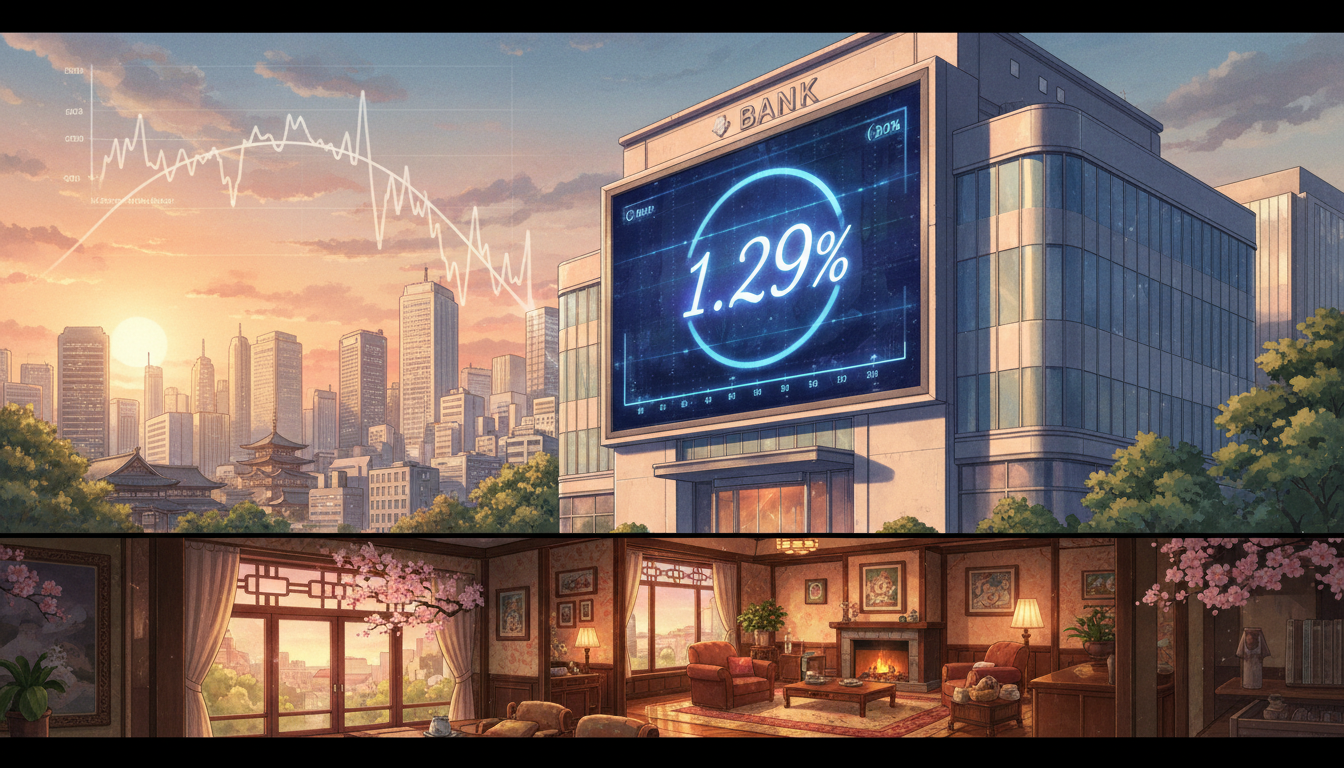
The chart below shows recent interest rate trends in Singapore:
After a rapid decline in 2025, SORA appears to be stabilising at lower levels than during the 2022–2023 spike, but there is still uncertainty because global rates track US Federal Reserve decisions.[2] That is why many local mortgage advisers recommend using this window to lock in a competitive fixed rate for 2–3 years, while still considering floating packages if you are comfortable with some volatility and plan to refinance actively when conditions change.[2]
Homejourney supports this decision-making by providing real-time 3M and 6M SORA tracking within our bank rates comparison tool Bank Rates . This lets you see, in one glance, how your floating package might behave compared to fixed alternatives.
How Banks in Singapore Assess Your Home Loan Application
To improve your approval chances, you first need to understand what banks actually look at. In Singapore, all major banks—DBS, OCBC, UOB, HSBC, Standard Chartered, Maybank, CIMB, RHB, Public Bank, Hong Leong Bank and Citibank—apply MAS rules such as the Total Debt Servicing Ratio (TDSR) for private properties and the Mortgage Servicing Ratio (MSR) for HDB and new ECs, alongside internal credit policies.[2]
Key approval criteria typically include:
- Income and employment stability – Banks check your latest 3–12 months’ income and prefer stable, salaried employment or a consistent self-employed track record.
- TDSR & MSR limits – MAS caps TDSR at 55% of gross monthly income for property loans, inclusive of other debts like car loans and credit cards.[2] For HDB and new EC loans from banks, MSR is typically capped at 30% of gross income.
- Credit history – Late payments, frequent short-term loans, or high credit card utilisation can cause banks to cut your loan quantum or reject your application altogether.
- Age and loan tenure – Maximum tenure is normally up to 30 years (HDB) or 35 years (private), and the loan must usually not extend beyond age 65–75, depending on bank policy.
- Property type and location – Freehold and 99-year condos near MRTs like Paya Lebar, Tanjong Pagar or Novena often get standard LTVs, but older walk-up apartments or properties with short remaining leases can face lower loan-to-value caps.
On the ground, this means a couple earning a combined S$9,000 and carrying a S$800 car loan plus S$300 of other monthly debt will have a maximum total debt allowance of 0.55 × S$9,000 = S$4,950. After deducting existing S$1,100 debt, they have about S$3,850 left for mortgage payments. This directly constrains how big a loan they can take at a given interest rate and tenure.
Homejourney simplifies this calculation via our mortgage eligibility calculator at Mortgage Rates and , so you can see your indicative borrowing limit instantly before you even contact a bank officer.
Step-by-Step: How to Secure the Best Home Loan Rate (Jan 2026)
Step 1: Check Your Eligibility and Budget Safely
Before you fall in love with a project in Queenstown or a resale HDB in Pasir Ris, start by assessing how much you can borrow. Use Homejourney’s eligibility and affordability calculator at to input salary, variable income, and existing debts.
Insider tip from local buyers: when I was helping a friend upgrade from a 4-room HDB in Punggol to a resale condo near Bartley MRT, the biggest shock was not the price, but how much their existing car loan ate into TDSR. We adjusted by shortening the car loan tenure first, which freed up debt capacity and improved their bank approval odds.
At this stage, you should also use Homejourney’s property search Property Search to filter for homes within your safe budget, instead of stretching to the edge of your TDSR limit. This is crucial for long-term safety if rates rise again.
Step 2: Compare Bank Rates Side-by-Side (Fixed vs Floating)
Next, go to Homejourney’s bank rates comparison page: Bank Rates . Here, you can view current bank rate comparison January 2026 across DBS, OCBC, UOB, HSBC, Standard Chartered, Maybank, CIMB, RHB, Public Bank, Hong Leong Bank and Citibank, including both fixed and SORA-pegged options.
To choose between fixed and floating in early 2026:
- Pick a 2–3 year fixed rate if you want repayment certainty and believe rates could rise again from current lows.
- Consider 1M or 3M SORA packages
References