
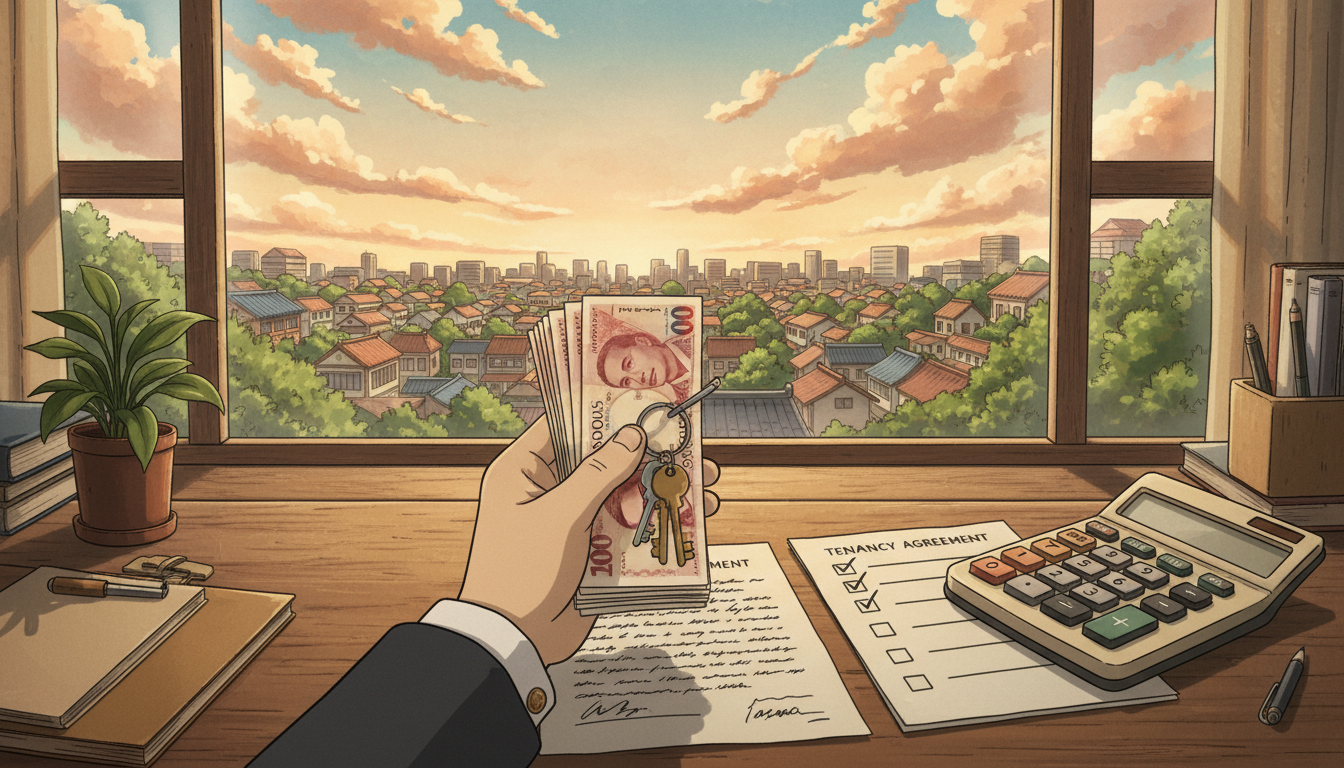
Recovering Deposits from Problem Tenants: Landlord Strategies in Singapore
When a tenancy ends, recovering your security deposit from a problem tenant can be challenging—but with the right strategies and documentation, landlords in Singapore have proven legal pathways to reclaim withheld funds. Unlike tenant-focused deposit recovery, landlord deposit management requires understanding legitimate deduction rights, proper documentation procedures, and when to escalate disputes through Singapore's Small Claims Tribunal system.
This guide equips Singapore landlords with actionable strategies to protect deposits, manage problem tenants, and recover funds efficiently while maintaining compliance with tenancy law and common law principles that govern rental agreements in Singapore.
Understanding Your Rights as a Landlord: What Deposits Cover
Security deposits in Singapore serve as financial protection against tenant-caused damage and unpaid rent.[1][2] However, landlords must distinguish between legitimate deductions and normal wear and tear—a critical distinction that determines whether your deposit withholding will survive legal challenge.
Legitimate deduction categories include unpaid rent, damage beyond normal wear and tear (with photographic evidence and repair receipts), cleaning costs for excessive uncleanliness, and minor repairs directly caused by tenant negligence.[1][2] Non-legitimate deductions—such as normal wear and tear, standard cleaning after move-out, or repainting due to age—frequently trigger disputes and tribunal losses.
The legal standard in Singapore is that deposits must be returned within a "reasonable time," typically interpreted as 14 days post-move-out, though your tenancy agreement may specify up to 30 days.[1][2] This timeline is crucial: delays without substantiation constitute illegal withholding and expose you to tribunal claims plus costs orders.
Your tenancy agreement is your primary legal document. Ensure it explicitly specifies which deductions are permissible, the timeline for refunds, and the process for itemizing deductions with receipts—this clarity prevents disputes and strengthens your position if challenged.[4]
Preventing Deposit Disputes: Documentation Strategies from Move-In
The most effective deposit recovery strategy begins before the tenant moves in. Problem tenants are easier to manage when your documentation is airtight from day one.
Move-in documentation protocol: Conduct a joint inspection with the tenant on move-in day. Take timestamped photos and videos of every room, all appliances, fixtures, walls, and flooring—capturing the property's condition in detail.[1][2] Create a signed inventory checklist that the tenant acknowledges, noting any pre-existing damage or wear. This document becomes your baseline for assessing what damage occurred during the tenancy.
Store all documentation in a dedicated folder: the signed inventory, photos with timestamps, the signed tenancy agreement, and any communication about property condition. Digital copies stored in cloud storage protect against loss and provide evidence if disputes escalate to tribunal.
For problem tenants specifically—those with a history of disputes or late payments—consider photographing the property monthly or quarterly during the tenancy. This creates a timeline showing when damage occurred and demonstrates that you were monitoring the property condition. While this may seem excessive, it proves invaluable if a problem tenant later claims damage existed before their tenancy.
Reference your tenancy agreement clauses carefully. If your agreement lacks specific deposit protection language, review Tenancy Agreement Clauses for Security Deposit Protection | Homejourney for guidance on essential clauses that prevent disputes and strengthen your legal position.
The Move-Out Inspection: Your Critical Evidence Window
The move-out inspection is your final opportunity to document the property condition and establish the baseline for deposit deductions. This inspection determines whether you have sufficient evidence to withhold deposits—and whether a tribunal will uphold your deductions if challenged.
Conducting the inspection: Schedule the inspection on move-out day or within 24 hours. Ideally, conduct it jointly with the tenant so they cannot later claim damage occurred after their departure. If the tenant refuses to attend, document this refusal in writing and conduct the inspection alone, photographing and videoing extensively.
Photograph every surface: walls for marks or damage, flooring for stains or scratches, appliances for functionality issues, light fixtures, door handles, and any areas showing damage beyond normal wear. Take wide shots and close-ups. Include the date and time stamp on all photos—modern smartphones do this automatically, but verify your settings.
Create a detailed written report listing all damage observed, with reference to the move-in photos. For example: "Living room wall has 3cm hole in drywall (new damage; move-in photos show pristine condition). Kitchen appliances non-functional; refrigerator does not cool (move-in photos show working condition)."
If the tenant is present, have them sign a move-out checklist acknowledging the property condition and any damage noted. If they dispute your observations, note their objections in writing—this creates a record that you attempted to resolve discrepancies transparently.
Itemizing Deductions: The Documentation That Wins Disputes
When withholding deposit amounts, your itemization must be detailed, specific, and supported by evidence. Vague deductions—"cleaning: $200" without receipts—lose tribunal cases. Detailed deductions with supporting documentation win them.
Proper deduction format:
- List each deduction item separately with a specific amount
- Describe the damage or issue requiring the deduction
- Reference move-in photos showing the property was not in that condition initially
- Attach receipts, invoices, or quotes from contractors showing the cost
- Include photos of the damage requiring repair
- Calculate the total and specify the refund amount
Example of strong deduction documentation: "Kitchen wall paint damage (approximately 15cm × 20cm area with water staining): Contractor quote for repainting kitchen wall, SGD $350 (attached). Move-in photos show pristine painted wall; move-out photos show water damage and staining. Tenant acknowledged water damage during move-out inspection."
Example of weak deduction documentation: "Cleaning and repairs: SGD $500." This provides no specifics, no evidence, and no connection to move-in condition—a tribunal will reject it entirely.
Receipts and quotes are non-negotiable. If you use your own labour to repair damage, obtain a quote from a professional contractor showing what the repair would cost—you cannot simply claim your time as a deduction without market evidence. For cleaning, obtain receipts from cleaning services or provide detailed invoices showing the specific areas cleaned and costs.
Homejourney's commitment to transparency and user safety extends to landlord-tenant relationships. Detailed, honest deduction documentation protects both parties and builds the trust-based rental environment that benefits all stakeholders.
Communicating Deposit Deductions: The Written Demand Process
How you communicate deposit deductions significantly influences whether disputes escalate to tribunal or resolve amicably. Problem tenants often respond to clear, documented communication more effectively than informal conversations.
Timeline for communication: Send your deduction notice within 7 days of move-out.[1][2] This demonstrates promptness and compliance with the "reasonable time" standard. Delays in communicating deductions weaken your position if challenged—tribunals view delayed deductions skeptically.
Communication format: Email is preferable to phone calls or in-person conversations because it creates a documented record. Use a professional, neutral tone that focuses on facts rather than disputes with the tenant.
Email template for deposit deductions:
"Dear [Tenant Name],
Following your move-out on [date], I have assessed the property condition and am providing your deposit accounting as required under our tenancy agreement.
Original Deposit: SGD [amount]
Less: Deductions (itemized below)
Refund Amount: SGD [amount]
Refund Timeline: [date, typically 14 days from move-out]
Deductions:
1. Kitchen wall water damage repair (15cm × 20cm): SGD $350 (contractor quote attached)
2. Carpet stain removal, living room: SGD $120 (cleaning service receipt attached)
3. Unpaid utilities (final bill): SGD $85
Total Deductions: SGD $555
Supporting documentation (move-in photos, move-out photos, contractor quotes, and receipts) is attached. If you have questions or dispute any deduction, please contact me within 7 days with specific concerns and supporting evidence.
Your refund of SGD [amount] will be transferred to [bank account] by [date]."
This format is clear, professional, and demonstrates that you've followed proper procedures—exactly what tribunals expect to see.
Handling Problem Tenants: When Disputes Escalate
Problem tenants often dispute legitimate deductions, refuse to acknowledge damage, or claim the property was already damaged. When communication fails, you need a clear escalation strategy.
Step 1 - Request Substantiation: If the tenant disputes your deductions, ask them to provide written evidence supporting their position.[4] Request specific documentation: photos showing the property was in better condition at move-out, contractor quotes showing lower repair costs, or proof that damage existed before their tenancy. Most problem tenants cannot produce credible evidence—this step often resolves disputes.
Step 2 - Mediation: Before escalating to tribunal, offer mediation through Community Mediation Centres (free service in Singapore).[1][2] Many disputes resolve through neutral third-party facilitation. Mediation is faster, less adversarial, and preserves the possibility of amicable resolution if the tenant must remain in the property or if you might rent to them again.
Step 3 - Letter of Demand: If mediation fails or the tenant refuses to participate, engage a lawyer to send a formal letter of demand.[4] This letter outlines your claim, supporting documentation, and a deadline (typically 14 days) for payment. Many tenants pay after receiving a lawyer's letter because they recognize the seriousness of the claim and the costs of tribunal proceedings.
Step 4 - Small Claims Tribunal: If the letter of demand fails, file a claim in the Small Claims Tribunal.[1][2][4] The tribunal handles disputes up to SGD $20,000, making it suitable for most deposit disputes. Proceedings typically conclude within 1-2 months. You do not need a lawyer to file (though you may choose to have one represent you), and the process is designed to be accessible to non-lawyers.
Small Claims Tribunal: Winning Your Deposit Dispute
The Small Claims Tribunal is Singapore's most practical avenue for deposit recovery from problem tenants. Understanding tribunal procedures and what evidence wins cases significantly improves your success rate.
What tribunals prioritize: Tribunals favor documented cases with clear evidence.[1][2] Your move-in photos, move-out photos, signed inventory checklists, contractor quotes, and receipts are exactly what tribunals want to see. Vague claims without documentation lose consistently.
Required documentation for tribunal:
- Original signed tenancy agreement
- Move-in inspection photos and signed inventory checklist
- Move-out inspection photos and written condition report
- All communication with the tenant (emails, text messages)
- Contractor quotes and repair receipts
- Utility bills or other evidence of unpaid rent/charges
- Copy of your demand letter and the tenant's response (if any)
Tribunal hearing process: You present your evidence, explain the damage and deductions, and answer the tribunal officer's questions. The tenant presents their position. The tribunal officer asks clarifying questions and makes a decision, typically within days.
Important limitation: You must be physically present in Singapore to file and attend tribunal hearings.[4] If you are overseas, you must engage a lawyer to file in Magistrate's Court instead, which is more expensive and time-consuming.
Tribunal decisions are largely final—appeals are limited to technical grounds only.[4] This finality means your evidence must be strong from the start.
Preventing Problem Tenants: Screening and Lease Strategies
The most effective deposit recovery strategy is preventing problem tenants from moving in. Rigorous tenant screening and clear lease terms eliminate many disputes before they start.
Tenant screening essentials: Request references from previous landlords, verify employment and income (typically requiring 3 months of payslips), and conduct background checks if permitted. Problem tenants often have a history—previous landlords can alert you to disputes or late payments.
For detailed guidance on tenant screening and lease protection strategies, reference 预防租客违约:筛选与租约提示 | Homejourney新加坡指南 , which covers comprehensive screening protocols that reduce the likelihood of problem tenants.
Lease clause essentials: Your tenancy agreement should explicitly specify:
- Deposit amount and purpose
- Permitted deductions (damage, unpaid rent, excessive cleaning)
- Timeline for refund (14 days standard)
- Process for itemizing deductions with receipts
- Tenant's responsibility for maintaining the property
- Definition of normal wear and tear vs. damage
For comprehensive guidance on deposit-specific lease clauses, see Security Deposit Management: Essential Guide for SG Landlords | Homejourney , which details essential protections for landlords managing deposits.
Clear lease terms prevent disputes by establishing expectations upfront. Problem tenants are less likely to challenge deductions when the lease explicitly authorized them.
Managing Deposits Across Multiple Tenancies: Systems and Best Practices
Landlords managing multiple properties or long-term rentals benefit from systematic deposit management that reduces errors and disputes.
Deposit account management: