
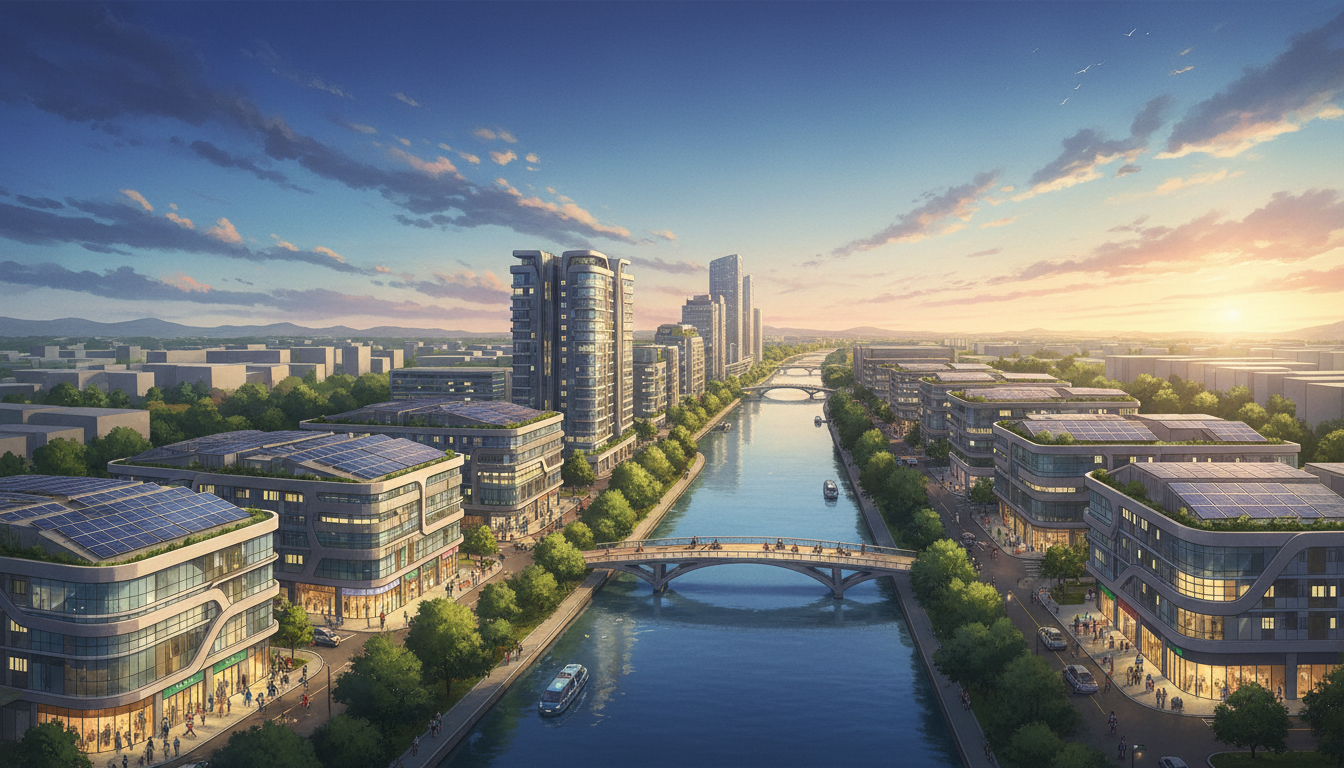
Punggol, Singapore's pioneering smart town, blends cutting-edge technology, sustainable living, and family-friendly vibes around the iconic Punggol waterway. This definitive Homejourney guide equips buyers, investors, and residents with verified insights for confident decisions in this new town.
Homejourney prioritizes your safety through transparent data verification and customer feedback-driven updates, making us your trusted partner in Punggol's dynamic property landscape.
1. Overview & Quick Facts
Punggol emerges as Singapore's flagship smart town Singapore, transforming from fishing village to a 50-hectare innovation hub anchored by the Punggol Digital District (PDD).[1][2] This new town integrates the North East Line (NEL) MRT, Punggol waterway, and smart infrastructure for seamless living.
Punggol Coast MRT (Punggol Coast, NE19) is the gateway, operational from 2024 with Circle Line extensions planned. Station hours: 5:30 AM to 11:30 PM daily. Features barrier-free access, bicycle parking (over 1,500 district-wide), and direct links to PDD's Open Digital Platform (ODP).[3][5]
Use Exit A for Punggol waterway parks (2-min walk); Exit B for SIT campus and business towers (5-min walk). Punggol's 'baby town' nickname stems from young families drawn to its waterfront HDBs and eco-spaces.[4]
| Quick Fact | Details |
|---|---|
| MRT Line | North East Line (NE), future Circle Line |
| Key Feature | Smart energy grid powers 8,000 flats[1] |
| Sustainability | Green Mark Platinum District[1][6] |
| EV Chargers | 151 spots, highest in Singapore[5][6] |
Homejourney verifies Punggol's growth via official HDB and URA data, ensuring you explore safely.
2. Things to Do Nearby (Within 15-Min Walk)
Stroll the Punggol waterway from Punggol Coast MRT Exit A (1-min walk), a 4.2km man-made gem ideal for kayaking or picnics. Punggol Waterway Park (5-min walk, 81 Punggol Field) offers playgrounds, heritage gardens, and cycling paths open 24/7.
Coney Island Park (10-min walk via waterway bridge, 2 Punggol Walk) spans 50 hectares with coastal trails, mangroves, and no cars—perfect for birdwatching (dawn-dusk). Sky gardens in PDD towers (8-min walk from Exit B) provide elevated networking spots with sustainable landscaping.[2][6]
Instagram-worthy: Punggol Jetty at Waterway Park for waterway sunsets. Cultural nod: Nearby Punggol Village remnants evoke fishing heritage.
- Punggol Waterway Park: Free, family-friendly, BBQ pits (book via NParks).
- Coney Island: Eco-trails, max 1km loops to avoid fatigue.
- PDD Sky Gardens: Business-meets-leisure, post-2026 full access.[1]
These spots highlight Punggol's smart living ethos, verified by Homejourney for safe exploration.
Photo Spots Table
| Spot | Walk Time | Why Visit |
|---|---|---|
| Punggol Jetty | 5 mins | Sunset waterway views |
| Coney Island Beach | 12 mins | Secluded nature shots |
| PDD Rooftop Solar | 8 mins | Futuristic skyline |
3. Food & Dining
Punggol offers diverse eats from hawker staples to smart cafes. Punggol Plaza Hawker Centre (10-min walk, 70 Punggol Central) serves zi char and laksa ($3-8, 7 AM-10 PM).
Waterway Point Food Court (12-min walk via waterway, 20 Punggol West) features Michelin-recognized stalls like Ah Seng Durian ($10-20 portions). PDD's future lifestyle spaces promise fintech-themed cafes post-2026.[2]
Local must-try: Chilli crab at nearby My Kampong Seafood (15-min walk, Punggol Settlement, $$ $20-40/person). Cafes like The Coffee Academics at Waterway Point ($5-12 coffee, 10 AM-10 PM).
- Budget ($-$$): Hawker centres for Hokkien mee.
- Mid-range ($$-$$$): Japanese at Punggol Coast Mall.
- Insider Pick: Durian stalls seasonally April-July.
Homejourney residents tip: Book hawker tables via apps for crowd-free meals, aligning with our trust-focused safety ethos.
4. Shopping
Waterway Point (12-min walk, 20 Punggol West, 10 AM-10 PM) is Punggol's mall hub with NTUC FairPrice, Daiso, and Uniqlo. Punggol Coast Mall (adjacent to MRT, opening phased 2026) adds tech gadgets and EV shops.[3]
Specialty: PDD's innovation stores for cybersecurity gadgets (future). Convenience: 7-Eleven at MRT (1-min walk). Wet markets at Punggol Central (10-min walk) for fresh seafood.
EV-focused: 151 chargers district-wide support shopping trips.[6]
5. Practical Information
Best time: Weekdays for quiet waterway walks; weekends for family events. From Changi Airport: MRT via CG2 to NE19 (45 mins, $2.20). From Orchard: NEL transfer at Dhoby Ghaut (40 mins).
Buses: 381, 62 from Punggol Interchange (5-min walk). Parking: Limited at PDD (shared, EV priority); opt for car-lite.[3] Active mobility: Extensive bike paths.
6. Property & Living
Punggol's HDBs dominate (90% stock), with BTOs like Punggol Point Cove averaging $500K-$800K for 4-room (HDB data 2025). Condos like Punggol Residences ($1.2M-$2M) near waterway. PDD adds premium smart rentals for tech pros.[7]
Schools: Punggol Primary (5-min walk), Edgefield Secondary. Healthcare: Punggol Polyclinic (8-min walk). Appeal: Young families (high birth rate), smart tech lowers bills 30% via DCS.[3]
Explore verified listings on Property Search and check Projects Directory for Punggol trends. Finance via Mortgage Rates .
| Housing Type | Price Range (2026) | Proximity |
|---|---|---|
| HDB 4-Room | $500K-$800K | Waterway edge |
| Private Condo | $1.2M+ | MRT adjacent |
| Smart Rentals | $4K+/mth | PDD towers |
Post-purchase, maintain with Aircon Services . Compare to 裕廊湖区未来CBD生活指南:Homejourney 2026权威解析 for regional insights.
7. Insider Tips
Locals kayak Punggol waterway pre-dawn (rent $15/hr at Waterway Point). Avoid peak 6-8 PM at hawker centres; hit Coney Island midweek. Save: NParks free entry, BYO picnic.
- Rent e-scooters via ODP app (PDD trial).
- Combine with SIT tours for tech families.
- Monitor HDB sales on Projects .
As Punggol natives note, solar grids cut strata fees—verified by Homejourney data.
8. Nearby Attractions & Itineraries
Sengkang Grand Mall (MRT 2 stops, 10 mins). Hougang Ave 10 hawker (bus 80, 15 mins). Itinerary: Morning waterway park, lunch hawker, afternoon PDD explore, evening jetty sunset.
Full day: Add Coney Island + SIT open house. Homejourney suggests pairing with 裕廊湖区未来CBD交通和设施便利度:Homejourney 2026指南 for CBD comparisons.
9. FAQ
What makes Punggol a smart town Singapore? PDD's ODP, solar power for 8,000 homes, and AI cooling define it.[1][3]
Punggol property prices 2026? HDB $500K+, condos $1.2M+; check Property Search .[7]
Best schools near Punggol Coast MRT? Punggol Primary (5-min walk), Greensprings Secondary.
Is Punggol family-friendly? Yes, 'baby town' with parks, schools, low crime—Homejourney verified.
How to get to Punggol Waterway? Exit A, 1-min walk; free parking nearby limited.
EV charging in Punggol? 151 spots at PDD, most in SG.[6]
Future developments? PDD full by 2026, robotics labs.[2][5]
Rental yields in Punggol new town? 3-4% for HDB, higher for smart units; see Mortgage Rates .
Ready for Punggol? Start your safe journey with Homejourney's verified Property Search , market insights at Projects Directory , and financing at Bank Rates . We build trust through transparency—your Punggol smart town Singapore dream awaits.