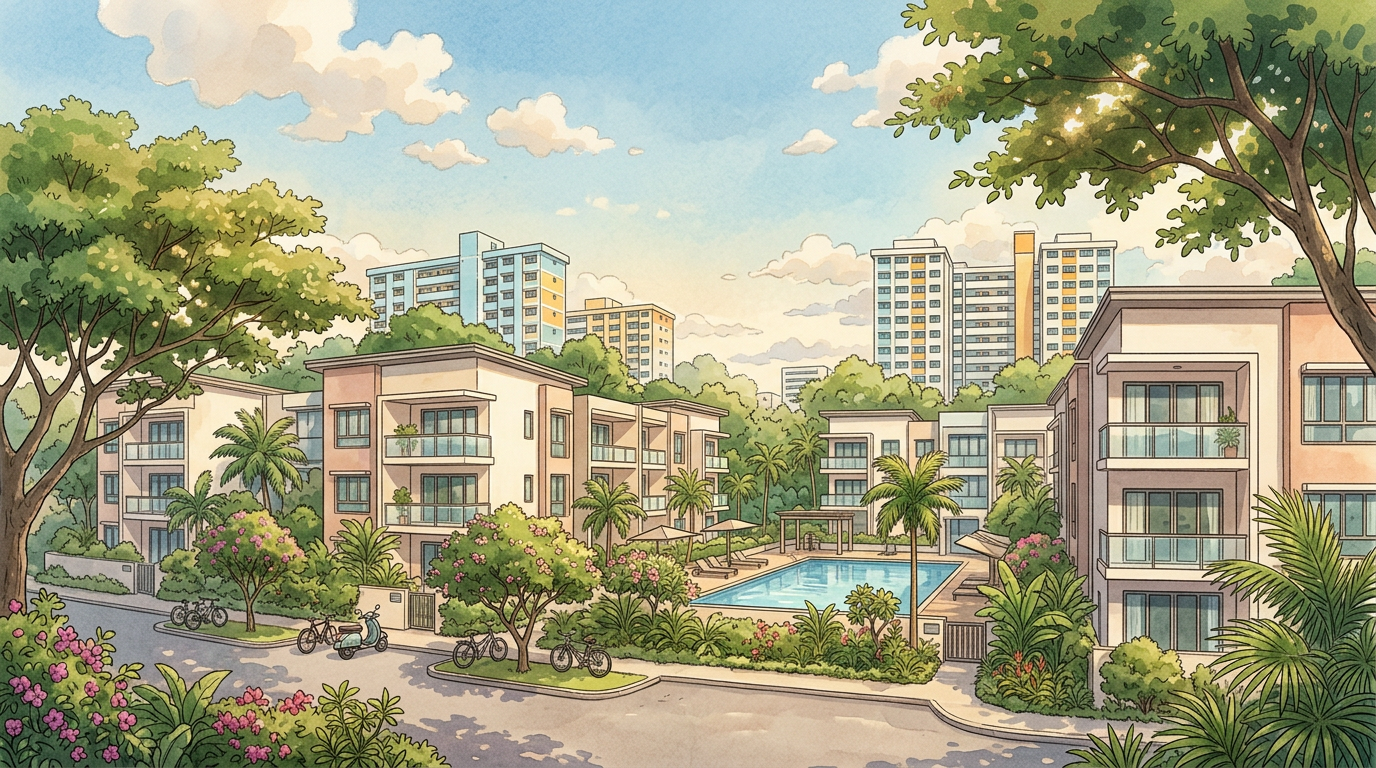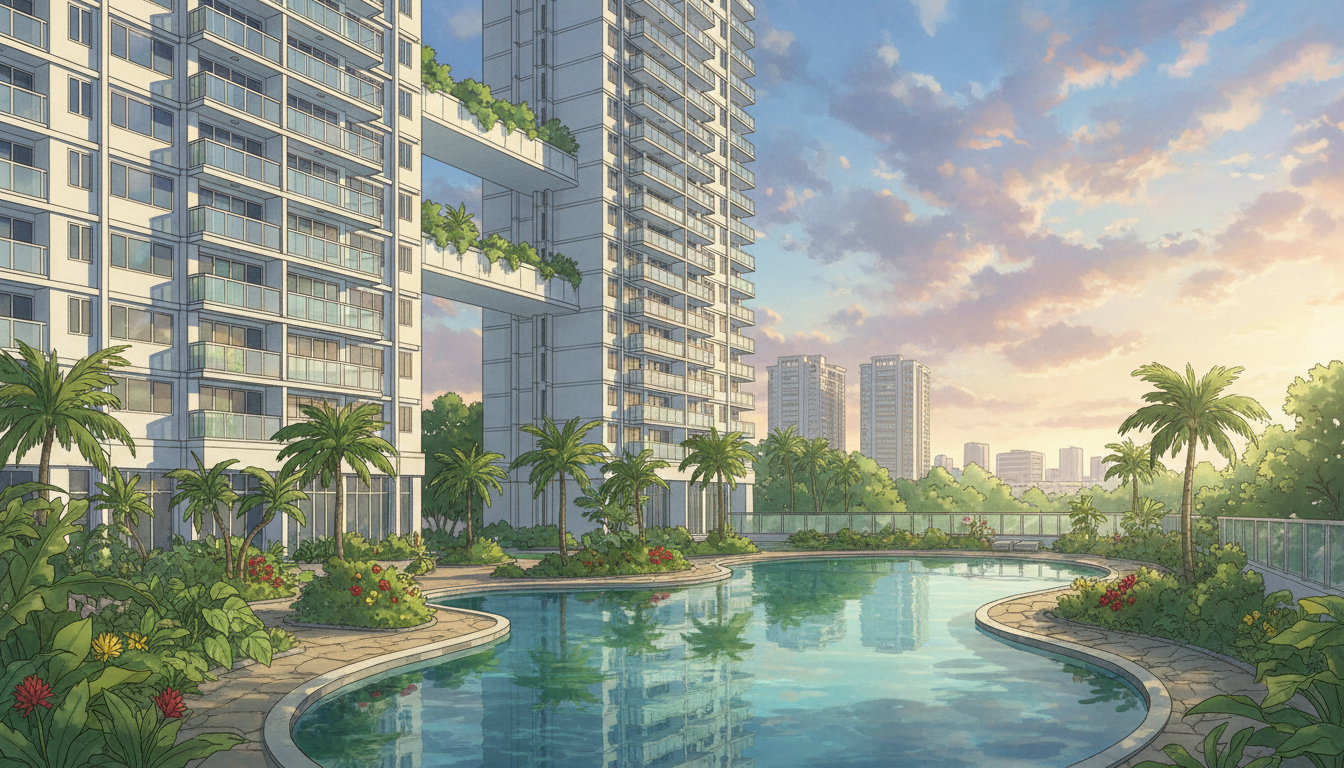
Phoenix Heights, now redeveloped as Phoenix Residences, is a boutique Singapore condo along Phoenix Avenue and Phoenix Road in District 23 (D23), serving the Bukit Panjang / Bukit Batok planning area. This Homejourney guide gives you a verified, safety‑first view of unit types, condo prices, location, and investment potential so buyers and investors can make confident decisions.
As someone who has viewed projects around Phoenix Road and walked the Phoenix Heights landed enclave many times over the years, I will combine on‑the‑ground experience with official data (URA, LTA, MOE and public information) to give you a realistic picture of what living and investing here actually feels like.
Table of Contents
- 1. Project Overview: From Phoenix Heights to Phoenix Residences
- 2. Unit Types, Sizes and Layout Insights
- 3. Facilities, Security and On‑Site Experience
- 4. Location, Connectivity and Daily Commute
- 5. Nearby Amenities: Malls, Food, Schools and Nature
- 6. Price and PSF Analysis vs District 23
- 7. Honest Pros and Cons of Phoenix Residences
- 8. Investment Potential and Rental Demand
- 9. Who Phoenix Residences Is Best Suited For
- 10. Practical Buying Tips and Safety Checks (Homejourney)
- 11. Phoenix Heights / Phoenix Residences FAQ
1. Project Overview: From Phoenix Heights to Phoenix Residences
Phoenix Heights was a 99‑year leasehold apartment development along Phoenix Road that went through collective sale (en‑bloc). It has since been redeveloped into Phoenix Residences, a modern boutique condominium at 81–85 Phoenix Avenue, adjoining Phoenix Road within the same landed enclave known as Phoenix Heights.[2][3][4]
1.1 Key Development Facts (Phoenix Residences, ex‑Phoenix Heights)
| Attribute | Details (Verified Public Info) |
|---|---|
| Former project | Phoenix Heights (collective sale site along Phoenix Road)[2][3] |
| Current name | Phoenix Residences (Condominium) |
| Developer | USB (Phoenix) Pte Ltd / USB Holdings Pte Ltd (unit of OKP Holdings)[2][3][4] |
| Address | 81, 83, 85 Phoenix Avenue, Singapore 668383 (corner of Phoenix Avenue / Phoenix Road, within Phoenix Heights landed estate)[2][3][4] |
| District | D23 – Bukit Panjang / Bukit Batok / Choa Chu Kang belt[2][3][4] |
| Tenure | 99‑year leasehold[1][2][4] |
| Site area | Approx. 42,753 sq ft / 3,971.9 sqm[2][3][4] |
| Total blocks / height | 3 blocks of 5 storeys[2][3][4] |
| Total units | 74 units (fully sold from developer)[2][3][4] |
| Carpark | 72 standard lots + 2 handicap lots (basement)[2][3][4] |
| Expected TOP / completion | 2024 completed (URA / project data)[2][4] |
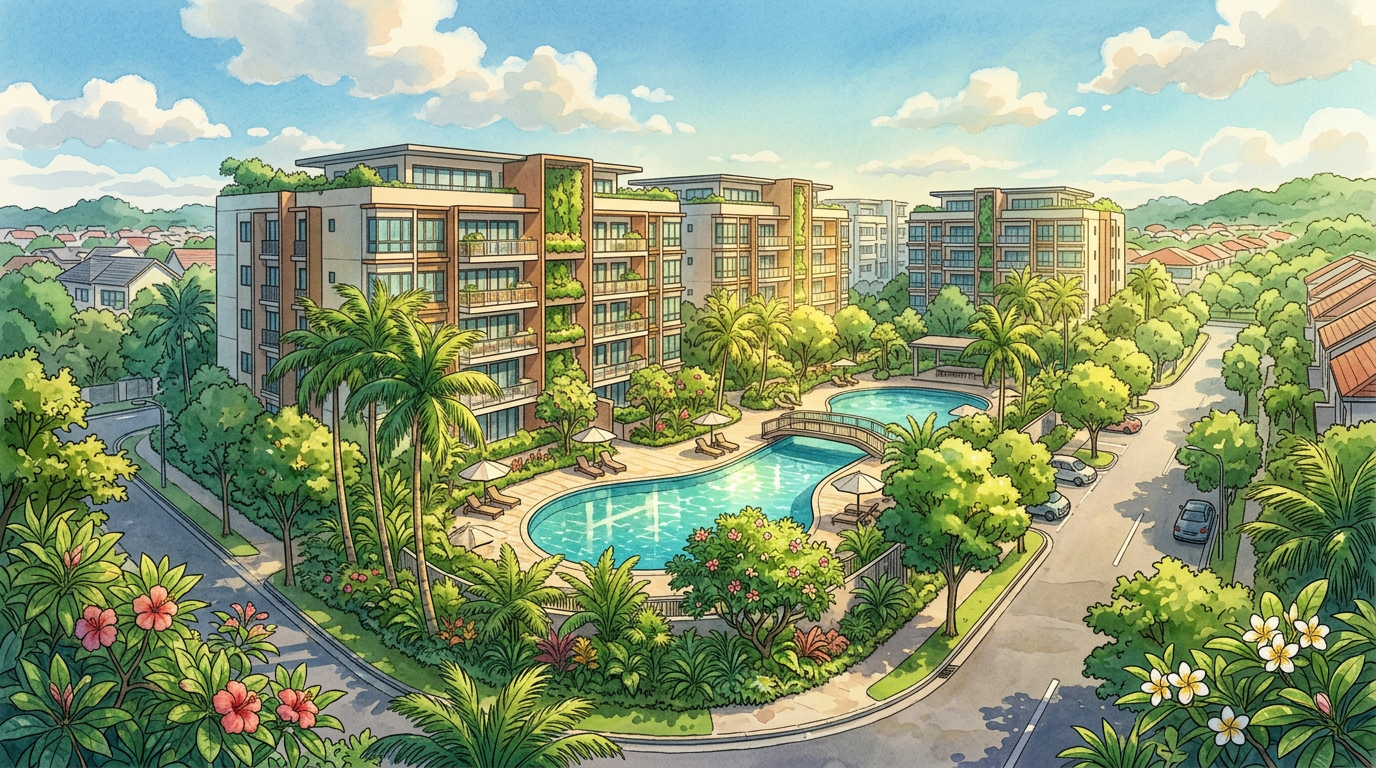
Because the project is small, Phoenix Residences gives a very different feel from mega‑condos in Bukit Panjang. Walking through Phoenix Avenue, you mostly see low‑rise landed homes and greenery from Gombak Hill at the back, which creates a quiet, low‑density environment that many residents appreciate.[3]
Homejourney safety note: The redevelopment from Phoenix Heights (old apartment) to Phoenix Residences (new condo) means buyers should always check:
- Start date of the new 99‑year lease (from URA records / legal documents)
- Official TOP date and CSC (Certificate of Statutory Completion)
- Actual unit size and share value in the strata title
1.2 District 23 Context – Bukit Panjang / Bukit Batok
District 23 covers Bukit Panjang, Choa Chu Kang, Bukit Batok and Dairy Farm / Hillview.[2][3][4] Phoenix Residences sits in the Bukit Panjang planning area, but is also close to Bukit Batok via Upper Bukit Timah Road and the KJE/PIE. On the ground, this feels like the “fringe” between Bukit Panjang town and Upper Bukit Timah / Hillview.
From living and visiting in D23 over the years, the main draws of this belt are:
- More greenery and low‑rise surroundings than central estates
- Access to Bukit Timah Nature Reserve, Dairy Farm, Zhenghua Park and the Rail Corridor
- Generally more affordable PSF compared to central OCR/CCR, while still connected via Downtown Line (DTL) and expressways
2. Unit Types, Sizes and Layout Insights
Official project information shows a mix of 1‑ to 3‑bedroom units (including dual‑key), with a boutique scale of only 74 homes.[1][2][3][4] While individual stack details depend on the full floor plan set, we can summarise the typical mix below.
2.1 Unit Type and Size Range
| Unit Type | Estimated Size Range* | Typical Profile |
|---|---|---|
| 1‑Bedroom | Approx. 450–550 sq ft (reference: 1BR 551 sq ft listed in early project info)[1] | Singles, young couples, investors targeting 1–2 pax tenants |
| 2‑Bedroom | Approx. 650–750 sq ft (varies by layout)[1][2] | Young families, couples planning for first child, downsizers |
| 3‑Bedroom | Approx. 900–1,050 sq ft[1][2][3] | Families with school‑going children, multi‑generation households that prefer compact layouts |
| 3‑Bedroom Dual‑Key | Approx. 1,250–1,400 sq ft (1,356 sq ft stated in early info)[1] | Owner‑occupiers wanting a studio to rent out, co‑living with parents or older children |
*Size ranges are based on publicly available marketing info and typical boutique condo configurations in D23. Always verify exact strata area from the latest URA‑registered floor plans and Sales & Purchase Agreement.
2.2 Layout Characteristics (On‑the‑Ground Perspective)
From reviewing Phoenix Residences floor plans and comparing them with similar boutique projects in Bukit Panjang:
- Efficient small‑unit layouts – 1‑ and 2‑bedroom types are generally compact, with minimal corridor space, suitable for investors who want rentability over luxury size.
- Regular shapes – Many stacks use squarish living/dining and bedrooms, which helps with furniture placement (especially for families bringing existing furniture from HDB flats).
- Balconies standard for most stacks – Typical of OCR boutique condos; creates semi‑outdoor space but increases balcony ratio vs internal floor area.
- Dual‑key 3BR units – Practical for multi‑generation living or home‑office setups; the smaller sub‑unit can be locked off for rental.
2.3 Smart Home and Fittings
The developer’s materials highlight contemporary fittings and finishes, but there is no official indication of extensive built‑in smart home systems such as hub‑integrated lighting or full‑suite app control. Instead, Phoenix Residences follows the typical “functional boutique” approach: modern kitchen appliances, air‑conditioning, and standard digital locksets in selected stacks, but not a heavy smart‑tech focus.[2][3][4]
Homejourney tip: If you are planning to retrofit smart home features (Wi‑Fi locks, lighting, air‑con control), budget an additional 1–2% of your purchase price for wiring, devices and professional installation. You can also factor in ongoing maintenance or servicing, including air‑conditioning upkeep via Aircon Services .
3. Facilities, Security and On‑Site Experience
For a 74‑unit condo, Phoenix Residences offers a reasonable but not mega‑scale list of facilities. Project descriptions and site plans indicate a basement carpark, swimming pool and communal facilities.[2][3][4]
3.1 Key Condo Facilities
- Swimming pool – Central pool with surrounding deck; adequate for the resident base but not resort‑scale.[3]
- Gym / fitness area – Typical boutique size; enough for daily cardio/weights for a small community.
- Function / multi‑purpose space – Common room(s) suitable for small gatherings or meetings (usage rules via MCST).
- BBQ and seating – Outdoor dining / BBQ corner, popular with families on weekends.
- Children’s play area – Compact playground or play corner within the communal facility zone.
- Landscaped areas – Perimeter greenery, especially towards the Gombak Hill / Phoenix Park side, which locals find pleasantly quiet in the evenings.[3]
3.2 Security Features
Based on typical configurations for new boutique condos launched in the early‑2020s and descriptions of Phoenix Residences, buyers can reasonably expect:
- Guardhouse with controlled vehicular access
- Resident access system for lift lobbies and/or block entrances
- CCTV coverage at common areas, entrances and carpark zones
- Basement carpark – Direct lift access to residential blocks, which is convenient during rain and late‑night returns
Homejourney safety checklist when viewing:
- Walk the basement carpark and stair/lift lobbies at night to assess lighting and camera coverage.
- Note where visitors enter and how intercom access is managed.
- Ask the MCST / agent about any prior security incidents and how they were handled.
4. Location, Connectivity and Daily Commute
Phoenix Residences is located within the Phoenix Heights landed estate, at the junction of Phoenix Avenue and Phoenix Road, just off Choa Chu Kang Road and near Upper Bukit Timah Road.[3] From walking the estate, the feel is distinctly low‑rise and residential, with traffic mostly from residents and local school runs.
4.1 MRT and LRT Connectivity
- Phoenix LRT (BP5) – About 5–7 minutes’ walk via Phoenix Walk / Phoenix Garden, depending on your block and pace.[3] This LRT connects to Bukit Panjang MRT.
- Teck Whye LRT (BP4) – Also walkable, but slightly similar distance; some residents use whichever side is closer to their block.[1]
- Bukit Panjang MRT (DTL) – Around 11–12 minutes’ walk by main road, or about the same timing via an internal path past Phoenix Garden towards Choa Chu Kang Road, then across to Hillion Mall.[3] A short LRT hop is common on rainy or very hot days.
The Downtown Line (DTL) links directly to:
- Newton (for NSL interchange)
- Bugis (City Hall / Beach Road area)
- Downtown and Telok Ayer (CBD)
- Expo and Sungei Bedok in the east (with interchange to Thomson‑East Coast Line)
From personal commuting experience, Bukit Panjang to Bugis is roughly 20–25 minutes train ride, depending on transfer timing.[1] This is reasonable for CBD workers, although not as fast as direct NSL/CCL access.
4.2 Bus Services and Road Access
Choa Chu Kang Road and Upper Bukit Timah Road carry multiple bus services heading towards:
- Choa Chu Kang / Bukit Panjang town centres
- Bukit Batok, Hillview and Bukit Timah
- Boon Lay / Jurong East (via connecting routes)
By car, residents typically use:
- BKE via Bukit Panjang Road / KJE
- Kranji Expressway (KJE) towards Jurong / PIE
- Upper Bukit Timah Road southwards towards Hillview, Beauty World and central Bukit Timah
In real‑world driving, you can usually reach:
- Hillview area in about 8–10 minutes during off‑peak
- Jurong East in about 15–20 minutes via KJE/PIE (traffic‑dependent)
- CBD (Raffles Place) in about 25–35 minutes off‑peak, longer during peak hours
4.3 District 23 Location Advantages
Compared with other OCR regions, D23 offers:
- Green, low‑rise surroundings – Bukit Gombak, Bukit Timah Nature Reserve and Dairy Farm provide visible greenery that you can literally see from many roads and higher‑floor stacks.
- Reasonable PSF – Historically lower than central OCR like Serangoon / Bishan, offering value especially for buyers comfortable with longer commutes.
- Upcoming enhancements – Ongoing improvements in Bukit Panjang town centre and transport options as part of regular HDB/URA upgrading cycles.Straits Times Housing News
5. Nearby Amenities: Malls, Food, Schools and Nature
Living at Phoenix Residences (ex‑Phoenix Heights) means your day‑to‑day amenities revolve around Bukit Panjang town centre and the Phoenix / Teck Whye heartland cluster. Having personally walked these routes many times, the distances and walkability feel manageable for most residents, though you will likely rely on LRT/bus for heavy grocery trips.
5.1 Shopping Malls and Supermarkets
- Hillion Mall – Beside Bukit Panjang MRT/LRT and bus interchange; roughly 10–12 minutes’ walk or 1 LRT stop. Offers FairPrice, F&B, clinics and banking.
- Bukit Panjang Plaza – Across from Hillion; long‑time favourite with residents, with supermarkets, enrichment centres and eateries.[1][4]
- Junction 10 – At the junction of Choa Chu Kang Road and Woodlands Road; about 12–15 minutes’ walk or short bus ride. Has supermarket, F&B and lifestyle outlets.[3]
For larger‑scale shopping, many residents drive or take the bus to:
- Lot One (Choa Chu Kang)
- West Mall (Bukit Batok)
- JEM / Westgate / IMM (Jurong East)
5.2 Hawker Centres and Eateries
Around Phoenix Avenue and Teck Whye, you will find:
- Teck Whye Market & Food Centre – Morning wet market and local hawker food; walkable via Teck Whye LRT.
- Bukit Panjang Hawker / food courts – At Bukit Panjang Plaza and nearby HDB estates.
- Coffee shops along Choa Chu Kang Road – Several heartland kopitiams scattered within 10–15 minutes’ walk.
From my own visits, weekends often see families walking out to Teck Whye or hopping on the LRT to Hillion / Bukit Panjang Plaza for meals. Late‑night options are more limited than central areas, so car or delivery apps become more important after 10pm.
5.3 Schools Nearby (MOE‑Registered)
Always verify exact distances and latest admissions rules on the MOE SchoolFinder, but broadly Phoenix Residences is close to:[3]
- Primary schools – Teck Whye Primary, West View Primary, Bukit Panjang Primary, Greenridge Primary (exact distance bands to be checked via MOE)
- Secondary schools – Teck Whye Secondary, West Spring Secondary, Greenridge Secondary, Zhenghua Secondary
- Tertiary / others – ITE College West, local enrichment centres at Bukit Panjang Plaza / Hillion
Because admissions priority and distance bands can change, Homejourney strongly recommends parents:
- Use MOE’s official distance tool before committing to a purchase
- Confirm with your solicitor or agent that your chosen stack lies within your targeted 1km/2km band (if critical to you)
5.4 Healthcare Facilities
Nearby medical options include:
- GP clinics and dental clinics in Bukit Panjang Plaza, Hillion and nearby HDB hubs
- Polyclinic within the Bukit Panjang / Choa Chu Kang area (check MOH for latest)
- Ng Teng Fong General Hospital and Jurong Community Hospital (reachable by car or public transport via Jurong East)
5.5 Parks and Recreational Spaces
- Phoenix Park / Gombak Hill – Right behind the estate; many residents use the quiet roads and park connectors for evening walks.[3]
- Zhenghua Nature Park – A short drive or longer walk away, part of the greater Bukit Timah buffer park system.
- Bukit Timah Nature Reserve & Dairy Farm – Accessible via Upper Bukit Timah Road; very popular with hikers and cyclists.
For families and nature lovers, the access to green spaces is one of the biggest lifestyle advantages of this part of D23.
6. Price and PSF Analysis vs District 23
Disclaimer: All price and PSF figures below are estimates based on URA transaction data trends and general D23 market performance up to early‑mid 2026. They are for educational purposes only and are not a formal valuation or financial advice. Always verify with up‑to‑date URA caveats, banks and your salesperson before committing.
6.1 Land Cost and Launch Context
Public data indicates that the Phoenix Heights en‑bloc land was acquired at a rate of about $720 psf ppr.[2] For a 99‑year leasehold boutique project in D23, this generally translated at launch into selling prices noticeably above that land rate once construction, financing and margins were factored in.
6.2 Estimated Current Price Range (2026)
By 2026, Phoenix Residences is a recently completed boutique condo with full developer sell‑out.[2] Subsale and resale transactions (based on general D23 OCR trends and similar boutique condos) suggest:
- Indicative PSF band: roughly $1,650 – $1,950 psf depending on unit size, level and facing (smaller 1BR units often at higher PSF, larger 3BR at lower PSF).
- Indicative absolute prices:
- 1‑Bedroom (~500–550 sq ft): around $850k – $1.05m
- 2‑Bedroom (~650–750 sq ft): around $1.1m – $1.35m
- 3‑Bedroom (~900–1,050 sq ft): around $1.45m – $1.8m
- 3BR Dual‑Key (~1,350 sq ft): potentially $2.1m+, depending on configuration and market cycle
These are broad, non‑binding estimates derived from market behaviour for new‑ish D23 freehold/leasehold condos; actual achieved prices can vary significantly by unit, negotiation and timing. Buyers should confirm latest transactions via URA Realis or official URA caveat search.
6.3 Comparison with Nearby Developments (Macro View)
Within Bukit Panjang and surrounding D23, Phoenix Residences competes with:
- Larger integrated developments and mass‑market condos closer to Bukit Panjang MRT
- Older 99‑year and freehold condos along Upper Bukit Timah / Hillview
- Neighbouring landed properties in Phoenix Heights estate itself
Generally:
- Boutique, new‑build status supports a small PSF premium against older neighbours.
- However, Phoenix Residences may trade at some discount to larger integrated projects directly next to MRT, due to walk distance and fewer facilities.
For detailed PSF charts and comparisons across D23 non‑landed projects, you can refer to Homejourney’s project directory at Projects Directory and specific Phoenix Residences project page: “View comprehensive analysis of Phoenix Heights (Phoenix Residences)” at Projects .
6.4 Value‑for‑Money Assessment
From a buyer’s standpoint:
- If you prioritise low‑density living in a landed enclave, Phoenix Residences offers a unique feel compared with high‑rise Bukit Panjang blocks and mega‑condos.
- If your priority is direct MRT door‑step convenience, some centrally located D23 projects beside Bukit Panjang MRT may offer stronger day‑to‑day convenience for a similar or slightly higher PSF.
- For investors, smaller 1–2 bedroom units may offer better entry quantum and yield, but you should weigh this against tenant pool size and competition in the Bukit Panjang rental market.
To quantify your affordability safely, use Homejourney’s mortgage tools – “Calculate your monthly payments” at Bank Rates and read our financing deep dives such as Non-landed Housing Development Home Loan & Financing Guide and Sunrise Villa Home Loan & Financing Guide | Homejourney .
7. Honest Pros and Cons of Phoenix Residences
7.1 Main Strengths
- Boutique, low‑density environment – Only 74 units within a landed enclave, providing privacy and less crowding at facilities.[2][3][4]
- Green surroundings – Gombak Hill / Phoenix Park at the back, with plenty of tree cover visible from many stacks.[3]
- Reasonable walking access to multiple stations – Phoenix and Teck Whye LRT, plus Bukit Panjang MRT within ~10–12 minutes’ walk (or short LRT ride).[1][3]
- Modern build with recent TOP – 2024 completion means building services and façade are still new, with typically lower near‑term maintenance issues.[2][4]
- Strong amenities within 5–10 minutes’ LRT/bus – Hillion Mall, Bukit Panjang Plaza, Junction 10 and heartland shops.[1][3][4]
7.2 Potential Drawbacks
- Not direct MRT‑doorstep – The 10–12 minute walk to Bukit Panjang MRT can feel long in heavy rain or heat, especially for families with small children.[3]
- Smaller facility scale – Pool, gym and communal areas are sized for 74 units; those used to mega‑condo resort facilities may find it modest.
- Limited on‑site retail – No shops within the condo itself; residents depend on nearby malls and coffee shops.
- Leasehold nature – 99‑year tenure means lease decay considerations in the long term, especially beyond 20–25 years from TOP (relevant for long‑horizon investors).
7.3 How It Compares to Alternatives in D23
Compared to larger, integrated developments near Bukit Panjang MRT:
- Phoenix Residences is quieter, more private, but slightly less convenient for daily commuting.
- Facilities and on‑site community events will naturally be smaller scale.
Compared to older freehold/99‑year condos along Upper Bukit Timah or Hillview:
- Phoenix Residences is typically newer but smaller; those older projects may offer larger internal sizes but older façade/mechanical systems.
8. Investment Potential and Rental Demand
8.1 Rental Demand Drivers
Potential tenant pools for Phoenix Residences include:
- Young professionals working in the west (Jurong, Bukit Batok, Choa Chu Kang)
- Small families who want to be near schools and Bukit Panjang amenities
- Foreign tenants seeking quiet, green surroundings with reasonable MRT access
Being a boutique condo, the total number of rental units is limited; rents therefore depend heavily on individual unit condition, furnishing and timing.
8.2 Estimated Rental and Yield Range (2026)
Disclaimer: The ranges below are educated estimates based on D23 OCR rent levels for comparable 2020s‑vintage condos. Use them only as a starting point and always confirm with latest URA rental contracts and on‑the‑ground leasing feedback.
- 1‑Bedroom – Approx. $2,700 – $3,100/month depending on size and furnishing
- 2‑Bedroom – Approx. $3,300 – $3,900/month
- 3‑Bedroom – Approx. $4,000 – $4,700/month
Using an example:
- Purchase price (2‑bedroom): $1.25m
- Monthly rent: $3,600
- Annual rent: ~$43,200
- Gross yield ≈ 3.45% (before expenses, taxes, vacancy)
This is broadly in line with many modern OCR condos. For a deeper look at how yield compares with other non‑landed projects, see our rental analysis guides such as Non-landed Housing D28 Rental Yield Analysis | Homejourney and Sunrise Villa Investment Returns: Rental Yield Analysis | Homejourney (concepts apply even though they focus on other districts).
8.3 Capital Appreciation Outlook
Key factors supporting the long‑term investment case: