Mumbai India with Kids: Family Travel Guide – Safe, Fun & Practical
Travelling to Mumbai India with kids can be an unforgettable, chaotic-in-a-good-way adventure – provided you plan for heat, crowds, and transport ahead of time. From kid-friendly Mumbai attractions like Marine Drive, Elephanta Caves and KidZania to safe food choices and reliable transport, this Homejourney guide gives Singapore-based families and global travellers clear, practical steps to enjoy Mumbai while keeping children safe and comfortable.
This guide is part of Homejourney’s wider Asia travel and property insights pillar, complementing our broader piece: Complete Guide to Things to Do in Mumbai India | Homejourney Travel & Property Insights Complete Guide to Things to Do in Mumbai India | Homejourney Travel & Property I... .
Why Visit Mumbai India with Kids
Mumbai is India’s financial and entertainment capital – think Singapore’s CBD energy mixed with Little India’s colour, multiplied by ten. Families come for Bollywood, sea views, colonial architecture, and street food, but also for the chance to show kids a very different pace of life compared with Singapore.
Compared with other Indian cities, Mumbai is relatively straightforward for first-time family visitors: most key things to do in Mumbai cluster around South Mumbai (Colaba, Fort, Marine Drive), and English is widely spoken in tourist areas. For Singapore parents, it’s also one of the easiest Indian cities to reach directly by air.
Best Time to Visit Mumbai India with Kids
For families, the best time to visit Mumbai is from October to February, when temperatures are milder and humidity is lower, similar to a slightly cooler, less sticky version of Singapore’s monsoon season.[2] Avoid June–September if you can, as Mumbai’s monsoon rains can cause flooding and transport disruptions.
If you are bound by Singapore school holidays, December is often ideal: pleasant evenings for Marine Drive walks, early-morning sightseeing before crowds, and a festive atmosphere across malls and hotels.
Getting to Mumbai from Singapore & Money Basics
Most Singapore-based families fly directly from Changi to Chhatrapati Shivaji Maharaj International Airport (BOM). Direct flights are around 5.5 hours; with kids, plan an arrival that avoids Mumbai’s peak road traffic (roughly 8–11am and 5–9pm) so your transfer into the city isn’t a 2-hour crawl.
The local currency is the Indian Rupee (INR). For safety, change a small amount at the airport for immediate needs, then use ATMs at major banks or large malls where CCTV and security are present. Many mid- to high-end hotels, restaurants, and ride-hailing apps accept international cards, but street vendors and taxis are mostly cash-only.
If you are also exploring property opportunities in Singapore, Homejourney supports comparison between INR and SGD for budgeting and investment planning through our property search and mortgage tools Property Search Bank Rates .
Top Family-Friendly Attractions & Experiences in Mumbai
Iconic Landmarks Kids Will Actually Enjoy
Gateway of India & Colaba
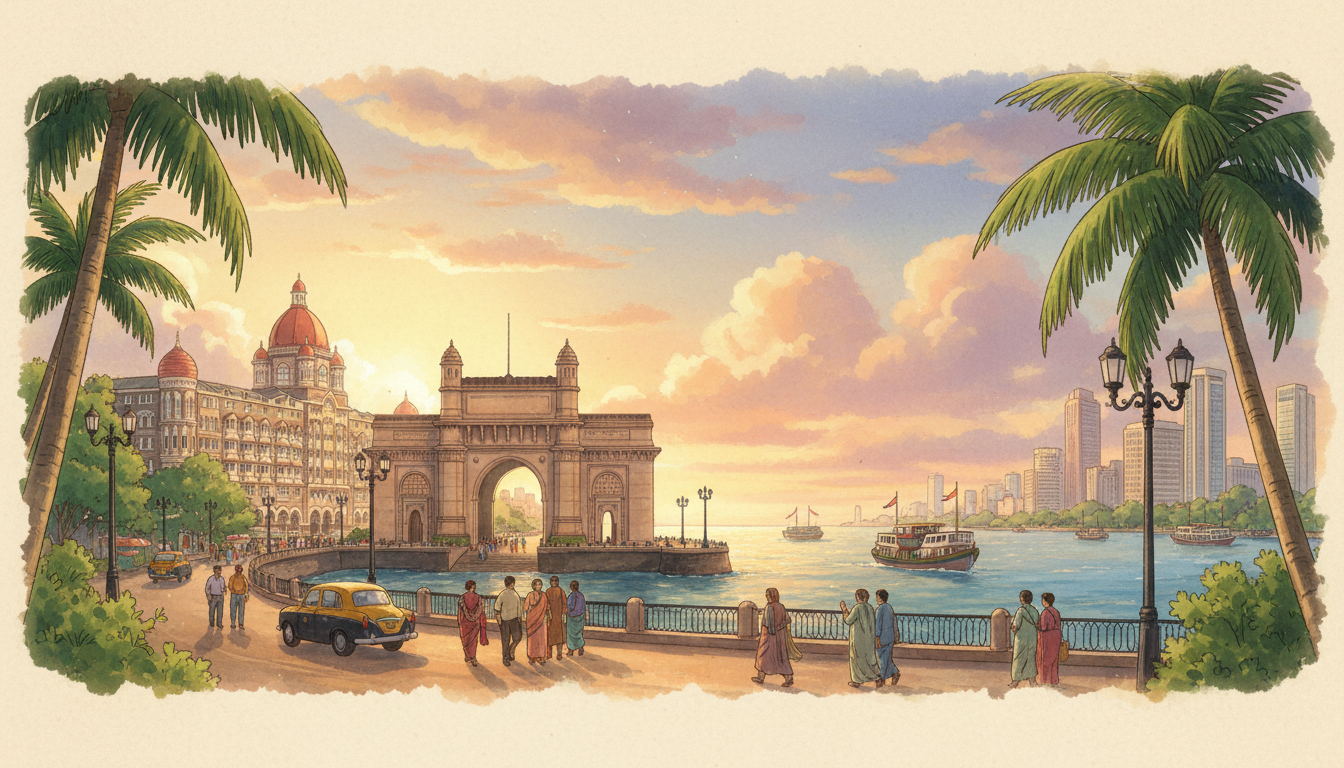
The Gateway of India, facing the Arabian Sea in Colaba, is one of the city’s most recognisable landmarks and a good first stop with kids.[2][6] Go early (before 9am) to avoid crowds and heat, then walk through shaded streets to Cafe Mondegar or Leopold Cafe for breakfast (for younger kids, stick to simple dishes like toast or dosa).
Marine Drive & Girgaum Chowpatty
Marine Drive, also called the Queen’s Necklace, is ideal for an evening stroll when the sea breeze picks up.[2][4] End at Girgaum Chowpatty beach, where kids can enjoy simple rides, shooting games and watching kite flyers. Do not swim here; the water isn’t clean, so keep it to sand play and people-watching.
Caves, Nature & Educational Stops
Elephanta Caves
A UNESCO-listed complex of rock-cut caves on Elephanta Island, reached via a ferry from the Gateway of India, works best for older kids (7+) who can manage steps and walking.[2][4] Plan at least half a day; carry hats, mosquito repellent, and plenty of water.
Sanjay Gandhi National Park & Kanheri Caves
In the city’s north, this park offers a toy train, boating, and access to the ancient Kanheri Caves – a calmer, greener contrast to downtown Mumbai.[3] For kids used to Singapore’s nature reserves, this is a more rugged but rewarding alternative.
Taraporewala Aquarium
Located along Marine Drive, this recently renovated aquarium features over 400 species and glow-lit jellyfish displays, making it a short, air-conditioned break from the heat.[3]
Pure Fun: Theme Parks & Kid-Centric Spaces
Essel World & Water Kingdom
These are among India’s largest amusement and water parks, with multiple family rides, slides, wave pools and children’s zones.[2] They’re great if you are in Mumbai for more than three days and want a break from sightseeing.
KidZania Mumbai
In R City Mall (Ghatkopar), KidZania is a mini-city where children role-play jobs like pilots, firefighters and chefs while earning and spending a kid-currency.[2] This is excellent for families used to Singapore’s KidZania or indoor edutainment; book ahead on weekends.
For more inspiration on kid-friendly experiences and hidden gems, refer to our broader Mumbai attractions guide Complete Guide to Things to Do in Mumbai India | Homejourney Travel & Property I... and unique experiential activities such as the Paradox Museum and Global Vipassana Pagoda.[3]
Practical Travel Tips: Visas, Transport & Safety with Kids
Visa Requirements (Singapore & International Travellers)
Many travellers to India, including Singapore citizens, require an e-Visa obtained online before arrival; always verify requirements on the official Government of India visa portal or through the High Commission of India in Singapore, as rules can change. Do not rely on unverified third-party agents; when in doubt, consult official sources and your airline.
Getting Around Safely
Mumbai’s local trains are famous but extremely crowded, especially at rush hours. With children, it is usually safer and more comfortable to use:
- App-based taxis (Ola, Uber) – Door-to-door, air-conditioned, and safer for families than hailing street taxis late at night.
- Hotel cars – More expensive but predictable and vetted by your hotel.
- Metro – Newer lines are cleaner and safer than older suburban trains, but still avoid peak hours with young kids.
As a rule of thumb from a Singapore parent’s perspective: expect travel times to be longer than Google Maps shows, and always carry some snacks and water in case of traffic jams.
Family Safety & Health
Homejourney prioritises safety and transparency, and we recommend a similar approach in Mumbai:
- Food safety: For children, favour busy, well-reviewed restaurants and hotel buffets over random street stalls. Save street food for adults with stronger stomachs, or choose vendors with high turnover and freshly cooked items.
- Water: Drink only bottled or filtered water; avoid ice from unknown sources. Use bottled water even for brushing teeth if your children have sensitive stomachs.
- Air quality: Like some parts of Southeast Asia, Mumbai can have hazy days. If your kids are prone to asthma, carry medication and consider masks for congested main roads.
- Crowd management: In markets and stations, hold younger children’s hands and agree on a simple meeting point if you get separated.
Travel insurance with good medical coverage is strongly recommended for families, as private hospitals and clinics are the safest option for tourists but can be costly.
Where to Stay in Mumbai with Kids
Mumbai is spread out, so choosing the right base can save hours in traffic. For first-time family trips, three main areas work best.
South Mumbai (Colaba, Marine Drive, Fort)
This is the city’s heritage and tourist core, close to many key Mumbai attractions – Gateway of India, museums, Marine Drive, Chowpatty.[2][6] For families, this means less time commuting and more time walking between sights.
- Pros: Iconic views, walkable promenades, historic architecture, easier sightseeing.
- Cons: Higher room rates, older buildings (check air-conditioning and soundproofing, important for kids’ sleep).