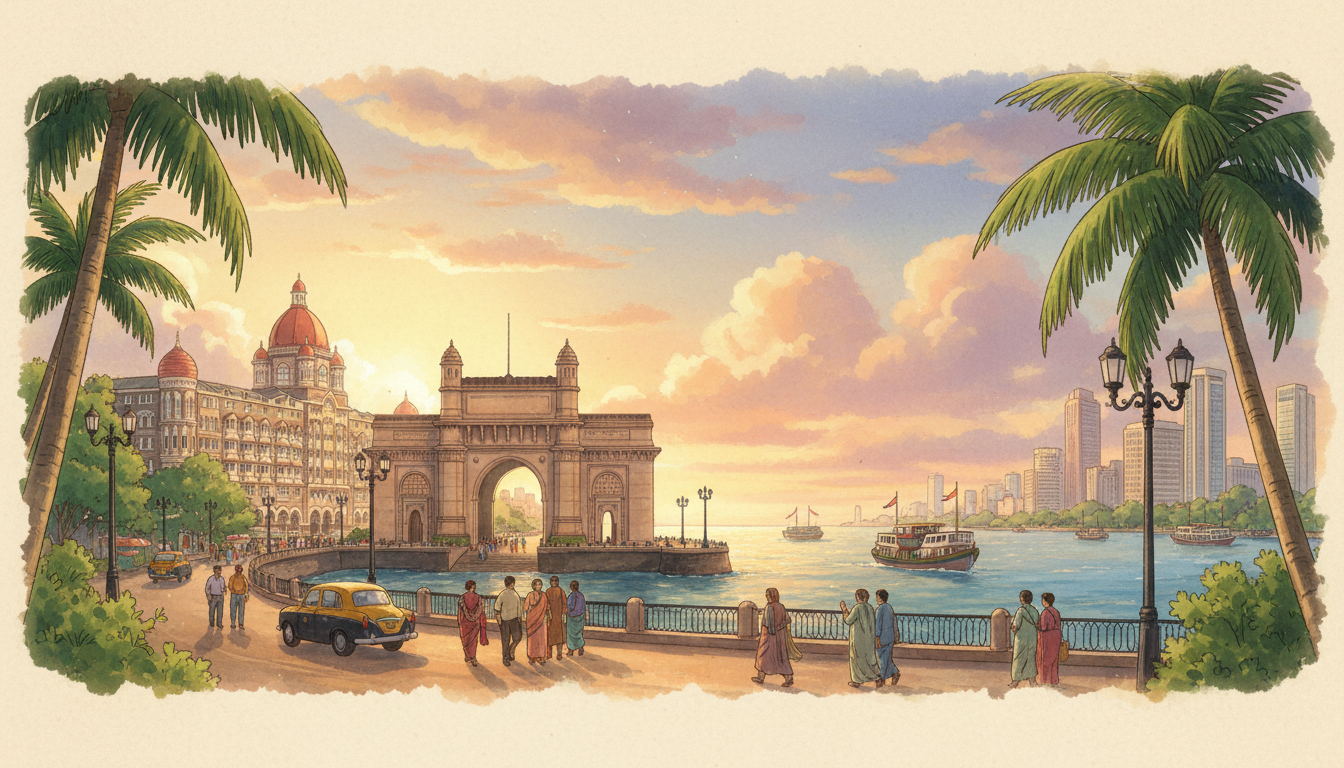
Planning a budget travel guide to Mumbai India from Singapore (or elsewhere in Asia) starts with two priorities: keeping costs low and staying safe in one of India’s most intense, exciting cities. Mumbai can be very affordable if you know where to stay, how to move around, and which Mumbai attractions are truly worth your time and rupees.
As with every guide on Homejourney, this article focuses on verified, practical details and safety-first advice, so you can enjoy Mumbai while making confident, informed decisions—whether you are visiting purely for leisure or also exploring longer-term lifestyle and property options across Asia.
Why Visit Mumbai, India on a Budget?
Mumbai India is India’s financial capital, Bollywood hub, and a city of extremes: heritage colonial architecture in South Mumbai, sea-facing promenades in Bandra, and some of the most vibrant street food scenes in Asia.[3] It is also one of the most expensive cities in India, but still very affordable for Singapore-based travellers if you plan carefully.[1][2]
Best time to visit:
- November–February: Cooler, less humid (around 20–30°C), ideal for walking tours and outdoor Mumbai attractions.
- March–May: Hot and humid; budget travellers can find better hotel deals but should plan mostly indoor sightseeing mid-day.
- June–September (monsoon): Very heavy rain; some coastal activities and day trips become less pleasant—only suitable if you are very budget-conscious and flexible.
Getting there from Singapore:
- Direct flights from Changi to Mumbai (Chhatrapati Shivaji Maharaj International Airport – BOM) typically take about 5.5 hours, operated by Singapore Airlines, Vistara, and other carriers.
- Budget/low-cost carriers may offer return fares in the range of S$300–S$500 during off-peak periods (subject to airline promotions).
Currency basics:
- Currency is the Indian Rupee (INR).
- Budget travellers typically spend around INR 2,700–3,000 (≈ S$45–50) per day, including basic accommodation, local meals, and transport.[2]
- Mid-range travellers can expect around INR 7,500–8,000 (≈ S$120–130) per day.[2]
Use Homejourney’s multi-currency support and tools to compare trip budgets and potential Singapore property costs in your home currency, including INR Bank Rates .
Top Budget-Friendly Mumbai Attractions & Things To Do
To keep costs low, focus your things to do Mumbai list around South Mumbai and Bandra, where many highlights are located close together.
Must-see Landmarks (Low or No Entry Fees)
- Gateway of India & Colaba – Iconic arch by the waterfront; free to visit and best just after sunrise or late afternoon when it’s cooler.[1][3]
- Chhatrapati Shivaji Maharaj Terminus (CST) – UNESCO-listed Gothic railway station; admire the architecture from outside for free and step inside for a quick look.[1][4]
- Marine Drive & Girgaon Chowpatty Beach – Evening stroll along the “Queen’s Necklace” coastline is completely free and one of the best local experiences.[3]
For a deeper list of city highlights, see our companion article: Complete Guide to Things to Do in Mumbai India | Homejourney Travel & Property Insights Complete Guide to Things to Do in Mumbai India | Homejourney Travel & Property I... .
Cultural & Historical Experiences
- Elephanta Caves – UNESCO-listed caves on an island reached by ferry from near the Gateway of India. Ferry plus foreigner ticket can be around INR 800–900 combined, so consider it a half-day splurge if you are on a tight budget.[1]
- Museums in South Mumbai – Budget-conscious travellers may prioritise one main museum (such as the key art/history museum near Kala Ghoda) instead of several, to manage both entry fees and time.
- Walking in Fort & Kala Ghoda – Self-guided walking is free and lets you enjoy colonial-era buildings, art galleries, and cafés.
Local Life & Hidden Gems
- Bandra – A favourite with younger travellers and NRIs. Explore street art, cafés, and sea-facing promenades like Bandra Fort and Bandstand on foot, with almost no entrance costs.[1][3]
- Crawford Market (Mahatma Jyotiba Phule Mandai) – A classic bazaar where you can see daily life and shop for spices, snacks, and household items at local prices. Great for budget-friendly souvenirs.[1][3]
- Dhobi Ghat (Mahalaxmi) – Open-air laundry, often visited as part of a city tour; some viewpoints are free to access from nearby flyovers.[3]
For food-specific recommendations, refer to: Best Food & Restaurants in Mumbai, India: Homejourney Insider Guide Best Food & Restaurants in Mumbai, India: Homejourney Insider Guide .
Practical Budget Travel Tips for Mumbai
Visa & Entry for Singapore Travellers
Most Singaporeans and many other nationalities require an Indian e-Visa for tourism. Always confirm the latest requirements on the official Indian government visa portal or with the High Commission of India in Singapore, as rules can change.
Important: Only use official government sites or trusted visa partners; avoid third-party sites that charge hidden fees or request unnecessary personal data. This is consistent with Homejourney’s commitment to secure, transparent processes.
Getting Around Mumbai on a Budget
- Ride-hailing (Ola, Uber) – Safest and easiest for first-timers; prices are still low by Singapore standards. Ideal at night or when carrying valuables.[1][4]
- Local trains & metro – Very cheap; a single ride can cost under INR 20–40, but peak-hour crowds are intense. Avoid rush hour (roughly 8–10 a.m. and 6–8 p.m.) if you are not used to packed trains.[1][4]
- Auto-rickshaws – Not permitted in some central areas but common elsewhere; ensure the driver uses the meter or agree on a fare beforehand.[4]
Singapore-style safety mindset: Just as we advise Homejourney users to verify property agents and listings, apply the same caution with transport. Use only licensed taxis or app-based rides and avoid unmarked vehicles, especially at night.
Safety Considerations
- Crowds & pickpocketing: Keep your bag in front of you in markets and trains. Use money belts or anti-theft bags.
- Food hygiene: Choose busy stalls with high turnover; avoid salads and ice in very basic eateries if you have a sensitive stomach.
- Water: Drink only bottled or filtered water. Many Singapore travellers carry small water-purification bottles for extra safety.
- Women travellers: Prefer app-based taxis after dark and share live location with a trusted contact, similar to best practices in other big cities.
Budget Accommodation Guide: Where to Stay in Mumbai
Mumbai has accommodation for every budget, but as multiple guides note, it is the most expensive city in India for hotels, so plan early and be flexible with dates.[1][3]
Best Areas for Budget Travellers
- Colaba & Fort (South Mumbai) – Ideal for first-timers: walkable to the Gateway of India, CST, museums, and many cafés.[1][3]
- Bandra – Trendy, sea-facing suburb with lots of mid-range guesthouses, boutique hotels, and casual eateries.[1][3]
- Dadar & CST zone – More functional than scenic, but often where budget hotels and hostels cluster.[3]
Price expectations (per night, typical ranges):
- Hostel dorms: from about INR 800–1,500 (≈ S$13–25) in central areas.
- Simple budget hotels/guesthouses: around INR 2,000–4,000 (≈ S$33–65).