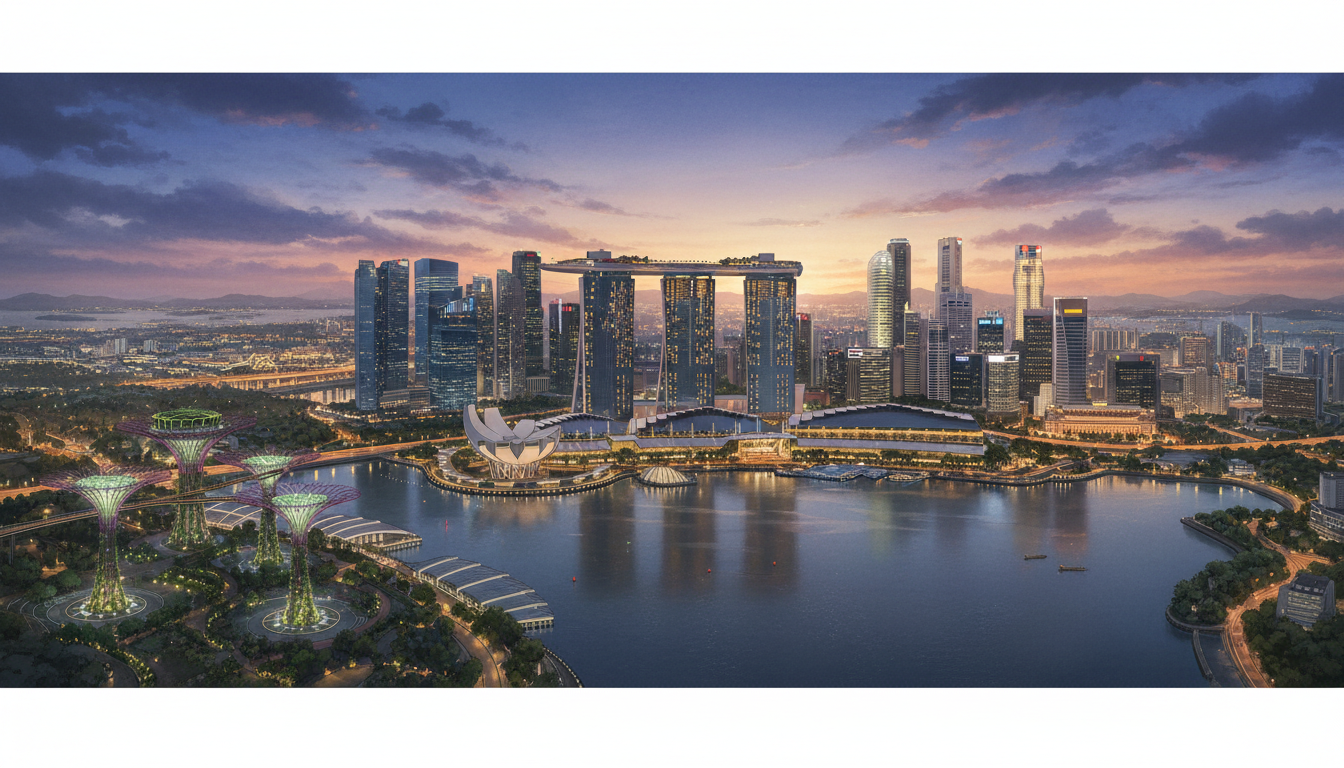
Life in Singapore for Qatar expats is defined by safety, political stability, efficient public services and a highly international lifestyle, but it also comes with a premium cost of living and a very structured regulatory environment.
For Qataris in Singapore considering a longer stay or property investment, understanding visas, neighbourhoods, property rules and day-to-day costs is essential for a smooth and safe relocation. Homejourney’s safety-first approach helps Qatar expats verify information, compare homes confidently and connect with trusted professionals across every step of the move.
Why Qatar Expats Are Choosing Singapore
Many Qatar expats are drawn to Singapore for its role as a regional financial hub, strong education options, clean environment and world-class connectivity to the rest of Asia.
Compared with Doha, Singapore is more compact and walkable, with excellent public transport (MRT and buses) and lower car ownership due to high vehicle taxes and Certificates of Entitlement (COE). The climate is similarly hot and humid, but Singapore’s humidity is higher and there is frequent tropical rain, which affects your choice of home (good ventilation, strong air-conditioning and dehumidifiers matter).
In day-to-day life, you will notice a few key differences:
- Space: Apartments are generally smaller than villas or larger flats in Doha. Compact layouts and efficient storage are standard.
- Cost of living: Everyday food at hawker centres can be very affordable, but rent and car ownership are significantly higher than in Qatar.[1][3][5]
- Cultural mix: Singapore is highly multicultural – Chinese, Malay, Indian and a large expat community – with English widely spoken and used in business and government.
This cluster guide supports our main expat and investment pillar on Singapore living and property, and is tailored specifically to the needs of Qatar expats planning to relocate Singapore from Doha or invest while based in Qatar.
Relocating to Singapore from Qatar: Visas, Work & Lifestyle Fit
Visa and Work Permit Options for Qataris in Singapore
For most Qatar expats, moving to Singapore is tied to employment or business. The main routes include:
- Employment Pass (EP): For professionals, managers and executives with a job offer in Singapore. The Ministry of Manpower (MOM) assesses salary, qualifications and the employer’s profile.
- S Pass: For mid-level skilled staff with a qualifying salary and relevant experience.
- EntrePass / business set-up: For entrepreneurs building venture-backed or innovative businesses in Singapore.
- Dependent’s Pass / Long-Term Visit Pass: For trailing spouses and children of EP and S Pass holders.
Visa regulations are updated regularly by MOM, so Homejourney always recommends confirming details directly with official sources and, where necessary, consulting a licensed relocation or immigration professional. Our main visa-focused pillar and related article “Moving to Singapore from Qatar: Complete Expat Guide | Homejourney” Moving to Singapore from Qatar: Complete Expat Guide | Homejourney provide a structured checklist for Qatar expats.
Employment Opportunities for Qatar Expats
Qatar expats in Singapore commonly work in:
- Banking and wealth management
- Energy trading, LNG and petrochemicals
- Aviation and logistics
- Technology, consulting and professional services
Salaries in financial and professional services are competitive, but you should factor in Singapore’s high rental and schooling costs. Various cost-of-living studies indicate that a single expat can live comfortably on around S$5,000–S$7,000 per month before savings, with rent as the largest component.[1][3][5][6]
Cost of Living: Singapore vs Doha
Based on recent 2025 estimates, average monthly living expenses (excluding rent) for a single person in Singapore are around S$1,500 (about US$1,100), while a family of four may spend roughly S$4,300–S$5,500 before rent.[1][5]
Key cost comparisons for Qatar expats:
- Rent: Central one-bedroom condos typically cost S$3,500–S$6,000 per month, while three-bedroom units can reach S$7,000–S$10,000 in prime districts.[1][2][3]
- Food: Hawker centre meals are S$4–S$8, mid-range restaurants S$25–S$50 per person, and fine dining significantly more.[3][5]
- Transport: Public transport can be as low as S$130–S$230 per month; cars are expensive due to COE, taxes and parking.[3][5]
Compared with Doha, you will likely spend more on rent and schooling, but you may spend less on domestic help (if limited) and utilities due to smaller home sizes. Homejourney helps you model housing costs by budget and district, using verified listings and market data from our projects directory Projects Directory .
Property in Singapore for Qatar Expats: Buy, Rent and Stay Safe
What Foreigners from Qatar Can Buy
Under Singapore’s Residential Property Act, most non-residents (including Qataris) can freely purchase:
- Private condominiums and apartments (including new launches and resale)
- Strata-titled units in approved developments that are not classified as landed residential property
Foreigners usually cannot buy subsidised HDB flats directly, as these are reserved for Singapore citizens and permanent residents, and they need special approval to purchase landed properties (e.g., bungalows, semi-detached houses) in most cases.
Because regulations and eligibility can be complex, especially for mixed-use or landed projects, Homejourney strongly recommends working with licensed agents from our agent directory and cross-checking details with the Urban Redevelopment Authority (URA) and Housing & Development Board (HDB).
ABSD (Additional Buyer’s Stamp Duty) for Qataris
Foreign buyers, including Qatar expats, are subject to Additional Buyer’s Stamp Duty (ABSD) on top of standard Buyer’s Stamp Duty when purchasing residential property. ABSD rates differ for Singapore Citizens, Permanent Residents and foreigners, and have been adjusted multiple times to cool the property market.
Because ABSD policy is updated periodically, any Qatar expat buyer should:
- Check the latest ABSD schedule on IRAS (Inland Revenue Authority of Singapore)
- Use Homejourney’s calculators and bank rates page Bank Rates to model total acquisition cost, including stamp duties and legal fees
- Seek advice from a conveyancing lawyer or licensed agent before committing to a purchase
Popular Neighbourhoods for Qatar Expats in Singapore
From on-the-ground experience working with Gulf-region clients, Qatar expats often prioritise easy access to international schools, CBD offices and green spaces. Common choices include:
- Marina Bay / Downtown / Tanjong Pagar: High-rise city living, close to offices, with one-bedroom condos often S$4,000–S$6,000 and three-bed units from S$7,000 upwards.[1][2]
- River Valley / Orchard: Central, upscale, near international schools and malls. Great for families wanting a city lifestyle.
- Holland Village / Buona Vista: Expat-friendly, near international schools and the one-north tech cluster, with café culture and low-rise condos.
- East Coast (Katong, Siglap): Family-friendly, near the beach and good international schools, with relatively better space-value balance.[5]
Insider tip: If you prefer a quieter environment with greenery similar to Al Khor community-style living, look at Bukit Timah or West Coast, where you can find larger apartments close to parks, but still within 20–30 minutes’ drive to the CBD outside peak hours.
Use Homejourney’s property search Property Search to filter by budget, MRT line, school proximity and building age, and then reference our projects directory Projects for verified project-level data.
Rental Market Overview for Qatar Expats
Recent data shows that Singapore rents have risen strongly since 2022, especially in central districts.[1][2][3]
As a guide for Qatar expats:
- S$3,500–S$5,000: 1–2 bedroom condo in city-fringe or well-connected areas (Queenstown, Paya Lebar, Novena)