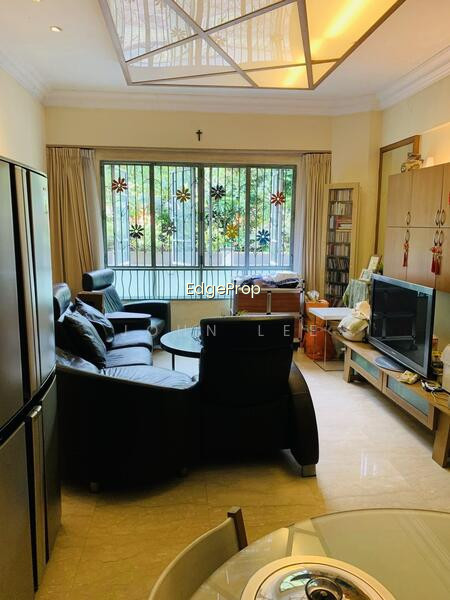
Le Wood Home Loan & Financing Guide | Homejourney 2026
Back to all articles
Property Developments10 min read

Le Wood Home Loan & Financing Guide | Homejourney 2026

H

Homejourney Editorial

Complete Le Wood financing guide for D21 condo buyers. Learn mortgage options, down payments, ABSD, and monthly payments for Hindhede Drive units. Homejourney trusted resource.

Le Wood Home Loan & Financing Guide: Your Complete Buying Blueprint

Purchasing a property at Le Wood on Hindhede Drive represents a significant financial decision, and understanding your financing options is crucial to making the right choice. This comprehensive guide walks you through every aspect of securing a home loan for Le Wood units in District 21, from down payment requirements to monthly payment calculations, helping you determine what's truly affordable for your situation.


Understanding Le Wood's Price Range & Unit Types

Le Wood is a 99-year leasehold condominium comprising 58 residential units across five floors, completed in 2000 by Ananda Development Pte Ltd.[3] The development offers three unit configurations: Type A (3-bedroom, 3-bathroom, 1,141 sqft), Type B (2-bedroom, 2-bathroom, 1,066 sqft), and Type C (1-bedroom, 1-bathroom, 807 sqft).[3] Current market prices for Le Wood units range between S$1.0 million to S$1.2 million, making it an accessible option for buyers seeking District 21 properties without the premium pricing of newer developments.[3]


Before diving into financing specifics, it's essential to understand which unit type aligns with your needs and budget. View detailed price trends and transaction history for Le Wood on Homejourney to see how different unit types have appreciated over time, giving you insight into potential returns on your investment.


Down Payment Requirements: How Much You'll Need Upfront

The down payment is your first major financial hurdle when purchasing at Le Wood. For most buyers, banks require a minimum 20% down payment on the purchase price, though some may accept 15% with additional mortgage insurance. On a S$1.1 million Le Wood unit (mid-range pricing), this translates to S$220,000 for a 20% down payment or S$165,000 for a 15% down payment.


However, if you're a first-time buyer or upgrading from an HDB flat, you may qualify for more favorable terms. Many banks offer 80% loan-to-value (LTV) for first-time private property buyers, meaning you only need 20% down. Additionally, you can leverage your CPF savings to cover part or all of your down payment, which is a significant advantage for Singaporean citizens and permanent residents. The ability to use CPF funds reduces the cash you need to have on hand, making homeownership more achievable.


ABSD Considerations: Additional Buyer's Stamp Duty Impact

Additional Buyer's Stamp Duty (ABSD) is a critical cost factor that many first-time buyers overlook. For Singapore citizens purchasing their first private residential property, ABSD is waived entirely—a substantial benefit. However, if you're purchasing a second property or are a permanent resident or foreigner, ABSD rates apply and can significantly increase your total acquisition costs.


As of 2026, ABSD rates for permanent residents start at 5% of the property's purchase price, while foreign buyers face rates of 20% or higher depending on their status. On a S$1.1 million Le Wood unit, ABSD for a permanent resident could add S$55,000 to your costs. This is why understanding your buyer profile and eligibility for ABSD exemptions or reductions is essential before committing to a purchase.


CPF Usage: Maximizing Your Savings for Le Wood Purchase

Your Central Provident Fund (CPF) account is one of your most powerful tools for purchasing Le Wood. You can use your CPF Ordinary Account (OA) balance to pay for the down payment, monthly mortgage payments, and even ABSD. For many buyers, CPF funds can cover 30-50% of the total purchase cost, dramatically reducing the cash you need to borrow.


To use CPF for a Le Wood purchase, your unit's price must fall within the CPF valuation limit, and the property must be approved for CPF usage—which it is, as a completed private residential property. You'll need to apply through your CPF board, and the funds are transferred directly to your lawyer's account. This process typically takes 2-4 weeks, so factor this into your timeline. The key advantage is that using CPF funds reduces your mortgage amount, lowering your monthly payments and total interest paid over the loan tenure.


Monthly Payment Estimates: What You'll Actually Pay

Understanding your monthly mortgage commitment is essential for budgeting. Let's break down realistic payment scenarios for different Le Wood unit types, assuming a 25-year loan tenure and current interest rates around 3.5-4.0% per annum:


  • Type C (1-bedroom, S$1.0M unit): With 20% down (S$200,000) and CPF covering S$150,000, your bank loan would be S$650,000. Monthly payment: approximately S$3,100-S$3,400
  • Type B (2-bedroom, S$1.1M unit): With 20% down (S$220,000) and CPF covering S$165,000, your bank loan would be S$715,000. Monthly payment: approximately S$3,400-S$3,750
  • Type A (3-bedroom, S$1.2M unit): With 20% down (S$240,000) and CPF covering S$180,000, your bank loan would be S$780,000. Monthly payment: approximately S$3,700-S$4,050


These estimates assume you're using CPF for part of the down payment and that you qualify for competitive interest rates. Your actual monthly payment will depend on your loan amount, tenure (typically 25-30 years), interest rate, and whether you choose a fixed or floating rate package. Check current bank mortgage rates and calculate your exact affordability using Homejourney's mortgage calculator to see personalized payment scenarios based on your financial situation.


Choosing Between Fixed vs. Floating Rate Mortgages

When securing your Le Wood mortgage, you'll need to decide between fixed and floating interest rates. Fixed-rate mortgages lock in your interest rate for a set period (typically 3-5 years), providing payment predictability and protection against rate increases. This is attractive in a rising rate environment and appeals to buyers who prefer certainty in their monthly budgets.


Floating-rate mortgages are tied to the Singapore Interbank Offered Rate (SIBOR) or the bank's prime lending rate, meaning your payments fluctuate with market conditions. While floating rates are currently lower than fixed rates, they carry the risk of increasing if interest rates rise. Many buyers opt for a hybrid approach: a fixed rate for the first few years, then switching to floating once they've built equity and are more comfortable with rate variability.


Loan Tenure: Balancing Monthly Payments with Total Interest

Your loan tenure—the length of time you have to repay the mortgage—directly impacts both your monthly payment and total interest paid. Most Le Wood buyers choose between 25 and 30-year tenures. A 25-year tenure results in higher monthly payments but significantly less total interest paid over the life of the loan. A 30-year tenure spreads payments over more years, reducing monthly obligations but increasing total interest costs.


For example, on a S$715,000 loan at 3.75% interest, a 25-year tenure results in approximately S$3,550 monthly payments with total interest of S$355,000. Extending to 30 years reduces monthly payments to approximately S$3,300 but increases total interest to S$465,000. The choice depends on your income stability, other financial obligations, and long-term financial goals.


Debt Servicing Ratio: Can You Qualify for the Loan?

Banks don't just look at your down payment—they assess whether you can afford the monthly payments. The Debt Servicing Ratio (DSR) is the percentage of your gross monthly income that goes toward mortgage and other debt payments. Most banks cap DSR at 60%, meaning your total monthly debt payments (mortgage, car loans, credit cards, etc.) cannot exceed 60% of your gross income.


For a Le Wood buyer with a S$3,500 monthly mortgage payment and no other significant debt, you'd need a gross monthly income of approximately S$5,833 to qualify (S$3,500 ÷ 0.60). If you have other debts, your required income increases proportionally. This is why understanding your complete financial picture—not just your down payment savings—is crucial before making an offer on a Le Wood unit.


Loan Approval Timeline: How Long Does It Take?

Once you've made an offer on a Le Wood unit and it's accepted, the mortgage approval process typically takes 4-6 weeks. Your bank will order a property valuation (usually 1-2 weeks), assess your financial documents, and conduct credit checks. During this time, you'll need to provide payslips, tax returns, CPF statements, and bank statements covering the past 3-6 months.


It's essential to get pre-approval before making an offer, which can be done within 3-5 business days and demonstrates to the seller that you're a serious buyer. Pre-approval doesn't guarantee final approval, but it significantly strengthens your negotiating position and accelerates the purchase timeline once an offer is accepted.


Additional Costs Beyond the Mortgage

When budgeting for your Le Wood purchase, remember that the mortgage payment is just one part of homeownership costs. You'll also need to budget for:


  • Stamp Duty: Buyer's Stamp Duty (BSD) is 4% of the purchase price for properties over S$500,000, plus ABSD if applicable
  • Legal Fees: Conveyancing lawyer fees typically range from S$1,500-S$2,500
  • Valuation Fees: Bank valuation fees are usually S$400-S$600
  • Property Tax: Annual property tax on a S$1.1M unit is approximately S$3,300-S$4,000
  • Maintenance & Sinking Fund: Le Wood's monthly maintenance fees average S$250-S$350 per unit, plus periodic sinking fund contributions
  • Insurance: Home insurance typically costs S$400-S$600 annually


These additional costs can total S$70,000-S$100,000 on top of your down payment, so factor them into your overall budget when determining affordability.


Why Le Wood Offers Strong Financing Potential

Le Wood's established track record—completed in 2000 with a solid 26-year history—makes it an attractive financing prospect for banks. The development's 99-year leasehold tenure, while shorter than newer projects, still offers excellent value for buyers with 73 years remaining on the lease. Banks are comfortable lending on Le Wood properties, and the development's location in District 21 (Clementi/Upper Bukit Timah) ensures strong demand and steady appreciation.


The development's amenities—swimming pool, sauna, Jacuzzi, multi-purpose hall, and 24-hour security—add to its appeal and help maintain property values.[3] Additionally, proximity to Beauty World, King Albert Park, and Hillview MRT stations ensures strong rental demand if you're considering investment potential, which can help justify your financing decision to banks during the approval process.


Getting Professional Guidance: When to Seek Expert Help

While this guide provides a comprehensive overview, every buyer's financial situation is unique. Consider consulting with a mortgage broker or financial advisor who can review your specific circumstances, identify the best bank and loan package for your profile, and potentially negotiate better rates. Many brokers, like those highlighted in Homejourney's trusted network, provide free consultations and can save you thousands in interest over your loan tenure.


Additionally, engage a conveyancing lawyer early in the process—they'll ensure all legal aspects of your purchase are handled correctly and that your interests are protected throughout the transaction.


Next Steps: From Financing Plan to Homeownership

Now that you understand Le Wood's financing landscape, the next step is to explore available units and get pre-approved for a mortgage. Browse all units currently for sale at Le Wood on Homejourney to see what's available in your price range. Once you've identified units of interest, connect with a property agent to schedule viewings and begin the purchasing process.


For deeper insights into Le Wood's market position and historical price trends, review our detailed Le Wood project analysis to understand how different unit types have appreciated and what you can expect for future returns. If you're considering Le Wood as an investment property, also explore Le Wood Price Trends 2026: D21 Condo Market Analysis | Homejourney " style="color: #0066cc; text-decoration: none;">Le Wood's price trends and D21 market analysis to assess rental yield potential and capital appreciation outlook.


Frequently Asked Questions About Le Wood Financing

Can I use 100% CPF to purchase Le Wood?

No, you must have at least 5% cash down payment. However, you can use CPF for the remaining 95% if your CPF balance is sufficient. Most buyers use CPF for 30-50% of the purchase price and secure a bank mortgage for the remainder, which is the most efficient approach.


What's the minimum income required to qualify for a Le Wood mortgage?

For a typical Le Wood unit in the S$1.0-1.2M range with a 25-year tenure, you'd generally need a gross monthly income of S$5,500-S$6,500 to qualify, depending on other debts and your down payment size. Use Homejourney's mortgage calculator to determine your specific qualification threshold.


Is Le Wood a good investment property for rental returns?

References

  1. Singapore Property Market Analysis 3 (2026)
Tags:Singapore PropertyProperty Developments

Follow Homejourney

Get the latest property insights and tips

Disclaimer

The information provided in this article is for general reference only. For accurate and official information, please visit HDB's official website or consult professional advice from lawyers, real estate agents, bankers, and other relevant professional consultants.

Homejourney is not liable for any damages, losses, or consequences that may result from the use of this information. We are simply sharing information to the best of our knowledge, but we make no representations or warranties of any kind, express or implied, about the completeness, accuracy, reliability, suitability or availability of the information contained herein.