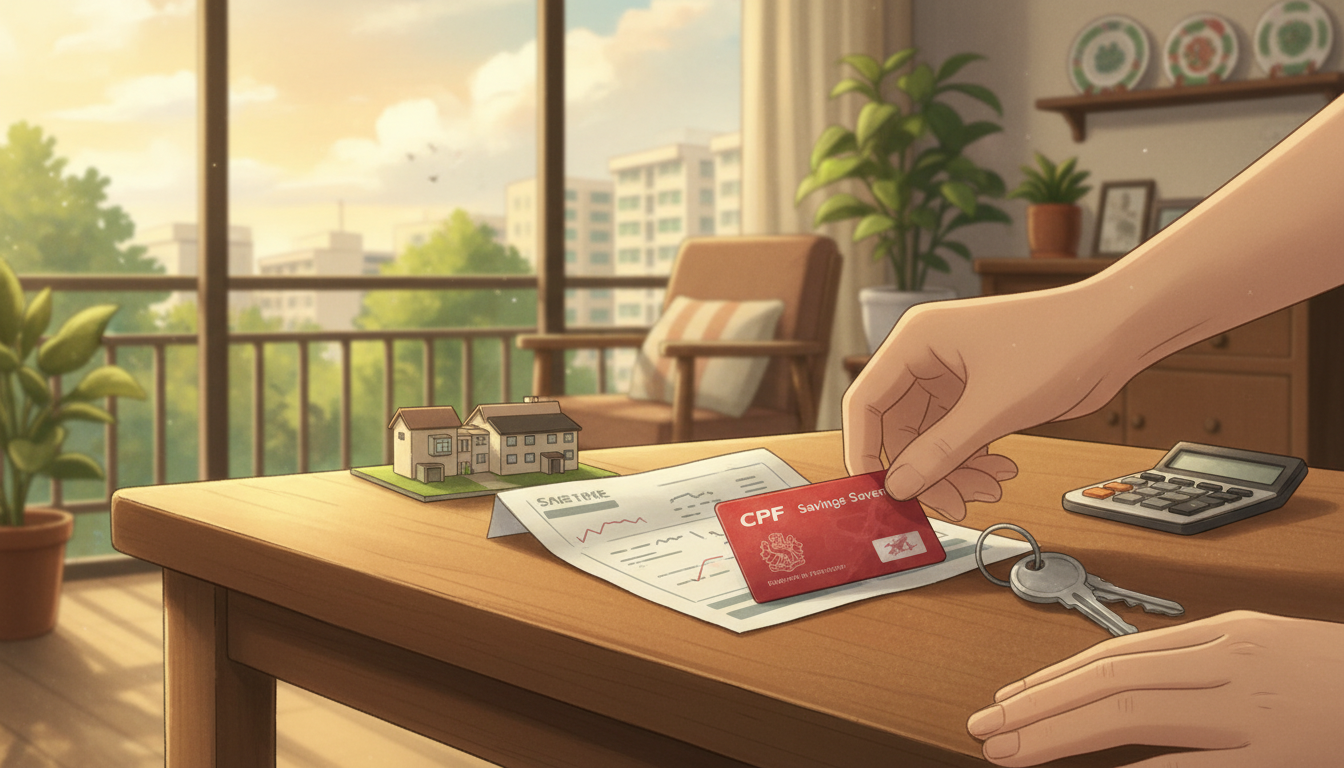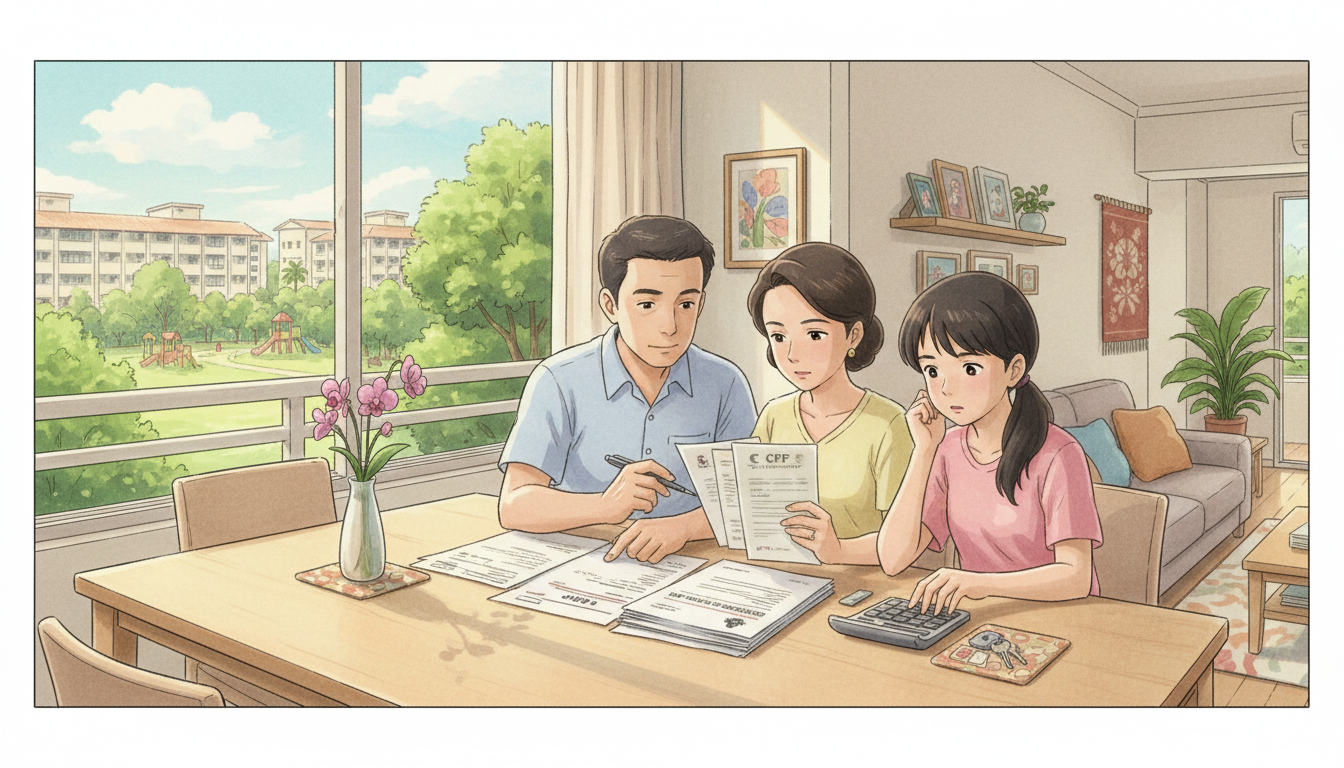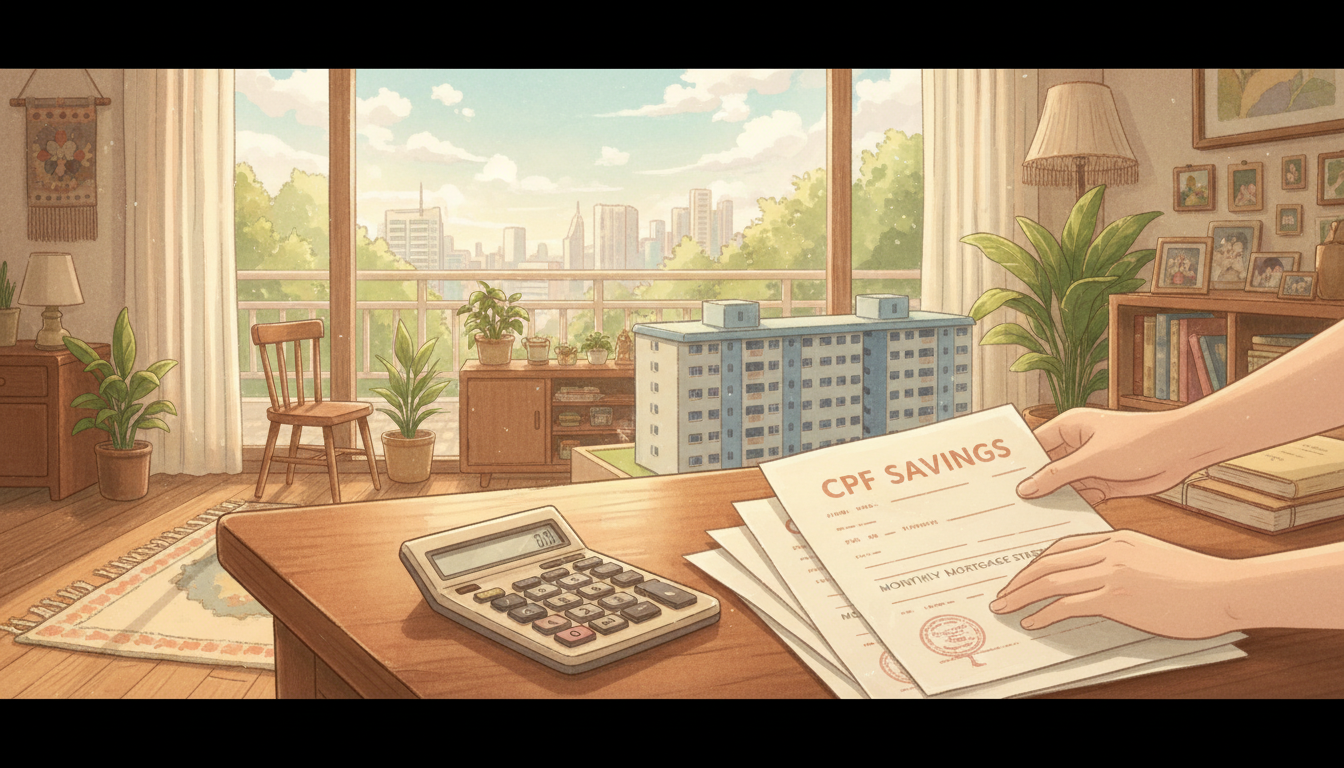
CPF accrued interest significantly reduces your net proceeds when selling a property in Singapore, as it requires repaying the principal CPF amount withdrawn plus 2.5% annual interest compounded yearly from withdrawal to sale.[1][2][6]
This cluster article dives deep into this key aspect of CPF accrued interest affects property sale, helping you plan upgrades or investments confidently. As part of Homejourney's comprehensive pillar on CPF and mortgage strategies, it provides tactical advice for HDB and private property owners. At Homejourney, we prioritize your financial safety through verified insights and tools like our bank rates page for transparent CPF monthly mortgage planning.
What is CPF Accrued Interest?
CPF accrued interest is the opportunity cost on funds withdrawn from your Ordinary Account (OA) for property purchases, calculated at 2.5% per annum, compounded annually.[1][2][3]
It applies to CPF used for downpayments, stamp duties, monthly repayments, grants, and other housing costs. The interest accrues from the withdrawal date until repayment upon sale, even if you're still paying your CPF loan repayment or CPF servicing mortgage.[2]
You don't pay this interest upfront—it's deducted from sale proceeds to restore your CPF OA, preserving retirement savings. Check your exact amount via CPF Online Services under 'My Statement'—no manual math needed.[1][3]
How CPF Accrued Interest is Calculated
Formula: Accrued Interest = Principal Withdrawn × 2.5% × Years Held (compounded annually, computed monthly).[1][2][6]
Example: Withdraw S$100,000 for 5 years: S$100,000 × 0.025 × 5 = S$12,500 total repayment S$112,500.[1]
For precision, CPF uses monthly compounding. A S$200,000 withdrawal over 5 years yields S$26,281.64 interest, totaling S$226,281.64.[3]
Voluntary refunds anytime reduce accrual—smart for long holds. Link this to our related guide on CPF Withdrawal Limits for Property: 2026 Guide by Homejourney ">CPF Withdrawal Limits for Property: 2026 Guide by Homejourney for full context.
Impact on Property Sale Proceeds
Upon sale post-MOP (5 years for HDB), proceeds first cover outstanding loans, then refund CPF principal + accrued interest.[7][8]
If proceeds exceed this, the surplus goes to you (after fees, levy). Shortfall? No top-up needed if sold at market value—option fees count as proceeds.[1][3]
Real Singapore Example: Mr and Mrs Lim, 35, bought Punggol BTO flat using CPF for downpayment and CPF OA monthly payments. After 5 years, selling for upgrade: If CPF used S$150,000 + S$50,000 grant, 5-year interest hits S$26,281, eating into profits.[1][3]
Homejourney tip: Use our mortgage calculator to model CPF vs cash monthly scenarios, minimizing future accrual.
4 Key Scenarios: How It Affects Your Sale
- Upgrade Under 55: Full refund from proceeds; surplus funds next buy. Balance restores OA for retirement.[1][6]
- Sell Above 55: Refund caps at Retirement Account shortfall to Full Retirement Sum (FRS).[5]
- Low Proceeds: Refund only available amount—no cash top-up if at market value.[1][3]
- Voluntary Refund Pre-Sale: Stops accrual, like Mr Tan refunding S$500,000 after 2 years (S$25,312 interest).[3]
Insider tip: For HDB in mature estates like Toa Payoh, high appreciation often covers accrual easily—check via projects directory.
CPF vs Cash: Minimizing Accrued Interest
Using cash for lump sums reduces principal exposed to 2.5% accrual vs CPF.[4] Compare CPF monthly mortgage (accrues on full used amount) vs cash (no accrual).[1]
Read our cluster: CPF vs Cash for Mortgage: Which is Smarter? Homejourney Guide ">CPF vs Cash for Mortgage: Which is Smarter? Homejourney Guide.
With SORA-linked loans rising, blend strategies: Cash downpayment, CPF for CPF OA monthly. View partners like DBS, OCBC, UOB at Homejourney bank rates.
Actionable Steps to Manage CPF Accrued Interest
- Log into CPF portal: View 'My Statement' for current accrual.[1][3]
- Model sales: Use HDB's Sale Proceeds Calculator + accrued figure.[7]
- Refund early: If not selling soon, voluntary top-up via CPF app.[3]
- Mix payments: Prioritize cash for big chunks; CPF for steady CPF servicing mortgage.[4]
- Consult pros: Homejourney connects you to mortgage brokers via one-click Singpass application—auto-fills CPF data.
Track SORA for refinancing timing: The chart below shows recent interest rate trends in Singapore:
Rates stable? Lock fixed; rising? Refinance via Homejourney for DBS, HSBC, Maybank offers.
Homejourney Tools for Safe Decisions
At Homejourney, trust starts with verification. Compare CPF loan repayment options across UOB, Standard Chartered, CIMB securely. Our eligibility calculator factors TDSR/MSR, CPF limits.
Post-sale? Maintain value with Aircon Services ">aircon services. Search budgeted properties at property search.
FAQ: CPF Accrued Interest & Property Sales
Q: Does accrued interest stop if I keep paying mortgage with CPF?
A: No, it accrues on total withdrawn amount until sale/refund.[2]
Q: Can I avoid paying full accrued interest?
A: Only if proceeds shortfall at market value; otherwise full refund mandatory.[1][3]
Q: How does this affect HDB resale levy?
A: Separate—levy deducted first, then CPF refund from remaining proceeds.[7]
Q: Best way to check my amount?
A: CPF Online 'My Statement' or Homejourney's partnered calculators.[1]
Q: Should I use CPF or cash for monthly payments?
A: Cash minimizes accrual; CPF earns 2.5% but repays with interest. See CPF for Monthly Mortgage Payments: Pros, Cons & Homejourney Guide ">CPF for Monthly Mortgage Payments Guide.
Disclaimer: This is general info per CPF/HDB rules (2026). Consult advisors; Homejourney aids safe decisions, not financial advice.
Maximize your sale—start with Homejourney bank rates today. For full CPF-mortgage pillar, explore our guides.
References
- Singapore Property Market Analysis 1 (2026)
- Singapore Property Market Analysis 2 (2026)
- Singapore Property Market Analysis 6 (2026)
- Singapore Property Market Analysis 3 (2026)
- Singapore Property Market Analysis 7 (2026)
- Singapore Property Market Analysis 8 (2026)
- Singapore Property Market Analysis 5 (2026)
- Singapore Property Market Analysis 4 (2026)