How CPF Accrued Interest Affects Your Property Sale Proceeds
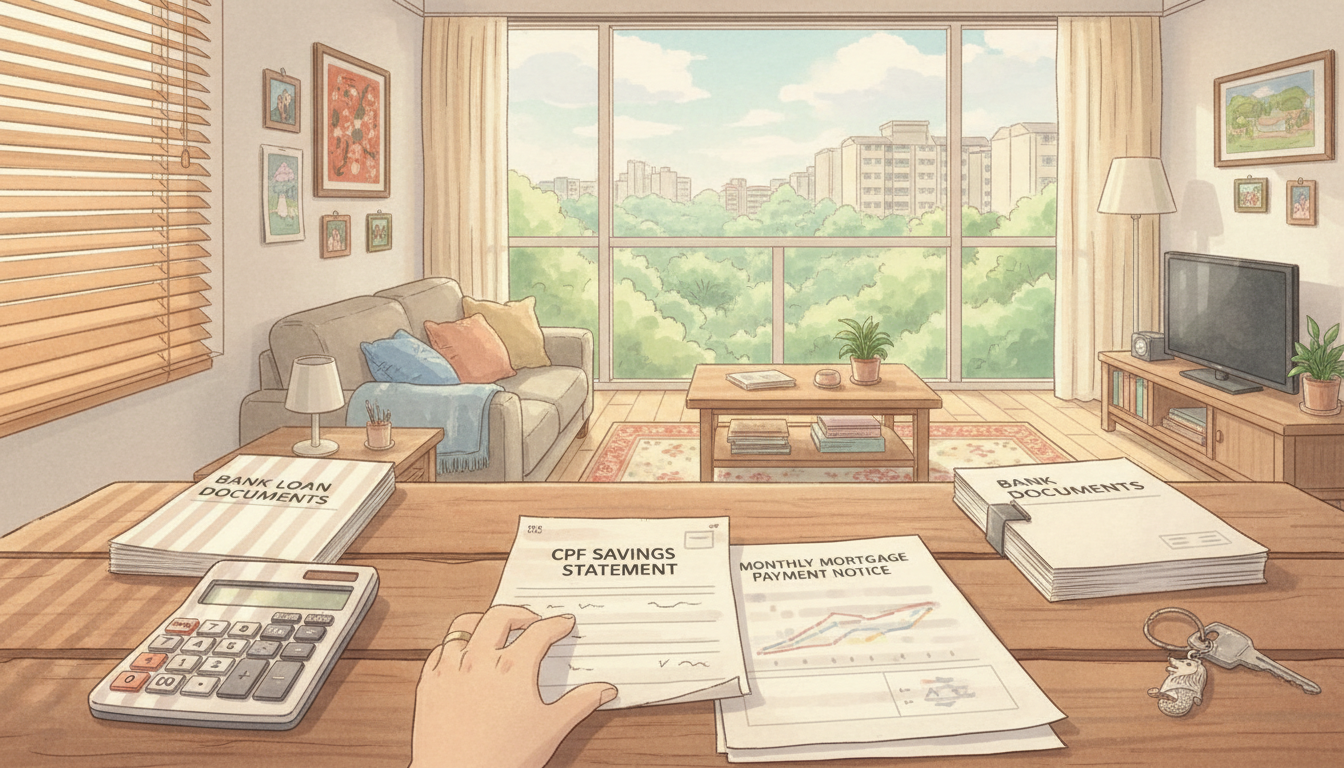
CPF accrued interest significantly reduces your net cash from a property sale by requiring refund of the principal withdrawn from your CPF Ordinary Account (OA) plus 2.5% per annum interest it would have earned[1][2]. For many Singapore sellers, this can cut take-home proceeds by thousands of dollars, sometimes creating a situation where you receive minimal cash despite property appreciation[1][3]. Understanding this mechanism is critical before you buy, and Homejourney helps you plan transparently with verified tools and expert guidance to protect your financial interests.
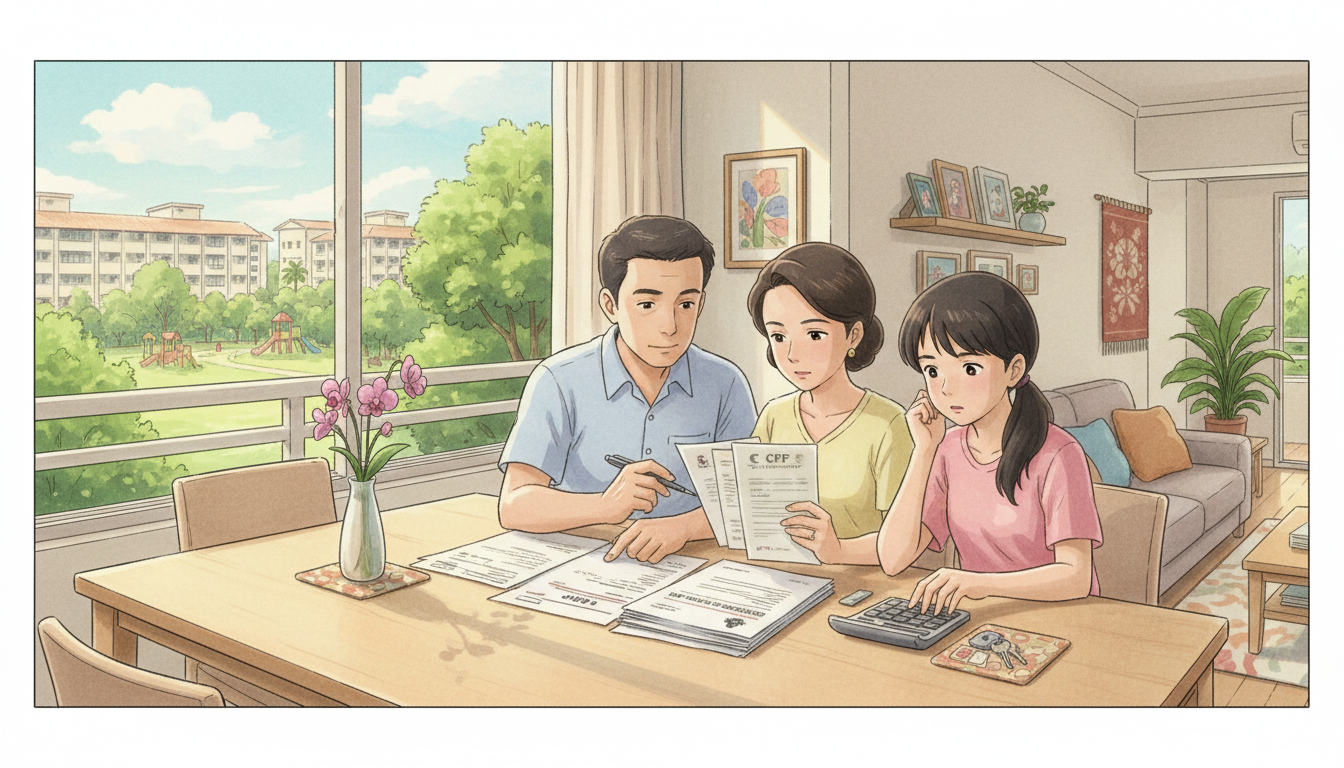
This cluster article dives deep into how accrued interest works, its real impact on your sale proceeds, and actionable strategies to minimize it. Whether you're a first-time buyer concerned about your BTO investment or an upgrader planning your next move, this guide equips you with the knowledge to make confident decisions.
What Exactly is CPF Accrued Interest?
CPF accrued interest is a notional 2.5% annual interest (compounded monthly) calculated on all CPF OA funds you withdraw for housing purposes[1][3]. This includes down payments, stamp duties, legal fees, home protection scheme premiums, and monthly mortgage repayments—but excludes interest-free grants like the Enhanced Housing Grant (EHG)[1][3][4].
Think of it this way: if you hadn't withdrawn that money for your property, it would have remained in your CPF OA earning 2.5% per annum. The accrued interest represents the "opportunity cost" of using your retirement savings for housing. When you sell, you must refund this calculated interest to restore your CPF for retirement[1][5].
Unlike actual CPF OA interest (which you earn passively), accrued interest is a mandatory refund obligation. It accrues from the day you withdraw funds until the day you sell your property or make a voluntary refund[1][3]. For example, if you bought a Punggol BTO in 2021 using $200,000 CPF and sold in 2026 post-MOP, you'd refund approximately $226,282—the principal plus roughly $26,282 in accrued interest[1].
The Calculation: How Much Accrued Interest Will You Pay?
The formula for CPF accrued interest is straightforward but the numbers compound significantly over time:
Accrued Interest = Principal × [(1 + 0.025/12)^(number of months) - 1][1][3]
Let's break this down with real Singapore examples:
- 5-year hold: $200,000 principal × 60 months = ~$26,282 accrued interest (total refund: $226,282)[1]
- 10-year hold: $200,000 principal × 120 months = ~$56,641 accrued interest (total refund: $256,641)[1]
- 15-year hold: $200,000 principal × 180 months = ~$91,386 accrued interest (total refund: $291,386)[1]
Notice how the accrued interest nearly doubles when you hold the property 15 years versus 5 years? This is the power of monthly compounding working against you. For a $500,000 CPF withdrawal over 2 years (like Mr Tan's Sengkang condo purchase), the accrued interest totals approximately $25,313[1].
You can check your exact accrued interest amount anytime via your CPF portal under 'My Statement'—no manual calculations needed[1][3]. Homejourney's mortgage eligibility calculator also helps you model different scenarios before you buy, so you understand the full financial picture upfront.
Real-World Impact: How Accrued Interest Reduces Your Sale Proceeds
Here's where accrued interest becomes painfully real. When you sell your property, the priority order for using sale proceeds is strict[1][4]:
- Outstanding housing loan (HDB loan or bank mortgage like DBS/OCBC)
- CPF principal + accrued interest refund
- Interest-free housing grants (EHG, etc.)
- Cash to you (seller)
Let's walk through a concrete example: You sell a $600,000 Sengkang HDB with a $200,000 outstanding HDB loan and $300,000 CPF withdrawn over 7 years[1].
- Sale price: $600,000
- Less: HDB loan outstanding: -$200,000
- CPF accrued interest (7 years): ~$52,500
- CPF refund required: $300,000 + $52,500 = $352,500
- Less: CPF refund: -$352,500
- Net cash to you: $47,500[1]
Despite a $600,000 sale price, you walk away with just $47,500 in cash. The accrued interest alone ($52,500) consumed a significant portion of your proceeds. This is why many upgraders are surprised at their net cash available for their next purchase.
The longer you hold the property, the more accrued interest accumulates. A 20-year hold on a $400,000 CPF withdrawal generates approximately $182,772 in accrued interest—a staggering amount that directly reduces your proceeds[1].
HDB vs Private Property: Different Rules Apply
HDB Flats: The 5-year Minimum Occupation Period (MOP) applies before you can sell[1][6]. Your CPF servicing the HDB mortgage counts in full toward your Monthly Servicing Ratio (MSR) limit. Enhanced Housing Grants (EHG, up to $80,000) refund interest-free, reducing your accrued interest burden[1]. This is why many first-time buyers use HDB as a stepping stone—the interest-free grant portion provides some relief.
Private Properties: CPF can only be used for bank mortgages (not cash purchases), and you must put down a minimum 5% cash[1]. Additional Buyer's Stamp Duty (ABSD) applies for non-first-time buyers. If you're over 55, your CPF usage is capped at either the Basic Retirement Sum ($106,500) or Full Retirement Sum ($213,000), significantly limiting how much CPF you can deploy[2]. Over-55 pledges also require refund of accrued interest, so retirement-age buyers face tighter constraints.
Actionable Strategies to Minimize CPF Accrued Interest Impact
While you can't eliminate accrued interest entirely, several strategies can meaningfully reduce it:
1. Voluntary Refund Before Sale
You can voluntarily repay your CPF principal plus accrued interest anytime, even before selling[1][5][7]. Once repaid, the accrual stops and your funds move to your CPF Special Account (SA), earning 4% interest instead[1]. This strategy works best if you're planning to sell within 1-2 years—the savings on accrued interest often exceed the opportunity cost of moving money from OA to SA.
2. Use Cash for Monthly Mortgage Payments
Every dollar you pay toward your mortgage using cash instead of CPF reduces your CPF principal, which means less accrued interest over time[1][3]. For example, if you're paying $2,000 monthly on a 25-year mortgage, paying just $500 monthly in cash reduces your CPF principal by $150,000 over 25 years—saving approximately $38,000+ in accrued interest[1]. This is particularly effective if you have stable cash flow.
3. Refinance Your Mortgage to Reduce CPF Drawdown
If you're on an HDB loan and refinance to a bank mortgage (like DBS or OCBC) at a lower rate, you can potentially reduce monthly repayments and redirect cash savings toward principal repayment, lowering your CPF accrued interest[1]. Compare current rates on Bank Rates to see if refinancing makes financial sense.
4. Optimize Your Initial CPF Drawdown
At purchase, be strategic about how much CPF you use. Many buyers reflexively max out CPF usage, but using slightly more cash upfront can reduce long-term accrued interest significantly[1]. Use Homejourney's mortgage eligibility calculator to model different CPF vs cash scenarios and see the long-term impact before committing.
5. Plan Your Sale Timing Carefully
If you're considering selling within 5-7 years, understand that accrued interest is still relatively modest. Holding 15+ years dramatically increases accrued interest, so if you're upgrading, selling sooner rather than later preserves more cash for your next purchase[1].
What Happens If Your Sale Proceeds Can't Cover the Refund?
This is a critical question many sellers worry about. If you sell at or above market value, you will NOT need to pay out-of-pocket to cover any CPF refund shortfall[3]. However, any option fees you received from the buyer are considered part of the selling price and must be refunded to CPF if there's a shortfall[1][3]. Your property transaction cannot complete until the CPF refund is satisfied, so this is a hard constraint.
The only exception: If you pass away, the CPF refund obligation is automatically waived[3]. This is why CPF-funded properties are sometimes described as "forgiving" for estate planning purposes.
Common Misconceptions About CPF Accrued Interest
Myth 1: "Accrued interest is actual money I'm paying out of pocket."
Reality: You're refunding money back into your own CPF account, which becomes part of your Retirement Account (RA) at age 55. It's not lost money—it's retirement savings being restored[1][3].
Myth 2: "I can avoid accrued interest by paying cash for the property."
Reality: If you use CPF, accrued interest is unavoidable. However, using cash for down payment and mortgage payments (instead of CPF) reduces the principal on which interest accrues[1].
Myth 3: "Accrued interest only applies to HDB flats."
Reality: It applies to any property purchase funded with CPF—HDB, private condos, landed houses, EC flats[1][2]. The rules are the same across all property types.
Myth 4: "I can negotiate away accrued interest when selling."
Reality: Accrued interest is a regulatory requirement set by CPF Board, not negotiable with buyers or agents[1][4]. It's part of the legal sale process.
How Homejourney Helps You Plan for CPF Accrued Interest
At Homejourney, we prioritize transparency and user safety by helping you understand the full financial picture before you commit to a property purchase. Here's how:
- Mortgage Eligibility Calculator: Model different CPF vs cash scenarios to see how your choice impacts long-term accrued interestBank Rates
- Bank Rates Comparison: Compare current mortgage rates from DBS, OCBC, UOB, HSBC, Standard Chartered, and more to find the best refinancing options that might reduce your CPF burdenBank Rates
- Property Search with Budget Filters: Find properties within your actual net budget after accounting for accrued interest refundsProperty Search
- Verified Information: All our CPF guidance is cross-checked against official CPF Board and HDB sources, ensuring accuracy you can trust
- Expert Guidance: Our mortgage brokers can help you structure your financing to minimize accrued interest impactBank Rates
We also recommend reading our related guides: CPF vs Cash for Mortgage: Which is Smarter in 2026? and 5 Strategies to Optimize Your Mortgage with CPF | Homejourney for deeper strategies on optimizing your mortgage structure.
FAQ: CPF Accrued Interest on Property Sale
Q: When does CPF accrued interest stop accruing?
A: Accrued interest stops accumulating on the day your property sale completes or the day you make a voluntary full refund to CPF[1][3][5]. Until then, it compounds monthly at 2.5% per annum.
Q: Do I have to pay accrued interest if my property loses value?
A: Yes, accrued interest is mandatory regardless of property appreciation or depreciation[1][3]. However, if sale proceeds can't cover the refund and you sold at market value, you don't pay out-of-pocket—the transaction simply can't complete until resolved.
Q: Does accrued interest apply to housing grants like EHG?
A: No, interest-free grants like the Enhanced Housing Grant (EHG) do not accrue interest[1][4]. Only the principal and paid grants accrue interest. This is one reason why EHG recipients face lower accrued interest burdens.
Q: How do I check my exact accrued interest amount?
A: Log into your CPF portal (www.cpf.gov.sg) and view 'My Statement' under the property section[1][3]. Your current accrued interest is updated monthly. Alternatively, use Homejourney's mortgage calculator for estimates before purchase.
Q: Can I reduce accrued interest if I'm upgrading to a larger property?
A: Yes, by using cash to pay down your current mortgage before selling, you reduce the CPF principal and thus accrued interest[1][3]. Additionally, any proceeds from your current sale can be used for cash down payment on your upgrade, reducing CPF dependency on the new property.
Your Next Steps: Plan Ahead with Homejourney
References
- Singapore Property Market Analysis 1 (2026)
- Singapore Property Market Analysis 2 (2026)
- Singapore Property Market Analysis 3 (2026)
- Singapore Property Market Analysis 4 (2026)
- Singapore Property Market Analysis 5 (2026)
- Singapore Property Market Analysis 6 (2026)
- Singapore Property Market Analysis 7 (2026)