
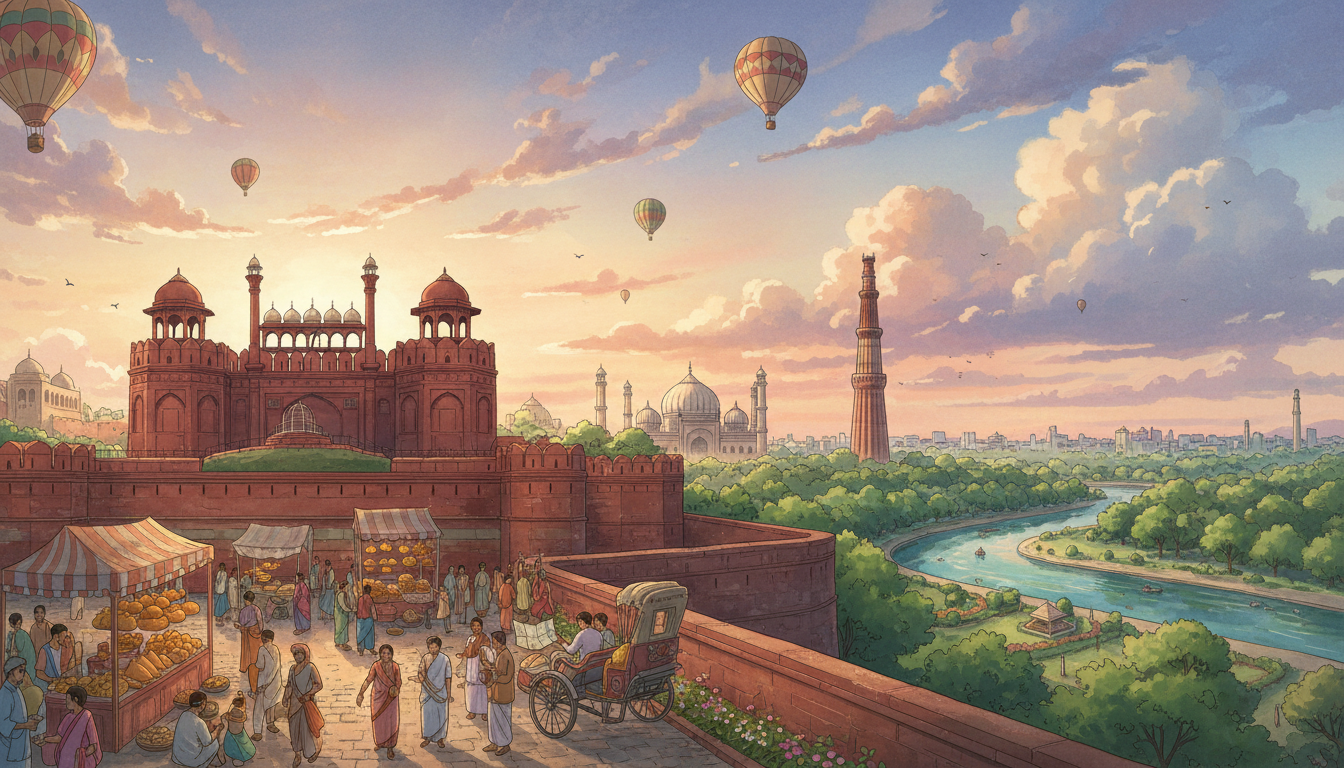
Planning a trip to Delhi? This is your definitive, safety-first Delhi travel guide covering history, food, and culture, written specifically for Singapore residents and international visitors. Whether you’re a first-time traveller from Singapore or a seasoned explorer, this guide will help you experience Delhi India safely, authentically, and memorably. We’ll walk you through the must-see New Delhi attractions, decode the legendary Delhi food scene, and explain the rich cultural tapestry that makes India tourism so compelling. And for those thinking beyond tourism, we’ll also touch on how experiences in destinations like Delhi can inform smart property decisions in Singapore, where Homejourney prioritises your safety, trust, and long-term goals.
Delhi is more than just India’s capital – it’s a living museum of empires, a street food paradise, and a vibrant cultural hub. For Singaporeans used to order and efficiency, Delhi can feel overwhelming at first. But with the right preparation, it becomes one of the most rewarding destinations in Asia. This guide is structured to help you plan confidently, avoid common pitfalls, and make the most of your Delhi travel experience – all while keeping safety and practicality front of mind, just like Homejourney does for every property journey.
Why Visit Delhi? A Singaporean’s Perspective
For Singaporeans, Delhi offers a powerful contrast to our compact, orderly city. It’s a chance to step into a different rhythm of life – chaotic, colourful, and deeply human. Delhi is the heart of India tourism for good reason: it’s where ancient history, Mughal grandeur, colonial architecture, and modern India collide in the most fascinating way.
From a Singaporean’s point of view, Delhi is ideal for:
- History lovers: Over 1,000 years of layered history, from the Qutub Minar to the Red Fort to the British Raj buildings.
- Foodies: The undisputed street food capital of India, with flavours that are bold, complex, and unforgettable.
- Culture seekers: A melting pot of religions, languages, and traditions, visible in its temples, mosques, gurdwaras, and everyday life.
- Shoppers: From high-end boutiques in South Delhi to bustling bazaars in Chandni Chowk and Dilli Haat.
Many Singaporeans visit Delhi as a gateway to the Golden Triangle (Delhi–Agra–Jaipur) or as a stopover before heading to other parts of India. Whatever your reason, Delhi rewards those who come prepared with realistic expectations and a flexible mindset – much like how Homejourney helps you approach property decisions with clarity and confidence.
Best Time to Visit Delhi
Delhi has three main seasons, and timing your trip correctly makes a huge difference to your comfort and enjoyment.
1. Winter (October to March)
This is the best time for Delhi travel, especially for first-time visitors from Singapore. The weather is pleasant, with daytime temperatures ranging from 15°C to 25°C (59°F to 77°F) and cooler nights.
- October–November: Post-monsoon, clear skies, ideal for sightseeing and photography.
- December–February: Peak tourist season. Expect crowds at major attractions, but the weather is excellent.
- March: Starts warming up, but still very manageable.
2. Summer (April to June)
Delhi gets extremely hot in summer, with temperatures often exceeding 40°C (104°F). This is not recommended for Singaporeans unless you’re well-acclimatised or have a very specific reason (e.g., a wedding).
- Outdoor sightseeing is best limited to early morning and late evening.
- Ensure your accommodation has reliable air-conditioning – a must for comfort, just like how Homejourney emphasises the importance of good property maintenance and services like Aircon Services .
3. Monsoon (July to September)
The monsoon brings relief from the heat but also humidity, rain, and occasional flooding in low-lying areas.
- Rains are usually short but heavy, so plan indoor activities (museums, shopping malls, restaurants) as backups.
- Some outdoor attractions may be slippery or temporarily closed after heavy rain.
Insider tip for Singaporeans: If possible, plan your Delhi trip between late October and early March. Avoid major Indian festivals like Diwali if you want fewer crowds, unless you specifically want to experience the festival atmosphere (which is incredible, but very busy).
Getting to Delhi from Singapore
Delhi is well-connected from Singapore, making it a convenient destination for short or long trips.
Flights from Singapore to Delhi
Several airlines operate direct flights from Singapore Changi Airport (SIN) to Indira Gandhi International Airport (DEL) in New Delhi:
- Singapore Airlines: Direct flights, approx. 5h 30m.
- Air India: Direct flights, similar duration.
- Vistara: Full-service carrier with direct flights.
- IndiGo: Budget option, sometimes with layovers.
Flight time is around 5.5 hours, making it a comfortable overnight or daytime journey. For Singaporeans used to efficient airports, Delhi’s Terminal 3 is modern and well-equipped, though immigration can be slow during peak hours.
Airport to City Transport
From Delhi airport to central areas like Connaught Place, Paharganj, or South Delhi:
- Prepaid taxis: Safest and most reliable option for first-time visitors. Available at the airport, with fixed rates to different zones.
- App-based cabs (Uber/Ola): Convenient, but ensure your phone has local data or an eSIM before landing.
- Delhi Metro: Very efficient and affordable. The Airport Express Line connects the airport to New Delhi Railway Station and other key stations.
Insider tip: For Singaporeans, the Delhi Metro is surprisingly clean and efficient – think of it like Singapore’s MRT but with more crowds. Use it for short to medium distances to save money and avoid traffic.
Currency & Exchange Tips for Singaporeans
Understanding money in Delhi is crucial for a smooth trip.
Currency: Indian Rupee (INR)
The official currency is the Indian Rupee (₹). Coins are 1, 2, 5, 10 rupees; notes are 10, 20, 50, 100, 200, 500, and 2000 rupees.
Exchange Tips
For Singaporeans, here’s how to handle currency:
- Before travel: Exchange a small amount (₹3,000–5,000) at a reputable money changer in Singapore for initial expenses (airport taxi, snacks).
- In Delhi: Use ATMs at banks or major hotels for better rates. Avoid roadside money changers.
- Cards: Credit/debit cards are widely accepted in hotels, malls, and restaurants, but carry cash for street food, markets, and small vendors.
Insider tip: Keep small denomination notes (₹10, ₹20, ₹50) for tips, chai, and small purchases. Many vendors struggle to break large notes (₹500, ₹2000).
Delhi Overview: Old Delhi vs New Delhi
Delhi is best understood as two distinct but connected worlds: Old Delhi and New Delhi.
Old Delhi (Shahjahanabad)
Founded in the 17th century by Mughal Emperor Shah Jahan, Old Delhi is a maze of narrow lanes, bustling markets, historic mosques, and legendary street food.
- Vibe: Chaotic, vibrant, sensory overload.
- Key areas: Chandni Chowk, Jama Masjid, Red Fort, Khari Baoli (spice market), Chawri Bazar.
- Best for: History, culture, street food, shopping for spices, textiles, and souvenirs.
New Delhi
Designed by British architects Lutyens and Baker in the early 20th century, New Delhi is the modern administrative capital.
- Vibe: Orderly, spacious, colonial-era architecture, wide avenues.
- Key areas: Connaught Place, India Gate, Rashtrapati Bhavan, Parliament House, Lutyens’ Delhi.
- Best for: Monuments, museums, upscale dining, shopping malls, diplomatic areas.
Most visitors spend time in both, often using New Delhi as a base and exploring Old Delhi as a day trip. This contrast is part of what makes Delhi so fascinating – much like how Singapore blends modern skyscrapers with historic shophouses and hawker centres.
Top Attractions & Must-See New Delhi Attractions
Delhi is packed with iconic landmarks. Here are the must-see New Delhi attractions and historical sites.
1. India Gate
A war memorial dedicated to Indian soldiers who died in World War I. Best visited in the evening when it’s lit up.
- Location: Central Delhi, near Rajpath.
- Best time to visit: Evening (5:30 PM–8:30 PM).
- Insider tip: Combine with a walk along Rajpath and a visit to nearby Connaught Place for dinner.
2. Red Fort (Lal Qila)
A UNESCO World Heritage Site and symbol of Mughal power. Built by Shah Jahan in the 17th century.
- Location: Old Delhi.
- Opening hours: 9:30 AM–4:30 PM (closed Mondays).
- Insider tip: Hire a guide or use an audio guide to understand the history. Visit early to avoid crowds and heat.
3. Qutub Minar
The tallest brick minaret in the world, part of a complex of ancient Islamic monuments.
- Location: South Delhi.
- Opening hours: 7:00 AM–5:00 PM (closed Fridays).
- Insider tip: Wear comfortable shoes; the complex is large and uneven in places.
4. Humayun’s Tomb
A stunning Mughal garden tomb, a precursor to the Taj Mahal.
- Location: Nizamuddin East, South Delhi.
- Opening hours: 6:00 AM–6:00 PM.
- Insider tip: Visit early morning for the best light and fewer crowds.
5. Lotus Temple
A Bahá’í House of Worship shaped like a lotus flower, open to all religions.
- Location: South Delhi.
- Opening hours: 9:00 AM–5:30 PM (closed Mondays).
- Insider tip: Remove shoes before entering; silence is maintained inside.
6. Akshardham Temple
A modern Hindu temple complex with intricate carvings, exhibitions, and a boat ride.
- Location: East Delhi.
- Opening hours: 9:30 AM–6:30 PM (closed Mondays).
- Insider tip: Security is strict; bags are not allowed inside. Plan at least 3–4 hours here.
7. Jama Masjid
One of the largest mosques in India, built by Shah Jahan.
- Location: Old Delhi.
- Opening hours: 7:00 AM–12:00 PM, 1:30 PM–6:30 PM (closed during prayer times).
- Insider tip: Dress modestly; non-Muslims can enter but not during prayers. Climb the minaret (₹300) for a panoramic view of Old Delhi.
8. Chandni Chowk
One of Asia’s busiest markets, famous for food, spices, jewellery, and textiles.
- Location: Old Delhi.
- Best time to visit: Morning to early afternoon.
- Insider tip: Go with a guide or on a food tour to navigate safely and find the best stalls.