
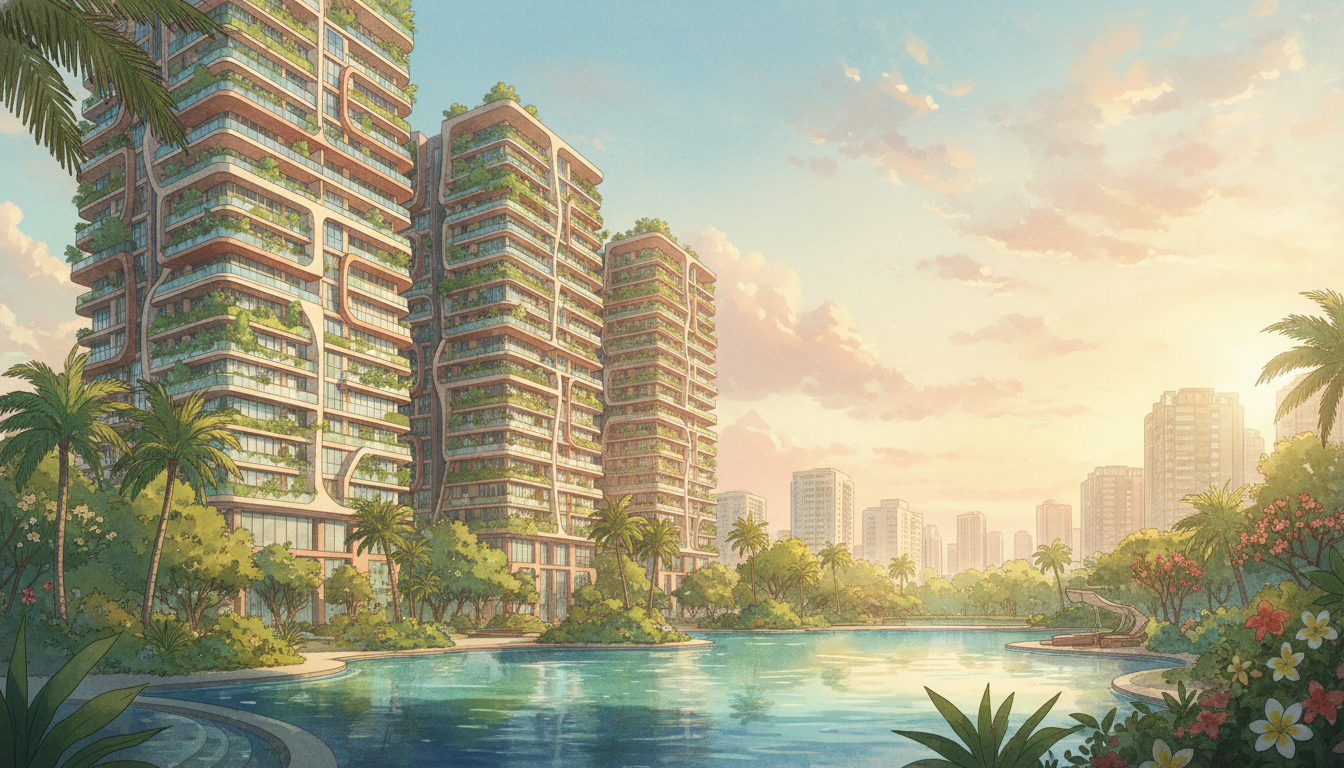
Comfort Garden is a freehold terraced house development located at 1 Hong San Walk in District 23, spanning the vibrant neighbourhoods of Bukit Batok and Bukit Panjang. With 68 residential units completed in 1977, this mature development has established itself as a desirable residential enclave offering families and investors a rare combination of freehold tenure, spacious layouts, and excellent connectivity to Singapore's major business districts.
This comprehensive guide provides everything you need to know about Comfort Garden—from unit types and pricing to amenities, location advantages, and investment potential. Whether you're a first-time buyer, growing family, or seasoned investor, Homejourney's verified platform helps you make confident decisions backed by transparent, trustworthy information.
Table of Contents
- Executive Summary: Why Comfort Garden Matters
- Project Overview: Development Details
- Unit Types & Floor Plans
- Facilities & Amenities
- Location & Accessibility
- Nearby Amenities & Lifestyle
- Price Analysis & Market Data
- Pros, Cons & Who It Suits
- Investment Potential & Resale Market
- Frequently Asked Questions
- Next Steps: How Homejourney Helps
Executive Summary: Why Comfort Garden Matters in District 23
Comfort Garden represents a unique opportunity in Singapore's property market—a mature, freehold terraced development that combines the space and privacy of landed property with the community amenities of a modern residential estate. Unlike many developments in District 23, Comfort Garden's freehold tenure provides indefinite ownership rights, a significant advantage in Singapore's property landscape where most developments are leasehold.
Located strategically near Choa Chu Kang Road, residents enjoy a 4-minute walk to South View LRT and 10-minute access to Choa Chu Kang MRT on the North-South Line. This positioning makes Comfort Garden particularly attractive for professionals commuting to the CBD, families seeking quality schools, and investors targeting rental yield in a well-established neighbourhood.
The development's maturity—built in 1977—means established infrastructure, mature landscaping, and a proven track record of property appreciation. For buyers prioritizing stability, community character, and long-term wealth building, Comfort Garden offers compelling value in District 23.
Project Overview: Development Details & Key Information
Basic Development Information
Development Name: Comfort Garden
Location: 1 Hong San Walk, Singapore 688992 (near Choa Chu Kang Road)
District: 23 (Bukit Batok, Bukit Panjang)
Property Type: Terraced Houses (Landed)
Tenure: Freehold
Completion Date (TOP): 1 January 1977
Total Units: 68 residential units
Total Blocks: 78 blocks
Project Size: Small development (intimate community feel)
Why Freehold Tenure Matters
Comfort Garden's freehold status is a critical distinguishing factor. Unlike the majority of Singapore's residential developments, which operate on 99-year leasehold terms with diminishing value as lease expiry approaches, freehold properties maintain their value indefinitely. This provides peace of mind for long-term residents and stronger capital appreciation potential for investors.
For families planning to stay 20+ years or investors building generational wealth, Comfort Garden's freehold tenure eliminates concerns about lease decay and provides superior long-term value compared to leasehold alternatives in neighbouring districts.
Unit Types & Floor Plans: Understanding Your Living Space
Terraced House Configuration
Comfort Garden comprises terraced houses designed for family living and privacy. The development features spacious layouts with multiple bedrooms, private car porches, and outdoor patios surrounded by lush greenery. Units typically range from 3-bedroom to 4-bedroom configurations, with land sizes approximately 1,878 square feet, providing generous space for families.
Each unit is designed with resort-style aesthetics, featuring:
- Private car porch for secure parking
- Generous outdoor patio areas for entertaining and relaxation
- Multiple bedrooms suitable for growing families
- Ample living and dining spaces
- Modern kitchen facilities
- Multiple bathrooms for family convenience
Reconstruction & Extension Potential
A significant advantage of Comfort Garden's spacious 4-bedroom units is the potential for reconstruction or additions. Many owners have undertaken renovations to modernize layouts, add second storeys, or reconfigure spaces to suit contemporary living preferences. This flexibility appeals to buyers seeking customization options unavailable in typical condominiums.
Before planning any modifications, consult with a qualified architect and ensure compliance with URA (Urban Redevelopment Authority) guidelines and local planning regulations.
Facilities & Amenities: Resort-Style Living in District 23
Despite being a mature development, Comfort Garden maintains comprehensive in-house facilities that enhance resident quality of life:
| Facility | Details & Benefits |
|---|---|
| Swimming Pool | Resident-exclusive facility for recreation and fitness; ideal for families with children |
| Gymnasium | Equipped fitness centre for residents; eliminates need for external gym memberships |
| BBQ Pavilion | Dedicated area for family gatherings and entertaining; fosters community bonds |
| Playground | Safe recreational space for children; encourages outdoor play and family activities |
| 24-Hour Security | Round-the-clock security personnel and CCTV surveillance; ensures resident safety and peace of mind |
| Landscaped Gardens | Mature greenery and hill views; creates serene living environment |
These amenities position Comfort Garden as a self-contained community where residents can enjoy recreational activities without leaving the development. The combination of fitness facilities, family-friendly spaces, and security features makes it particularly attractive for families prioritizing safety and lifestyle quality.
Location & Accessibility: Connectivity That Matters
Proximity to Public Transport
Comfort Garden's location near Choa Chu Kang Road provides exceptional public transport connectivity—a critical factor for daily commuting and property investment potential:
| MRT/LRT Station | Distance | Travel Time to CBD |
|---|---|---|
| South View LRT | 0.31 km (4-minute walk) | ~20 minutes to Raffles Place |
| Keat Hong LRT | 0.41 km (5-minute walk) | ~22 minutes to Raffles Place |
| Choa Chu Kang MRT (NS4) | 0.81-0.89 km (10-minute walk) | 25-30 minutes to Raffles Place |
| Bukit Panjang LRT (DT1) | Accessible via bus connections | ~25 minutes to Downtown Line |
Bus Connectivity
Beyond MRT/LRT access, Comfort Garden benefits from 21 nearby bus stops providing comprehensive coverage across Singapore. Key bus services connect residents to:
- Choa Chu Kang MRT and Bukit Panjang LRT for rapid transit
- Major shopping destinations (Lot One, Sunshine Place, West Mall)
- Employment hubs in the CBD, Marina Bay, and Jurong East
- Healthcare facilities including Tan Tock Seng Hospital and Bukit Batok polyclinic
- Educational institutions across Singapore
Expressway Access & Driving Convenience
For residents who drive, Comfort Garden's proximity to major expressways provides rapid access to Singapore's key business and leisure destinations. The Choa Chu Kang area serves as a strategic junction for multiple expressway routes, reducing commute times for professionals working in Jurong, Marina Bay, or the East Coast.
The development's location near Choa Chu Kang Road also provides convenient access to petrol stations, making vehicle maintenance straightforward for car owners.
District 23 Strategic Positioning
Comfort Garden sits within District 23, which encompasses Choa Chu Kang, Bukit Batok, Hillview, and Bukit Panjang. This district has evolved from its kampung origins (the name derives from "kangchu," referring to plantation owners in Teochew) into a modern, well-planned neighbourhood with strong infrastructure, excellent schools, and vibrant community amenities.
Nearby Amenities & Lifestyle: Everything Within Reach
Shopping & Retail
Residents enjoy convenient access to major shopping destinations:
- Lot One Shopping Mall: Multi-level mall with retail outlets, dining options, and services
- Sunshine Place: Community shopping centre with supermarket and convenience stores
- West Mall: Major shopping destination featuring cinema, public library, and post office
- Prime Supermarket & U Stars Megamart: Neighbourhood grocery options for daily essentials
Education: Quality Schools in District 23
Comfort Garden's location makes it ideal for families prioritizing education. The development is close to several quality schools:
- Chua Chu Kang Primary School: Established primary institution serving the neighbourhood
- Zhengfei Cultural Education Centre (Choa Chu Kang Avenue 2): Specialized education facility
- Secondary schools: Multiple secondary institutions within District 23 and accessible via public transport
- International schools: Accessible via short bus or car rides for families seeking international education
For families with school-age children, Comfort Garden's proximity to quality educational institutions is a major advantage. The 4-minute walk to South View LRT makes school commutes quick and convenient.
Healthcare & Medical Facilities
Essential healthcare services are readily accessible:
- Bukit Batok polyclinic for primary healthcare
- Multiple private clinics and dental practices in the neighbourhood
- Tan Tock Seng Hospital accessible via public transport (approximately 20-25 minutes)
- 24-hour pharmacies at nearby shopping centres
Recreation & Nature
District 23 offers exceptional natural attractions:
- Bukit Batok Nature Park: Home to Little Guilin Lake, a scenic freshwater lake ideal for photography and relaxation
- Bukit Timah Nature Reserve: Singapore's largest nature reserve with hiking trails and biodiversity
- Bukit Batok Town Park: Family-friendly park with recreational facilities
- Mont Botanik: Sits within the Bukit Timah Nature Reserve area, offering botanical interest
These natural amenities provide residents with outdoor recreation options, making District 23 particularly attractive for nature enthusiasts and families seeking green space access.
Dining & Leisure
The neighbourhood offers diverse dining options:
- Hawker centres with local cuisine at affordable prices
- Cafes and modern restaurants in shopping malls
- Food courts at Lot One and West Mall
- Diverse eateries catering to various cuisines and dietary preferences
Price Analysis & Market Data: Understanding Comfort Garden's Value
Current Market Positioning
As a mature freehold terraced development, Comfort Garden occupies a unique price segment within District 23. Unlike newer leasehold developments, Comfort Garden's freehold status and established character command premium positioning relative to newer leasehold alternatives.
Pricing for Comfort Garden units reflects several factors:
- Freehold tenure: Commands premium over comparable leasehold properties
- Maturity & track record: 49+ years of proven appreciation and stable community
- Location: Proximity to MRT/LRT and major shopping centres
- Space & privacy: Terraced house format provides superior space compared to condominiums
- Customization potential: Reconstruction and extension possibilities add value
Price Trends & Historical Appreciation
Freehold landed properties in District 23 have demonstrated consistent appreciation over decades. Comfort Garden's maturity means it has weathered multiple property cycles, providing investors with confidence in long-term value retention and growth potential.
For current pricing data and recent transaction information, Homejourney's verified platform provides transparent, up-to-date market information. Browse available units at Comfort Garden through our property search to see current asking prices and market activity.
Value Assessment: Freehold vs. Leasehold
When evaluating Comfort Garden's value, consider the freehold advantage:
| Factor | Comfort Garden (Freehold) | Typical Leasehold (99-year) |
|---|---|---|
| Tenure | Indefinite ownership | 99-year lease (decaying) |
| Long-term Value | Maintains value indefinitely | Depreciates as lease expires |
| Financing | Banks offer full mortgage terms | Restricted financing as lease decays |
| Resale Demand | Strong, indefinite appeal | Declining as lease shortens |
| Peace of Mind | No lease expiry concerns | Lease expiry considerations |
Rental Yield Potential
For investors, Comfort Garden presents attractive rental potential. The development's proximity to MRT/LRT, established schools, and family-friendly amenities make it appealing to both tenants seeking long-term rentals and families relocating to Singapore.
The spacious 3-4 bedroom units appeal to expat families, growing local families, and multi-generational households—tenant segments with strong rental demand and ability to pay premium rents.
Calculate your potential returns using Homejourney's mortgage calculator to understand financing options and investment scenarios.
Pros, Cons & Who It Suits: An Honest Assessment
Key Advantages of Comfort Garden
- Freehold Tenure: Indefinite ownership without lease decay concerns—a significant advantage in Singapore's property market
- Spacious Layouts: 3-4 bedroom units with generous land sizes (1,878 sqft) provide superior space compared to condominiums
- Privacy & Exclusivity: Terraced house format offers privacy unavailable in high-rise developments
- Customization Potential: Reconstruction and extension possibilities allow owners to modernize and personalize
- Established Community: 49+ years of maturity mean stable, family-oriented neighbourhood
- Excellent Connectivity: 4-minute walk to South View LRT; 10-minute walk to Choa Chu Kang MRT
- Quality Schools Nearby: Proximity to established primary and secondary schools
- Nature Access: Close to Bukit Batok Nature Park, Bukit Timah Nature Reserve
- Complete Amenities: Swimming pool, gym, BBQ pavilion, playground, 24-hour security
- Strong Resale Market: Freehold landed properties maintain consistent demand
Potential Considerations
- Mature Development: Built in 1977; some units may require renovation to meet contemporary standards
- Maintenance Responsibility: As terraced houses, owners are responsible for individual unit maintenance (unlike condominiums with managed maintenance)
- Space Trade-off: While spacious compared to condominiums, terraced houses offer less space than detached homes
- Renovation Costs: Modernization may require significant investment; always consult URA guidelines before major modifications
- Parking: Private car porches provided, but limited visitor parking compared to larger developments
- HOA/Management Fees: Residents contribute to common area maintenance (though typically lower than condominium management fees)
Who Comfort Garden Suits Best
Ideal for:
- Families with children: Quality schools, playgrounds, and family-friendly amenities make it perfect for growing families
- Long-term residents: Freehold tenure appeals to buyers planning 20+ year ownership
- Investors seeking stability: Proven track record, established community, and strong rental demand
- Nature enthusiasts: Proximity to Bukit Batok Nature Park and Bukit Timah Nature Reserve
- Professionals commuting to CBD: Excellent MRT/LRT connectivity reduces commute times
- Buyers prioritizing privacy: Terraced house format offers superior privacy compared to high-rise developments
- Customization seekers: Reconstruction potential appeals to buyers wanting personalized homes
May be less suitable for:
- Buyers seeking modern, turnkey properties (may require renovation)
- Those prioritizing minimal maintenance (terraced houses require more owner involvement than condominiums)
- Buyers on extremely tight budgets (freehold premium adds cost)
- Those seeking cutting-edge smart home features (mature development)
Investment Potential & Resale Market: Building Wealth Through Property
Capital Appreciation Outlook
Comfort Garden's freehold status positions it strongly for long-term capital appreciation. Unlike leasehold properties that depreciate as lease expiry approaches, freehold properties maintain and appreciate indefinitely. Historical data demonstrates that freehold landed properties in established Singapore neighbourhoods have consistently outperformed leasehold alternatives over 20+ year periods.
Key appreciation drivers for Comfort Garden:
- Land scarcity: Singapore's limited land supply supports long-term property value appreciation
- District 23 development: Ongoing infrastructure improvements and neighbourhood enhancements support property values
- Transport improvements: Existing MRT/LRT connectivity is well-established; future enhancements will further boost values
- Demographic trends: Growing demand for family homes in accessible neighbourhoods
- Freehold premium: As leasehold properties decay, freehold alternatives become increasingly valuable
Rental Demand & Yield Potential
Comfort Garden's appeal to renters supports strong rental demand:
- Expat families: Spacious layouts, quality schools, and established community appeal to expatriate families
- Growing local families: Affordable access to quality family homes compared to newer developments
- Multi-generational households: Spacious layouts accommodate extended family arrangements
- Stable tenant base: Established neighbourhood attracts long-term renters
The combination of spacious units, quality amenities, and excellent connectivity supports rental yields competitive with newer developments, while the freehold structure provides superior long-term appreciation.
Resale Market Liquidity
Comfort Garden benefits from strong resale market liquidity. Freehold landed properties in District 23 maintain consistent buyer interest, ensuring relatively quick sales when owners decide to exit. The development's maturity, established reputation, and proven track record make it attractive to successive generations of buyers.
Unlike newer developments that may experience market saturation when multiple units come on market simultaneously, Comfort Garden's smaller size (68 units) and freehold status mean individual units maintain strong resale appeal.
Future Development Considerations
District 23's continued development supports long-term property appreciation. Ongoing improvements to public transport, shopping facilities, and community amenities enhance neighbourhood appeal and property values. Proximity to planned infrastructure projects and commercial developments further supports investment potential.
For investors, Comfort Garden represents a stable, long-term wealth-building vehicle combining capital appreciation potential with rental income opportunities.
Frequently Asked Questions: Your Comfort Garden Queries Answered
Ownership & Tenure Questions
Q: What does "freehold" mean, and why is it important?
A: Freehold means you own the property indefinitely without a lease expiry date. Unlike 99-year leasehold properties that depreciate as the lease shortens, freehold properties maintain value indefinitely. This provides superior long-term wealth building and peace of mind—you'll never face lease expiry concerns that plague older leasehold properties.
Q: Can I pass Comfort Garden to my children?
A: Yes. Freehold properties can be inherited and passed through generations without lease concerns. This makes Comfort Garden ideal for families building generational wealth.
Q: Are there any restrictions on selling my unit?
A: No major restrictions. As a freehold property, you can sell freely to any buyer. However, always consult with a property lawyer regarding any specific conditions in your purchase agreement.
Location & Connectivity Questions
Q: How long does it take to reach the CBD from Comfort Garden?
A: Using South View LRT (4-minute walk), you can reach Raffles Place in approximately 20 minutes. Using Choa Chu Kang MRT (10-minute walk), travel time is 25-30 minutes. This makes Comfort Garden excellent for professionals commuting to the CBD.
Q: Is parking convenient?
A: Yes. Each unit includes a private car porch. Visitor parking is available within the development, though limited compared to larger condominium developments.
Q: What about public transport alternatives?
A: Comfort Garden has 21 nearby bus stops providing comprehensive coverage. Combined with LRT/MRT access, residents enjoy multiple commute options.