
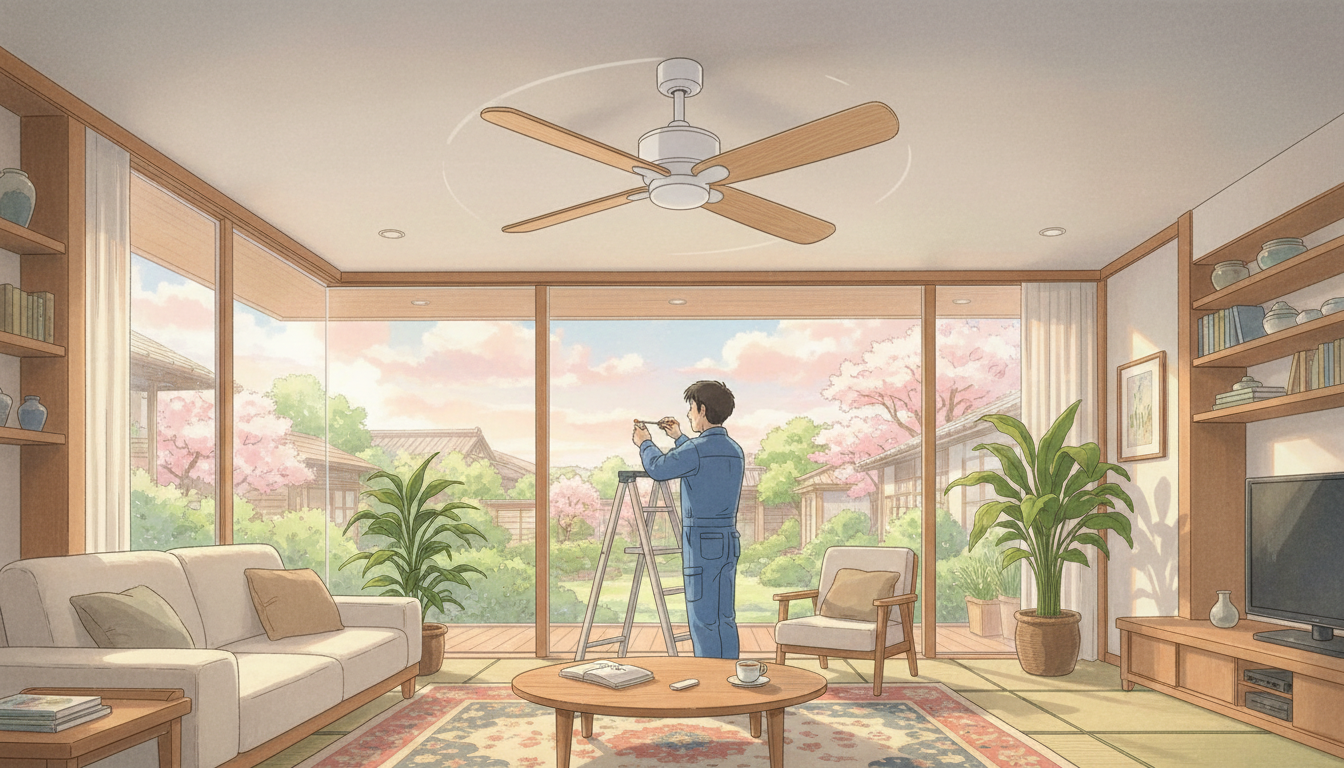
This definitive guide equips Singapore homeowners with everything needed for ceiling fan installation, fan repair, and maintenance. From HDB flats to condos, discover 2026 pricing, safety standards, and how Homejourney verifies providers for trusted ceiling fan service.
Ceiling fans are essential in Singapore's humid climate, circulating air to enhance comfort and cut energy costs. Whether your fan not working or you're installing a new one, professional service ensures compliance with SS 655:2020 and IEC 60335-2-80:2015 standards[1][2]. Homejourney prioritizes your safety with vetted electricians, upfront pricing, and real reviews from local users.
Table of Contents
- Why Ceiling Fans Matter in Singapore Homes
- Choosing the Right Ceiling Fan
- Ceiling Fan Installation Guide
- Common Ceiling Fan Problems & Fan Repair
- 2026 Ceiling Fan Service Costs in Singapore
- HDB, Condo & Safety Regulations
- DIY vs Professional: When to Call Experts
- Book Safe Ceiling Fan Services via Homejourney
- Maintenance & Longevity Tips
- FAQ: Ceiling Fan Queries from Singapore Homeowners
Why Ceiling Fans Matter in Singapore Homes
In Singapore's tropical heat, ceiling fans provide efficient cooling, reducing reliance on air-conditioners. They improve air circulation in HDB living rooms or condo bedrooms, lowering electricity bills by up to 30% when paired with AC[5].
Local insight: In high-rise HDBs like those in Punggol or Sengkang, fans combat stuffy air from enclosed layouts. Homejourney users report fans as a must-have for new BTO flats, enhancing comfort post-renovation.
Safety first: All fans must meet Consumer Product Safety Office requirements, including mounting plates and motor safeguards[2]. Faulty installations risk wobbling or falls, common in older false ceilings.
Benefits for HDB, Condo & Landed Properties
- HDB Flats: Standard 2.7m ceilings suit basic fans; ideal for 3-4 room units.
- Condo: Higher ceilings (3m+) need downrods; check MCST rules for communal wiring.
- Landed: Larger blades (56-72 inches) for open spaces like Toa Payoh landed homes.
Choosing the Right Ceiling Fan for Your Space
Select fans compliant with IEC 60335-2-80:2015, covering household safety up to 250V[1]. Popular brands like KDK or Mistral offer DC motors for quiet, energy-efficient operation.
Insider tip: For humid areas like Jurong West HDBs, choose rust-resistant blades with ABS plastic or coated metal. Measure room size—48-inch fans for 12x12m rooms, 56-inch for larger[3].
Key Selection Factors
| Factor | Recommendation | Singapore Example |
|---|---|---|
| Ceiling Height | 2.5m+ from floor to blades | HDB standard: 2.7m[3] |
| Blade Clearance | 0.2m from ceiling, 1m from walls | Avoid wobble in small Tampines flats[3] |
| Motor Type | DC for 50% energy savings | KDK models popular in condos |
| Features | Remote, reverse mode, lights | Reverse for winter, though rare here |
Homejourney tip: Search verified sellers via Property Search for new homes with pre-installed points.
Ceiling Fan Installation Guide: Step-by-Step
Professional ceiling fan installation takes 1-2 hours, ensuring optimal airflow and safety[3][5]. DIY risks voiding warranties and BCA non-compliance.
Pre-Installation Checks
- Verify ceiling type: Concrete (HDB standard) or false (condos).
- Check electrical point: Must have dedicated on/off switch; bypass regulators ($20 extra)[4].
- Measure clearances: Blades 2.5m from floor, 0.2m from ceiling[3].
Professional Installation Process
Expect: Ceiling inspection, secure mounting (reinforce false ceilings if needed), wiring, testing, cleanup[5]. For KDK fans, authorized techs charge $60 base[4].
False ceiling note: Add supports ($150-200) to bear 5-10kg fans; common in Yishun condos[4].
Common Ceiling Fan Problems & Fan Repair Solutions
If your fan not working, diagnose before calling for fan repair. Most issues stem from dust, loose parts, or wiring in humid Singapore weather.
Troubleshooting Table
| Symptom | Likely Cause | Quick Fix / When to Repair |
|---|---|---|
| Fan Not Spinning | Power trip, capacitor failure | Reset DB; pro repair $60+[4] |
| Wobbling/Noisy | Loose blades, imbalance | Tighten screws; balance by pro |
| Slow Speed | Regulator issue, dust buildup | Bypass regulator $20[4] |
| Lights Flickering | Loose wiring | Electrician check mandatory |
Original insight: In monsoon season, capacitor failures rise 20% in older HDBs like Bedok; annual checks prevent this.
2026 Ceiling Fan Service Costs in Singapore
Prices updated for 2026 reflect inflation and demand. Homejourney offers transparent quotes from verified pros.
- Basic Installation: $40-80 per fan (concrete ceiling, existing point)[4].
- False Ceiling: $60-200 + supports.
- KDK Official: $60-440 depending on wiring[4].
- Repair: $60+ for ceiling fan service; add $20 disposal.
- Multiple Fans: Discount for 2+ in same visit.
Condo premium: +20% for MCST access. Book via Homejourney for no-hidden-fees guarantee.
HDB, Condo Rules & Safety Regulations
HDB requires BCA-licensed electricians for wiring changes; no structural alterations without approval. Condos follow MCST bylaws—notify for communal areas[5].
Standards: SS 655:2020 for fans; suspension systems prevent falls[1][2]. Mounting plates mandatory; check for entrapment risks.
Safety tip: Ensure 2.5m floor clearance to avoid child hazards[3]. Homejourney pros are licensed and insured.
DIY vs Professional: When to Call Experts
DIY cleaning ok, but never wiring—risks shocks or fires. Pros handle HDB power trips ($50+) and reinforcements.
- DIY Safe: Wipe blades, lubricate bearings quarterly.
- Pro Needed: Installation, repairs, height adjustments.
Homejourney edge: Vetted providers save time; same-day for urgent fan not working cases.
Book Safe Ceiling Fan Services via Homejourney
Homejourney verifies all electricians, ensuring BCA licensing and real reviews. Book in minutes for ceiling fan installation or fan repair with upfront pricing.
- Transparent quotes: No surprises.
- Emergency response: Fix fan not working same-day.
- Bundle with aircon services via Aircon Services .
- Property search integration: Property Search for new homes.
Users love our service guarantee—quality or refund. Explore financing via Bank Rates for renos.
Maintenance & Longevity Tips
Follow IEC instructions: Annual pro checks, clean blades monthly[1]. Reverse blades seasonally for better flow.
Local hack: In dusty areas like Woodlands, use blade covers during renovations. Expect 10-15 year lifespan with care.
FAQ: Ceiling Fan Queries from Singapore Homeowners
Q: How much is ceiling fan installation in HDB?
A: $40-60 for standard 2.7m concrete ceilings with existing points[4]. Book via Homejourney for verified pros.
Q: Why is my ceiling fan wobbling?
A: Often blade imbalance or loose mounting. Pro repair recommended to check suspension[1][3].
Q: Fan not working after rain—fix?
A: Check capacitor or wiring; $60+ repair. Homejourney offers fast emergency service.
Q: Can I install on false ceiling?
A: Yes, with reinforcements ($150+)[4]. Ensure compliance with SS 655:2020[2].
Q: What's the cost for KDK fan service?
A: Installation $60-440; repairs similar. Official techs via Homejourney.
Q: HDB rules for new fan installation?
A: Use licensed electrician; no wall hacking without permit.
Ready for hassle-free ceiling fan installation or fan repair? Download Homejourney app at https://www.homejourney.sg—your trusted partner for safe home services. Get quotes now and join thousands of satisfied Singapore homeowners.