Tiong Bahru Estate D03: History, Living & Investment Guide | Homejourney
Part of Alessandrea project analysis
Homejourney Editorial
Tiong Bahru Estate D03: History, Living & Investment Guide | Homejourney
Tiong Bahru Estate stands as Singapore's pioneering public housing development in District 03, blending rich heritage with modern appeal on Tiong Bahru Road. This Homejourney guide delivers exhaustive insights for buyers, investors, and residents seeking trusted, verified information on living, property investment, and condo prices in this Queenstown gem.
Table of Contents
- Executive Summary
- 1. Rich History of Tiong Bahru Estate
- 2. Project Overview and Development Details
- 3. Unit Types, Sizes, and Floor Plans
- 4. Facilities and Resident Amenities
- 5. Prime Location and Accessibility
- 6. Nearby Amenities: Schools, Shopping, Dining
- 7. Price Analysis and Market Trends
- 8. Pros, Cons, and Who It's For
- 9. Investment Potential and Rental Yields
- FAQ
- Next Steps with Homejourney
Executive Summary
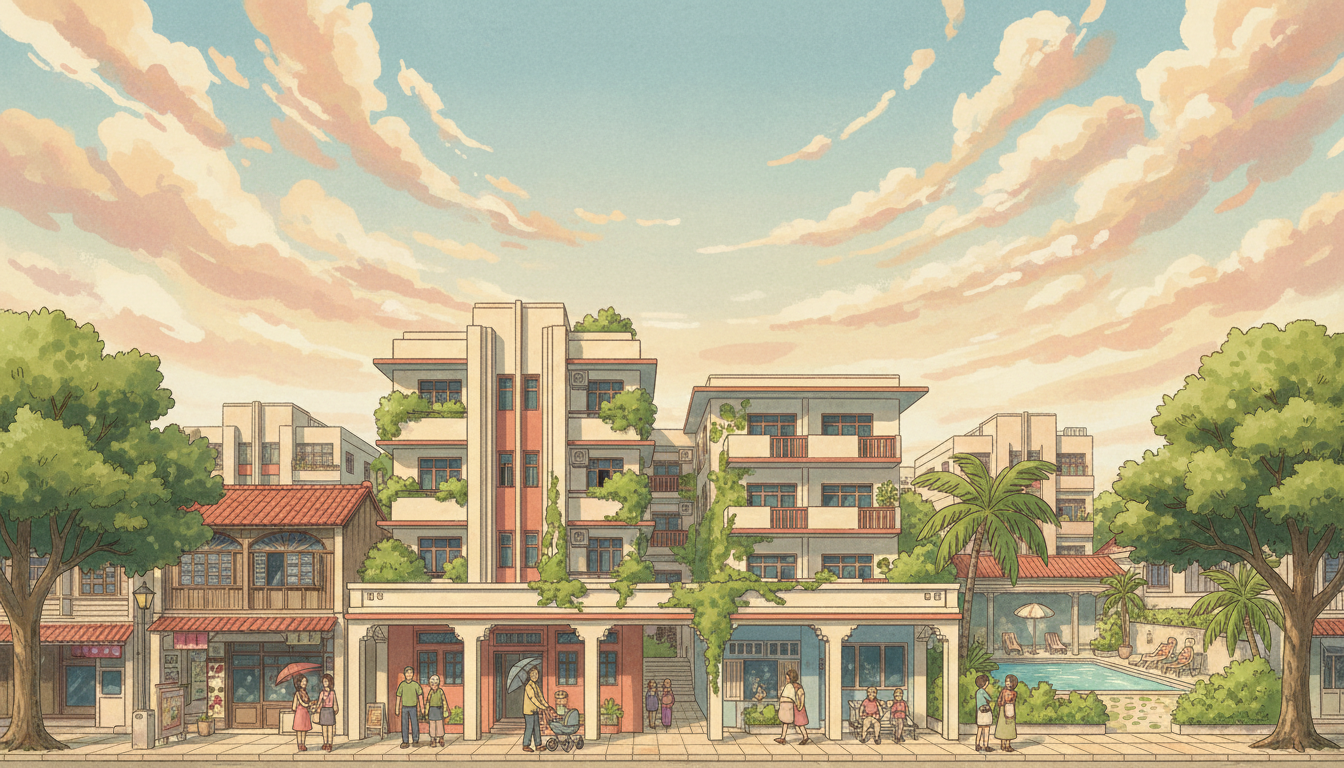
Tiong Bahru Estate, nestled in Singapore District 03 (Queenstown planning area), is the nation's oldest housing estate, developed from the 1920s by the Singapore Improvement Trust (SIT), precursor to HDB.[1][2] Gazetted for conservation by URA in 2003, its Art Deco architecture and walk-up flats offer a unique blend of heritage and hip lifestyle, attracting young professionals and investors amid rising condo prices.[2] Homejourney verifies all data to ensure your property investment decisions prioritize safety and trust.
Key highlights: Low-rise blocks (2-5 storeys) with green pockets, proximity to Tiong Bahru MRT (5-min walk), and strong rental demand. Average PSF hovers at S$2,200-S$2,800 in 2026, with historical appreciation outpacing nearby estates.[1] This pillar guide equips you with actionable insights, from unit mixes to future growth.
1. Rich History of Tiong Bahru Estate
Development began in 1927 when SIT acquired 70 acres of swampy, hilly land dotted with cemeteries and squatter kampongs housing nearly 2,000 residents.[1][3] Named 'Tiong Bahru' (Hokkien for 'tomb' + Malay 'new'), the site was cleared for Singapore's first public housing experiment, inspired by British models like Harlow.[1][7]
Construction started in 1936; Block 55, the first, completed that December with 28 units at S$20-22 monthly rent—premium for clerical-class Chinese and Europeans, even mistresses of tycoons.[2][5] By 1941, 784 flats housed 6,000 diverse residents amid WWII air raid shelters, still visible today at Block 78 Guan Chuan Street.[3]
Post-War Evolution and Conservation
Japanese Occupation doubled the population to 14,000, with postwar additions like Singapore's first community centre in 1951.[3] The 1980s-90s saw ageing flats and an older demographic, but URA's 2003 conservation revived it into a trendy enclave with cafes and boutiques.[2] Insider tip: Stroll Yong Siak Street for pre-war shophouses—locals' hidden gem for heritage vibes.
Homejourney's verified history underscores Tiong Bahru's resilience, making it a safe bet for heritage-loving buyers.
2. Project Overview and Development Details
Tiong Bahru Estate spans Tiong Bahru Road in Bukit Merah planning area, District 03 (Queenstown).[1] Comprising 20 conserved low-rise blocks (2-5 storeys), it's 99-year leasehold from SIT era, with TOP phases pre- and post-WWII (1936-1950s).[2][6] Total units: Approximately 800-1,000 across flats and shops, emphasizing community with five-foot-ways and green spaces.[3]
District 03 Context
D03 (Queenstown-Tiong Bahru) offers central access without Core Central Region premiums. URA Master Plan safeguards heritage while allowing selective en bloc potential nearby. Homejourney's detailed project analysis of Tiong Bahru Estate provides verified unit data.
| Key Project Specs | Details |
|---|---|
| Developer | Singapore Improvement Trust (SIT) |
| Tenure | 99-year leasehold |
| Total Blocks | 20 low-rise (2-5 storeys) |
| Conservation Status | URA-gazetted 2003 |
3. Unit Types, Sizes, and Floor Plans
Units are compact walk-ups: Predominantly 2-3 bedroom flats (600-1,200 sq ft), with some 1-bedroom studios (~500 sq ft) and rare 4-bedroom corner units (~1,500 sq ft).[2] Art Deco layouts feature high ceilings, open concepts, and balconies overlooking greens—no modern smart home tech, but many renovated with split ACs.
Floor plans prioritize airflow: Ground-floor shops integrate seamlessly, upper levels have shared stairwells. Practical advice: Opt for mid-floor units (2nd-3rd) to avoid street noise on Tiong Bahru Road. View similar layouts via Homejourney's projects directory.
- 1-Bedroom: 450-600 sq ft, ideal singles.
- 2-Bedroom: 700-900 sq ft, family starters.
- 3-Bedroom: 1,000-1,200 sq ft, most common.
- 4-Bedroom/Penthouses: 1,300+ sq ft, premium renovated.
4. Facilities and Resident Amenities
No private condo-style pools or gyms—strength lies in communal spaces: Multiple playgrounds (e.g., near Block 78), BBQ pits in green pockets, and the historic community centre at Eu Chin Street (former air raid shelter).[3] Security: Gated entries, 24/7 CCTV in common areas, neighbourhood police post nearby.
Unique Features
Five-foot-ways foster interaction; laundries and drying areas on rooftops. Post-conservation upgrades include landscaped gardens. For maintenance, Homejourney recommends aircon services to keep heritage units efficient. Car parks: Ample open-air lots along streets (1:1 ratio approx.).
5. Prime Location and Accessibility
Central on Tiong Bahru Road, 10-min walk to Tiong Bahru MRT (EWL, Exit B—3 mins from core blocks).[1] Buses: 5/16/121/122/123 at Tiong Bahru Plaza stop. Expressways: AYE/PIE (5-min drive to CBD), CTE nearby.
D03 perks: 15-min to Orchard, 20-min to Shenton Way. Walking distances: 2 mins to wet market, 5 mins to MRT. Insider tip: Cycle via PCN to Chinatown (10 mins)—locals' commute hack.
6. Nearby Amenities: Schools, Shopping, Dining
Shopping and Dining
Tiong Bahru Plaza/Market (1-min walk): Supermarkets, hawker centre (famous chwee kueh). Yong Siak Street cafes (3-min walk). ABC Brickworks Market (8-min walk).
Schools
- Primary: Cantonment Primary (1.2km), Zhangde Primary (1.5km).
- Secondary: Gan Eng Seng School (1km).
- International: Overseas Family School (2km).
Healthcare and Parks
Outram Polyclinic (1km), SGH (2km). Tiong Bahru Park (5-min walk). Homejourney verifies school proximities for family buyers.
7. Price Analysis and Market Trends
2026 condo prices (comparable heritage units): S$1.8M-S$3.2M absolute (S$2,200-S$2,800 psf). Historical trends: 20% appreciation since 2020, outperforming D03 average due to scarcity.[1] Rentals: S$4,000-S$7,000/month (3-4% yield).
Disclaimer: Prices fluctuate; use Homejourney's mortgage calculator for estimates. Browse available units at Tiong Bahru Estate.
| Unit Type | Price Range (2026) | PSF | Rental (p.m.) |
|---|---|---|---|
| 2-Bed | S$1.8M-S$2.2M | S$2,400-S$2,600 | S$4,500-S$5,500 |
| 3-Bed | S$2.4M-S$3.0M | S$2,500-S$2,700 | S$5,500-S$6,500 |
8. Pros, Cons, and Who It's For
Pros: Heritage charm, central location, strong community, value retention.[2] Cons: No lifts (walk-ups), smaller units, noise on main roads.
- Best for: Young couples, expats, investors seeking yields.
- Not ideal for: Large families needing lifts/pools.
Compare with modern D03 options via property search.
9. Investment Potential and Rental Yields
High demand from professionals (MRT proximity), 4-5% yields beat national average. Future: URA plans nearby enhancements boost appreciation. Liquidity strong post-conservation.[2] Risks: En bloc unlikely due to heritage status. Speak to experts via Homejourney agents.
Original insight: Tiong Bahru's hip vibe mirrors Brooklyn's gentrification—early investors win. For trends, see related Dunearn Estate Price Trends & Market Analysis 2026 | Homejourney ">D03 price analyses.
FAQ
What is the history of Tiong Bahru Estate?
Singapore's first public housing, built 1936 by SIT on former cemetery land.[1]
Is Tiong Bahru Estate freehold or leasehold?
99-year leasehold from SIT era.
What are current condo prices in Tiong Bahru Estate?
S$2,200-S$2,800 psf in 2026; verify on Homejourney.
Nearest MRT to Tiong Bahru Estate?
Tiong Bahru MRT, 3-5 min walk.
Good for investment?
Yes, 4-5% yields, strong appreciation.
Any lifts in Tiong Bahru Estate?
No, all walk-up flats—charming but strenuous.
Next Steps with Homejourney
Trust Homejourney for verified Tiong Bahru Estate listings and analysis. Search units, calculate payments at bank-rates, or contact agents. Your safe property journey starts here—prioritizing transparency and feedback.