424C Yishun Avenue 11 HDB For Sale: The Complete Resale Buyer's Guide
Buying a resale HDB flat at 424C Yishun Avenue 11 represents a significant financial decision for Singapore property buyers. This comprehensive guide provides verified data, practical insights, and actionable advice to help you navigate the Yishun resale market with confidence. At Homejourney, we prioritize your safety and trust by verifying all information and ensuring you have the clarity needed to make informed decisions about your property investment.
Table of Contents
- Executive Overview: 424C Yishun Avenue 11
- Property Details & Specifications
- Market Analysis & Price Trends
- Financing Your Purchase: CPF & Mortgage Options
- Step-by-Step Buying Process
- Investment Potential & Rental Yields
- Yishun Neighborhood Guide
- Complete Costs Breakdown
- Decision-Making Framework
- Frequently Asked Questions
- Next Steps with Homejourney
Executive Overview: 424C Yishun Avenue 11
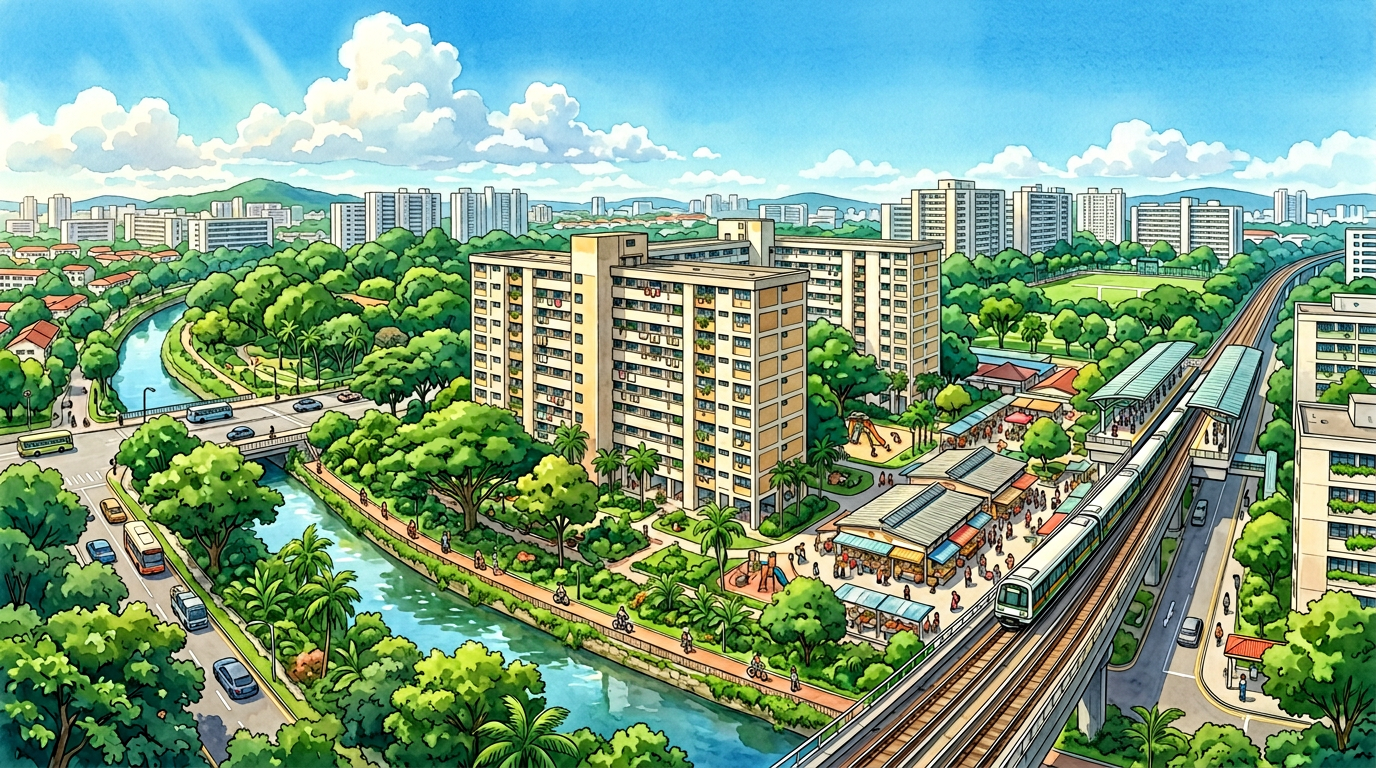
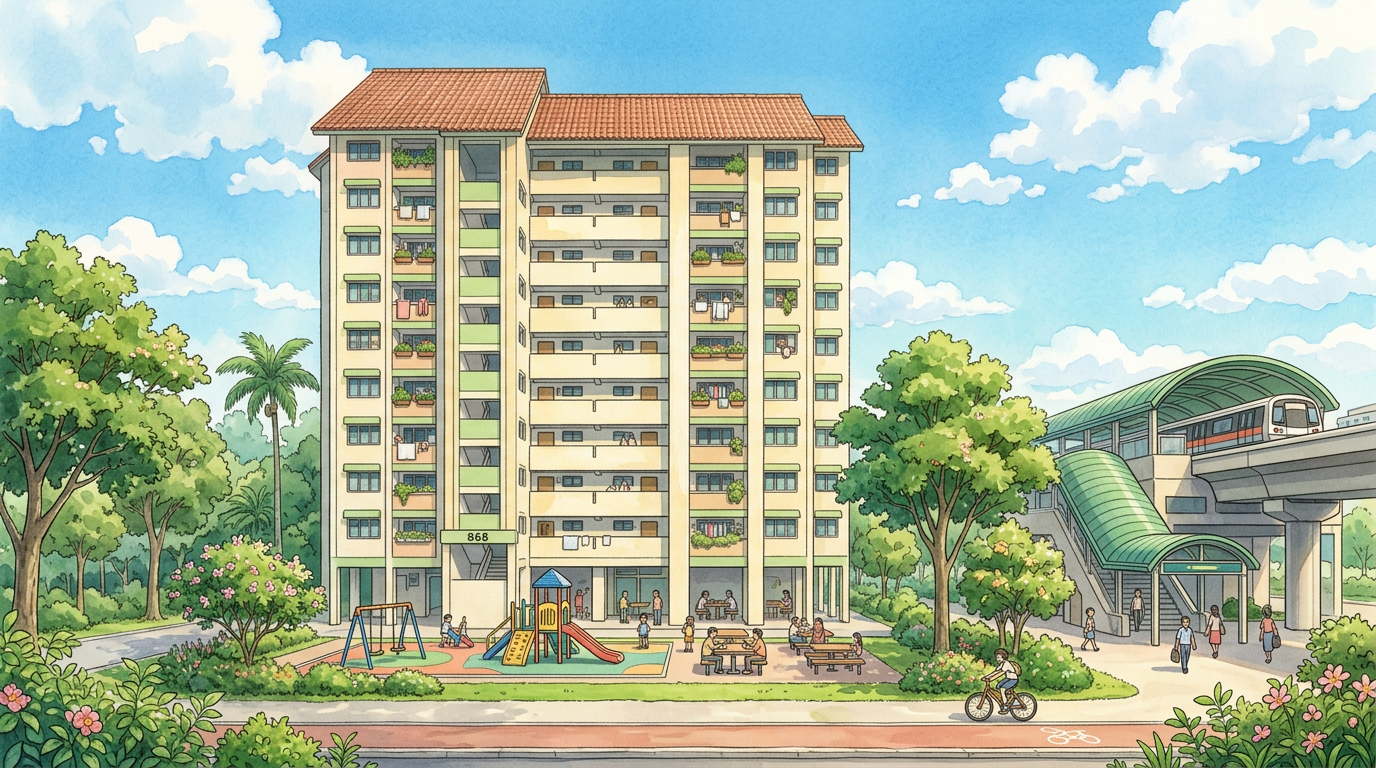
424C Yishun Avenue 11, officially known as Orchid Spring @ Yishun, is a mature HDB development completed in 2013 with a 99-year leasehold tenure.[1][2] Located in the established Yishun residential area, this 13-storey block offers 3-room and 4-room flat options, making it an attractive choice for families, upgraders, and investors seeking properties in a well-developed estate.
The block's lease commencement in 2015 means units still have approximately 88 years of lease remaining as of 2026, providing substantial security for buyers concerned about lease decay. With postal code 763424, the development benefits from Yishun's mature infrastructure, proximity to MRT services, and established community amenities.
Why Yishun Resale Flats Matter to Buyers
Yishun has evolved into one of Singapore's most sought-after residential areas, particularly for resale HDB buyers. The estate offers a unique combination of affordability compared to central locations, mature amenities, and strong rental demand. For investors, Yishun HDB for sale properties like 424C represent proven assets with consistent market performance.
Homejourney recognizes that purchasing a resale flat involves navigating complex regulations, understanding market dynamics, and making decisions that impact your financial future. This guide ensures you have verified, current information to proceed with confidence.
Property Details & Specifications
Block Information
| Block Number | 424C |
| Street Address | Yishun Avenue 11 |
| Development Name | Orchid Spring @ Yishun |
| Postal Code | 763424 |
| Town | Yishun |
| Year Completed | 2013 |
| Lease Commencement | 2015 |
| Tenure | 99-year Leasehold |
| Total Floors | 13 |
| Developer | Housing & Development Board (HDB) |
Flat Types & Floor Areas
424C Yishun Avenue 11 offers two primary flat configurations designed to accommodate different family sizes and preferences:
| Flat Type | Floor Area (sqm) | Floor Area (sqft) | Model |
| 3-Room | 67 | 721 | Model A |
| 4-Room | 92 | 990 | Model A |
The 3-room configuration is ideal for couples, small families, or investors targeting the rental market. The 4-room option suits larger families or buyers seeking additional space for home offices and guest areas. Both configurations feature efficient layouts typical of modern HDB designs.
Market Analysis & Price Trends for 424C Yishun Avenue 11
Current Resale Prices (2024-2025)
Understanding current market prices is essential for making competitive offers and assessing value. Based on verified transaction data, here are the recent resale prices for 424C Yishun Avenue 11:
| Period | Flat Type | Price Range | Price Per Sqft |
| July 2024 | 3-Room | $410,000 - $468,000 | $569 - $649 |
| June 2024 | 3-Room | $420,000 | $583 |
| May 2025 | 3-Room | $430,000 | $603 |
| May 2025 | 4-Room | $558,000 | $565 |
The data reveals that 3-room flats at 424C Yishun Avenue 11 have maintained stable pricing around $410,000-$468,000, with price per square foot ranging from $569 to $649. The 4-room configuration commands higher absolute prices but similar per-square-foot rates, indicating market efficiency.
Price Trend Analysis
Examining historical transactions from 2019 to 2025 shows a clear appreciation trend. In June 2019, 3-room units transacted at approximately $290,000 ($403 psf). By July 2024, prices had risen to $410,000-$468,000 ($569-$649 psf), representing approximately 41-61% appreciation over five years.
This appreciation reflects several factors: Yishun's maturation as a residential hub, improved connectivity through MRT enhancements, and sustained demand for resale properties. The relatively stable pricing in 2024-2025 suggests the market has reached equilibrium, with prices reflecting true market value rather than speculative peaks.
Rental Market Performance
For investors considering 424C Yishun Avenue 11 as an investment property, rental data is crucial. Recent rental transactions show:
- 3-room flats: $2,000-$3,200 per month (2024-2025)
- 4-room flats: $3,200-$3,600 per month (2023-2025)
The variation in rental prices reflects unit condition, floor level, and market timing. Higher-floor units and recently renovated flats command premium rents. This rental market depth makes 424C attractive for buy-to-let investors seeking consistent income streams.
Financing Your 424C Yishun Avenue 11 Purchase
CPF Usage for HDB Resale Purchases
For most Singapore citizens and permanent residents, the Central Provident Fund (CPF) provides the primary financing mechanism for HDB purchases. Understanding CPF rules is essential for maximizing your purchasing power.
CPF Ordinary Account (OA) Usage: You can use your CPF OA to pay the down payment and monthly mortgage installments. The amount available depends on your CPF balance and the property's valuation. For a property valued at approximately $430,000-$468,000, most buyers can utilize between $100,000-$150,000 from their CPF OA.
CPF Withdrawal Limits: As of 2026, you can withdraw CPF for HDB purchases up to the property's purchase price or valuation, whichever is lower. However, you must retain a minimum sum in your Retirement Account (currently $20,000-$30,000 depending on age).
CPF Refund on Sale: When you eventually sell your property, any CPF used for the purchase (plus accrued interest) must be returned to your CPF account from the sale proceeds. This is a critical consideration for investment planning.
Bank Mortgage Options
Most buyers finance the remaining purchase amount through bank mortgages. For a 424C Yishun Avenue 11 purchase at approximately $430,000-$468,000:
- Typical Down Payment: 10-20% ($43,000-$93,600) using CPF OA or cash
- Mortgage Amount: 80-90% ($344,000-$421,200)
- Loan Tenure: 25-30 years (maximum age 65 at maturity)
- Interest Rates: Current rates range from 4.0%-4.5% for HDB loans
For current mortgage rates and personalized financing options, consult Homejourney's Bank Rates ">bank rates page to compare offerings from major Singapore banks.
Loan-to-Value (LTV) and MSR/TDSR Requirements
Loan-to-Value (LTV) Ratio: Banks typically offer up to 80% LTV for HDB resale purchases. For a $430,000 property, this means a maximum loan of $344,000, requiring a down payment of $86,000.
Mortgage Service Ratio (MSR): Your monthly mortgage payment should not exceed 30% of your gross monthly income. For a $344,000 loan at 4.25% over 25 years (approximately $1,635/month), you need a minimum monthly income of $5,450.
Total Debt Service Ratio (TDSR): Your total monthly debt obligations (mortgage + car loans + credit cards + personal loans) should not exceed 60% of gross monthly income. This ensures you maintain financial flexibility and can service unexpected expenses.
Step-by-Step HDB Resale Buying Process
Phase 1: Preparation (Weeks 1-2)
Step 1: Financial Assessment - Determine your budget by calculating available CPF, down payment capacity, and affordable mortgage amount. Use your latest CPF statement to confirm OA balance and understand your purchasing power.
Step 2: Mortgage Pre-Approval - Approach banks for mortgage pre-approval. This letter confirms the maximum loan amount you qualify for and strengthens your negotiating position with sellers. Most banks provide pre-approval within 3-5 working days.
Step 3: Property Search - Use Homejourney's Property Search ">property search tool to explore available units at 424C Yishun Avenue 11 and compare with similar properties in Yishun. Filter by flat type, floor level, and price range to identify suitable options.
Phase 2: Offer & Negotiation (Weeks 3-4)
Step 4: Make an Offer - Once you identify a property, submit an offer in writing through your agent or directly to the seller. For 3-room flats, competitive offers typically range from $410,000-$450,000 depending on unit condition and floor level. For 4-room units, expect $520,000-$560,000.
Step 5: Negotiation - Sellers may counter-offer. Be prepared to negotiate on price, renovation condition, and move-in timeline. Most negotiations conclude within 1-2 weeks.
Step 6: Agreement in Principle - Once price is agreed, sign an Agreement in Principle (AIP) with the seller. This non-binding document outlines key terms and typically requires a 1% deposit (approximately $4,300-$4,680).
Phase 3: Documentation & Financing (Weeks 5-8)
Step 7: Formal Mortgage Application - Submit complete mortgage application with supporting documents: recent payslips, income tax returns, employment letter, CPF statement, and identification documents. Processing typically takes 2-3 weeks.
Step 8: Property Valuation - The bank appoints a valuer to assess the property. This valuation determines the maximum loan amount. For 424C Yishun Avenue 11, valuations typically align closely with agreed purchase prices given the established market.
Step 9: Mortgage Approval - Upon successful valuation and document review, the bank issues a formal mortgage offer. Review terms carefully, including interest rate, tenure, and conditions.
Step 10: Legal Documentation - Engage a conveyancing lawyer to prepare the Sale & Purchase Agreement (S&P). The lawyer conducts title searches, verifies seller's ownership, and ensures all legal requirements are met. Legal fees typically range from $1,200-$1,800.
Phase 4: Completion (Weeks 9-12)
Step 11: Sign S&P Agreement - Both buyer and seller sign the S&P Agreement, which is the binding legal document. A 5% deposit (approximately $21,500-$23,400) is typically required at this stage.
Step 12: CPF Withdrawal & Financing - Submit CPF withdrawal application to HDB/CPF Board. Simultaneously, finalize mortgage disbursement arrangements with your bank. CPF processing typically takes 2-3 weeks.
Step 13: Final Inspection - Conduct a final walkthrough 2-3 days before completion to verify the property's condition matches the agreement and any agreed renovations are complete.
Step 14: Completion & Key Handover - On completion date, funds are disbursed (CPF + mortgage + your cash), and ownership transfers to you. Keys are handed over, and you take possession of the property.
Investment Potential & Rental Yield Analysis
Calculating Rental Yield
For investors considering 424C Yishun Avenue 11 as an investment property, understanding rental yield is essential. Rental yield measures the annual rental income as a percentage of the property's purchase price.
3-Room Investment Example:
- Purchase Price: $430,000
- Average Monthly Rent: $2,600 (based on recent transactions)
- Annual Rental Income: $31,200
- Gross Rental Yield: 7.26% ($31,200 ÷ $430,000)
- Net Yield (after 20% expenses): 5.81%
4-Room Investment Example:
- Purchase Price: $558,000
- Average Monthly Rent: $3,400 (based on recent transactions)
- Annual Rental Income: $40,800
- Gross Rental Yield: 7.31% ($40,800 ÷ $558,000)
- Net Yield (after 20% expenses): 5.85%
These yields are competitive within the Singapore HDB market, particularly for mature estates like Yishun. The consistent rental demand reflects the area's established infrastructure and accessibility.
Expense Considerations for Landlords
When calculating net yield, account for these expenses:
- Property Tax: Approximately 4-5% of annual rental income
- Maintenance & Repairs: Budget 5-8% annually for maintenance, painting, and repairs
- Management Fees: If using an agent, typically 5-7% of rental income
- Vacancy Period: Assume 1-2 months annually when the property is unlet
- Insurance: Approximately $300-$500 annually for landlord insurance
These expenses typically total 15-20% of gross rental income, bringing net yield to 5.8-6.2% for 424C properties.
Long-Term Appreciation Potential
Beyond rental yield, HDB resale properties appreciate over time. Historical data for 424C shows approximately 8-10% annual appreciation from 2019-2024. However, this rate may moderate as the property ages and lease decay becomes more apparent in later years.
For long-term investors (10+ years), the combination of rental yield (5.8-6.2%) and capital appreciation (estimated 3-5% annually in mature estates) provides total returns of 8.8-11.2% annually, making HDB resale properties attractive compared to other asset classes.
Yishun Neighborhood Guide: Living at 424C Yishun Avenue 11
Location & Accessibility
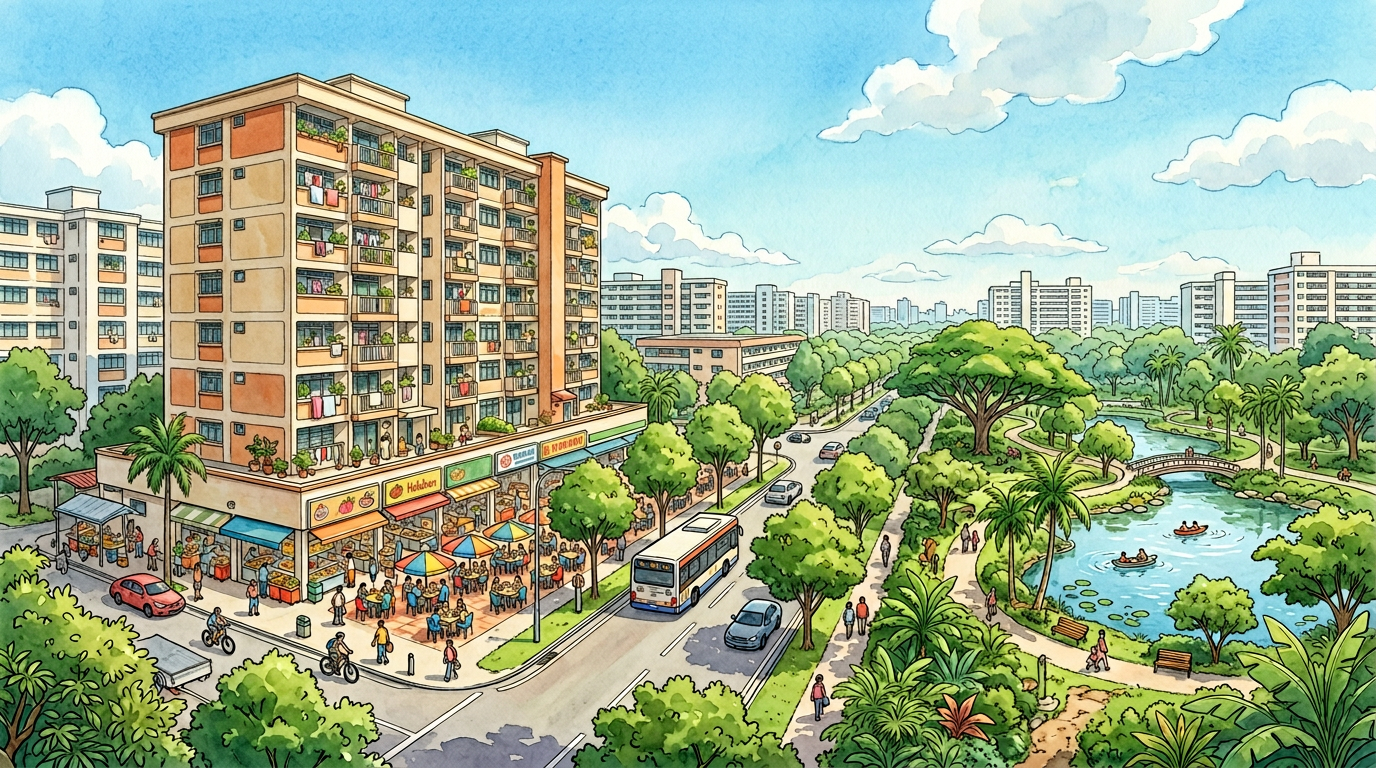
424C Yishun Avenue 11 is strategically located in the heart of Yishun, one of Singapore's most established and well-connected residential areas. The property's postal code 763424 places it within walking distance of key amenities and transport nodes.
MRT Connectivity: Yishun MRT Station (North-South Line) is approximately 1.5 km away, roughly a 15-20 minute walk or 3-5 minute bus ride. This direct connection to the city center makes commuting convenient for working professionals.
Bus Services: Multiple bus routes serve Yishun Avenue, including services to Orchard, Marina Bay, and other major business districts. Real-time bus tracking via mobile apps ensures predictable commute times.
Shopping & Dining
Yishun offers diverse shopping and dining options suitable for all lifestyles:
- Yishun Park Shopping Centre: Major shopping destination with supermarkets, restaurants, and retail outlets
- Northpoint City: Large integrated shopping mall approximately 2 km away, featuring cinema, dining, and entertainment
- Hawker Centers: Multiple hawker centers including Yishun Ring Road Hawker Centre, offering affordable local cuisine
- Wet Market: Traditional wet markets for fresh produce and local groceries
Education & Family Amenities
Yishun is well-served by educational institutions and family-friendly amenities:
- Primary Schools: Yishun Primary School, Northland Primary School, and Yishun Town Primary School within 1-2 km
- Secondary Schools: Yishun Secondary School and Northland Secondary School nearby
- Childcare Centers: Multiple licensed childcare centers throughout the estate
- Yishun Park: Large recreational park with jogging tracks, playgrounds, and sports facilities
Healthcare Services
Healthcare accessibility is excellent in Yishun:
- Yishun Community Hospital: Approximately 1.5 km away, offering primary and specialist care
- Polyclinics: Multiple polyclinics for subsidized healthcare and chronic disease management
- Private Clinics & Dental: Numerous private medical and dental clinics throughout the estate
Complete Costs Breakdown for Buying 424C Yishun Avenue 11
Purchase Price & Deposits
| Cost Item | 3-Room ($430,000) | 4-Room ($558,000) |
| Purchase Price | $430,000 | $558,000 |
| Option Fee (1%) | $4,300 | $5,580 |
| Deposit on S&P (5%) | $21,500 | $27,900 |
Stamp Duty & Legal Costs
| Cost Item | 3-Room | 4-Room |
| Buyer's Stamp Duty (BSD) | $4,300 | $5,580 |
| Conveyancing Legal Fees | $1,200-$1,800 | $1,200-$1,800 |
| HDB Administrative Fees | $100-$200 | $100-$200 |
Stamp Duty Explanation: Buyer's Stamp Duty (BSD) for HDB properties is calculated on a tiered basis. For properties valued at $430,000-$558,000, BSD ranges from approximately 1% of the purchase price. This is a one-time cost paid at completion.