
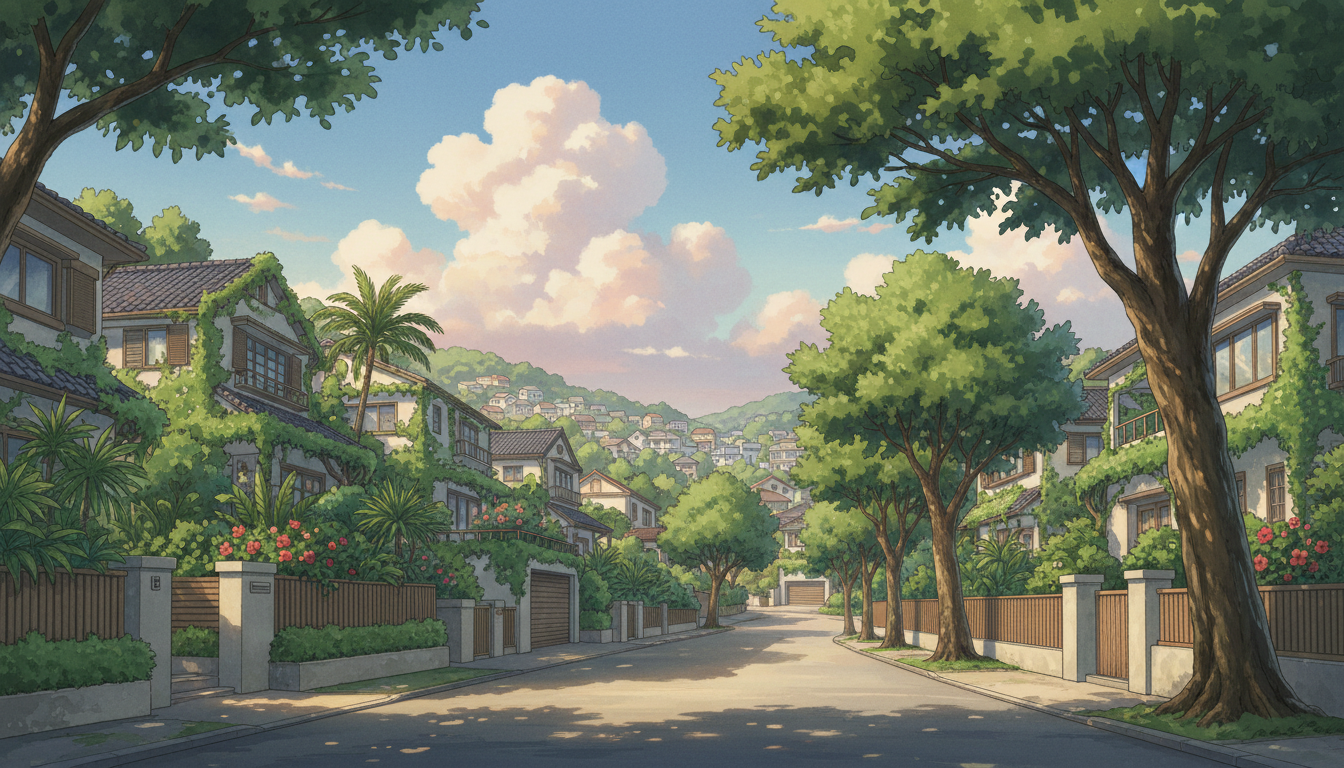
Sanny Park for sale represents a rare opportunity to own freehold landed properties in Singapore's prestigious District 11 along Merryn Road. This definitive Homejourney guide covers available units, price analysis, location perks, and the full buying process, empowering you with verified insights for confident decisions in Newton and Novena.
Homejourney prioritizes your safety through transparent data and verified listings, ensuring a trusted path to property ownership. Whether you're a first-time buyer, upgrader, investor, or expat, this pillar resource details everything about Sanny Park for sale, Merryn Road landed homes, and D11 properties.
Table of Contents
- Property Overview
- Available Units for Sale
- Why Buy at Sanny Park
- Price Analysis for Buyers
- Location Advantages
- Financing Guide for Buyers
- Buying Process
- Investment Potential
- FAQ
Property Overview
Sanny Park is a freehold landed development completed in 1976, featuring 54 units of terraced, semi-detached, and detached houses on Merryn Road (also referenced as Merryn Avenue or Terrace) in District 11's Newton/Novena enclave.[1][2][4]
These homes span from 1,657 sqft to over 9,000 sqft, offering spacious layouts ideal for families or investors. Well-maintained despite their age, units boast generous land plots in the Core Central Region (CCR), near Stevens MRT and premium amenities.[1][2]
Buyers appreciate Sanny Park's exclusivity—only 54 units across 62-63 blocks—providing privacy in a quiet, leafy setting. Homejourney verifies all listings for authenticity, aligning with our commitment to user safety and trust.[6]
Developer Note: As a mature estate, Sanny Park lacks a single developer; resales dominate the market, ensuring established quality.
Why Buyers Love Sanny Park
- Freehold tenure for generational wealth.
- Large plot sizes uncommon in CCR.
- Proximity to Botanic Gardens and elite schools.
- Strong community feel with modern upgrades possible.
Insider tip: Many owners have customized interiors, blending vintage charm with contemporary luxury—perfect for upgraders seeking character over new builds.
Available Units for Sale
Sanny Park for sale units include terraces (1,657 sqft+), semi-Ds, and detached homes up to 9,024 sqft. Recent 2025 transactions show terraces at $6.18M ($3,731 psf) and detached at $18.5M ($2,050 psf).[2]
Expect current availability in the $6M-$20M range, with terraces most popular for their balance of size and price. Homejourney's verified listings ensure accurate available units—browse now for real-time options.
View all units for sale at Sanny Park to see photos, floor plans, and agent contacts.
Unit Types Table
| Type | Size Range (sqft) | Price Range (2026 Est.) | PSF Range |
|---|---|---|---|
| Terrace | 1,657 - 2,500 | $6M - $8M | $2,500 - $3,731 |
| Semi-Detached | 3,500 - 5,000 | $10M - $15M | $2,500 - $3,000 |
| Detached | 4,000 - 9,139 | $12M - $20M+ | $2,050 - $2,500 |
Disclaimer: Prices are estimates based on 2025 URA data; actuals vary. Check Homejourney for latest.
Why Buy at Sanny Park
Sanny Park stands out for its freehold status in CCR District 11, offering property investment stability amid rising demand. Key perks include vast gardens, private driveways, and renovation potential for modern living.
Lifestyle shines with walks to Botanic Gardens (UNESCO site) and Coronation Plaza's FairPrice. Families value the serene yet connected vibe—ideal for buy condo alternatives in Newton or Novena.
Unique features: Expansive plots allow pools and extensions, rare in dense Singapore. Homejourney users report high satisfaction from verified viewings.
Top Selling Points
- Privacy: Low-density with 54 units only.
- Heritage Appeal: 50-year charm with upgrade flexibility.
- Family-Friendly: Space for kids, proximity to parks.
- Investor Edge: Strong rental demand from expats.
Price Analysis for Buyers
In 2026, Sanny Park PSF averages $2,050-$3,731, competitive in D11 where landed averages $2,090-$2,329.[2][3] Recent sales: Sep 2025 detached at $18.5M ($2,050 psf), Aug 2025 terrace at $6.18M ($3,731 psf).[2]
Compared to neighbors like Capitol Park ($2,575 psf) or Hillcrest Park ($2,415 psf), Sanny offers value for larger plots.[3] Historical appreciation: Steady uplift in CCR freeholds, outpacing inflation.
See detailed price trends and transaction history on Homejourney, sourced from verified URA data.
D11 Landed Price Comparison Table
| Project | Avg PSF (2025) | Type |
|---|---|---|
| Sanny Park | $2,050 - $3,731 | Terrace/Detached |
| Capitol Park | $2,575 | Landed |
| Hillcrest Park | $2,415 | Landed |
| Raffles Park | $2,128 | Landed |
Insight: Sanny's terrace high-PSF reflects compact efficiency; detached offers best per-sqft value long-term.[3]
Location Advantages
Sanny Park on Merryn Road enjoys prime D11 access: 10-min walk to Stevens MRT (Thomson-East Coast Line), 15-min drive to Orchard Road.[1][4]
Nearby: Coronation Plaza (FairPrice, shops, 5-min walk), Cluny Court (Cold Storage), Adam Road Food Centre. Recreation: Botanic Gardens (1km), Malcolm Park.
Schools: St. Joseph's Primary (1.2km), Anglo-Chinese School (Primary) nearby; international options like United World College (short drive). For families, this is gold.
D11 perks: CCR prestige, low density, future-proof with Circle Line expansions.
Amenities Quick List
- MRT: Stevens (Exit A, 800m walk).
- Schools: Nanyang Primary (1.5km), Raffles Girls' Primary.
- Shopping: Novena Square (2km), Orchard (5-min drive).
- Parks: Botanic Gardens (10-min walk).
Financing Guide for Buyers
For a $7M terrace, expect 25% downpayment ($1.75M), with loans up to 75% LTV for Singaporeans. Monthly: ~$20,000 at 3% interest (30-year tenure).
ABSD: 0% first-time Singaporean buyers; 17% for second property. CPF usable for downpayment/stamp duties. Expats: 5% ABSD, higher rates.
Use Homejourney tools for precision: Check your buying power with our mortgage calculator. Insider tip: Lock rates early amid 2026 volatility.
Estimated Payments Table
| Unit Price | Downpayment (25%) | Monthly (3%, 30yr) |
|---|---|---|
| $6M Terrace | $1.5M | $17,800 |
| $12M Semi-D | $3M | $35,500 |
| $18M Detached | $4.5M | $53,300 |
Estimates; consult agents via Homejourney.
Buying Process
1. Search verified listings on Homejourney.
2. Schedule viewing: Schedule a viewing with a property agent.
3. Offer via Option to Purchase (1% fee).
4. Exercise option (4% total), pay downpayment.
5. Financing approval, legal checks.
6. Completion (8-12 weeks).
Required: NRIC/passport, income proofs, CPF statements. Homejourney streamlines with verified agents, ensuring safety.
- Verify unit on Sanny Park project page.
- Engage lawyer for title checks.
- Pay stamp duties within 14 days.
Investment Potential
Sanny Park yields 2-3% rentals: Terraces $8K-$11.8K/month, detached $16K-$29K (2023-2025 data).[2] Tenant demand high from expats near Novena Medical Hub.
Capital growth: D11 landed up 5-7% annually; CCR freeholds resilient. Future: Nearby GCR enhancements boost values.
Compare to 38 Amber Investment Returns: Rental Yield Analysis | Homejourney ">similar analyses. Strong for property investment.
FAQ
What is the price range for Sanny Park for sale?
Units range $6M-$20M+ ($2,050-$3,731 psf), based on 2025 transactions.[2]
Is Sanny Park freehold?
Yes, fully freehold landed on Merryn Road.[1][2][4]
Nearest MRT to Sanny Park?
Stevens MRT, 10-min walk.[4]
ABSD for buying Sanny Park as second property?
17% for Singaporeans; consult Homejourney calculator.
Rental yields at Sanny Park?
2-3%, with detached up to $29K/month.[2]
Schools near Sanny Park?
St. Joseph's Primary (1.2km), ACS Primary.[1]
How to view Sanny Park units?
Browse on Homejourney and book via agents.
Ready to buy? Start with Homejourney's safe, verified platform. View Sanny Park for sale listings today—your trusted partner for District 11 properties.