
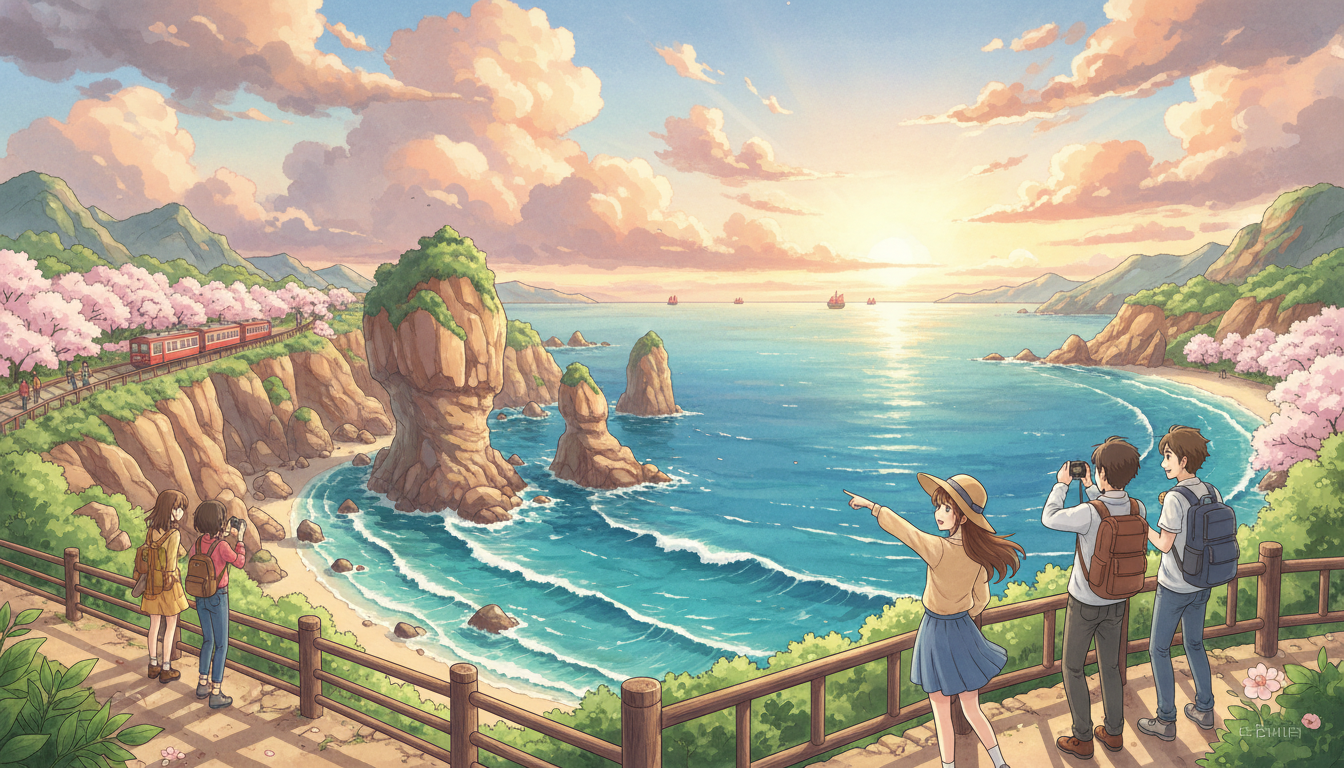
Yehliu Geopark is one of Taiwan’s most iconic coastal landscapes, famous for its otherworldly rock formations and the legendary Queen’s Head — and it makes an easy, safe, and rewarding day trip from Taipei for Singapore travellers.
In this definitive Yehliu Geopark day trip guide, Homejourney brings together first-hand experience, current data, and practical tips to help you plan confidently — whether you are flying in from Singapore, already in Taipei, or exploring Asian destinations while researching real estate and lifestyle options.
Executive Summary: Yehliu Geopark Day Trip at a Glance
If you only need a quick overview, this section summarises the essentials for a safe, smooth Yehliu day trip, especially from a Singapore perspective.
- What is Yehliu? A coastal geopark on Taiwan’s north coast (Wanli District, New Taipei City), known for dramatic sandstone rock formations sculpted by wind and waves, including the famous Queen’s Head.[2][3]
- Why go? Easy Taipei day trip (~80–90 minutes by direct bus from Taipei Main Station), unique landscapes often compared to a Martian surface, safe walking trails, and excellent photo opportunities.[1][2][3]
- Opening hours (reference): Typically around 08:00–17:00, with last entry near closing; confirm on the official New Taipei City Tourism site before visiting.[2]
- Tickets (reference): Around NT$120 for adults, with concessions for children, students, and seniors.[4]
- Best season: Oct–Apr is cooler and less humid for Singapore visitors; summer offers clear skies but strong sun and heat along the exposed cape.[2][3]
- Safety: Clearly marked walking paths, barriers near cliffs, English signage, and attentive park staff make it family‑friendly, though strong winds and slippery rocks require basic caution.[2][3]
- From Singapore: 4.5–5 hr flight to Taipei Taoyuan, then 45–60 min to Taipei city and 80–90 min bus ride to Yehliu.[1][3][8]
Homejourney approaches Yehliu like we do Singapore property: with verified information, safety-first thinking, and clear, step‑by‑step decision guides, so you can focus on enjoying the experience.
1. Yehliu Geopark Overview: Why It Belongs on Your Taipei Day Trip List
Yehliu Geopark (野柳地質公園) is a narrow 1.7 km cape stretching into the sea on Taiwan’s north coast, in Wanli District, New Taipei City.[2] Because soft sandstone here erodes at different speeds under wind, waves, and chemical weathering, Yehliu has become a natural outdoor classroom of geology.[2][3]
The park is often described as “Martian” thanks to rock shapes like mushrooms, candles, and honeycombs scattered across an ochre landscape beside vivid blue water.[2][4] CNN has compared Yehliu’s terrain to the surface of Mars.[2] For travellers from Singapore, where coastal landscapes tend to be flat and green, Yehliu offers a strikingly different seascape within a manageable travel time.
Key reasons Yehliu works especially well for Singapore visitors:
- Easy logistics: No need to rent a car. Direct public buses (e.g. Kuo‑Kuang 1815) run from Taipei Main Station in about 80–90 minutes.[1][3]
- Safe environment: Paved walkways, clear signage, and managed visitor flows around popular rock formations make it comfortable even for families and older travellers.[2][3]
- Compact but varied: You can see the signature features, including the Queen’s Head, within 1.5–2.5 hours, leaving time for other North Taiwan highlights like Jiufen or Shifen on the same day.[1][3][8]
- Educational value: The geology exhibits and interpretive boards parallel Singapore’s own focus on educational family travel, similar to how families in Singapore might visit Science Centre or Pulau Ubin.
As with Homejourney’s Singapore property tools, the value of Yehliu is in how much variety you get in a short and well‑structured experience.
2. Best Time to Visit Yehliu (Weather, Crowds, and Photography)
2.1 Seasons and Weather
Taiwan’s north coast has four distinct seasons, which affect both comfort and photography at Yehliu.
| Season | Months | Conditions at Yehliu | Suitability for Singapore Visitors |
|---|---|---|---|
| Spring | Mar–May | Mild temps, some rain, greener backdrop, changeable skies. | Comfortable; pack light jacket and umbrella. |
| Summer | Jun–Sep | Hot, humid, strong sun, chance of typhoons; bright blue skies.[2][3] | Similar to Singapore but more exposed sun; go early morning or late afternoon. |
| Autumn | Oct–Nov | Cooler, generally drier, excellent visibility. | Often the best balance of comfort and photo conditions. |
| Winter | Dec–Feb | Cool, can be windy and damp; moody seascapes. | Great if you want to escape Singapore heat; bring windbreaker. |
Insider tip (from repeated visits): For most Singapore travellers who are sensitive to heat but used to humidity, late Oct–mid Dec and late Mar–Apr usually give the best comfort‑to‑scenery ratio along the exposed cape.
2.2 Time of Day
- Morning (08:00–11:00): Cooler, softer light, fewer tour groups. Ideal if you’re coming directly from Taipei on the first bus and want less crowded Queen’s Head photos.[1][3]
- Midday (11:00–14:00): Strongest light and heat; rock colors are vivid but it’s hot and shadows are harsh. Pack sunscreen, hat, and water.[2][3][4]
- Afternoon (14:00–17:00): Light becomes warmer; tour buses thin out after 15:00. Good if you combine Yehliu after a morning in Taipei.
For photography, the directional light in early morning or late afternoon highlights the textures of the mushroom rocks and honeycomb surfaces, similar to how golden hour flatters heritage shophouses in Singapore’s Kampong Glam or Joo Chiat.
3. How to Get to Yehliu Geopark (From Taipei & From Singapore)
3.1 From Singapore to Taipei
Most visitors from Singapore fly into Taoyuan International Airport (TPE). Multiple airlines operate direct flights, typically 4.5–5 hours. From Taoyuan, airport MRT and buses connect to Taipei Main Station in about 35–50 minutes, depending on service.[8]
Singapore travellers can use Homejourney’s currency and budgeting tools to estimate trip expenses in SGD versus TWD and compare that to funds set aside for potential property investment. Homejourney supports currency conversions for Taiwan dollars, helping you benchmark costs against Singapore housing budgets and mortgage planning via Bank Rates .
3.2 From Taipei to Yehliu Geopark
The safest, simplest route from central Taipei is by public bus with no transfers.
Option A: Direct Bus from Taipei Main Station (Recommended)
- Bus: Kuo‑Kuang Bus 1815 or 1815A to Jinshan Youth Activity Center, alighting at Yehliu stop.[1][3]
- Duration: About 80–90 minutes depending on traffic.[1][3]
- Frequency: Roughly every 15–30 minutes in the day (verify on Kuo‑Kuang’s timetable before travel).
- From bus stop to park: 5–10 minutes’ flat walk following clear signs to Yehliu Geopark entrance.
Insider tip: If you’re staying near Ximending or Taipei Main, aim for an early bus (around 07:30–08:30) to reach Yehliu before major tour crowds, especially if you’re particular about photos at the Queen’s Head.[1]
Option B: Bus from Taipei City Hall / Other Points
Alternative buses like 862 and 790 also serve the Yehliu area from other parts of greater Taipei, often via Keelung.[1] These are useful if you’re already on the northeast coast but typically involve an extra transfer.
Option C: Private Tour or Chartered Car
Many visitors, including families from Singapore, book a full‑day tour that covers Yehliu + Shifen + Jiufen + Jinguashi.[1] These start from central Taipei (often Ximending), include transport and basic guiding, and remove the need to navigate buses.
Such day tours typically follow a 09:00–18:00 pattern, with around 60–90 minutes at Yehliu, then onward stops for sky lanterns in Shifen and teahouses in Jiufen.[1] Check that your operator has good safety records, licensed vehicles, and clear cancellation policies — an approach similar to how Homejourney vets real estate partners for user safety.
4. Tickets, Opening Hours, and On‑Site Facilities
4.1 Opening Hours & Last Entry
According to New Taipei City’s official tourism site, Yehliu Geopark generally operates during daytime hours, with last admission near closing.[2] Typical hours published in recent seasons are around 08:00–17:00, though these may extend or reduce seasonally or for special events.
Always confirm the latest hours on the New Taipei City Travel website before your visit, especially if you are combining Yehliu with multiple stops on the same day.[2]
4.2 Ticket Prices (Indicative)
Recent guides and tour operators list adult entry to Yehliu Geopark at approximately NT$120, with discounted tickets for children, students, and seniors.[4] Group tours often bundle tickets into their package price.[1]
To help Singapore travellers benchmark costs, NT$120 is usually less than a typical hawker lunch for two in Singapore. In Homejourney’s budgeting mindset, it’s a low‑risk, high‑value spend, especially when paired with free attractions like Taipei’s temples or riverside parks.
4.3 Facilities and Accessibility
Yehliu Geopark is designed as a safe mass‑market attraction with several helpful facilities:[2][3]
- Paved walkways and timber boardwalks along much of the cape, with railings near steeper drops.
- Clear multilingual signage (Mandarin and English at minimum) explaining geological features and safety advisories.[3]
- Visitor centre near the entrance with toilets, ticketing, and basic information counters.[2]
- Shops and eateries along the entrance street, offering snacks, drinks, and souvenirs.[2]
- Islamic prayer room within the park, helpful for Muslim travellers from Singapore and Southeast Asia.[2]
Accessibility note: While much of Area 1 is relatively flat and manageable, the further sections of the cape include stairs and uneven rock surfaces. Travellers with mobility challenges may prefer to stay within the first area but can still see many of the key formations.[2]
5. Top Attractions & Rock Formations: Queen’s Head and Beyond
Yehliu is divided into three main areas along the cape, each with different geological highlights.[2]
5.1 Area 1: Mushroom Rocks and Geological “Classroom”
The first section after you enter the park showcases dense clusters of mushroom rocks and candle rocks, where a harder capstone sits atop a narrower stem of softer sandstone.[2]