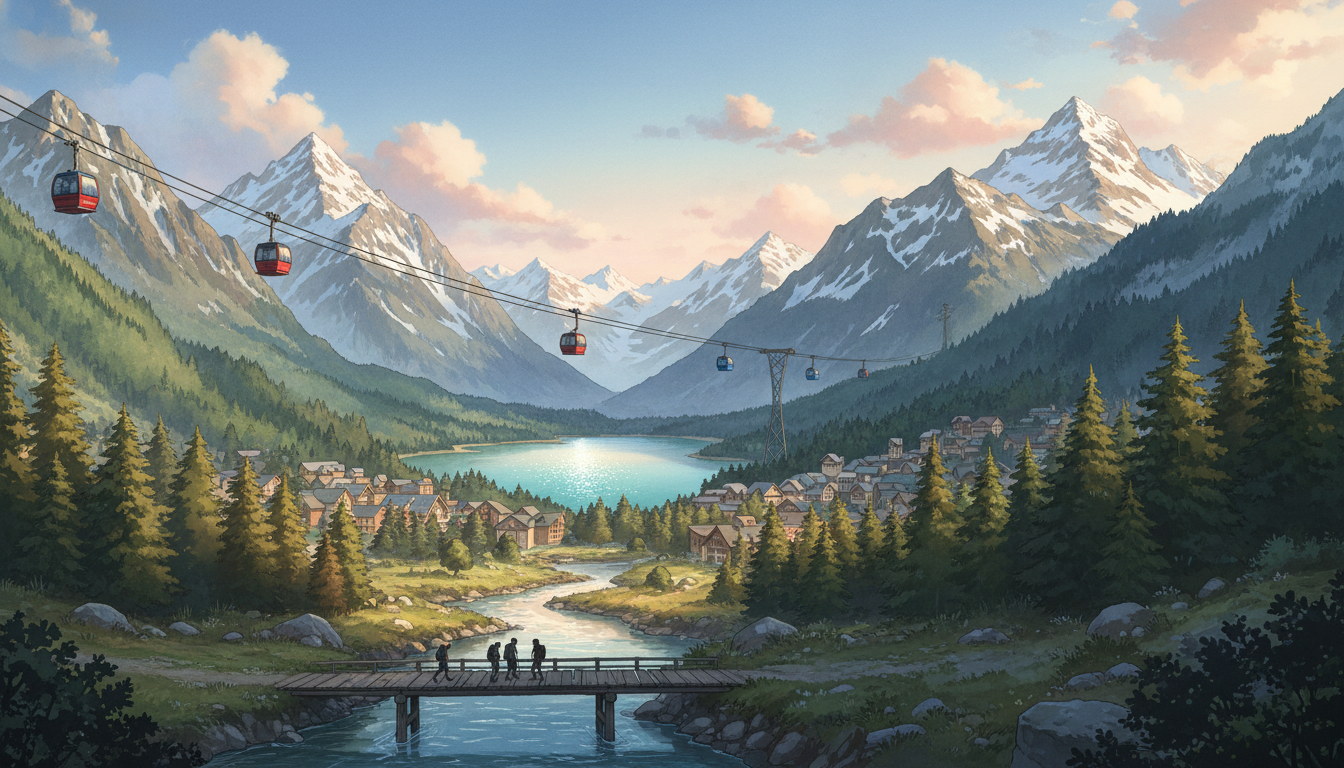
Whistler BC is one of the few destinations in the world that genuinely works 365 days a year – world‑class Whistler skiing in winter, hiking and biking in Whistler summer, and a walkable Whistler Village anchored by the iconic Peak 2 Peak Gondola.
For Singapore‑based travellers, expats and investors, Whistler is not just a holiday spot; it is also a useful benchmark when thinking about lifestyle destinations, mountain homes, and even long‑term property investment diversification alongside Singapore real estate through platforms like Homejourney.
This guide is written from the perspective of a Singapore‑based traveller who has visited Whistler multiple times in different seasons, with practical tips on jet‑lag, budgeting in SGD, and how Whistler compares to familiar places like Orchard, Holland Village, and Swiss ski resorts.
Table of Contents
- 1. Whistler BC Overview: Why It Matters for Singapore Travellers
- 2. Best Time to Visit Whistler: Season‑by‑Season Guide
- 3. Getting to Whistler from Singapore
- 4. Currency, Costs and Money‑Saving Tips
- 5. Top Attractions: Peak 2 Peak, Whistler Blackcomb & Beyond
- 6. Year‑Round Experiences: Winter, Summer & Shoulder Seasons
- 7. Where to Stay in Whistler: Areas & Hotels
- 8. Food & Dining: What to Eat in Whistler
- 9. Sample 3‑Day and 5‑Day Itineraries
- 10. Practical Travel Tips: Visas, Safety, Transport
- 11. From Whistler to Singapore: Real Estate & Relocation Insights
- 12. Whistler FAQ for Singapore Travellers
1. Whistler BC Overview: Why It Matters for Singapore Travellers
Whistler is a mountain resort town about 120 km north of Vancouver in British Columbia, Canada, best known for the twin mountains of Whistler and Blackcomb and the pedestrian‑only Whistler Village.[1][4] The combined Whistler Blackcomb area has around 33 sq km of skiable terrain and is a former Winter Olympic venue.[1]
For Singapore‑based travellers and investors, Whistler is interesting for three big reasons:
- Year‑round adventure: Reliable snow from roughly late November to April, and an active summer scene from June to September with hiking, lakes and mountain biking.[1][3]
- Compact, walkable village: Whistler Village is pedestrian‑only and functions a bit like a cooler, alpine version of an integrated mall district in Singapore – think a car‑free Orchard Road combined with Sentosa’s resort feel.[1][7]
- Global lifestyle benchmark: As with Swiss resorts, Whistler attracts high‑net‑worth travellers and second‑home buyers; understanding Whistler helps Singapore investors contextualise lifestyle‑driven property investments in places like Singapore, Japan or Europe.
Homejourney’s mission is to help users make safe, transparent decisions. So throughout this guide, you will see:
- Realistic cost estimates for Singapore travellers (in CAD and rough SGD).
- Safety notes for snow activities, transport and night‑time conditions.
- Links back to Homejourney tools like Property Search , Bank Rates and Projects Directory when we talk about real estate or financing.
2. Best Time to Visit Whistler: Season‑by‑Season Guide
Whistler is truly a four‑season destination, but your experience will differ massively by month. Tourism Whistler and travel guides broadly split it like this:[1][3][4]
| Season | Months (approx.) | Best for | Singapore‑focused tips |
|---|---|---|---|
| Peak winter | Jan – Feb | Deep powder, Whistler skiing, full terrain open | Coldest period; good for serious skiers, early CNY breaks |
| Late winter / spring ski | Mar – mid‑Apr | Milder weather, longer daylight, family trips | Snow still good at higher elevations; nicer for kids unused to cold |
| Shoulder (spring) | late Apr – May | Quiet village, deals | Some lifts/trails closed; check before booking |
| Whistler summer | Jun – Sep | Hiking, biking, lakes, Peak 2 Peak sightseeing | Best for non‑skiers and families; long daylight till ~10 pm in peak summer[1] |
| Fall | Oct – Nov | Autumn colours, lower prices | Can be rainy; limited alpine access before snow season starts |
Insider perspective for Singapore travellers
From a Singapore point of view:
- First‑time family ski trip: Aim for mid‑March. It is still ski season, but less brutally cold than January. Kids and older parents adapt better.
- Couples & non‑skiers: July or August work well – warm valley temperatures, lively village patios, and lots of scenic photo spots along the Peak 2 Peak walkways.[1]
- Budget‑conscious: Late spring (late April/May) or fall (October) can be cheaper for accommodation, but expect reduced operations – always check the Whistler Blackcomb operations calendar.[4][5]
3. Getting to Whistler from Singapore
Flight routes from Singapore
There are no direct flights from Singapore to Whistler. You will typically fly to Vancouver International Airport (YVR), then continue by road to Whistler.[4]
Typical routes for Singapore residents:
- Singapore (SIN) → Vancouver (YVR) via Tokyo, Seoul or Hong Kong (on airlines like Singapore Airlines partner carriers, ANA, JAL, Korean Air, Cathay).
- Travel time: around 18–22 hours total including transit, depending on connection.
Vancouver to Whistler transport
From Vancouver Airport or downtown to Whistler, you have several options:[6][7]
- Shared shuttle buses: Scheduled services along the Sea‑to‑Sky Highway. Journey time around 2–2.5 hours in good weather.
- Private transfer: More expensive but convenient for families with ski bags; door‑to‑door service.
- Rental car: Good if you plan side trips, but winter driving can be challenging for those unfamiliar with snow and ice.
Safety note: In winter, the Sea‑to‑Sky Highway can be snowy or icy. If you are not experienced with winter driving (which most Singaporean drivers are not), consider a shuttle or private transfer with professional drivers accustomed to the conditions.
4. Currency, Costs and Money‑Saving Tips
Currency basics
Whistler uses the Canadian Dollar (CAD). For rough Singapore planning, many travellers estimate 1 CAD ≈ 1.0–1.1 SGD as a mental benchmark, but always check live rates via your bank or trusted FX app.
Homejourney supports multi‑currency views for Singapore property searches, so if you are a Canadian or Whistler‑based investor exploring Singapore real estate, you can conveniently compare prices in CAD and SGD on Property Search and financing scenarios via Bank Rates .
Typical daily costs for Singapore travellers
Actual costs vary widely by season, but for mid‑range Singapore travellers, a realistic daily budget (per adult) might look like:
| Item | Winter range (CAD) | Summer range (CAD) | Notes |
|---|---|---|---|
| Accommodation (per room) | 250 – 450 | 180 – 350 | Whistler Village hotels cost more in peak winter & Christmas / New Year |
| Lift pass / activities | 180 – 250 | 80 – 150 | Full‑day ski pass vs. summer sightseeing / bike park |
| Food & drinks | 60 – 120 | 50 – 100 | Cheaper if you self‑cater breakfast and some dinners |
| Local transport | 0 – 10 | 0 – 10 | Village is walkable; local buses are inexpensive and sometimes free on summer weekends[1] |
Money‑saving tips (Singapore‑tested)
- Book early for winter: Ski season dates around Christmas, New Year and Chinese New Year are very popular; prices climb sharply if you wait.
- Consider shoulder season: March ski trips or early June summer trips can save significantly versus peak dates.
- Cook some meals: Booking an apartment with a kitchen (e.g., in Whistler Village North or Creekside) cuts costs, especially for families used to economical hawker prices in Singapore.
- Check multi‑day lift passes: Longer passes often bring per‑day costs down; compare online with official Whistler Blackcomb pricing.[4][5]
5. Top Attractions: Peak 2 Peak, Whistler Blackcomb & Beyond
Peak 2 Peak Gondola
The Peak 2 Peak Gondola is Whistler’s most iconic attraction – a record‑breaking aerial link between Whistler Mountain and Blackcomb Mountain, giving panoramic views over glaciers, forests and valleys.[2][4] It is popular in both winter and Whistler summer for skiers, hikers and sightseeing visitors.
For Singapore travellers, think of the Peak 2 Peak as a much more dramatic, alpine version of the cable cars at Mount Faber or Sentosa, but with a full mountain environment at the top. Non‑skiers can ride up, walk around the viewing platforms, take photos, and enjoy on‑mountain dining.
Whistler Blackcomb ski area
Whistler Blackcomb offers extensive skiing and snowboarding across varied terrain that has hosted Olympic events and professional competitions.[1][4][5] The area includes:
- Beginner zones close to mid‑mountain gondola stations for lessons.
- Wide intermediate runs that are manageable even for first‑time Singaporean skiers after a couple of lesson days.
- Advanced bowls and off‑piste zones for experienced riders.
The official Whistler Blackcomb travel guide provides up‑to‑date information on lift operations, snow conditions and terrain openings.[4][5]
Other must‑do experiences
- Squamish Lil’wat Cultural Centre: An Indigenous cultural centre showcasing the Squamish and Lil’wat Nations’ art and traditions, with guided tours and performances.[1]
- Valley Trail network: Over 46 km of paved paths connecting lakes, parks and neighbourhoods; ideal for family cycling or jogging in summer.[1]
- Lakes (Alta Lake, Lost Lake, Green Lake): Scenic spots for paddling, lakeside walks and photos.[1][6]
- Ziplining & ATV tours: Popular adventure activities for thrill‑seekers, often rated highly on attraction platforms.[2]
6. Year‑Round Experiences: Winter, Summer & Shoulder Seasons
Winter: Whistler skiing & snow activities
Key winter activities include:
- Skiing & snowboarding on Whistler Blackcomb’s extensive terrain.[1][4]
- Lessons for first‑timers – essential for Singaporeans with no snow experience; group or private options available.[5]
- Snowshoeing and easy winter walks for non‑skiers.
- Snowmobiling and tubing parks for families.[2]
Singapore‑specific safety tips:
- Layers are key – many Singapore visitors underestimate how cold −5°C feels with wind chill. Invest in good base layers, waterproof pants and gloves.
- Sun protection is still important; snow reflects UV rays even when it feels cold.
- Consider travel insurance that explicitly covers winter sports.
Whistler summer: Hiking, biking and lakes
From June to September, Whistler shifts to a mountain playground of green valleys and wildflower‑covered slopes.[1][6]
Popular summer activities:
- Hiking on trails like the High Note Trail on Whistler Mountain and Overlord Trail on Blackcomb, offering alpine lake and glacier views.[1]