
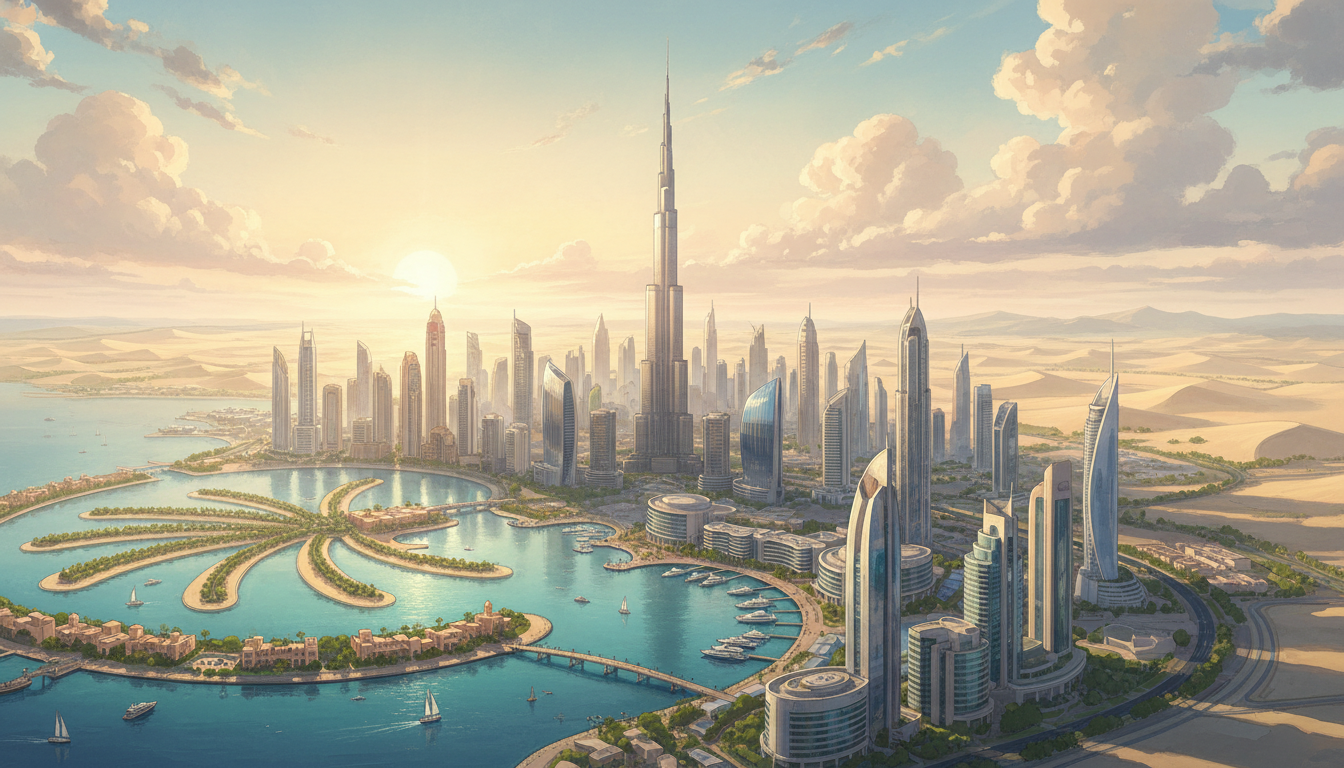
Executive Summary: Your Safe, Smart Dubai 3 Days Plan with Homejourney
Planning a Dubai 3 days trip for your Dubai first visit? This guide gives you a clear, field-tested Dubai itinerary that covers modern icons, Old Dubai, and the desert in a logical route – plus a bonus 5-day extension. It is written from the perspective of a Singapore-based traveler who has done multiple short trips to Dubai, with safety, time-efficiency, and cost clarity as top priorities.
As a Singapore real estate platform focused on user safety and trust, Homejourney integrates practical travel guidance with strategic insights for visitors who may also be exploring Singapore as a base, a second home, or an investment destination. You will find real examples, approximate prices, and route suggestions verified against multiple 2024–2025 Dubai travel resources[1][7][8].
Dubai in 3 Days: Why It Works Perfectly as a Short Trip
Dubai is one of the most convenient short trip Dubai destinations from Singapore: a direct flight of about 7 hours, no jet lag (4-hour time difference for most of the year), and a compact set of must-see attractions that fit well into a weekend Dubai break or 3–5 day itinerary[1][5].
For Singaporeans and regional travelers, Dubai often serves three roles:
- A modern city break with desert and beach, comparable in comfort and safety to Singapore but with very different scenery
- A stopover hub when flying between Asia, Europe, and Africa
- A reference point when comparing international cities for work, living, and property investment – where Singapore often emerges as the stable, rules-based counterpart in Asia
Homejourney’s goal is to help you experience Dubai efficiently and safely, while also giving you a framework to compare it with Singapore if you are thinking about long-term relocation or investment.
Best Time to Visit Dubai
Dubai has a hot desert climate. For a comfortable Dubai first visit, temperature matters more than almost anything else when planning your Dubai 3 days.
Dubai Weather by Season (Quick Reference)
| Period | Typical Day Temp | Comfort for Sightseeing | Remarks |
|---|---|---|---|
| Nov – Mar | ~20–28°C | Best | Pleasant; ideal for walking, desert safaris, outdoor fountains[1] |
| Apr – early Jun | ~30–38°C | Moderate | Hot midday; plan indoor attractions in afternoon |
| Jun – Sep | Can exceed 40°C | Challenging | Stay mostly indoors; aggressive use of air-con like in Singapore but stronger |
| Oct | ~30–35°C | Improving | Transitional; evenings much more comfortable |
If you are used to Singapore’s humidity, Dubai’s dry heat feels different; evenings in winter can even feel cool compared with Singapore. For a first-time Dubai itinerary, November to March is ideal.
Getting to Dubai from Singapore & Entry Basics
Flights from Singapore
Direct flights from Singapore Changi (SIN) to Dubai International (DXB) typically take about 7 hours, operated by major carriers such as Emirates and Singapore Airlines. Prices fluctuate with school holidays and major events; in non-peak periods, economy return fares often range roughly from SGD 800–1,200 if booked in advance (indicative only, always check current fares).
Visa Requirements (General Guidance)
Visa policies depend on citizenship, not departure city. Many nationalities, including Singapore citizens, can enter the UAE visa-free or with visa-on-arrival for short stays. Always verify entry rules with the official UAE government or embassy website before purchasing tickets, as regulations can change.
Arrival Experience & Airport Transport
Dubai International Airport (DXB) is large but well-signed in English and Arabic. Immigration queues are generally efficient outside peak banked arrivals. From DXB, first-time visitors can safely choose among:
- Dubai Metro (Red Line) – budget-friendly, connects DXB with Deira, Downtown Dubai, and Dubai Marina areas[1]
- Official taxis – metred, clearly marked; fares start with a flag-down fee from the airport
- Ride-hailing apps – similar to Singapore’s Grab/Gojek experience; check that your data roaming or local SIM is active
If you arrive late at night with family or multiple suitcases, a taxi is usually the safest and most convenient option. As with Singapore, avoid unofficial touts.
Currency, Costs & Payment Tips
Dubai uses the United Arab Emirates Dirham (AED). At a rough reference rate, 1 AED is around 0.35–0.40 SGD (rates fluctuate; always check live data).
Typical Daily Budget for a 3-Day Dubai Trip
| Category | Budget Traveler | Comfort Traveler | Luxury Traveler |
|---|---|---|---|
| Accommodation (per night) | ~AED 150–300 (hostels / budget hotels) | ~AED 400–800 (3–4★ hotels) | ~AED 1,000+ (5★ & iconic hotels) |
| Meals (per person per day) | ~AED 60–100 (casual & food courts) | ~AED 120–250 | ~AED 300+ (fine dining) |
| Transport | ~AED 20–40 (mainly metro) | ~AED 40–80 (mix metro & taxis) | Varies (mostly taxis / private cars) |
| Sightseeing & activities | ~AED 100–200 | ~AED 200–400 | ~AED 500+ (e.g., premium Burj Khalifa decks, luxury desert safaris) |
Most larger merchants accept international credit cards, similar to Singapore. For local souks, abra rides, and small eateries, carry some cash. Homejourney’s platform supports multi-currency considerations when you later evaluate Singapore property affordability relative to AED, helping you compare budgets in a familiar currency context.
Where to Stay in Dubai for a 3-Day First Visit
For a short trip Dubai of 3–5 days, location matters more than room size. Minimising travel time keeps your itinerary realistic.
Best Areas to Stay
- Downtown Dubai – Ideal for first-timers focused on Burj Khalifa, Dubai Mall, and Dubai Fountain[1][3]. Expect higher prices but superb convenience.
- Dubai Marina / JBR – Great for beach, dining, and nightlife; good base for Day 3 in this itinerary[1][3].
- Deira / Bur Dubai – Older parts of town, closer to traditional souks; usually more budget-friendly.
- Business Bay – Between Downtown and the wider city; many modern hotels with slightly lower rates than Downtown.
Hotel Types by Budget (Examples)
Rather than fixed names (which change quality over time), use this framework, similar to choosing between HDB heartland, fringe, and CBD condos in Singapore:
- Budget (Hostels & 2–3★): Often around Deira/Bur Dubai; convenient for Old Dubai and metro access.
- Mid-range (3–4★): Business Bay, some Marina properties, and parts of Downtown give a good price–location balance.
- Iconic & Luxury (5★): Burj Khalifa/ Dubai Mall connected hotels, Palm Jumeirah resorts, and Burj Al Arab area.
When you later explore Singapore lodging or long-stay options, Homejourney’s Property Search helps you filter Singapore properties with similar criteria: proximity to MRT, mall access, and neighbourhood profile.
Top Attractions & Experiences for a First-Time Dubai Itinerary
Most 3-day itineraries for first-time visitors agree on the core highlights[1][2][7][8]:
- Burj Khalifa – The world’s tallest building, with multiple observation decks[1][7].
- Dubai Mall – One of the world’s largest malls, with an aquarium and ice rink[1][3].
- Dubai Fountain – Evening water and light shows set to music in front of Burj Khalifa[1][7].
- Museum of the Future – Futuristic architecture and interactive exhibits about technology and sustainability[1].
- Sky Views Observatory – Glass walkway with views of Burj Khalifa and Downtown[1][7].
- Al Fahidi Historical District – Restored heritage area showcasing traditional wind-tower houses[1][3][4].
- Dubai Creek & Abra Ride – Cheap and atmospheric boat ride between Bur Dubai and Deira[1][2].
- Gold & Spice Souks (Deira) – Traditional markets full of jewellery, spices, textiles[1][2].
- Desert Safari – Dune bashing, camel rides, shows, and barbecue in the desert[1][2][4][7][8].
- JBR Beach & Dubai Marina – Modern waterfront with cafes, restaurants, and marina views[1][3][5].
- Palm Jumeirah & The View at The Palm – Aerial views of the palm-shaped island[1][7].
Our 3-day route below strings these together in a way that minimises backtracking and matches typical energy levels for Singapore-based travellers facing time differences and a drier climate.
Optimised 3-Day Dubai Itinerary for First-Time Visitors
This Dubai 3 days plan is based on patterns from multiple reputable itineraries[1][2][3][4][7][8] and refined with a Singapore traveller’s rhythm in mind: late-night flights, reliance on public transport, and priority on safety, clarity, and predictable timing.
Day 1: Icons of Downtown Dubai
Focus: Burj Khalifa, Dubai Mall, Dubai Fountain, Museum of the Future, Sky Views Observatory[1][7].
Morning: Museum of the Future & Arrival Orientation
- Start around 9–10am at Museum of the Future, located along Sheikh Zayed Road[1]. Pre-book timed tickets.
- Plan 2–3 hours to explore the immersive exhibits on future cities, sustainability, and AI – interesting if you are also thinking about future-proof cities like Singapore.
- From here, take the metro or a short taxi ride to Downtown Dubai.
Midday: Sky Views Observatory & Lunch
- Head to Sky Views Observatory, which offers panoramic views of Burj Khalifa and Downtown[1][7]. Allow about 1–1.5 hours.
- Try the glass walkway or, if queues are reasonable, the glass slide (optional)[1].
- Have lunch either in the same complex or move to Dubai Mall for more choices.
Afternoon: Dubai Mall & Burj Khalifa
- Walk to Dubai Mall