
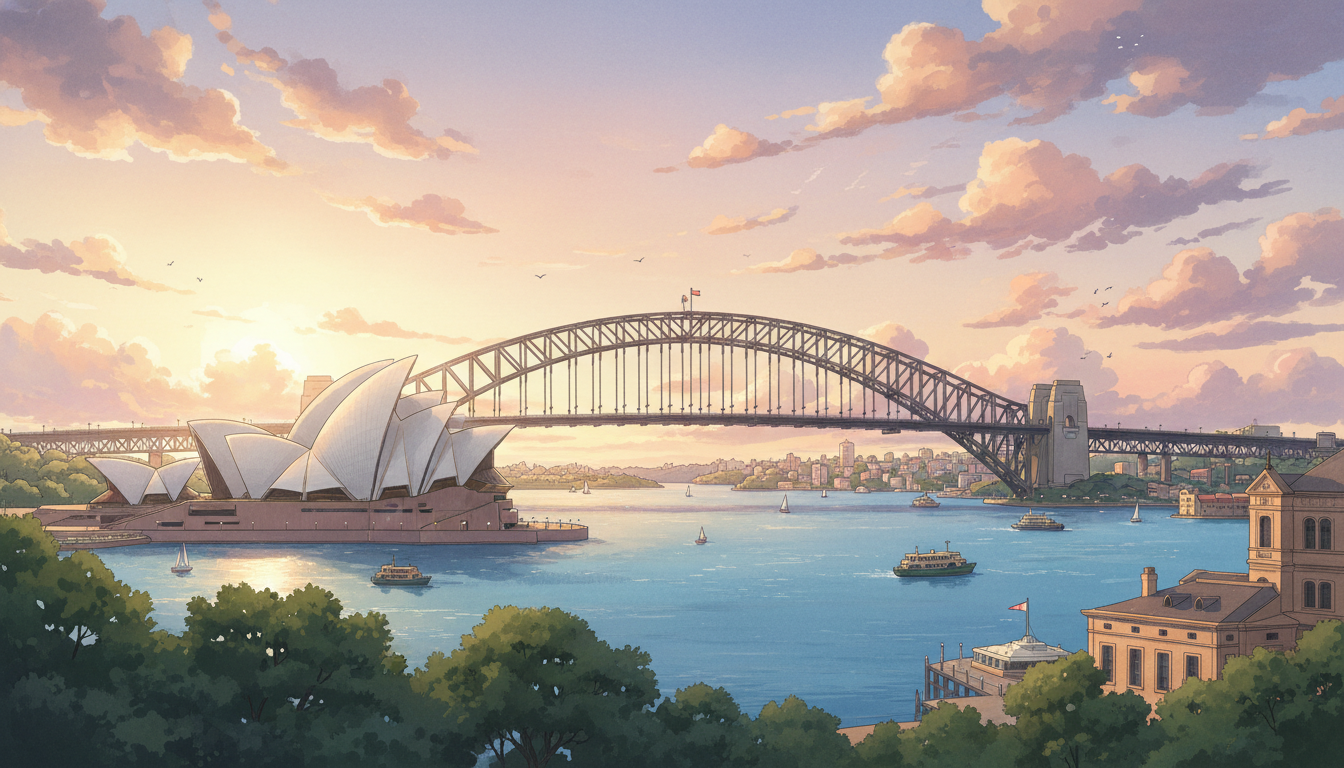
This definitive guide to the Sydney Opera House, Sydney Harbour Bridge, and Circular Quay is written for Singapore travellers, expats, and global investors who want more than surface-level tips.
As a Singapore-focused real estate and lifestyle platform, Homejourney combines on-the-ground Sydney experience with Singapore-style precision: clear pricing, verified information, safety-first advice, and practical comparisons to life in Singapore. Whether you are planning a once-in-a-lifetime trip, a repeat visit, or exploring regional property opportunities, this guide is designed to help you make confident decisions.
Table of Contents
- 1. Destination Overview: Sydney’s Iconic Harbourfront
- 2. Why Visit the Sydney Opera House & Harbour Bridge
- 3. Best Time to Visit (for Singapore Travellers)
- 4. Getting There from Singapore & Around Sydney
- 5. Top Attractions & Experiences Around Sydney Harbour
- 6. Sydney Harbour Bridge: Walks, Climbs & Photo Spots
- 7. Sydney Opera House: Tours, Shows & Insider Tips
- 8. Circular Quay & The Rocks: Neighbourhood Guide
- 9. Food & Dining: Where to Eat Near the Sydney Icons
- 10. Where to Stay: Best Areas & Hotel Tips
- 11. Practical Travel Tips for Singapore Visitors
- 12. Sample 3-Day & 5-Day Itineraries
- 13. Day Trips from Sydney Harbour
- 14. Connecting to Singapore: Travel, Lifestyle & Property
- 15. FAQ: Sydney Opera House, Harbour Bridge & Circular Quay
1. Destination Overview: Sydney’s Iconic Harbourfront
The cluster of the Sydney Opera House, Harbour Bridge, and Circular Quay forms the most recognisable postcard view of Australia. Standing at the Opera House forecourt looking back at the Bridge is similar to standing at Marina Bay Promenade facing Marina Bay Sands – it’s where first-time visitors and locals alike return again and again for the skyline, events, and energy.
For Singapore-based travellers, this area is particularly attractive because:
- It is compact and highly walkable, like Singapore’s Civic District.
- It has excellent public transport connections (trains, ferries, buses) from Sydney CBD.[7]
- It offers a mix of culture, dining, harbour cruises, and easy day trips – ideal for 3–5 day breaks from Singapore.
Most first-time visitors will spend at least one full day around Circular Quay, the Opera House and Harbour Bridge, but you can easily stretch this to three or more days with shows, dining, and walks.
2. Why Visit the Sydney Opera House & Harbour Bridge
2.1 Global Icons with Real Substance
The Sydney Opera House is a UNESCO World Heritage site known for its shell-like “sails” and bold modernist design.[7] The Sydney Harbour Bridge is the world’s largest steel arch bridge and a functional transport link carrying road, rail, cycle and pedestrian routes across Sydney Harbour.[3][8] Together, they frame one of the world’s most beautiful natural harbours.[7]
Beyond the visuals, both landmarks are living places: the Opera House hosts more than 1,500 performances a year across opera, ballet, theatre, comedy and pop concerts[4], while the Bridge remains a key commuter route with dedicated pedestrian and cycle paths.[1]
2.2 Why They Matter to Singapore Travellers & Investors
Many Singaporeans compare Sydney’s harbourfront to Marina Bay. Both locations are premium residential and commercial zones, with property values reflecting their status. While this guide focuses on travel, Homejourney’s property data team tracks waterfront premiums in cities like Sydney and Singapore to help investors understand how global “icon zones” compare, using tools similar to our Singapore projects directory Projects Directory .
For lifestyle seekers, Sydney’s harbour precinct offers:
- Cooler, drier weather than Singapore – especially appealing from November to March.
- Strong arts and outdoor culture centred around the harbour.[7]
- Familiar cosmopolitan mix of Asian and Western food, with many Singapore-style cafés and restaurants in the CBD.
3. Best Time to Visit (with Singapore Context)
3.1 Seasons & Weather at Sydney Harbour
Sydney has four seasons, opposite to the Northern Hemisphere. Around the Sydney Opera House and Harbour Bridge, you can expect:
| Season | Months | Typical Day Temp | Why Go / What to Expect |
|---|---|---|---|
| Summer | Dec – Feb | 24–30°C | Long days, lively harbour, peak crowds and prices. |
| Autumn | Mar – May | 18–25°C | Pleasant temps, fewer crowds – great for walks and BridgeClimb.[1][7] |
| Winter | Jun – Aug | 10–18°C | Crisp air, good visibility, lower hotel rates; bring layers. |
| Spring | Sep – Nov | 17–24°C | Mild weather, jacaranda blooms, ideal for outdoor dining. |
Compared with Singapore’s constant heat and humidity, even Sydney’s summer usually feels more comfortable thanks to lower humidity and breezes across the harbour.
3.2 Best Time of Day for Sydney Icons
- Opera House forecourt & Circular Quay: Late afternoon into sunset gives golden light on the Bridge and skyline, often recommended by local guides.[6]
- Harbour Bridge walk: Morning or late afternoon for cooler temperatures and softer light.[1]
- Harbour cruises: Sunset cruises offer dramatic views of both Sydney icons lit by the changing sky.[7]
4. Getting There from Singapore & Around Sydney
4.1 Flights from Singapore to Sydney
Non-stop flights from Singapore Changi (SIN) to Sydney (SYD) typically take around 7½–8 hours, operated by Singapore Airlines, Scoot and Qantas. Red-eye flights are popular with Singapore travellers who want to land in the morning and head straight to the harbour after checking in.
Sydney Airport is linked to Circular Quay and the CBD by train (Airport Link). The ride to Circular Quay station is usually around 20–25 minutes with one simple line, similar in efficiency to taking the MRT from Changi to City Hall.
4.2 Getting to Circular Quay, Opera House & Harbour Bridge
Circular Quay is the primary transport hub for visiting these Sydney landmarks.[7]
- Train: Circular Quay station is on the City Circle line and is usually the most convenient drop-off for the Opera House and harbour ferries.[7]
- Ferry: Many harbour ferries depart from Circular Quay towards Manly, Taronga Zoo and Darling Harbour, passing under or near the Harbour Bridge.[7]
- Walk: From Circular Quay to the Opera House is about 8–10 minutes on a gently sloping, well-paved path. To the southern end of the Harbour Bridge at The Rocks (Cumberland Street access) is around 10–15 minutes on foot.[1]
4.3 Getting Around: Opal Card & Contactless
Sydney’s equivalent of Singapore’s EZ-Link is the Opal card, usable on trains, buses, ferries and light rail. Many visitors now simply tap in/out with contactless bank cards or devices, similar to SimplyGo in Singapore.
5. Top Attractions & Experiences Around Sydney Harbour
5.1 Core Sydney Icons
- Sydney Opera House: Guided tours explain its design, construction challenges and performance spaces.[2][4][5]
- Sydney Harbour Bridge: Walk across on the pedestrian path, cycle the dedicated lane, or climb to the summit with BridgeClimb for 360° views.[1][3][8]
- Circular Quay: Main ferry terminal with waterfront promenades, buskers, and views of both icons together.[7]
- The Rocks: Historic precinct at the southern bridgehead with cobblestone streets, markets and heritage pubs.[1][7]
5.2 Cultural & Family Activities
- Sydney Opera House performances: From opera and classical concerts to contemporary music, dance and comedy.[4]
- Sydney Observatory: Located near the south-western bridge approach, offering astronomy exhibits and great harbour views.[1]
- Luna Park: Historic amusement park just beside the northern end of the Harbour Bridge at Milsons Point – a favourite with families.[1][3]
5.3 Hidden Gems & Local Favourites
- Pylon Lookout & Museum (South-East pylon of the Harbour Bridge): Often missed by first-timers; climb over 200 steps through museum exhibits to a viewing platform 87m above sea level, with arguably the best close-up view of the Opera House and harbour for a small entry fee.[1]
- Observatory Hill Park: Quiet green space with panoramic views of the Bridge and harbour, very popular with local photographers and joggers.[1]
- Early-morning Circular Quay walks: Between 7–8am, the area is much quieter; ideal if you are jet-lagged from Singapore and want calm harbour views before the crowds arrive.
6. Sydney Harbour Bridge: Walks, Climbs & Photo Spots
6.1 Understanding the Bridge Layout
The Sydney Harbour Bridge carries vehicles, trains, pedal cycles and pedestrians across Sydney Harbour between The Rocks (south) and Milsons Point (north).[1][8]
- Pedestrian path: Eastern side of the bridge – best for Opera House and harbour views.[1]
- Cycleway: Western side, suitable for cyclists only.[1]
- Access points: The main southern access is via Cumberland Street at The Rocks; the northern access is from Milsons Point.[1]
6.2 Walking Across the Harbour Bridge
Walking across the bridge is one of the safest, most budget-friendly iconic experiences in Sydney.
| Aspect | Details |
|---|---|
| Distance | Approx. 1.2 km one way on the pedestrian path |
| Time | About 20 minutes without stops; 30–45 minutes with photos.[1] |
| Cost | Free to use the pedestrian path |
| Difficulty | Fairly easy, suitable for most fitness levels, with some stairs at access points.[1] |
| Best Views | Mid-span and near the Pylon Lookout facing the Opera House and Circular Quay.[1] |
Safety note: The path is fenced and separated from vehicle lanes. Follow signage, stay inside barriers, and supervise younger children, especially when stopping for photos.[1]
6.3 BridgeClimb & Pylon Lookout
- BridgeClimb: Guided climb experiences take 2–3 hours and bring you to the summit of the arch, with expert commentary on the bridge’s history and engineering.[1][3]
- Pylon Lookout & Museum: Offers a lower-cost alternative with a museum and viewing platform 87m above sea level.[1]
6.4 Insider Tips from a Singapore Perspective
- If you are used to air-conditioned malls and skywalks in Singapore, note that the Harbour Bridge walk is fully outdoors – bring a light jacket in cooler months and sun protection in summer.
- Strollers can be challenging at some stair-only access points; consider a carrier for infants.