
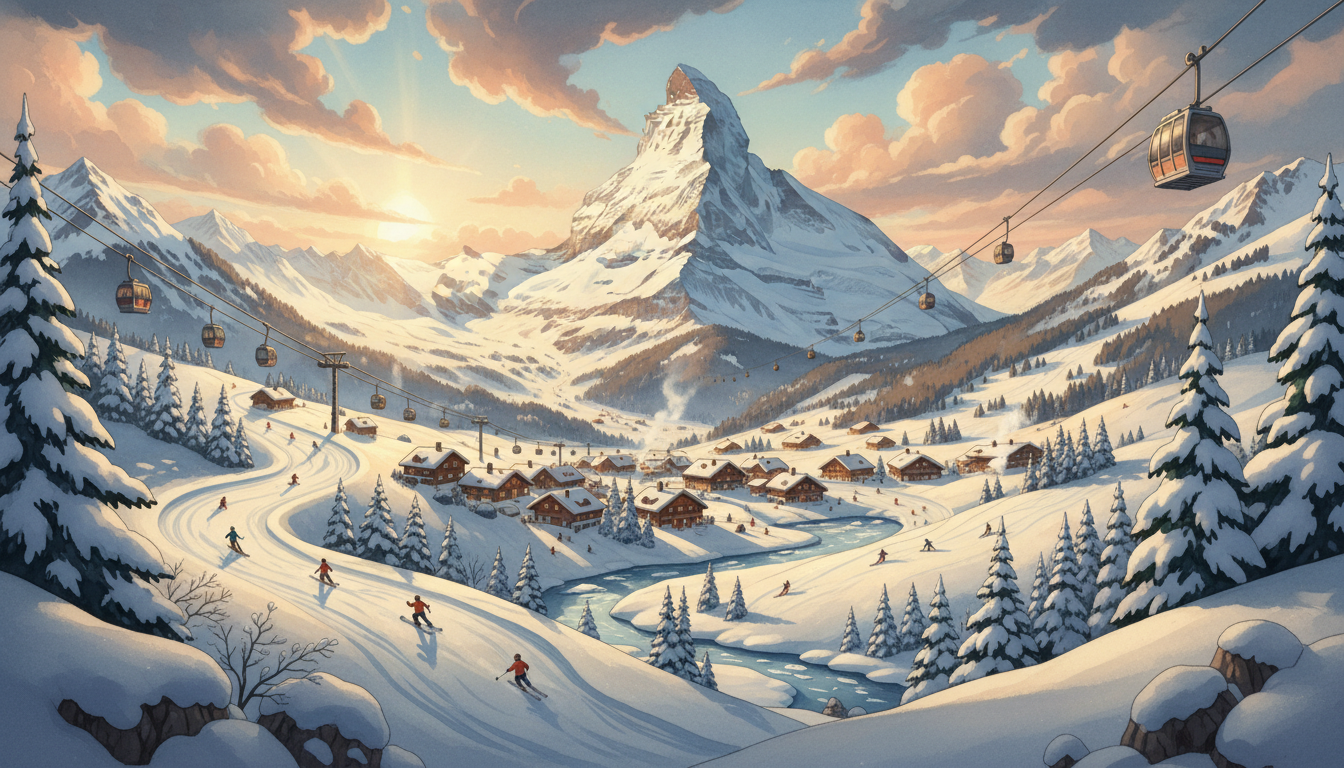
Swiss skiing has a unique magic: postcard-perfect villages, ultra-reliable snow, and some of the most sophisticated lift systems in the world. For many Singapore-based travellers and international investors, the same qualities that make Switzerland ski resorts so sought after—safety, reliability, transparency—are exactly what they look for when considering property in Singapore with Homejourney.
This definitive Homejourney guide to Switzerland ski resorts brings together the best of both worlds. We will walk you through the best Swiss ski destinations—Zermatt, Verbier, St. Moritz and more—while giving practical, Singapore-focused travel tips, budget guidance, and strategic insight for travellers and potential investors. Throughout, we emphasise Homejourney’s core values of safety, trust and verified information so you can make confident choices—on the mountain and in the property market.
Table of Contents
- 1. Why Swiss skiing appeals to Singapore travellers and investors
- 2. Best time to ski in Switzerland (and how it fits Singapore schedules)
- 3. Getting to Swiss ski resorts from Singapore
- 4. Best Swiss ski resorts: Zermatt, Verbier, St. Moritz & more
- 5. Best slopes by level: beginner, intermediate, expert
- 6. On-mountain experiences: food, culture, and hidden gems
- 7. Accommodation guide: where to stay and how to choose
- 8. Practical travel & safety tips for Singapore travellers
- 9. Sample 3-day and 5-day Swiss ski itineraries
- 10. Connecting Switzerland and Singapore: lifestyle & property
- 11. How Homejourney supports safe, trusted decisions
- 12. FAQ: Swiss skiing for Singapore travellers and investors
1. Why Swiss skiing appeals to Singapore travellers and investors
From Singapore, Switzerland represents almost the opposite climate and landscape—powder snow instead of tropical humidity, chalet villages instead of high-rise HDB estates. Yet the two places share key traits: strong rule of law, reliable infrastructure, and a reputation for safety and good governance.
For Singapore-based professionals used to clear regulations from agencies like URA and MAS, Swiss ski resorts such as Zermatt, Verbier, and St. Moritz offer similarly well-regulated environments, from lift safety standards to avalanche management.[1][3] This gives many families the confidence to try snow sports for the first time, especially when travelling with children or older parents.
Key reasons Swiss ski resorts are popular with Singapore residents
- Safety and reliability: Switzerland consistently ranks among the world’s safest destinations, with strict mountain safety procedures and high-quality healthcare near major resorts.[6][7]
- Efficient public transport: The Swiss rail system links major airports directly to mountain bases like Zermatt, Wengen and St. Moritz, much like how Singapore’s MRT network underpins daily commuting reliability.[3][5]
- Quality of experience: Resorts such as Zermatt and Verbier regularly appear in “best in the world” rankings for terrain, snow reliability and village ambience.[1][3][6]
- Prestige and lifestyle: St. Moritz and Gstaad attract a global high-net-worth crowd, similar to prime districts 9, 10 and Sentosa Cove in Singapore’s property market.[1][3]
- Investment mindset: Many of the same travellers are also considering diversification into stable Asian real estate markets, with Singapore high on the list due to its transparent regulations and strong rental demand.
2. Best time to ski in Switzerland (for Singapore schedules and budgets)
The Swiss ski season typically runs from late November to April, with some glacier areas (like Zermatt) offering year‑round skiing.[1][3][5] For Singapore-based travellers juggling school holidays, annual leave and budget, timing is crucial.
Swiss ski season by period
| Period | Conditions | Fit with Singapore calendar | Budget level |
|---|---|---|---|
| Late Nov – mid Dec | Early season, good in higher resorts like Zermatt, Verbier | Good for couples / flexible workers, before peak crowds | Generally lower prices |
| Mid Dec – early Jan (Christmas / New Year) | Festive atmosphere, busy slopes, high demand | Works for year-end school holidays, but must book early | Peak pricing |
| Early Jan – mid Feb (Value period) | Excellent snow, fewer crowds; top value weeks identified by many operators[3] | Best for adults or preschoolers (outside primary/secondary holidays) | Better deals, especially Jan 7–Feb 14[3] |
| Mid Feb – early Mar | High season; reliable snow, long days | Aligns with some international school breaks | High but not as extreme as Christmas |
| Mid Mar – mid Apr (Spring) | Sunny days, softer snow; great in high-altitude resorts like St. Moritz and Zermatt[3] | Works for families willing to trade powder for sun and views | Value season from Mar 16–Apr 15 in many resorts[3] |
Insider tip from a Singapore perspective: If you are used to travelling during Chinese New Year, consider aiming just after that period for better value and fewer crowds, especially in Verbier, Zermatt or St. Moritz during late January or late March value windows.[3]
3. Getting to Swiss ski resorts from Singapore
From Changi Airport, most travellers fly into Zurich or Geneva. Both airports are extremely well connected by train to major Swiss ski resorts, similar to how the MRT and bus network connect Changi to all parts of Singapore.
Typical journey times from airports to top resorts
| Resort | Nearest major airport | Typical transfer time & mode |
|---|---|---|
| Zermatt | Zurich / Geneva | Approx. 3h30–4h by train to Täsch + 10 min electric taxi/train to village[1][3] |
| Verbier (Four Valleys) | Geneva | Around 2h by car; 2.5–3h by train + bus/gondola to resort[1][3] |
| St. Moritz | Zurich | Approx. 3h30 by scenic train via Chur; some private shuttle options[1][3] |
| Grindelwald / Wengen (Jungfrau) | Zurich / Bern | ~3h from Zurich, 1h45 from Bern by train to Interlaken + cogwheel train[3][5] |
| Davos-Klosters | Zurich | 2h30–3h by train, with easy transfers[3] |
From Singapore, direct or one-stop flights to Zurich or Geneva typically take 13–15 hours. When planning, allow at least half a day after landing to reach the resort, especially if travelling with children or ski gear.
Practical tip: If your flight lands early morning Swiss time, booking an afternoon train lets you clear immigration, collect baggage, buy SIM cards, and pick up Swiss Travel Passes without rushing—similar to giving yourself buffer time after landing at Changi when returning from long-haul flights.
4. Best Swiss ski resorts: Zermatt, Verbier, St. Moritz & more
Different Swiss ski resorts suit different profiles: families, beginner skiers, luxury-seekers, or hardcore off‑piste riders. Below we break down the most important names—Zermatt, Verbier, St. Moritz, Grindelwald-Wengen, Davos-Klosters, and more—so you can match your travel style.
4.1 Zermatt – Matterhorn views and year‑round skiing
Zermatt is one of the most iconic Switzerland ski resorts, famous for the Matterhorn skyline and its high-altitude, snow‑sure slopes.[1][3][5] With about 360 km of pistes reaching up to 3,883 m, it is among the highest ski areas in Europe.[1] The village itself is car‑free, much like Singapore’s pedestrianised zones in Orchard Road or Chinatown, creating a relaxed, walkable environment.
- Best for: Intermediates and experts, confident beginners, scenic photographers, food lovers.
- Terrain: Long red runs, glacier skiing, links to Cervinia in Italy (cross-border).
- Atmosphere: Upmarket but relaxed; mix of luxury hotels and traditional chalets.
- Insider tip: Book mountain restaurants for lunch (e.g., on the Sunnegga side) in advance during high season; they can be as popular as Michelin-starred spots in Singapore on a Friday night.
4.2 Verbier – Four Valleys and expert off‑piste
Verbier is perhaps the most famous Swiss resort among advanced skiers, with access to the massive Four Valleys area and around 410–412 km of pistes.[1][2][3] It is known for steep itinerary runs, legendary freeride terrain, and a vibrant après‑ski scene popular with international visitors and celebrities.[1][2]
- Best for: Strong intermediates, experts, groups of friends, nightlife seekers.
- Terrain: Big vertical drops, marked but ungroomed “itinerary” runs, extensive off‑piste for those with guides.
- Atmosphere: Cosmopolitan, energetic; often compared to a ski version of a lively Singapore expat enclave.
- Insider tip: Travel in the value window (January or late March) for lower hotel rates and less crowded slopes while still enjoying top snow conditions.[3]
4.3 St. Moritz – luxury, sun and Engadine beauty
St. Moritz is one of the world’s oldest winter resorts and a symbol of Alpine luxury. It offers about 326–350 km of pistes in the Engadine valley, backed by 300+ sunny days a year.[1][3][5] Think designer boutiques, gourmet restaurants, and events like White Turf horse racing on the frozen lake.
- Best for: Luxury travellers, couples, non-skiers who still want a winter experience.
- Terrain: Varied; Corviglia for intermediate cruising, Corvatsch and Diavolezza for more challenging runs and glacier access.
- Atmosphere: Glamorous yet efficient, reminiscent of Orchard Road’s high-end malls paired with Swiss mountain views.
- Insider tip: Spring (mid-March to mid-April) offers superb sunny skiing with reduced room rates, similar to how Singapore hotels price shoulder seasons.[3]
4.4 Grindelwald-Wengen – families and Jungfrau panoramas
The Jungfrau region, including Grindelwald and Wengen, is known for its dramatic scenery under the Eiger, Mönch and Jungfrau peaks.[1][3][5] Wengen is car‑free and reachable by mountain railway, while Grindelwald offers more direct road access. Together they form a highly family‑friendly area with many blue and red slopes.[1][3]
- Best for: Families, cautious beginners, scenic travellers.
- Terrain: Long, scenic runs rather than extremely steep pitches; World Cup Lauberhorn downhill for advanced skiers.[1]
- Atmosphere: Traditional, charming; a slower pace that suits multi‑generational trips from Singapore.
- Insider tip: Stay in Wengen if you prefer a quieter, car‑free experience; choose Grindelwald if you want more shops and easier access.
4.5 Davos-Klosters, Arosa-Lenzerheide, Saas‑Fee and others
Beyond the big three, Switzerland offers many other top‑tier ski resorts:[1][3][5][6][8]
- Davos-Klosters: Large, varied area (around 300 km of pistes) with different mountains for different levels and a substantial town with conferences and events.[3][5]
- Arosa-Lenzerheide: Linked resorts with around 225 km of slopes; less internationally famous than Zermatt or Verbier but popular with Swiss locals and rated highly for value.[1][4][5]
- Saas‑Fee: High, snow‑sure, glacier resort nicknamed the “Pearl of the Alps”, set in a charming, mostly car‑free village.[1][2][6]