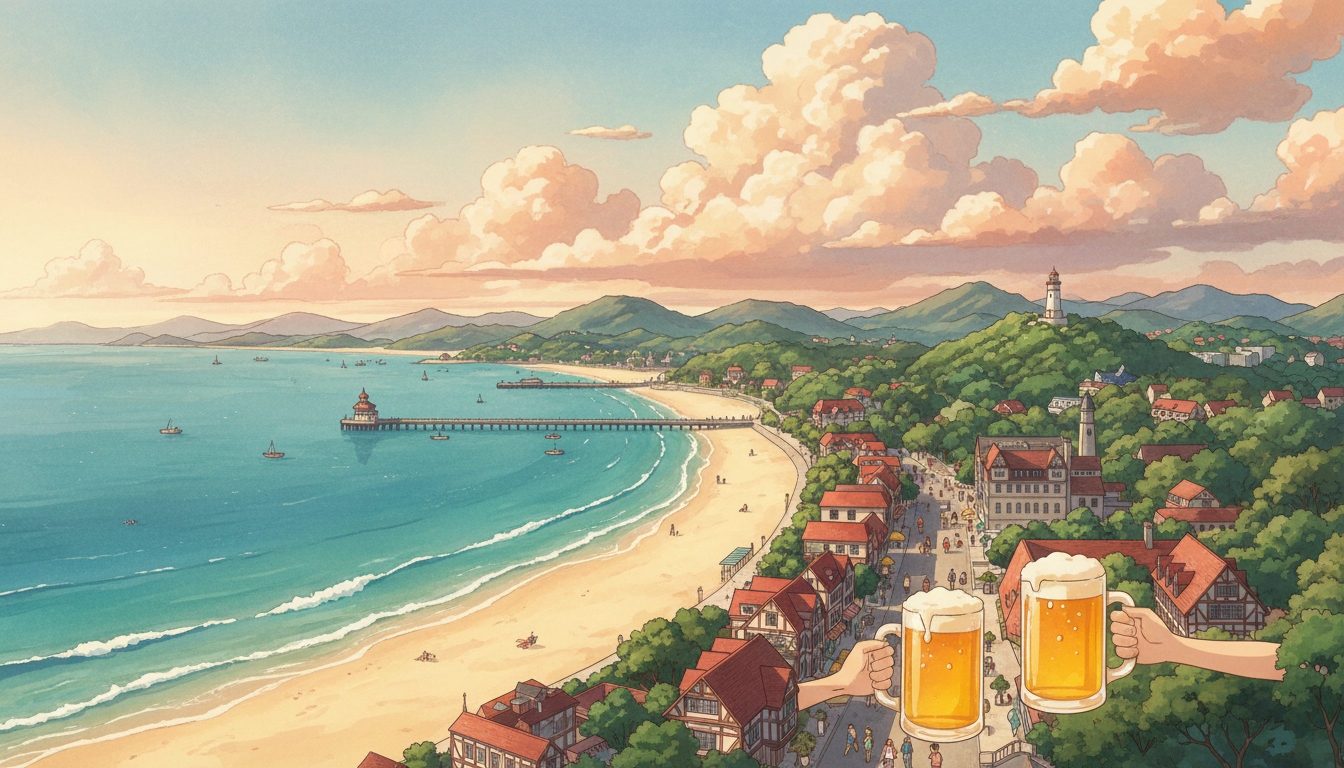
Qingdao China is one of Asia’s most underrated coastal cities – a rare mix of soft beaches, world-famous Tsingtao beer, storybook German architecture and Shandong hospitality.
This Homejourney guide is written for Singapore travelers, expats and investors who want more than a checklist of sights: you’ll get first-hand style insights, real price ranges, safety guidance, and how Qingdao fits into a broader Asia lifestyle and property strategy.
Having lived and traveled repeatedly between Singapore and coastal China, Qingdao is the one city I routinely recommend to Singaporeans who love Sentosa and East Coast Park but also appreciate heritage districts like Tiong Bahru and Joo Chiat. Its compact old town, clean promenade and cool summers make it a realistic alternative for a second-home base – with Singapore remaining the regional hub via platforms like Homejourney for safe, regulated property investment.
1. Qingdao Overview: Why This Coastal City Belongs on Your Asia Shortlist
Qingdao is a major coastal city in southeast Shandong, facing the Yellow Sea and historically shaped by German colonial rule in the late 19th and early 20th centuries.[7][2] Its skyline is a blend of red-tiled German villas, modern CBD towers and long crescent-shaped beaches – visually closer to a mix of Hokkaido’s Otaru and a quieter Busan than to Beijing or Shanghai.[2][7]
For Singapore-based travelers and investors, Qingdao stands out for four reasons:
- Beaches: Multiple urban beaches (No. 1 Bathing Beach, No. 2, Shilaoren) with soft sand and shallow waters, all reachable within 15–30 minutes by Metro or taxi.[1][2][7]
- Beer: Tsingtao beer – one of China’s most globally recognized brands – was born here, with an excellent brewery museum and taproom culture that feels like a Chinese-German fusion.[2][5]
- German architecture: Areas like Badaguan Scenic Area and the old town feature more than 20 architectural styles from around the world, with a strong German core: churches, governor’s mansion, villas and cobbled streets.[2][1]
- Comfortable climate: Compared to hot, humid Singapore, Qingdao’s sea breeze and four seasons are a refreshing contrast – especially late spring and early autumn.[7][2]
Unlike mega-cities such as Shanghai, Qingdao’s tempo is slower, closer to a family-oriented seaside town but with enough infrastructure (metro, malls, international hotels) to support long stays and remote work.
Key Fast Facts About Qingdao for Singapore Travelers
| Item | Details (approximate, for planning only) |
|---|---|
| Location | South-east Shandong Province, eastern China, on the Yellow Sea coast[7] |
| Flight time from Singapore | Approx. 6–7 hours (usually via a hub like Beijing, Shanghai, Xiamen or Hong Kong) |
| Main city districts for visitors | Shinan (old town, beaches), Laoshan (nature, mountains), Shibei (urban local life) |
| Famous for | Tsingtao beer, beaches, German-era architecture, Laoshan Mountain, seafood[2][7] |
| Population | ~10 million in the metropolitan area (large but not overwhelming in feel) |
| Local language | Mandarin; some signage and museum content in English in tourist areas |
Disclaimer: All times, prices and conditions mentioned in this guide are indicative and can change. Always double-check transport, visa and health advisories with official sources such as the Singapore Ministry of Foreign Affairs and China’s official immigration authorities before traveling.
2. Best Time to Visit Qingdao & Weather Tips
Qingdao’s climate is temperate maritime: four distinct seasons, relatively humid but cooled by sea breezes.[7] From a Singapore perspective, you’ll immediately feel the difference – winters can be near-freezing, while summers are warm but drier and breezier than Singapore.
Season-by-Season Overview
| Season | Weather | Best For | Singapore Traveler Notes |
|---|---|---|---|
| April–June (Spring) | Cool to mild, 10–22°C, flowers blooming | City walks, light hiking, heritage exploring | Pack a light jacket; big contrast from Singapore’s constant 30°C |
| July–August (Summer) | Warm, 24–30°C, peak beach season; can be humid | Swimming, water sports, Tsingtao Beer Festival (Aug) | Similar daytime highs as Singapore, but nights cooler; busier and pricier |
| September–October (Autumn) | Comfortable 16–24°C, clear skies | Balanced city + nature trips, fewer crowds | Arguably the sweet spot for Singaporeans – no heavy winter gear needed |
| November–March (Winter) | 0–8°C, can be windy and icy | Quiet cityscape, off-peak hotel deals | Not ideal for beaches; only consider if you enjoy cold weather |
If you are used to planning short getaways from Singapore to Bintan or Phuket, think of Qingdao as a late-spring or early-autumn escape when Singapore is its usual hot and humid self. The city’s leafy streets and sea breeze are especially pleasant in May and late September.[2]
3. Getting to Qingdao from Singapore & Money Essentials
Flights from Singapore to Qingdao
Direct flights between Singapore and Qingdao may not always be available; most routes involve a transit at a Chinese hub like Beijing, Shanghai or Xiamen, or via Hong Kong. Allow around 6–7 hours total flying time, excluding layovers.
Practical planning tips Singapore travelers often overlook:
- Use regional hubs strategically: If you are already flying into Shanghai or Beijing for business, tagging on a 3–5 day Qingdao side-trip via high-speed rail or domestic flight can be very efficient.[7]
- Connect trip with other Shandong destinations: Qingdao is a natural base for a wider Shandong loop (e.g., Qufu for Confucius heritage, Yantai or Weihai for more coastal towns).[7]
Currency, Cards & Payments
Qingdao uses the Chinese yuan (RMB). Digital wallets such as Alipay and WeChat Pay are widely used, and foreign cards are progressively better supported through tourist versions of these apps in major cities.
For Singapore-based travelers used to cashless payments and multi-currency accounts:
- Carry some physical RMB for small shops, taxis in older areas and street food.
- Have at least one Visa/Mastercard credit card that works overseas for hotels and larger restaurants.
- Use your preferred multi-currency solution and cross-check rates before exchanging at Changi Airport or in-city money changers.
If you later explore Singapore property while based in China or elsewhere, Homejourney supports transparent currency views for foreign investors so you can see Singapore property values in your home currency and benchmark against RMB or other holdings, reducing FX uncertainty when planning down-payments and mortgages.
4. Top Beaches, Beer Spots & German Heritage Landmarks
Qingdao’s charm lies in how walkable and compact many of its highlights are. In a single day you can walk from a German-style church, down a leafy hill, end at a soft-sand beach and then drink fresh Tsingtao within sight of the old brewery.[1][2]
4.1 Qingdao’s Best Beaches
- No. 1 Bathing Beach (第一海水浴场)
Located in Shinan District, backed by green hills and colonial villas, this is Qingdao’s most famous urban beach.[1][2] The sand is fine, the slope gentle, and lifeguards operate in season. From a Singapore lens, think of it as a cooler, more historic cousin of Siloso Beach – more local families, fewer resort complexes.
Insider tip: Arrive before 9am in summer to avoid crowds and secure a good spot. Combine with a walk through Badaguan afterwards to see villas from multiple countries.[2] - No. 2 Bathing Beach
Smaller and closer to the old town, often less packed than No. 1 but still lively in summer.[6] Good if you’re short on time and want a quick dip after exploring Zhanqiao Pier. - Shilaoren Beach (石老人海水浴场)
Further east in Laoshan District, this long sandy stretch has a more modern seaside promenade feel, closer to what Singaporeans might recognise from newer East Coast Park sections. Ideal if you are staying in the Laoshan area or pairing with a Laoshan Mountain day trip.[2]
4.2 Tsingtao Beer & Brewery Heritage
Tsingtao beer (often spelt Tsingtao internationally) was founded in 1903 by German settlers and remains Qingdao’s most famous export.[2][5] For many visitors, beer-tasting is as iconic as stepping onto the pier.
- Tsingtao Beer Museum & Brewery
Located on the original brewery site, the museum walks you through over a century of brewing, with historic equipment, interactive exhibits and tasting sessions.[2][5] Expect to spend 1.5–2 hours if you enjoy reading displays and sampling.
Typical experience: Tour + small tastings are bundled; unfiltered fresh beer on tap is a highlight. Pair it with local beer snacks like peanuts and grilled squid.[2] - Tsingtao Beer Street
The surrounding area has beer halls and seafood restaurants where Tsingtao is served in chilled glass mugs or even plastic bags for take-away – a uniquely local quirk.
Safety note: Street touts may quote higher prices to tourists; check menu prices carefully and clarify how seafood is priced per weight before ordering.
4.3 German Architecture & Historic Districts
- Badaguan Scenic Area (八大关)
A leafy neighbourhood featuring over 20 styles of global architecture – German, Russian, British, French and more.[2] Streets are named after former Chinese border passes, lined with ginkgo and pine trees, perfect for slow morning walks. This is where many wedding photos are shot; think of it as Qingdao’s version of a much larger, quieter Tiong Bahru plus Botanic Gardens. - St. Michael’s Cathedral
A German-built Catholic church featuring twin towers and a steeply pitched roof, rising above the old town streets.[1][2] The forecourt is popular for photography; check local guidelines before entering during services. - German Governor’s Residence (Guest House)
This former colonial administrative building shows classic German architecture adapted to Qingdao’s hilly site, with oak interiors and sea-facing views.[1][2] Good for those deeply interested in colonial urban planning, similar to exploring conserved black-and-white bungalows in Singapore. - Signal Hill & Xiaoyushan Park
These vantage points offer 360° views of red rooftops, church spires and the bay – one of the best ways to visually understand Qingdao’s layered architectural history.[2][3]