
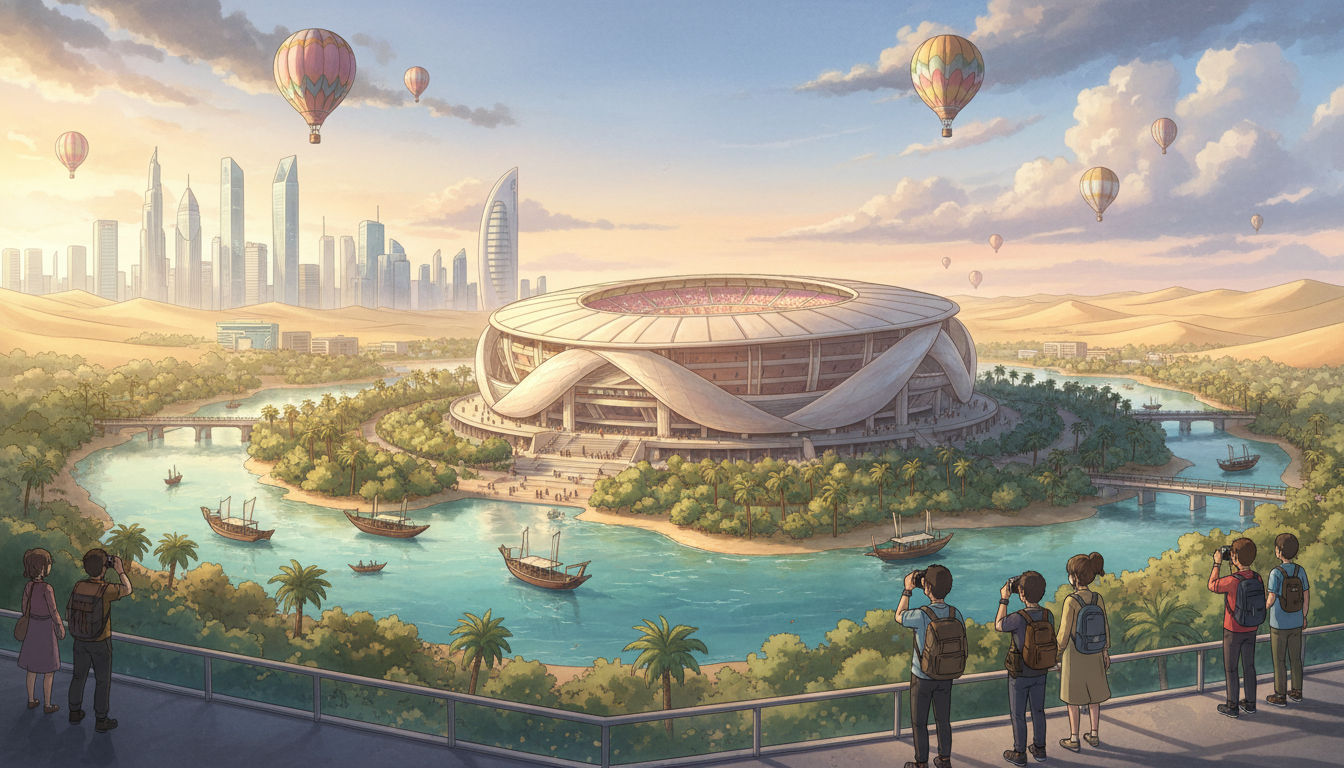
The FIFA World Cup 2022 stadium tour in Qatar has quickly become one of the most unique sports travel experiences in the world. For Singapore travellers, expats and global investors, these state-of-the-art World Cup stadiums are not just football icons – they are case studies in urban planning, sustainability and liveability that can inform smart property decisions back home in Singapore.
As a Singapore-based researcher who has helped many families plan trips from Changi to Doha and then back to condo viewings in areas like Bishan, Paya Lebar and Queenstown, I have seen first-hand how a well-planned stadium tour Qatar can fit neatly into a broader life plan – from lifestyle upgrades to cross-border property investment.
This Homejourney guide brings together verified information from official tourism sources, tour operators and public data, and combines it with on-the-ground insights you would typically get from a Singaporean friend who has done the trip, compared costs in SGD vs QAR, and then used Homejourney’s tools to explore real estate back home.
1. Why Visit Qatar’s FIFA World Cup 2022 Stadiums
The Qatar stadiums built and upgraded for FIFA 2022 are among the most advanced in the world, combining cutting-edge cooling technology, sustainability features and local cultural design. FIFA highlights how these venues showcase Qatari heritage and futuristic engineering across compact distances that are easy to cover in one trip.[9]
In numbers, the 2022 World Cup featured 8 playing venues, with an average capacity of around 47,500 seats.[2] The largest is Lusail Stadium, with approximately 80,000 seats and the honour of hosting the final, while the smallest venues are still large by Asian standards at around 40,000 seats.[2]
1.1 Key reasons Singapore travellers love the Qatar stadium tour
- Compact & efficient: Unlike past World Cups, all eight stadiums are within roughly an hour’s drive, similar to travelling from Tampines to Jurong in Singapore.
- World-class metro: Multiple stadiums sit by modern metro stations, offering a familiar, MRT-like experience for Singaporeans.[9]
- Architecture & sustainability: From Lusail’s golden bowl to Stadium 974’s recycled shipping containers, these are powerful case studies for architects, planners and property investors.[2][7]
- Post‑World Cup legacy: Qatar’s plans for reusing, downsizing or repurposing stadiums mirror Singapore’s own emphasis on adaptive reuse and efficient land use.[7]
- Easy stopover from Singapore: Direct flights from Changi to Doha make it simple to pair a stadium tour with onward travel to Europe or the Middle East.
1.2 Best time to visit the World Cup stadiums
Qatar’s climate is hot for most of the year, with milder periods from November to March. Singapore travellers typically find:
- November–March: Most comfortable for outdoor walking between stadium photo spots and city attractions.
- April–May, October: Warm but manageable if you plan indoor breaks in malls, museums and metro stations.
- June–September: Very hot; best if you are comfortable with heat and plan mostly air-conditioned activities.
Because the stadiums have extensive shade and indoor facilities and some still operate cooling systems during events, visiting is feasible year‑round, but mid‑day outdoor photo walks are far more pleasant in the cooler season.[7]
2. The 8 Qatar World Cup Stadiums – Snapshot Guide
The table below summarises the key facts every visitor should know before planning a FIFA World Cup 2022 Qatar stadium tour.[2][7]
| Stadium | Location / City | Approx. Capacity | World Cup Role | Legacy / Design Highlight |
|---|---|---|---|---|
| Lusail Stadium | Lusail City | ~80,000 | Hosted final and knockout matches[2] | Golden bowl inspired by Arab crafts; planned mixed‑use legacy district[2][9] |
| Al Bayt Stadium | Al Khor | ~60,000 | Opening match and knockouts[2] | Designed as a giant Bedouin tent; park and community facilities around it[7] |
| Al Janoub Stadium | Al Wakrah | ~40,000 | Group stage & Round of 16[2] | Inspired by traditional dhow boats; coastal town vibe[7] |
| Ahmad Bin Ali Stadium | Al Rayyan | ~40,000 | Group stage & Round of 16[2] | Façade patterns reflect desert, flora and local culture; near Mall of Qatar[7] |
| Khalifa International Stadium | Doha / Aspire Zone | ~40,000 | Group stage, Round of 16 & 3rd place match[2] | Historic national stadium; attached to Qatar Olympic & Sports Museum[1][7] |
| Education City Stadium | Education City, Doha | ~40,000 | Group stage, Round of 16 & Quarter‑final[2] | Surrounded by universities; strong sustainability focus[7] |
| Stadium 974 | Doha waterfront | ~40,000 | Group stage & Round of 16[2] | Built from modular shipping containers; designed for full dismantling[2][7] |
| Al Thumama Stadium | Doha (south) | ~40,000 | Group stage, Round of 16 & Quarter‑final[2] | Inspired by the traditional gahfiya cap; gardens and community use planned[7] |
2.1 Lusail Stadium – Icon of FIFA 2022
Lusail Stadium is the largest venue and hosted the World Cup Final.[2] Located in the new Lusail City north of central Doha, it sits within a vast mixed‑use masterplan with residential, commercial and leisure components – very similar to how Singapore integrates stadiums and malls at Kallang or Sports Hub.
For visitors, Lusail is excellent for sunset photography thanks to its shimmering gold exterior and wide plazas. If you time your visit near evening, you can combine stadium shots with a short stroll through Lusail Boulevard, which often hosts events and light installations.
2.2 Khalifa International Stadium & Qatar Olympic and Sports Museum
Khalifa International Stadium is Qatar’s historic national stadium, significantly upgraded for 2022 and located in the Aspire Zone alongside malls and parks.[2][7] The adjacent Qatar Olympic and Sports Museum offers a guided combined tour with the stadium, including access to curated sports exhibits and selected stadium zones.[1]
According to the official museum tour description, visitors start at the museum and then proceed into the stadium to see key areas and learn about its World Cup role.[1] This is one of the most structured, family‑friendly options if you prefer a fully guided, ticketed experience rather than just exterior photos.
2.3 Stadium 974 – The Reusable Icon
Stadium 974 is one of the most talked‑about venues thanks to its construction using 974 shipping containers and modular steel elements, designed for eventual dismantling and reuse.[2][7] For Singapore property investors, this is an interesting example of circular design and temporary large‑scale structures – similar in spirit to relocatable community facilities URA sometimes pilots.
3. How to Book a FIFA World Cup 2022 Stadium Tour in Qatar
Several licensed operators in Doha now offer dedicated FIFA 2022 World Cup stadiums in Qatar tours ranging from half‑day to full‑day routes.[3][4][5][6] These typically cover all eight stadiums from the outside, with photo stops of around 20–30 minutes each at key venues.[3][5]
3.1 Common tour formats
| Tour Type | Typical Duration | What’s Included | Ideal For |
|---|---|---|---|
| Private full‑day stadium tour | ~8 hours[6] | All 8 stadiums (exterior), hotel pickup, private vehicle, local guide[3][5][6] | Families, small groups, serious football fans |
| Half‑day stadium highlights | 4–5 hours[3][5] | Key stadiums (usually 4–6), hotel pickup, flexible start times[3] | Transit visitors, business travellers on tight schedules |
| Combined city + stadium tour | ~6–8 hours | Mix of stadiums plus Souq Waqif, Corniche, The Pearl, Katara[3][7][9] | First‑time visitors wanting an overview of Doha |
| Guided Khalifa Stadium + Museum | 2–3 hours[1] | Qatar Olympic & Sports Museum + partial stadium access[1] | Families, educational trips, sports history fans |
3.2 Price ranges & booking channels
Based on major platforms and local operators, indicative prices (per adult) are:
- Private full‑day stadium tour: approximately USD 200–250 (around SGD 270–340), depending on group size.[3][5][6]
- Half‑day tours: around USD 45–120 (SGD 60–160).[3][5]
- Combined city + stadium tours: around USD 70–130 (SGD 95–180).[3][5]
Prices are often lower per person for larger groups, similar to how Singapore tour operators price chartered buses for Sentosa or Mandai Zoo. Always confirm inclusions (water, entrance fees, timing) and read recent reviews, as itineraries can change.
You can book via:
- Global platforms such as GetYourGuide and Viator for English‑friendly booking and clear cancellation policies.[5][6]
- Local Qatari agencies that specialise in stadium and desert tours.[3][4]
- The Qatar Olympic and Sports Museum directly for the Khalifa Stadium program.[1]
3.3 Safety and trust tips (Homejourney standards applied to travel)
Homejourney is built around safety and verification in property; the same standards can guide your stadium tour bookings:
- Check that your tour operator is licensed and has recent positive reviews highlighting punctuality, safe driving and clear communication.[3][5][6]
- Confirm whether the tour includes only exterior visits (most do) or any interior access, and do not rely on unofficial promises.
- Use payment methods with clear refund policies, similar to how you would approach deposits for property transactions.
- Share your live location with family (e.g., through WhatsApp) when heading out on longer day tours – a routine I recommend just as when viewing multiple properties in unfamiliar Singapore neighbourhoods.
4. Travel Basics from Singapore to Qatar
4.1 Getting from Singapore to Doha
Doha’s Hamad International Airport is the main gateway. From Singapore, travellers typically fly direct on Qatar Airways, with a flight time of roughly 8 hours. Many Singapore‑based families plan Doha as a stopover en route to Europe, combining a stadium tour with jet‑lag adjustment before longer flights.
