
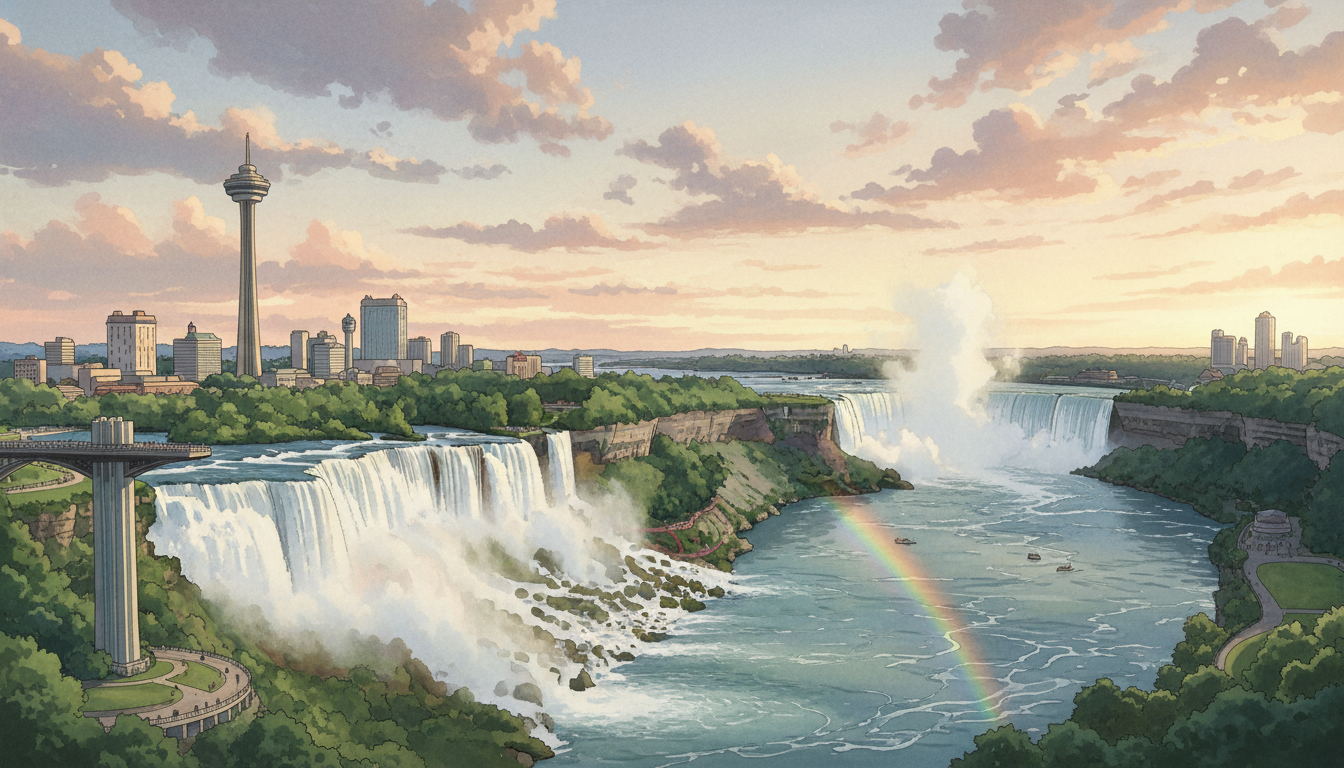
Niagara Falls Canada is one of the world's most spectacular natural wonders – and the Canadian side, anchored by the iconic Horseshoe Falls, offers the best panoramic views, the most Niagara attractions, and a very safe, well-organised visitor experience.[2][5] For Singapore travellers, expats, and global investors, this complete travel guide by Homejourney is written to help you plan a safe, efficient, and value-for-money trip while also understanding how this destination compares to Singapore as a place to live and invest.
Drawing on first-hand experience from multiple visits in different seasons, and cross-checking details against official Niagara Parks and tourism sources, this guide focuses on verified information, clear safety advice, and practical tips that Singapore travellers expect. As with all Homejourney content, user safety, trust, and transparent information are the top priorities.
Table of Contents
- 1. Destination Overview: Why Niagara Falls Canada
- 2. Best Time to Visit the Canadian Side
- 3. Getting to Niagara Falls Canada (From Singapore & Beyond)
- 4. Currency, Costs & Money Basics
- 5. Top Attractions & Signature Experiences
- 6. Food & Dining: What and Where to Eat
- 7. Practical Travel Tips: Visas, Transport & Safety
- 8. Where to Stay: Areas & Hotel Types
- 9. Suggested 3-Day & 5-Day Itineraries
- 10. Day Trips & Nearby Regions
- 11. From Niagara Falls to Singapore: Real Estate, Lifestyle & Investment
- 12. FAQ: Niagara Falls Canada for Singapore Travellers & Investors
1. Destination Overview: Why Visit Niagara Falls Canada
The Canadian side of Niagara Falls, located in Ontario, is where you get that classic postcard view: the full curve of Horseshoe Falls with the American Falls and Bridal Veil Falls in a single panorama.[2][5] Compared with the US side, the Canadian side is more walkable, more developed for tourism, and offers better viewpoints plus a wider variety of Niagara attractions such as Skylon Tower, Journey Behind the Falls, and ziplining over the gorge.[1][2][4]
From a Singapore perspective, Niagara Falls Canada feels like the "MBS SkyPark view" of the falls – you are looking at the full skyline of water rather than standing right on top of it. For families used to Singapore's safety standards, you'll find a similarly high level of maintenance, clear signage, and visible security, especially in key areas like Queen Victoria Park, Table Rock, and Clifton Hill.[4][8]
Key Reasons to Choose the Canadian Side
- Best overall views of Horseshoe Falls and the American falls from Niagara Parkway and Table Rock.[2][5]
- Concentrated attractions within a compact, walkable zone around Clifton Hill, Fallsview and Table Rock.[1][2][4]
- Niagara Parks manages a connected network of viewpoints, nature attractions, and heritage sites with consistent safety and service standards.[4][6]
- Easy day trips to Niagara-on-the-Lake wine country and the Greater Toronto Area (GTA).
- Good fit for multi-generational Singapore families – barrier-free access, paved paths, indoor attractions for winter, and plenty of child-friendly activities.[3][4]
2. Best Time to Visit the Canadian Side
Niagara Falls Canada is open year-round, but what you see and do varies significantly by season.[4][8] If you're used to Singapore's constant 30°C and high humidity, planning around weather is critical.
Niagara Seasons at a Glance
| Season | Months (Approx.) | Weather & Experience | Pros for Singapore Travellers | Watch-outs |
|---|---|---|---|---|
| Summer | Jun – Aug | 20–30°C, long days, mist feels refreshing | All attractions open; boat cruises run; best for first-timers | Peak crowds, higher hotel rates, long queues for cruises |
| Shoulder (Late Spring / Early Autumn) | May, Sep – Oct | 10–22°C, cooler, beautiful foliage in Oct | Fewer crowds, lower prices, most attractions still open | Cool nights – pack layers; some seasonal activities may reduce hours |
| Winter | Nov – Mar | -10 to 5°C, snow/ice, frozen mist formations | Unique icy scenery, cheaper hotels, fewer tourists | Boat cruises paused; slippery surfaces; requires winter clothing |
For most Singapore visitors, late May to early October offers the best balance of weather, open attractions, and extended daylight. If you have school-going children following the MOE calendar, June school holidays line up nicely with full summer operations, including the Niagara City Cruises boat operated on the Canadian side (successor to the classic Maid of the Mist experience from the US side).[1][2][5]
3. Getting to Niagara Falls Canada (From Singapore & Beyond)
3.1 Flight Routing from Singapore
There are no direct flights from Singapore to Niagara Falls. The most practical routing is:
- Singapore (SIN) → Toronto Pearson (YYZ) via a transit hub (e.g. Tokyo, Seoul, Hong Kong, or European hubs).
- From Toronto Pearson to Niagara Falls by car, bus, or train.
Driving from Toronto Pearson Airport to Niagara Falls usually takes around 1.5 to 2 hours depending on traffic, similar to driving from Changi to Johor Bahru in peak periods – but with better highways and clearer signage.
3.2 Getting from Toronto to Niagara Falls
- Self-drive car rental: Most flexible for families; allows stops at Niagara-on-the-Lake and outlets. Parking around Fallsview and Clifton Hill is widely available but can cost CAD 20–35 per day in peak season.
- Intercity bus or tour coach: Day tours from Toronto include transport plus key attractions like Niagara City Cruises, Journey Behind the Falls, and Skylon Tower.[1][5]
- GO Transit / VIA Rail: Seasonal trains connect Toronto Union Station to Niagara Falls station; from there it's a short taxi or local bus ride to the falls area.
For Singaporeans who prefer not to drive on unfamiliar roads or in winter conditions, pre-booking a tour that bundles transport and a few attractions is often the lowest-stress option.
4. Currency, Costs & Money Basics
Niagara Falls Canada uses the Canadian dollar (CAD). Cards (Visa, Mastercard) are widely accepted including at Niagara Parks attractions and major restaurants.[4][6]
4.1 Typical Daily Budget (Per Adult)
| Spending Category | Budget Traveller | Mid-Range Traveller | Comfort / Family |
|---|---|---|---|
| Accommodation (per room) | CAD 90–150 (off-peak, simple motels) | CAD 180–300 (3–4★ hotel) | CAD 300–500+ (fallsview rooms, peak dates) |
| Food | CAD 30–50 (fast food, diners) | CAD 60–90 | CAD 90–150 |
| Attractions | CAD 60–100 (1–2 paid attractions) | CAD 100–160 | CAD 150–250 (bundles, tower dining, extras) |
Homejourney supports multi-currency comparisons, including Singapore dollars and Canadian dollars, so you can evaluate trip budgets and, later, property budgets in both currencies using Bank Rates for indicative foreign exchange and mortgage comparisons.
4.2 Money-Saving Tips
- Consider Niagara Parks attraction bundles rather than buying individual tickets – they often combine Journey Behind the Falls, Niagara's Fury, and other experiences at a discount.[1][6]
- Visit on weekdays outside Canadian public holidays to enjoy lower hotel rates.
- Walk or use the WEGO tourist bus instead of multiple taxis; the main sights are within a compact corridor.
- Book fallsview rooms only for 1–2 nights; move to a cheaper hotel further away for additional nights.
5. Top Attractions & Signature Experiences
Most of Niagara Falls Canada's signature attractions are concentrated along the Niagara Parkway and within Niagara Parks.[1][4][6] For clarity, we group them by experience type so Singapore travellers can prioritise based on family needs, mobility, and comfort with getting wet or dealing with heights.
5.1 Horseshoe Falls & Niagara Parks Promenade
Horseshoe Falls is the largest of the three waterfalls, about 670 metres wide and 51 metres high, carrying roughly 90% of the Niagara River's flow.[5] The Canadian promenade in Queen Victoria Park gives you wide, unobstructed views of Horseshoe Falls plus the American Falls further upriver.[4][8]
- Best viewing points: Table Rock area (immediately beside Horseshoe Falls), sections of Niagara Parkway between the Rainbow Bridge and Table Rock, and from Skylon Tower's observation deck.[1][2][4]
- Accessibility: Flat, paved paths suitable for strollers and wheelchairs, similar to the Marina Bay Promenade in Singapore.
- Insider tip (Singapore style): Go early (before 9am) for quieter photos, then return at night for the illumination and fireworks (seasonal).[8]
5.2 Boat Tour into the Mist (Niagara City Cruises)
On the Canadian side, the classic "Maid of the Mist" experience is operated as Niagara City Cruises, taking you by boat right into the mist at the base of Horseshoe Falls.[1][2][5] Ponchos are provided but you will still get damp to soaked, especially near the bow.
- Duration: Around 20–25 minutes on the water.[1]
- Best seasons: Late spring to autumn; replaced by other attractions in winter when the river conditions are unsuitable.[1][8]
- Tip for families: If travelling with young kids or elderly parents from Singapore, pick earlier time slots when queues are shorter and temperatures milder.
5.3 Journey Behind the Falls
Journey Behind the Falls is a Niagara Parks attraction where you descend about 40 metres in an elevator and walk through tunnels to viewing portals directly behind Horseshoe Falls, plus an outdoor observation deck beside the falling water.[1][2][6]
- What it feels like: Comparable to standing next to a roaring MRT tunnel, but wetter – you hear and feel the power of the water through the rock.[1]
- Accessibility: Elevators are available; tunnels can be damp and slightly uneven, so closed shoes are advisable.
- Insider tip: Time your visit just before sunset; you can then walk straight out to the promenade for illuminated falls views.
5.4 Skylon Tower
The Skylon Tower is the main observation tower on the Canadian side,[1][2][4] rising about 236 metres above the falls area. It offers a 360-degree indoor and outdoor observation deck plus a revolving dining room.
- Why go: For Singaporeans used to the Marina Bay Sands SkyPark or One Raffles Place views, Skylon is the Niagara equivalent – the best way to understand the geography of the river, gorge, and hydro plants in one shot.
- Family note: Glass elevators can be thrilling or intimidating; prepare younger kids beforehand.
- Booking tip: Book dining plus observation access to save compared to separate tickets.
5.5 Clifton Hill: Entertainment District
Clifton Hill is the main entertainment strip on the Canadian side, described as "Orlando meets Las Vegas" with arcades, mini-golf, wax museums, and the Niagara SkyWheel.[1][3]
- Good for: Families who want a break from pure sightseeing; teens; anyone who enjoys theme-park-style fun.[3]
- Budget tip: Set a daily arcade / game budget for kids; the pay-per-attraction model can add up quickly.
- Noise level: Expect a lively, sometimes noisy evening scene, similar to Clarke Quay but family-oriented.
