
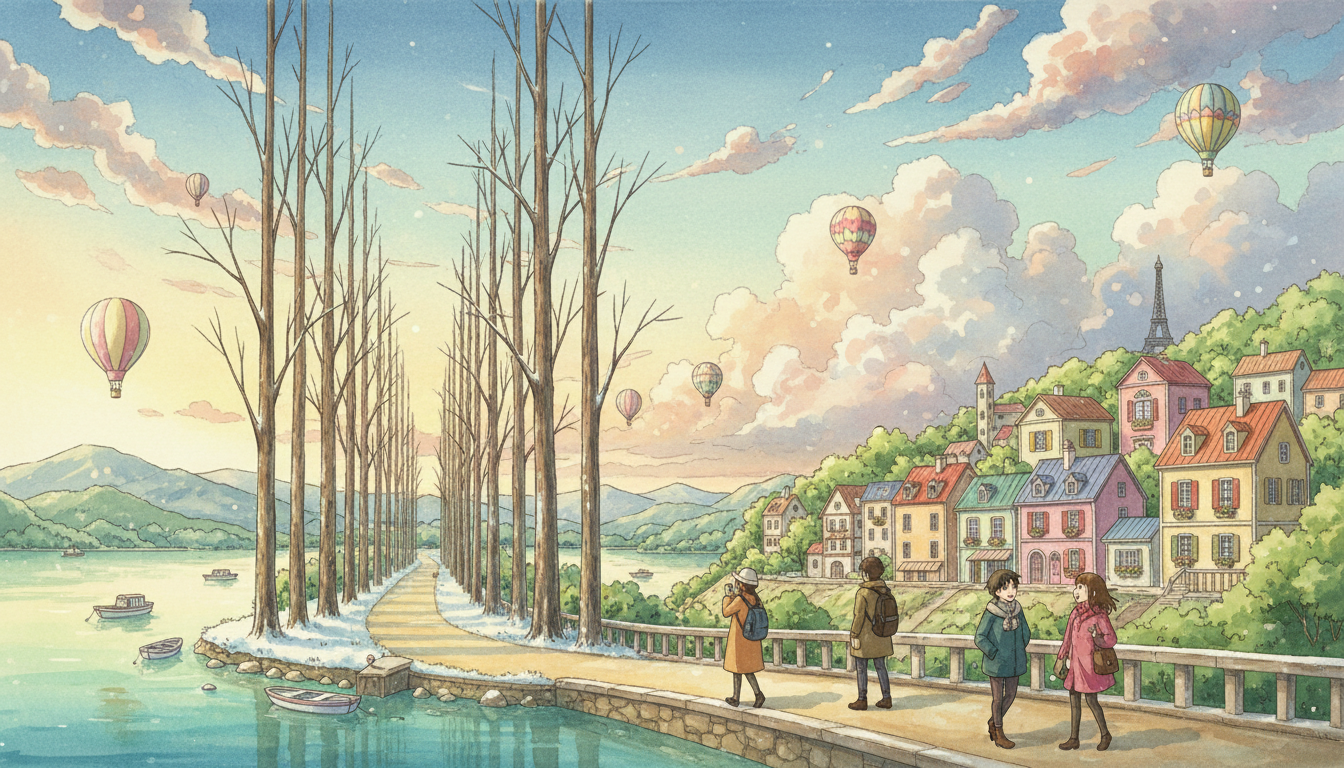
Nami Island, Petite France, and the Gangchon Rail Bike form one of the most popular and family‑friendly Seoul day trip routes – especially for fans of Winter Sonata and K‑dramas in general.[2][3][4][6][8]
This definitive Homejourney guide is written for Singapore travelers, expats and global investors who want a safe, well‑planned day out from Seoul while also keeping an eye on property and lifestyle opportunities across Asia, including Singapore.
As a Singapore‑based, safety‑first property platform, Homejourney approaches travel the same way we approach real estate: verified information, clear options, risk‑aware planning, and practical money‑saving strategies.
Table of Contents
- 1. Overview: Why Nami Island, Petite France & Gangchon Rail Bike Belong in Your Seoul Itinerary
- 2. Best Time to Visit & Seasonal Highlights (Including Winter Sonata Spots)
- 3. How to Get There from Seoul (and from Singapore)
- 4. Top Attractions & Experiences: What Not to Miss
- 5. Gangchon Rail Bike: Safety, Seat Types & Booking Tips
- 6. Practical Travel Tips for Singapore Visitors
- 7. Sample Day Trip Itineraries (Classic & Rail Bike Options)
- 8. Where to Stay: Seoul Bases for a Safe, Easy Day Trip
- 9. Food & Dining: What to Eat at Nami, Petite France & Along the Way
- 10. From Nami Island to Singapore: Real Estate, Lifestyle & Investment Angles
- 11. Quick Planning Checklists & Safety Reminders
- 12. FAQ: Nami Island, Petite France & Gangchon Rail Bike Day Trip
1. Overview: Why This Day Trip Is So Popular (Especially with Singapore Travellers)
A Nami Island, Petite France and Gangchon Rail Bike day trip is one of the most efficient ways to experience Korea’s countryside, K‑drama culture and family‑friendly attractions without needing to self‑drive.[2][3][4][6][8]
Most day tours from Seoul combine two or three of these:
- Nami Island – tree‑lined avenues, lakeside walks, bike rentals, and famous Winter Sonata filming sites.[2][3][4][6]
- Petite France – a small French‑style cultural village with colourful facades, K‑drama filming spots, and Little Prince‑themed installations.[2][4][6]
- Gangchon Rail Bike – pedal along a disused rail track through mountains and rivers, with tunnels, music and light effects; suitable for couples, families and friends.[3][4][6][8]
From a Singapore traveller’s perspective, this day trip works particularly well because:
- There is minimal walking complexity (mostly flat paths) – good for families and multi‑generation trips.
- Tours are usually well‑timed and structured, similar to Singapore’s preference for punctual, predictable experiences.[1][2][3][8]
- You can cover multiple attractions within 10–11 hours door‑to‑door from central Seoul.[1][2][3][6][8]
Key Facts at a Glance (For Fast Planners)
| Item | Typical Range / Info |
|---|---|
| Travel time (Seoul → Nami area) | ~1.5–2 hours one way by tour bus or ITX/subway.[2][3][4][6] |
| Common tour duration | ~10–11 hours round trip from Seoul.[1][2][3][8] |
| Approx tour cost (adult) | Around SGD 70–120 depending on inclusions & season.[1][2][3][8] |
| Nami Island admission (incl. ferry) | Package tours usually include admission; on your own, budget around KRW 16,000+ (check latest on official site). |
| Petite France admission | About KRW 10,000 per adult.[4][6] |
| Gangchon Rail Bike | Separate ticket if DIY; day tours often include it in bundled price.[3][4][6][8] |
2. Best Time to Visit & Seasonal Highlights
Nami Island and the Gapyeong area are four‑season destinations. What changes is the scenery, crowd pattern and how you should pack.
2.1 Seasonal Overview (with Winter Sonata Angle)
| Season | What to Expect | Homejourney Safety & Comfort Tips |
|---|---|---|
| Spring (Mar–May) | Cherry blossoms, fresh greens; cool to mild temperatures; popular for couples and photoshoots.[4][6] | Pack light layers; hay‑fever medicine if sensitive to pollen. |
| Summer (Jun–Aug) | Lush greenery, longer days; can be hot and humid, with monsoon rains.[4][6] | Bring poncho/umbrella, quick‑dry clothing and water; reserve covered rail bikes if available. |
| Autumn (Sep–Nov) | Fiery foliage, crisp air; one of the busiest & prettiest times, especially late Oct–early Nov.[4][6] | Pre‑book tours early; carry a light down jacket for night coach rides. |
| Winter (Dec–Feb) | Snow, bare trees, true Winter Sonata vibes; very cold and slippery paths.[4] | Wear proper winter boots (non‑slip), gloves, heat packs; consider tours with clear snow policies. |
For Winter Sonata fans, winter and late autumn give the closest feel to the drama, with snow and bare tree avenues that resemble key scenes filmed on Nami Island.[4]
2.2 Best Time for Singapore Travellers
Coming from Singapore’s equatorial climate, many visitors find spring (Apr–May) and autumn (Oct–early Nov) most comfortable. Temperatures are cool but manageable, and the scenery is dramatic without the extreme cold or humidity of deep winter or midsummer.
If you are travelling with elderly parents or young kids – a common scenario for Singapore families – avoid heavy snow or peak monsoon days, as ferry boarding and walking on icy/soaked paths can be tricky.
3. How to Get There from Seoul (and from Singapore)
3.1 Getting from Singapore to Seoul
Several airlines operate direct flights from Singapore Changi Airport to Incheon International Airport, typically ~6 to 7 hours. Once in Seoul, most travellers stay in central districts like Myeongdong, Hongdae or Dongdaemun before joining a day tour.
From a budgeting and planning standpoint, you can use Homejourney’s currency and budgeting tools to compare SGD vs KRW costs across flights, hotels and tours, and later apply similar logic when evaluating property investments in Singapore vs Korea.Property Search
3.2 Getting from Seoul to Nami Island, Petite France & Gangchon Rail Bike
You have two main approaches:
- Pre‑arranged day tours (most common for Singapore travellers)
- DIY via public transport (ITX or subway + local buses/taxis)
Option A: Join a Structured Day Tour (Recommended for Most)
Popular tour operators bundle round‑trip coach transport from central Seoul with admission to Nami Island, Petite France and, optionally, Gangchon Rail Bike.[1][2][3][8]
Typical schedules (actual times vary by provider and season):
- Pick‑up around 7:20–9:10am from places like Hongik Univ, Myeongdong or Dongdaemun.[1][2][3][8]
- Arrive at Petite France around 9:40–10:20am; stay about 1.5–2 hours.[1][2][3][6][8]
- Arrive at Nami Island around 11:50am–12:20pm; enjoy 3–4 hours of free time.[1][2][3][4][6][8]
- Optional Gangchon Rail Bike slot around 4:30–6:00pm; ride ~1–2 hours.[3][4][6][8]
- Return to Seoul by ~5:40–8:10pm, depending on inclusions and traffic.[1][2][3][8]
Pros for safety‑ and comfort‑focused Singapore travellers:
- No transfers to figure out – you board at a known landmark (e.g. Dongdaemun History & Culture Park) and return there.[2][3][6][8]
- English‑speaking guides can assist if there are delays, weather changes or questions.[1][2][3][5][8]
- Suitable for multi‑generation groups where grandparents or kids may not enjoy multiple public transport transfers.
Option B: DIY with ITX/Subway + Local Transfers
If you prefer flexibility, you can travel independently:
- Take the subway or ITX‑Cheongchun train from Seoul (e.g. Seoul Station, Yongsan) to Gapyeong Station – about 1 hour 30–40 minutes.[4][6]
- From Gapyeong, choose:
- Taxi to Nami Island ferry terminal (~5 minutes, ≈ KRW 5,000), or a ~20‑minute walk.[4][6]
- Taxi to Petite France (~25 minutes, ≈ KRW 20,000).[6]
- Gapyeong City Tour Bus, a hop‑on hop‑off bus covering Nami Island, Petite France, Garden of Morning Calm and more (buy a day pass on arrival).[6][9]
DIY offers more control but requires time checks, bus intervals and contingency planning. If you are used to Singapore’s precise MRT schedules, note that bus frequencies can be less predictable, especially off‑peak and in bad weather.
4. Top Attractions & Experiences
4.1 Nami Island Highlights
Nami Island is a half‑moon‑shaped island in the Bukhangang River near Chuncheon, accessed via a short 5‑minute ferry ride.[2][4][6] It is renowned for its tree‑lined boulevards, gentle walking paths and filming locations from Winter Sonata.[2][4][6]
Must‑See Spots on Nami Island
- Metasequoia Lane – the most iconic straight avenue with tall metasequoia trees; spectacular in autumn foliage and snowy winter.[4][6]
- Gingko Tree Lane – turns brilliant yellow in autumn; beautiful photo spot.
- Winter Sonata Statue & Bench – official photo spot for fans of the drama.
- Lakeside Walks – gentle riverside paths, ideal for strollers and relaxed photography.[4][6]
- Bike & Electric Cart Rentals – for families who prefer riding over walking; convenient for elderly or young children.
- Cafés & Restaurants – Korean food, snacks and coffee spots are distributed across the island, so you do not need to rush meals.
How Much Time Do You Need?
Most day tours allocate about 3 hours on Nami Island, which is sufficient for a relaxed stroll, multiple photo stops, a simple meal and some souvenir shopping.[1][2][3][4] Winter Sonata superfans or slow photographers might want longer, which is easier on a DIY trip or a private charter.
4.2 Petite France Highlights
Petite France is a small hillside village themed after a rural French town, inspired by The Little Prince, with colourful facades, European‑style architecture, and K‑drama filming locations.[2][4][6][9]
Operating hours are generally 9am–6pm, with last admission earlier near closing.[4][6]
- Colourful Courtyards & Streets