
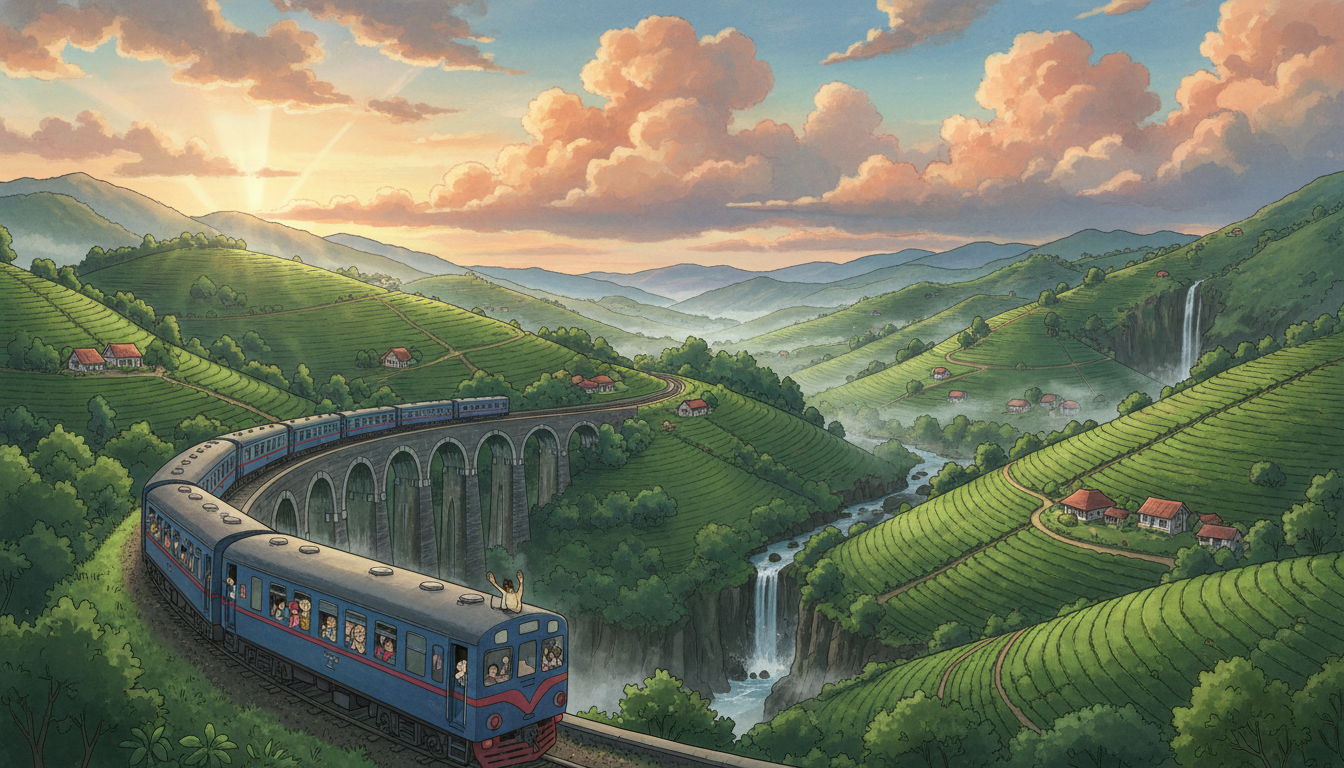
The Kandy to Ella train in Sri Lanka is often called one of the most beautiful train journeys in the world – a slow, scenic ride through emerald tea plantations, misty hills, and local villages along the historic Sri Lanka railway Main Line.[1][3] For many Singapore travellers (and future property investors), this journey is a bucket‑list experience that often sits alongside trips to Singapore as an Asian hub.
This complete guide is written for Homejourney users – Singapore‑based travellers, expats, and international investors – who want a safe, well‑planned, and trusted travel experience. It combines first‑hand style tips with verified information, so you can enjoy the scenery and avoid common pitfalls, just as you would when using Homejourney to navigate the Singapore property market.
1. Overview: Why the Kandy to Ella Train Journey Matters
The Kandy–Ella stretch is the most celebrated portion of the Colombo–Kandy–Badulla Main Line, a legacy of British‑era Sri Lanka railway construction that carved tracks through the central highlands to move tea and goods to Colombo port.[1][3] Today, it is one of the world’s most photographed scenic train routes, famous for blue trains snaking past tea fields and for the iconic Nine Arch Bridge near Ella.[1][3]
For Singapore travellers, the experience feels like a cooler‑climate counterpart to tropical Singapore – swapping HDB blocks and CBD skylines for plantation bungalows, waterfalls and village stations. It also offers a useful contrast for anyone comparing quality of life, infrastructure, and even long‑term property investment potential between Sri Lanka and Singapore.
2. Route Basics: Distance, Duration & Key Stations
2.1 How far is Kandy from Ella and how long is the ride?
The Kandy to Ella section covers roughly 150–170 km of track, depending on how you measure the curves and exact start/end points along the Main Line.[5] Because this is a mountain railway with many curves, bridges and gradients, trains are intentionally slow.
Based on recent travel data for 2024–2025, the Kandy–Ella leg generally takes about 6.5 to 7.5 hours, with some reports of journeys extending to 8–10 hours when there are delays.[2][4] Sri Lanka Railways timetables often list shorter theoretical durations, but travellers should always plan with buffer time.[2][4][6]
| Segment | Approx. Duration (no major delays) | Notes |
|---|---|---|
| Kandy → Hatton | 2–2.5 hours | Hill climb begins, tea estates start appearing.[3] |
| Hatton → Nanu Oya (Nuwara Eliya) | 1.5–2 hours | Very scenic; waterfalls and dense tea plantations.[3][6] |
| Nanu Oya → Haputale | 1.5–2 hours | Ridge‑top tracks with misty forest and mountain views.[1][3] |
| Haputale → Ella | 1.5–2 hours | Valleys, tunnels, famous vistas near Ella.[1][3] |
2.2 Key stations on the Kandy–Ella route
- Kandy – Cultural capital, lakefront city, start/finish for many travellers.
- Peradeniya – Junction station ~6 km from Kandy, often with better seat availability.[1][3][5]
- Hatton – Gateway to Adam’s Peak (Sri Pada); tea country town.[3]
- Nanu Oya – Station for Nuwara Eliya, known as “Little England” for its colonial bungalows and cool climate.[3][4]
- Haputale – Small hill town on a ridge, surrounded by plantations and sweeping views.[3]
- Ella – Popular backpacker and nature hub; base for Little Adam’s Peak, Ella Rock and Nine Arch Bridge.[1][3]
3. Tickets, Classes & How to Book Safely
3.1 Train classes on the Kandy–Ella line
The Main Line trains between Kandy and Ella typically offer the following classes:[1][3][6]
- 1st Class (often A/C) – Reserved seating, more comfort, sometimes with sealed windows and air‑conditioning. Quieter, good for those travelling with children or elderly.
- 2nd Class Reserved – Numbered seats, fans and openable windows. Popular balance between price and comfort.
- 2nd Class Unreserved – Cheapest for many tourists; benches and open windows. Can be extremely crowded, with standing passengers.
- 3rd Class – Very basic, packed with local commuters. Authentic but not ideal for first‑timers who value comfort.
- Observation Saloon (on some trains) – Limited‑seat carriage usually at the rear/front with panoramic windows towards the track and scenery.[3]
3.2 How and where to book tickets
Unlike booking a Singapore MRT or LTA‑regulated bus, Sri Lanka Railways’ reservation systems are partly manual and seats on scenic trains are limited. Official timetables are available on the Sri Lanka Railway website and ticket bookings can be made:
- In person at major stations (Colombo Fort, Kandy, Ella, sometimes Nanu Oya and others).
- Via authorised agencies and online booking partners that pre‑purchase quotas of reserved seats for popular trains.[1][6]
Travel writers consistently recommend booking reserved seats days to weeks in advance, especially during school holidays and December–January peak season.[1][2][6] For Singapore travellers who are used to reserving flights and even attractions online in advance, treat this train the same way – do not leave it to the last minute at the station if you are on a tight schedule.
3.3 Safety and trust when booking
Similar to Homejourney’s approach of verifying property information before listing, you should:
- Prioritise official or well‑reviewed platforms (check recent reviews, look for clear refund policies).
- Avoid paying large cash deposits to unverified individuals around stations who promise “guaranteed tickets”.
- Cross‑check train numbers and times with recent timetables from trusted guides and Sri Lanka Railway updates.[1][2][7]
4. Best Time to Ride the Kandy–Ella Scenic Train
Sri Lanka’s hill country has a cooler climate than coastal Colombo, but rain patterns and visibility matter for this scenic train. Many travellers prefer December to April for relatively drier weather in much of the highlands, though conditions can vary by micro‑region. The southwest monsoon often brings heavier rain earlier in the year; mist is common in the hills in the mornings and late afternoons.
For Singapore residents who are used to hot, humid weather year‑round, Kandy and Ella offer a refreshing 16–24°C range at many times of the year. Bring a light jacket – trains are not temperature‑controlled to Singapore MRT standards, and night services can feel quite cold.
5. Which Train to Take, Timings & Where to Sit
5.1 How many trains run between Kandy and Ella?
As of 2025, travel reports indicate roughly five trains providing about 26 services per week from Kandy to Ella, plus additional daily services from nearby Peradeniya, bringing the weekly total from the Kandy area to around 40 services towards Ella.[2] Timetables are subject to change, so always confirm close to your travel date.
5.2 Typical departure times & recommended services
Different sources report slightly varied times, but a few named trains consistently appear in 2023–2025 guides:[3][6][7]
- Podi Menike – Often highlighted as one of the best options, leaving Kandy in the morning (~08:47) and arriving in Ella mid‑afternoon (~15:15).[3][6]
- Udarata Menike – Another daytime service leaving Kandy late morning (~11:03) and arriving Ella late afternoon (~17:28).[3]
- Trains from Peradeniya – Some services with observation saloon depart or pass Peradeniya around midday (~12:25 to Ella ~18:23).[3]
Exact timings shift periodically; platforms like Sri Lanka Railways’ official site and recent travel guides (2024–2025) provide updated schedules.[1][2][7] Compared to Singapore’s LTA‑regulated systems, timetable adherence is looser – build in slack time for connections.
| Train | Approx. Kandy Departure | Approx. Ella Arrival | Why Choose It |
|---|---|---|---|
| Podi Menike | ~08:45–09:00 | Mid‑afternoon | Less crowded, full scenery in daylight, buffer for delays.[3][6] |
| Udarata Menike | Late morning | Late afternoon | Good for late risers; still daylight on arrival in most cases.[3] |
| Midday Peradeniya train | ~12:25 (Peradeniya) | Early evening | Observation saloon available on some days; great photography.[3] |
5.3 Which side of the train offers the best views?
Local‑style tips from frequent travellers:
- Sit on the right‑hand side leaving Kandy for prime views between Kandy and Nuwara Eliya / Nanu Oya.[3][8]
- If you continue all the way to Ella, some travellers switch sides mid‑journey; others report that scenery is excellent from both sides in the later sections.[8]
- On the return journey Ella → Kandy, many recommend the left‑hand side for the best panoramas.[3][8]
6. Onboard Experience: What the Journey is Really Like
Unlike the smooth, air‑conditioned MRT in Singapore, the Kandy–Ella train is slower, more social, and more rustic. Trains often run with open windows and doors; vendors walk through selling snacks; locals and tourists mingle in shared compartments.[1][3][7]
The scenery changes gradually: terraced rice fields give way to dense tea plantations; villages appear and vanish behind forest and mist; waterfalls flash by between tunnels. Many travellers stand in the open doorways to take photos, a classic image associated with the world’s most beautiful train routes.[1][3] However, from a safety perspective (and consistent with Homejourney’s safety‑first values), it is important to avoid leaning out excessively or ignoring staff instructions.
6.1 Comfort level vs Singapore standards
- Temperature – Cooler than Singapore; a light jacket is sufficient.
- Cleanliness – Varies by class and how busy the train is. 1st and reserved 2nd class usually more comfortable.
- Noise & crowding – Expect crowds, especially in unreserved classes. Avoid heavy luggage if you dislike tight spaces.
- Connectivity – Mobile data coverage is intermittent; download offline maps and entertainment in advance.