
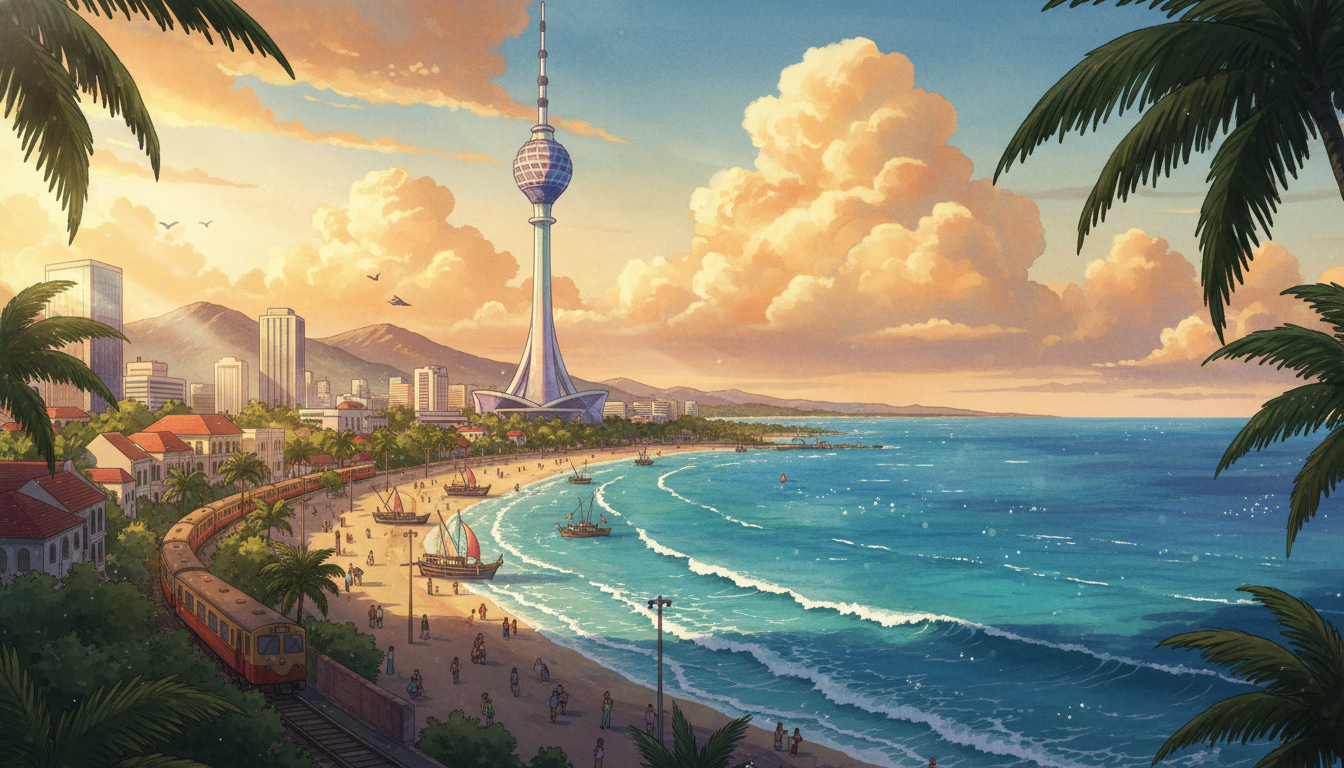
Colombo, the vibrant Sri Lanka capital, is often treated as a transit stop. But if you look beyond Bandaranaike Airport and the highway into town, you’ll find a coastal city layered with colonial history, colourful markets, seafront evenings at Galle Face, serene temples like Gangaramaya Temple, and fast‑evolving neighbourhoods that increasingly catch the eye of Singaporean travellers and investors.[1][4]
This Homejourney guide is written for Singapore‑based travellers, expats and international investors who want a safe, practical and deeply researched introduction to Colombo. Drawing on first‑hand visits, Singapore travel norms, and verified data, it will help you:
- Plan a safe and efficient Colombo trip from Singapore
- Navigate key areas like Galle Face, Pettah, and Cinnamon Gardens[1][5]
- Discover top Colombo attractions, food, and local experiences
- Choose where to stay based on your budget and travel style
- Understand how Colombo fits into a wider Asia travel and property strategy, including Singapore
Table of Contents
- 1. Destination Overview: Why Colombo Matters for Singapore Travelers
- 2. Best Time to Visit Colombo
- 3. Getting There from Singapore & Arrival Essentials
- 4. Currency, Costs & Money Tips
- 5. Top Attractions & Experiences in Colombo
- 6. Food & Dining: What and Where to Eat
- 7. Where to Stay: Best Areas & Accommodation Types
- 8. Getting Around Colombo Safely
- 9. Practical Travel Tips, Visas & Safety
- 10. Suggested 3‑Day & 5‑Day Colombo Itineraries
- 11. Best Day Trips from Colombo
- 12. Colombo & Singapore: Travel, Currency & Property Links
- 13. Colombo FAQ for Singapore Travelers & Investors
- 14. Next Steps & How Homejourney Supports Your Journey
1. Destination Overview: Why Colombo Matters for Singapore Travelers
Colombo is Sri Lanka’s commercial and administrative hub, with a deep‑water port, financial district, and a fast‑changing skyline of hotels, offices and mixed‑use towers along the Indian Ocean.[4] For Singapore travelers, it offers:
- Gateway to Sri Lanka: Most international flights land at Bandaranaike International Airport (CMB), around 30–45 minutes north of Colombo via expressway in light traffic.[1][4]
- Compact coastal city: Key areas like Colombo Fort, Galle Face Green, Pettah, and Kollupitiya are relatively close, making short stays feasible.[1][4]
- Cultural sampler: You get Buddhist temples, mosques like Jami Ul‑Alfar, colonial churches, museums and modern malls within a few kilometres.[4][5]
- Cost advantage: For Singaporeans used to high prices, Colombo feels considerably more affordable for food, transport and mid‑range accommodation.[7]
From a lifestyle and property perspective, Colombo also helps Singapore‑based buyers benchmark regional cities: sea‑view condos along Marine Drive, heritage shophouse districts around Pettah, and leafy enclaves such as Cinnamon Gardens invite comparisons with Singapore’s East Coast, Kampong Glam, and Bukit Timah.[1][4][5]
2. Best Time to Visit Colombo
Sri Lanka’s climate is shaped by two monsoon systems, but Colombo is generally a year‑round destination.[4]
- Pleasant & popular (Dec–Apr): Cooler winds, bluer skies and lower rainfall on the west coast. This aligns perfectly with Singapore’s school holidays and year‑end breaks.[1][4]
- Shoulder months (May–Jun, Sep–Nov): More humid, with sporadic heavy showers. Prices can be lower and crowds thinner; plan indoor activities like museums during mid‑day storms.[4][7]
- Festive periods: Sinhala and Tamil New Year (mid‑April) and Vesak (around May) bring street decorations, lanterns and special food. Expect some business closures but richer cultural experiences.
Insider tip (from a Singapore travel rhythm): If you’re used to combining Bangkok or Jakarta with short leaves, Colombo works similarly. A Thu–Sun long weekend in the December to February window is ideal for a quick Colombo focused trip before heading to the tea country or the southern beaches.
3. Getting There from Singapore & Arrival Essentials
3.1 Flights from Singapore to Colombo
Singapore to Colombo is a straightforward medium‑haul route of about 3.5–4 hours nonstop. Several full‑service and regional airlines operate direct or one‑stop flights, with multiple options in the evening that suit post‑work departures from Changi.
Flight timings and carriers can change, so always verify with airlines or Changi Airport. As with any international guide, this article is not a substitute for airline schedules or official travel advisories.
3.2 Bandaranaike International Airport (CMB)
CMB, the main international gateway, sits near Negombo, roughly 30 km north of central Colombo.[1] Travel time to the city:
- Expressway taxi: Around 30–45 minutes in light traffic, longer at weekday peak hours.
- Cost benchmark: Airport taxi to Colombo core typically costs substantially less than a Changi–Orchard taxi ride of similar time, even with expressway tolls (amounts vary by provider and fuel prices).
Upon arrival, look for official taxi counters in the arrivals hall. Ride‑hailing apps like Uber and PickMe are widely used in Colombo and can sometimes pick up from designated airport zones.[1]
3.3 Entry, SIM cards & connectivity
- eSIM & roaming: Most Singapore travelers either activate roaming or buy a local SIM at the arrival hall. Major Sri Lankan telcos have counters before customs exit, with tourist data packages at competitive rates compared to Singapore roaming charges.
- Payment: Cards are increasingly accepted in Colombo’s malls and hotels, but cash is still king at markets like Pettah and local eateries.[1][5]
4. Currency, Costs & Money Tips
4.1 Currency basics
Colombo uses the Sri Lankan Rupee (LKR). Exchange rates fluctuate, so always check live rates before you travel. Compared to Singapore, typical day‑to‑day costs for food, taxis and admission fees in Colombo are significantly lower, though imported items and high‑end drinks can feel closer to global pricing.[7]
Practical money tips for Singapore travelers:
- Change a modest amount of cash at the airport or city money changers; top up only as needed.
- Use credit cards for hotels and larger restaurants; keep cash for tuk‑tuks, markets and street food.
- Split cash and cards between your day bag and hotel safe, as you would in other regional capitals.
For those using Homejourney to explore Singapore property while based in Sri Lanka, our platform supports multi‑currency views, helping Colombo‑based users understand Singapore property prices in familiar terms. You can compare approximate SGD and LKR values when browsing listings via Property Search .
4.2 Typical daily cost ranges (per person, excluding flights)
| Traveller Type | Approx. Daily Budget in Colombo (LKR) | What This Usually Includes |
|---|---|---|
| Budget | 8,000–15,000 LKR | Guesthouse/hostel, local eateries & street food, buses/tuk‑tuks, basic attractions |
| Mid‑range (typical SG couple) | 18,000–35,000 LKR | 3–4★ hotel, mix of cafes & restaurants, taxis, entry fees, some drinks |
| Upscale | 40,000+ LKR | 4–5★ seafront hotel, fine dining, private transfers, spa, rooftop bars |
Figures are indicative only and can shift with currency and inflation; always cross‑check nearer your travel date.
5. Top Attractions & Experiences in Colombo
Colombo’s highlights are concentrated in and around the seaside core. Below is a quick‑reference list suitable for featured snippets, followed by deeper descriptions.
| Colombo Attraction | Neighbourhood | Experience Type |
|---|---|---|
| Galle Face Green | Galle Face | Seafront promenade, sunset, street food |
| Pettah Market | Pettah | Traditional bazaar, textiles, spices |
| Gangaramaya Temple | Kollupitiya | Buddhist temple, museum, lakeside walk |
| National Museum of Sri Lanka | Cinnamon Gardens | History & culture museum |
| Lotus Tower | Beira Lake area | City views, modern landmark |
| Jami Ul‑Alfar (Red Mosque) | Pettah | Iconic religious architecture |
5.1 Galle Face Green – Colombo’s iconic seafront
Galle Face is a broad oceanfront promenade framed by luxury hotels, colonial buildings and the crashing Indian Ocean.[1][4] In the late afternoon and evening, families fly kites, couples stroll, and food stalls sell isso wade (prawn fritters), kottu roti and ice cream.[1]
Insider tip (from multiple evenings there): Aim to arrive about 45–60 minutes before sunset. Start with a walk from the north end near the Old Parliament Building down towards the southern stretch, then pick a stall with a visible crowd turnover for fresh snacks. Like at Singapore’s East Coast Park, breeze conditions can change quickly—carry a light shawl if you’re sensitive to wind.
5.2 Pettah & the Red Mosque – Old trading heart of Colombo
Pettah is Colombo’s oldest market district—a maze of streets specialising in everything from spices to mobile phones.[1][5] The highlight for many is the red‑and‑white candy‑striped Jami Ul‑Alfar Mosque (often called the Red Mosque), an architectural landmark that dates back to the early 1900s.[2][5]
- Experience: Narrow streets, shouted bargains, porters wheeling boxes, street snacks and fruit stalls.
- Best time: Morning (before the mid‑day heat) or late afternoon; weekdays are livelier.
- Safety: As in Bugis Street or Chatuchak, keep valuables close and avoid displaying large sums of cash. Stick to main lanes if you’re new to Asian bazaars.
5.3 Gangaramaya Temple & Beira Lake
Gangaramaya Temple is one of Colombo’s most important Buddhist temples, blending Sri Lankan, Thai and Chinese influences.[1][4] It features courtyards packed with Buddha statues, relics, and even vintage cars donated by devotees.
- Location: Near Beira Lake in the Kollupitiya area.[1]
- Dress code: Modest clothing, shoulders and knees covered; remove shoes at the entrance, similar to visiting temples in Singapore’s Little India or Chinatown.
- Pairing: Combine with a walk along the nearby lake or a cafe stop in Kollupitiya.
5.4 National Museum of Sri Lanka & Cinnamon Gardens
The National Museum of Sri Lanka traces the island’s story from ancient kingdoms to colonial times.[1][4] It’s housed in a stately white building within Cinnamon Gardens, one of Colombo’s most affluent residential districts.[5]
- Why visit