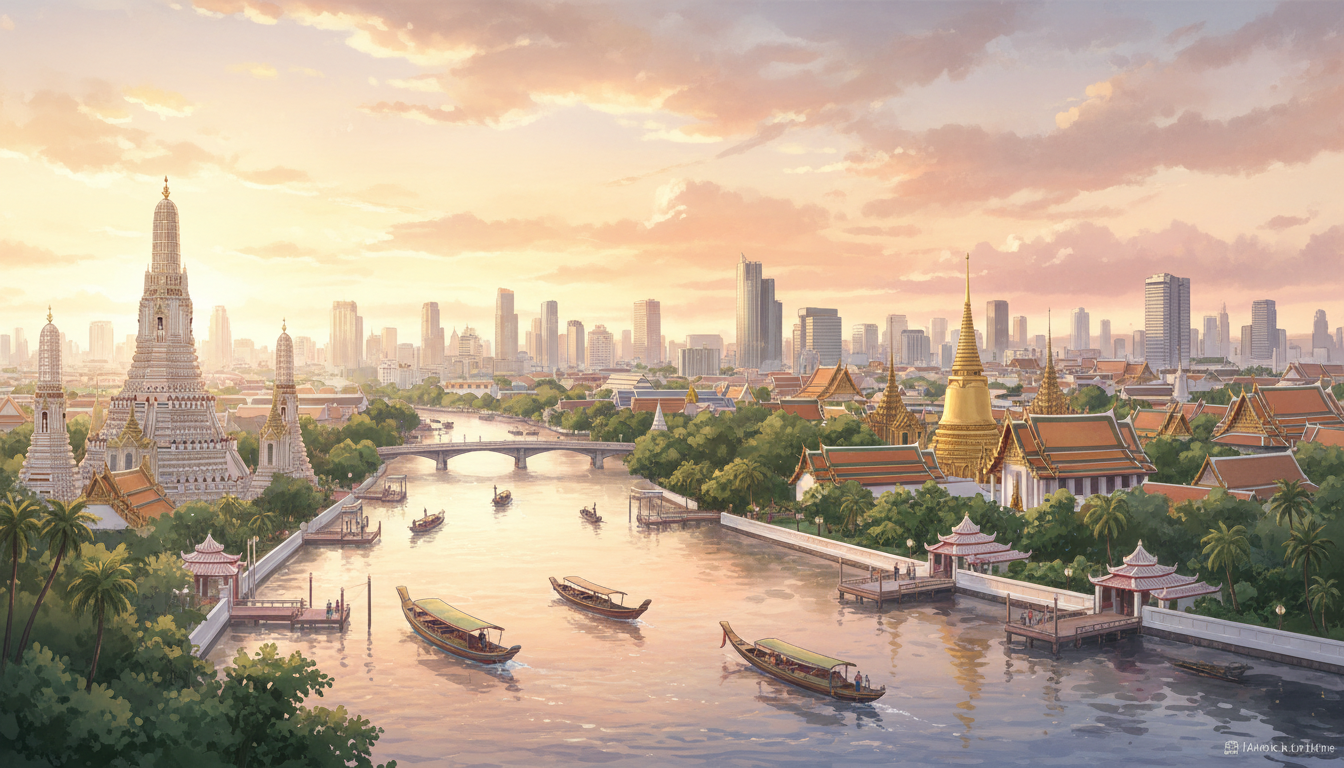
Bangkok Thailand is one of the most exciting cities in Asia – a mix of glittering temples, world-class malls, legendary street food and hidden neighbourhoods that reward slow exploration. For many Singaporeans (and travellers who pass through Singapore), Bangkok is also the gateway to exploring Asian real estate, lifestyle and long-term relocation options.
This guide is written from the perspective of a Singapore-based traveller who has visited Bangkok repeatedly over the last decade – for weekend food trips, longer remote-work stays and property market research. It is designed for human readers first, with a strong focus on safety, accurate data and practical detail, in line with Homejourney’s commitment to trust and transparency.
Whether you are planning your first Thailand travel adventure, returning for the fifth time, or quietly comparing Bangkok with Singapore as a place to live or invest, this is your complete, verified guide to the best things to do in Bangkok.
Table of Contents
- 1. Bangkok Thailand Overview: Why Go, When, How
- 2. Top Bangkok Attractions & Must-See Experiences
- 3. Hidden Gems & Neighbourhoods Only Regulars Talk About
- 4. Practical Travel Tips for Singapore & International Visitors
- 5. Where to Stay in Bangkok: Areas & Hotels by Budget
- 6. Food & Dining in Bangkok: From Street Stalls to Sky Bars
- 7. Suggested 3-Day & 5-Day Bangkok Itineraries
- 8. Best Day Trips & Short Excursions from Bangkok
- 9. Connecting Bangkok to Singapore Property & Investment
- 10. FAQ: Things to Do in Bangkok Thailand – Singapore Traveller Questions
1. Bangkok Thailand Overview: Why Visit & How to Plan
1.1 Why Bangkok is so Popular with Singapore Travellers
From Singapore, Bangkok Thailand is one of the easiest and most affordable short-haul destinations. Multiple budget and full-service carriers fly direct from Changi to Suvarnabhumi or Don Mueang daily, with flight times around 2 hours 25 minutes–2 hours 40 minutes depending on carrier and routing (timings based on recent airline schedules).
Bangkok consistently ranks among the world’s most visited cities, thanks to:
- Rich culture – Grand Palace, Wat Pho and Wat Arun are among the top-rated Bangkok attractions globally.[1][2][3][4]
- Affordable prices – Everyday costs (food, taxis, massages) are typically lower than Singapore, appealing to budget-conscious travellers.
- Convenient infrastructure – BTS Skytrain and MRT, plus ride-hailing apps, make getting around relatively easy for first-time visitors.[2][3]
- Variety of experiences – From temples and river cruises to rooftop bars, mega malls, floating markets and creative districts.[1][2][3][5][7]
For Singapore-based investors, repeated trips to Bangkok are also an opportunity to observe how another major Asian capital has evolved – from riverfront redevelopment to mall-centric urban planning – and to compare lifestyle, density and pricing with Singapore’s regulated property market.
1.2 Best Time to Visit Bangkok Thailand
Bangkok is hot and humid year-round, but seasons do matter for comfort and planning:
| Season | Months (approx.) | Weather & What to Expect | Homejourney Tip |
|---|---|---|---|
| Cool & dry (best overall) | Nov – Feb | Lower humidity, 24–30°C, less rain, peak tourist crowds. | Book flights & popular hotels 1–2 months in advance from Singapore. |
| Hot season | Mar – May | Very hot (often 34–36°C midday), intense sun. | Plan temples early morning; malls & rooftop bars in afternoon/evening. |
| Rainy season (southwest monsoon) | Jun – Oct | Short heavy showers, occasional flooding in low-lying lanes. | Ideal for value hunters; keep flexible plans and carry a compact umbrella. |
From a Singapore perspective, many travellers pair Bangkok with school holidays (March, June, September, December). If you are sensitive to heat, late November to January is noticeably more comfortable for temple and street-walking days.
1.3 Getting to Bangkok from Singapore
Direct flights from Singapore to Bangkok operate from early morning to late night, mostly landing at:
- Suvarnabhumi Airport (BKK) – Main international hub, connected to the city by Airport Rail Link (ARL) and taxis.
- Don Mueang Airport (DMK) – Focused on low-cost carriers, popular for budget trips and regional connections.
Typical economy return fares from Singapore can range from budget levels (for promo fares) to mid-range, depending on period and airline. Travellers often monitor fare trends over a few weeks or use flexible-date calendars to find the cheapest weekend combinations.
Insider tip from a frequent SG–BKK traveller: If you land at Suvarnabhumi, Airport Rail Link + BTS (change at Phaya Thai) is usually faster than taxis in rush hour when heading to central areas like Siam or Asok. For family groups with luggage, a metered taxi is still convenient and cost-effective if you travel outside peak hours.
1.4 Currency, Exchange & Budgeting
The local currency is the Thai Baht (THB). Many Singaporeans prefer to:
- Exchange SGD to THB at competitive money changers in Singapore (e.g. Raffles Place, Chinatown) before departure.
- Top up multi-currency cards / digital wallets to lock in better FX rates.
- Withdraw additional cash from Thai ATMs if needed (noting bank fees).
Homejourney supports multiple currencies – including THB – when you compare Singapore property prices and run affordability scenarios, so you can think in your “Bangkok travel money” terms even when browsing Singapore listings.Bank Rates Property Search
As a rough daily budget (excluding flights and shopping), many Singapore-based travellers find:
- Budget: 1,200–1,800 THB/day – guesthouse, BTS, simple meals, basic attractions.
- Mid-range: 1,800–3,500 THB/day – 3–4★ hotel, mix of street & restaurant meals, massages, some paid tours.
- Comfort: 3,500 THB+ – 4–5★ hotels, rooftop bars, fine dining, private tours.
2. Top Bangkok Attractions & Must-See Experiences
Bangkok attractions range from royal palaces to markets and parks. Below is a concise checklist of the most iconic things to do in Bangkok Thailand.
| Bangkok Attraction | Why Visit | Recommended Time |
|---|---|---|
| Grand Palace & Wat Phra Kaew | Bangkok’s most famous landmark; former royal residence and Temple of the Emerald Buddha.[1][2][3][4][5] | 2–3 hours, ideally 8:30–11:00am for lower heat. |
| Wat Pho | Home to the 46-metre Reclining Buddha and traditional Thai massage school.[1][2][3][4][5] | 1.5–2 hours; combine with Grand Palace walk.[1][2][3] |
| Wat Arun | Temple of Dawn, riverfront spire with mosaic details and views over Chao Phraya.[1][2][3][5] | 1–1.5 hours; late afternoon/sunset for photos. |
| Chatuchak Weekend Market | Thailand’s largest market with thousands of stalls; clothing, crafts, food.[1][2][4][5] | 3–4 hours on Sat/Sun mornings before midday heat. |
| Chinatown (Yaowarat) | Street food, gold shops, temples and atmospheric lanes.[1][2][5][7] | 2–3 hours in the evening for food walks. |
| Lumpini & Benjakitti Parks | Green lungs of Bangkok; jogging, cycling, lake views.[1][2] | 1–2 hours in early morning or evening. |
2.1 Grand Palace & Wat Phra Kaew
The Grand Palace is a complex of more than 100 royal buildings located in the historic heart of Bangkok and remains the city’s single biggest tourist draw.[1][3][4][5] Within the grounds sits Wat Phra Kaew, the Temple of the Emerald Buddha – considered the most sacred temple in Thailand.[3][4]
What to know:
- Dress code is strict: long trousers or skirts below the knee and covered shoulders. No ripped jeans or see-through fabrics.[1][3]
- Arrive early (opening time is typically around 8:30am) to avoid both heat and tour groups.[1][2][3]
- Allow time to walk slowly and appreciate details – intricate murals, gold leaf and layered roofs.
Singapore-traveller tip: Think of this like visiting a combination of the Istana and an ultra-ornate historic museum in one. Weather feels similar to Singapore but there is less shade; a cap, sunglasses and a small towel help.
2.2 Wat Pho: Reclining Buddha & Thai Massage
Wat Pho, one of Bangkok’s oldest temples, is famous for its 46-metre-long gold Reclining Buddha and for housing Thailand’s largest collection of Buddha images.[1][2][3][4] It is also recognised as the birthplace of Thai massage, and the on-site traditional medicine school offers massages in a historic setting.[1][2]
Insider tip: After temple-hopping in Singapore’s Chinatown or Little India, you may find Wat Pho’s scale and layout much larger. If you plan to try a massage here, budget at least an extra hour to avoid rushing.
2.3 Wat Arun: Temple of Dawn
Across the Chao Phraya River from Wat Pho sits Wat Arun, one of the oldest temples in Bangkok and known for its 70m high main spire decorated in colourful porcelain mosaics.[1][2][3][5] Climbing partway up gives photogenic views over the river and the Old City.[2][3]
From a Singapore perspective, the riverside ambience at Wat Arun feels closer to visiting coastal towns in Malaysia than to urban riverfronts like Clarke Quay. The light at sunset is particularly beautiful, and many sunset cruise routes pass by the temple.[2][3]
2.4 Markets & Malls: Chatuchak, Chinatown & Modern Retail
Chatuchak Weekend Market is widely cited as Thailand’s largest market, with thousands of stalls selling everything from fashion and plants to antiques and pets.[1][2][4][5] It operates mainly on Saturdays and Sundays (with a smaller version on Fridays).
Homejourney safety tip: In crowded zones like Chatuchak and Yaowarat, use a crossbody bag or money belt and avoid keeping phones in back pockets. Petty theft is infrequent but opportunistic in tight crowds, similar to busy Orchard Road sales days or large events in Singapore.
Bangkok’s modern malls – such as Siam Paragon, CentralWorld and ICONSIAM – offer air-conditioned comfort, high-end brands and extensive food courts.[1][2] For Singapore-based visitors familiar with malls like ION Orchard or VivoCity, Bangkok’s major malls feel familiar but often larger and more varied in F&B options.
2.5 Parks, Museums & Cultural Spaces
Bangkok’s green spaces are increasingly appreciated by repeat visitors:
- Lumpini Park – central park with a lake, jogging paths and resident monitor lizards; skyline views from the lawn.[2]
- Benjakitti Forest Park – newer park with elevated walking and cycling paths through wetlands, popular at sunset.[1]
- Bangkok National Museum – provides historical context to what you see at the temples, with collections of Thai art and artefacts.[1][3]
In recent years, Bangkok has also seen the rise of creative and museum spaces such as the Ancient City Museum (Muang Boran) and artsy districts like Talat Noi, which showcase street art and preserved shophouse architecture.[1][2][7]
3. Hidden Gems & Local-Favourite Things to Do in Bangkok
Beyond the classic Bangkok attractions, regular visitors and residents often recommend neighbourhoods and experiences that feel more lived-in and less touristic.
3.1 Talat Noi & Charoen Krung Creative District
Talat Noi