
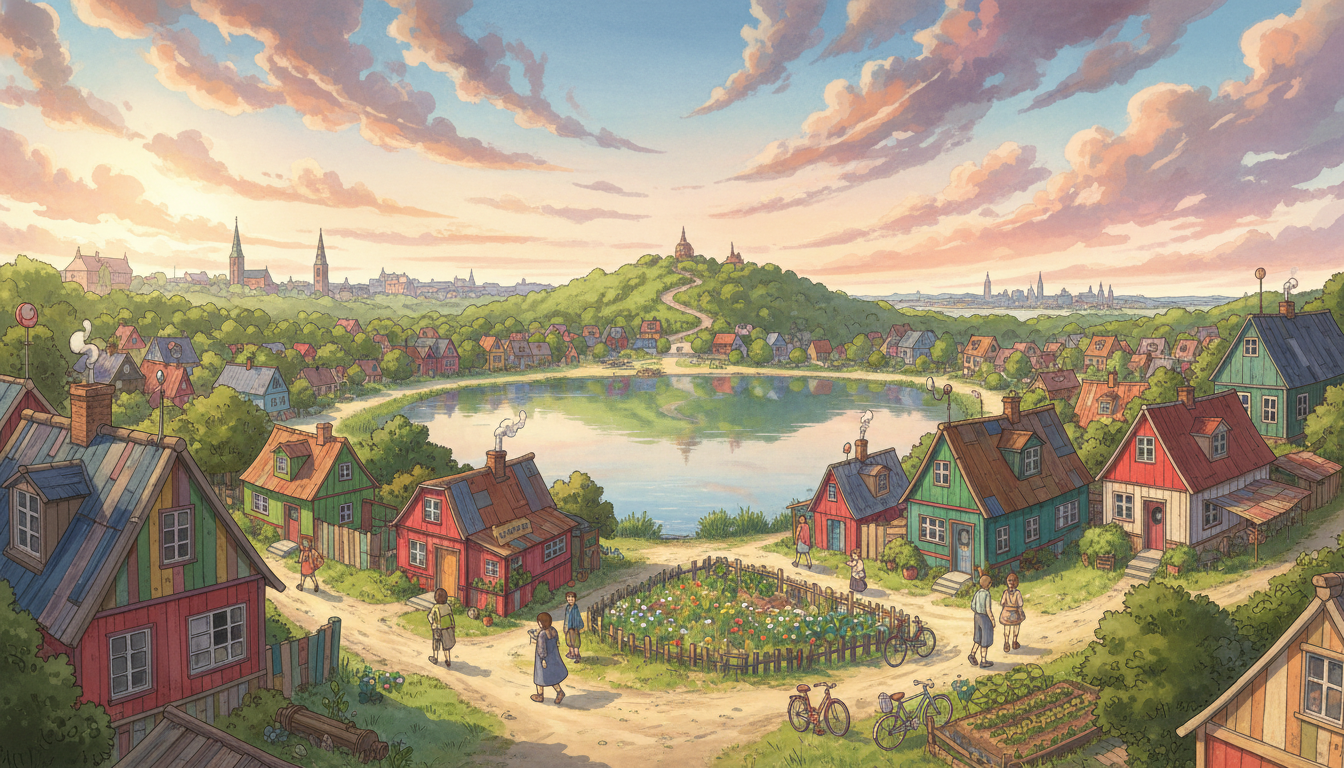
Executive Summary: Why Freetown Christiania Matters for Homejourney Travelers
Freetown Christiania in Copenhagen is one of Europe’s most famous counterculture communities – a self-declared "freetown" known for its alternative lifestyle, creative self-built homes, and vibrant communal spirit. For Singapore-based travelers, expats, and international investors exploring lifestyle destinations before deciding where to live or invest, Christiania offers a powerful contrast to highly planned cities like Singapore, and a useful reference point when evaluating community, regulation, and urban quality of life.[3][4]
This Homejourney guide is written from the perspective of a Singapore-focused real estate and lifestyle specialist who has visited Copenhagen and Christiania multiple times, with an emphasis on safety, accurate practical details, and meaningful comparisons to Singapore’s urban environment. It combines verified facts from official and trusted tourism sources with on-the-ground style insights, and connects your Copenhagen experience to potential next steps in Singapore property exploration via tools like Property Search , Bank Rates , and Projects Directory .
You will find:
- Clear explanation of what Christiania is today – and what has changed since the closure of Pusher Street in 2024.[3][5]
- Step-by-step guidance on how to visit safely and respectfully.
- Sample 3-day and 5-day Copenhagen itineraries anchored around Christiania.
- Budget guidance in DKK and SGD for Singapore travelers.
- How a visit here can sharpen your thinking about lifestyle, community, and regulation when considering Singapore property via Homejourney.
Table of Contents
- 1. Destination Overview: What Is Freetown Christiania?
- 2. Why Visit Freetown Christiania (Especially If You’re from Singapore)
- 3. Best Time to Visit Christiania and Copenhagen
- 4. Getting There from Singapore & Local Transport
- 5. Currency, Budgeting & Money-Saving Tips
- 6. Top Attractions & Experiences in and around Christiania
- 7. Food & Dining: What to Eat Near Christiania
- 8. Where to Stay in Copenhagen for Easy Access to Christiania
- 9. Practical Travel Tips: Visas, Safety, Photography Rules
- 10. Suggested 3-Day & 5-Day Copenhagen Itineraries
- 11. Day Trip Ideas from Copenhagen
- 12. From Christiania to Singapore: Lifestyle & Property Insights
- 13. FAQ: Freetown Christiania for Singapore & International Travelers
- 14. Next Steps: How Homejourney Supports Your Singapore Journey
1. Destination Overview: What Is Freetown Christiania?
Freetown Christiania (Danish: Fristaden Christiania) is an approximately 34-hectare, self-governed commune located on the island of Christianshavn in eastern Copenhagen.[3][4] It sits on former military barracks that were occupied in 1971 by a group of hippies, artists, and activists who declared it a "freetown" independent of Danish government rules.[4]
Over time, Christiania developed its own social rules, communal decision-making, and a distinctive physical environment: hand-built homes, workshops, music venues, eco-focused eateries, and abundant street art.[3][4][7] It is now one of Copenhagen’s most visited attractions – often cited as the city’s second most popular attraction – drawing both tourists and locals interested in its alternative way of life.[2]
Key facts about Christiania at a glance
| Aspect | Details (2025) |
|---|---|
| Location | Christianshavn island, east of central Copenhagen, Denmark[3][4] |
| Founded | 1971 by squatters, artists, activists on former military land[4] |
| Type | Self-governed commune / alternative neighborhood / "freetown"[3][4] |
| Population | Approx. 800–900 residents living collectively (varies by source) |
| Entrance fee | Free to enter; guided tours from about DKK 60 and up[4][5] |
| Famous for | Counterculture, street art, self-built houses, music venues, communal lifestyle[2][3][7] |
| Past issues | Open cannabis trade on Pusher Street (now dismantled in 2024)[3][5] |
| Current status (2025) | Safe for visitors, feels more like a creative neighborhood than a drug market; cannabis use largely private now[3][5] |
Christiania vs typical Copenhagen neighborhoods
Compared with central Copenhagen districts like Indre By or Vesterbro, Christiania is visually and socially distinct:
- More organic, unplanned architecture: many homes are self-built with reclaimed materials, in contrast to Copenhagen’s planned historic blocks.[4][7]
- Stronger communal decision-making and cooperative ownership structures.
- Historically looser approach to certain regulations, although Danish authorities have steadily regularised aspects of land use and safety.[3][4]
For Singapore visitors used to URA’s precise zoning and HDB’s strict building standards, walking into Christiania feels like stepping into a live experiment in alternative urbanism and governance.
2. Why Visit Freetown Christiania – Especially If You’re from Singapore
Christiania is worth visiting because it embodies three big themes that matter deeply when thinking about where to live or invest: community, regulation, and lifestyle diversity. From a Homejourney perspective, experiencing such a different model can clarify what you value in Singapore’s more managed environment.
1) Counterculture and alternative Copenhagen lifestyle
Christiania is often described as Copenhagen’s most alternative neighborhood, with a strong counterculture identity. You will find:
- Colorful murals and graffiti across walls, sheds, and even the ground.[3][5][7]
- Music venues hosting everything from indie bands to techno nights.[2][7]
- Workshops and galleries showcasing local crafts and art.[4][7]
For Singaporeans used to curated spaces like Jewel Changi or Marina Bay, Christiania offers a rawer, resident-led aesthetic – closer to an experimental kampung than a master-planned district.
2) Living example of a commune in a developed capital
Christiania functions as a commune – a community where residents share responsibilities, make decisions collectively, and historically resisted private land ownership.[3][4] While Denmark and Singapore are both high-income societies, Christiania highlights how different governance models can coexist in a modern city.
If you are considering co-living, community-focused developments, or lifestyle-driven projects in Singapore (e.g. integrated mixed-use projects listed on Projects Directory ), Christiania offers a real-world benchmark for community bonds and shared values – even though the regulatory framework is very different.
3) Urban greenery and waterfront living
Christiania sits by canals and green areas, with some houses directly facing the water. The feel is closer to a lakeside eco-village than an inner-city estate.[3][4] For Singaporeans comparing waterfront and park-facing condos, this offers a Nordic example of informal waterfront living versus Singapore’s highly regulated coastal housing.
3. Best Time to Visit Christiania and Copenhagen
Copenhagen has a cool temperate climate with distinct seasons. As a Singapore-based traveler used to year-round heat and humidity, you will notice temperature and daylight changes more than locals do.
Season overview (impact on Christiania)
| Season | Months | Weather & Daylight | Christiania Experience |
|---|---|---|---|
| Spring | April–May | 10–18°C, increasing daylight | Good balance of mild weather and fewer crowds; outdoor art and cafés pleasant. |
| Summer | June–August | 18–25°C, long days | Best for outdoor concerts, lakeside walks, and late evenings in Nemoland. |
| Autumn | September–October | 10–16°C, shorter days | Quieter, more atmospheric; good for photography and reflective walks. |
| Winter | November–March | 0–8°C, short days | Quieter outdoors; indoor venues and Grey Hall events more relevant.[2] |
For first-time Singapore visitors, late May to early September is usually the easiest period: warmer temperatures, longer daylight for exploring Christiania’s paths and art, and more outdoor events.
4. Getting There from Singapore & Local Transport
4.1 Flying from Singapore to Copenhagen
There are usually 1–2 daily one-stop options from Singapore Changi (SIN) to Copenhagen (CPH) via major hubs like Doha, Dubai, Istanbul or Frankfurt, operated by carriers such as Qatar Airways, Emirates, Turkish Airlines, or Lufthansa. Typical total travel time is around 14–17 hours including transit, depending on routing.
Estimated economy-class return fares from Singapore to Copenhagen often range from about S$1,100 to S$1,800 in non-peak periods, rising in June–August and December. These ranges are indicative and should be checked against current fare data; always verify with airlines or OTAs before booking.
4.2 Reaching Christiania from central Copenhagen
Christiania is close to the historic city centre and Christianshavn district, and is easy to reach by public transport, bike, or on foot.[1][3][4]
- Metro: Take the M1 or M2 line to Christianshavn Station. From there, Christiania’s main entrance is roughly a 10–12 minute walk (about 800–900m) along Prinsessegade.[3][4]
- Bus: Several city bus routes run along Prinsessegade or nearby streets, offering closer drop-offs for visitors who prefer not to walk as much.
- Bicycle: Copenhagen is renowned for cycling. Many guided bike tours include a short stop at Christiania, though external guides are usually not allowed to lead groups once inside the freetown itself.[1]
- On foot: From Nyhavn or the inner city, expect a scenic 25–35 minute walk across bridges and canals.
For safety and convenience – especially in winter – most Singaporean visitors find the metro plus short walk the most straightforward option, similar to taking the MRT and then walking from an exit to a Singapore estate.
5. Currency, Budgeting & Money-Saving Tips
5.1 Currency basics
Denmark uses the Danish krone (DKK). Christiania is part of Copenhagen, so all prices you encounter (cafés, bars, souvenirs, guided tours) will typically be in DKK.[4][5]
As of recent typical ranges, 1 DKK is often around S$0.19–0.22, but exchange rates fluctuate. Always check a reliable FX source close to your travel date.
Homejourney supports multi-currency awareness for international property seekers. When you evaluate Singapore property prices on Property Search , you can think in terms of your home currency or DKK-equivalent budgets, making it easier to compare long-term housing affordability between Copenhagen lifestyles and Singapore options.
5.2 Sample daily budgets (excluding flights)
These are rough estimates for travelers basing themselves in Copenhagen and visiting Christiania for a day. All figures are approximate and vary widely with personal choices.
- Budget traveler: DKK 600–900 per day (shared hostel or budget hotel, simple meals, public transport, limited paid attractions).
- Mid-range traveler: DKK 1,000–1,600 per day (3–4* hotel, mix of casual and nicer meals, a few paid tours).
- Comfort / premium: DKK 1,700–3,000+ per day (4–5* hotel, regular restaurant dining, guided experiences, nightlife).