
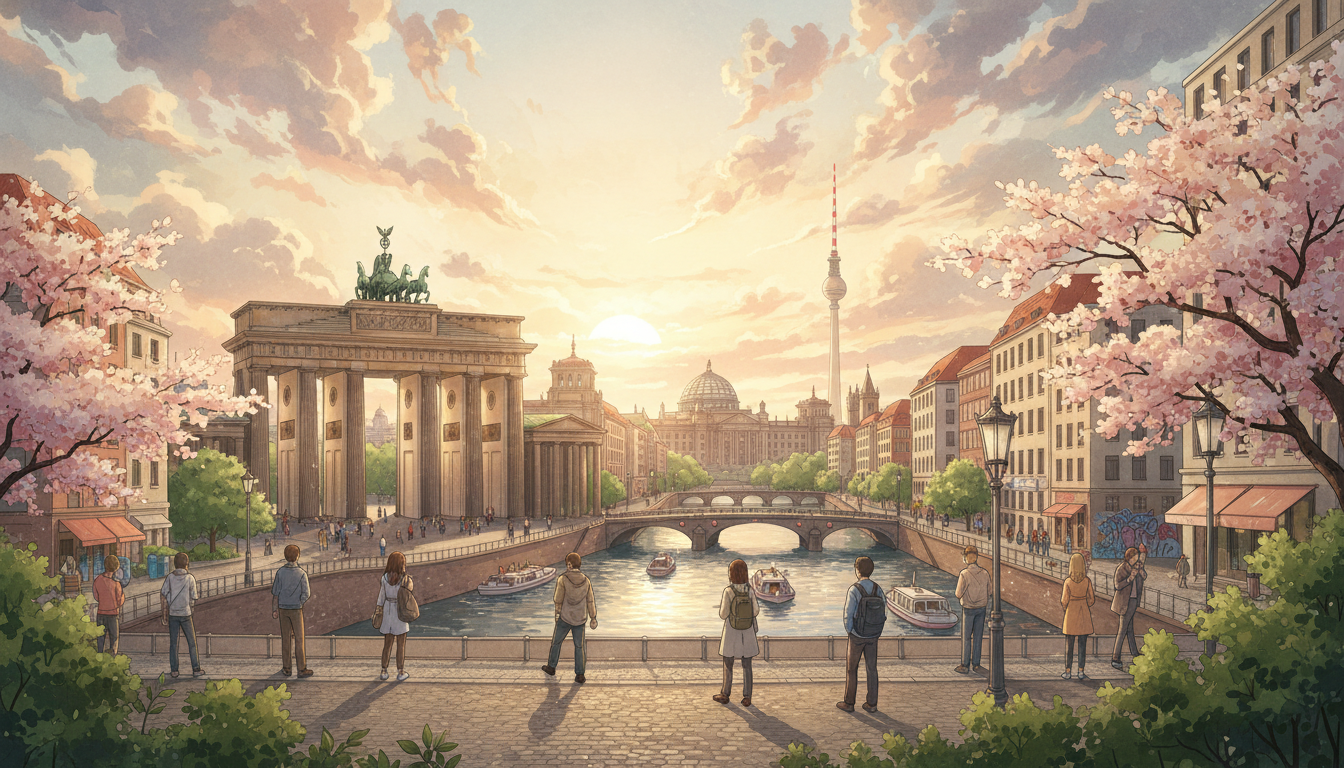
Berlin, the vibrant German capital, is one of the world’s most fascinating cities for history and culture lovers – and increasingly, for globally mobile professionals, expats and investors who also look at safe, transparent real estate hubs like Singapore.
This Berlin Complete Travel Guide: History and Culture is written for Homejourney’s community of Singapore travellers, expats and international investors who value safety, trust and verified information. Drawing on first-hand travel experience, up-to-date data, and Singapore-specific comparisons, this pillar guide helps you plan a meaningful, safe Berlin trip – and understand how it fits into a longer-term lifestyle or property journey in Asia.
Table of Contents
- 1. Berlin Overview: Why Visit the German Capital
- 2. Best Time to Visit Berlin
- 3. Getting to Berlin from Singapore & Money Basics
- 4. Berlin’s History & Culture: Essential Context
- 5. Top Historical & Cultural Attractions in Berlin
- 6. Local Experiences, Neighbourhoods & Hidden Gems
- 7. Food & Dining: What to Eat in Berlin
- 8. Practical Travel Tips for Singapore Travellers
- 9. Where to Stay in Berlin: Areas & Accommodation Guide
- 10. Suggested 3-Day and 5-Day Berlin Itineraries
- 11. Meaningful Day Trips from Berlin
- 12. From Berlin to Singapore: Real Estate, Relocation & Investment
- 13. FAQ: Berlin History, Culture & Travel for Singapore Travellers
1. Berlin Overview: Why Visit the German Capital
Berlin is a city where every street corner carries traces of the 20th century: Imperial Germany, the Nazi era, the devastation of World War II, the divided Cold War city, and finally reunification with the fall of the Berlin Wall in 1989.[1][2][3] Today, these layers sit alongside a thriving arts scene, world-class museums like Museum Island, and relaxed green spaces.
For Singaporeans used to a highly planned, efficient city, Berlin feels more raw and experimental. Rents are (still) generally lower than in Singapore, graffiti is everywhere, and many industrial spaces have been converted into galleries and music venues. Yet like Singapore, Berlin is increasingly international, with strong English usage in central districts, and a growing tech/start-up ecosystem.
Why Berlin appeals to Homejourney users:
- Deep history in a compact, walkable city – you can walk from the Brandenburg Gate to the Reichstag, Holocaust Memorial and Potsdamer Platz in under 20 minutes.[1][2]
- World-class museums and memorials that are thoughtfully curated and often brutally honest about the past.[3][4]
- Strong public transport (U-Bahn, S-Bahn, trams, buses) that feels familiar for MRT users, though less punctual than Singapore.
- Diverse, affordable food options compared with many European capitals – Turkish, Middle Eastern and Asian food scenes are strong.[4][5]
- Gateway to Europe – excellent rail links to Prague, Warsaw, Hamburg and Munich, similar to how Singapore is a hub to ASEAN.[2][8]
2. Best Time to Visit Berlin
Berlin is a year-round destination, but your experience will differ dramatically by season. Temperature swings are much greater than in Singapore, so packing correctly is crucial.
2.1 Season-by-Season Guide
| Season | Months | Weather (approx.) | Pros | Cons |
|---|---|---|---|---|
| Spring | April–May | 10–20°C, cool & pleasant | Fewer crowds, cherry blossoms in some parks, good for walking tours | Unpredictable rain, still chilly for those used to tropical climate |
| Summer | June–August | 20–30°C, long days | Outdoor events, lakes & beer gardens, late sunsets after 9 pm | Peak prices, some days can feel hot without aircon |
| Autumn | September–October | 10–18°C, crisp | Beautiful foliage, fewer tourists, Berlin Festival of Lights (usually Oct) | Shorter days, colder evenings |
| Winter | November–March | -3–8°C, short days | Christmas markets, lower hotel prices (except Christmas/New Year) | Very cold for Singaporeans, some outdoor sites less pleasant |
For most Singapore travellers, late April–June and September–early October offer the best balance of comfortable weather, manageable crowds and reasonable prices.[1][5]
3. Getting to Berlin from Singapore & Money Basics
3.1 Flights from Singapore
From Singapore Changi (SIN), you typically reach Berlin Brandenburg Airport (BER) via one stop in hubs like Frankfurt, Munich, Zurich, Doha or Istanbul. Total travel time is usually around 15–18 hours including transit, depending on route and layover length (based on current typical flight schedules from major carriers).
For Singapore-based travellers who like to maximise miles, combining a Berlin trip with other European cities by rail is popular, similar to planning trips involving Japan Rail Passes as covered in Homejourney’s JR Pass guides such as JR Pass全攻略:日本铁路通票值得买吗?亲子游完整指南|Homejourney .
3.2 Currency & Payment
Germany uses the Euro (EUR). Many places are card-friendly, but smaller cafes, local bakeries and some market stalls still prefer cash. ATMs are widely available in central Berlin.
From a Singapore perspective, it is usually more cost-efficient to:
- Use multi-currency wallets or cards to hold EUR, and
- Withdraw limited cash as needed.
Homejourney supports multi-currency considerations when you later explore Singapore property from Europe, including EUR-SGD comparisons for mortgage planning via Bank Rates .
3.3 Typical Daily Budget (Per Person)
Based on 2024–2025 price levels in Berlin and cross-checking with independent travel guides:[1][5]
| Traveller Type | Budget (EUR/day) | Approx. SGD/day (1 EUR ≈ 1.45–1.55 SGD) | What This Covers |
|---|---|---|---|
| Budget | €60–€90 | ~S$90–S$135 | Hostel bed, public transport, simple meals, 1 paid sight/day |
| Mid-range | €120–€180 | ~S$180–S$270 | 3–4★ hotel, restaurants, transit pass, multiple museums |
| Comfort / Family | €200–€300 | ~S$300–S$450 | Central 4★ hotel or serviced apartment, taxis, activities |
These are indicative and vary with exchange rates and season. Always cross-check with current data from your bank and preferred travel portals.
4. Berlin’s History & Culture: Essential Context
Understanding Berlin’s history enriches every walk and museum visit. Many attractions only make sense when you see them as layers of a story that runs from Prussian kings to Cold War spies.
4.1 From Prussian Capital to Weimar Culture
Berlin rose to prominence as the capital of Prussia, then the German Empire (1871). The Brandenburg Gate, completed in 1791, became a symbol of royal power and later of German unity.[1][2]
In the 1920s, Berlin flourished as a centre of avant-garde art, cinema and cabaret. You can still feel this experimental spirit today in neighbourhoods like Kreuzberg and Neukölln.
4.2 Nazi Era, World War II and Division
Berlin was the heart of Hitler’s Third Reich. Large parts of the city were destroyed by Allied bombing and the final 1945 battles.[4] Today, sites like the Topography of Terror, the Holocaust Memorial, and the Berlin Story Bunker document this period with unflinching detail.[4]
After the war, Berlin was divided into East (Soviet-controlled) and West (US, UK, French-controlled). In 1961, the Berlin Wall was built, physically splitting families and neighbourhoods. You can still see preserved segments at the Berlin Wall Memorial and the East Side Gallery.[3][4]
4.3 Fall of the Berlin Wall & Reunification
On 9 November 1989, the Berlin Wall opened following mass protests and political changes in Eastern Europe. The Brandenburg Gate became the epicentre of celebrations, symbolising a reunited Germany.[1][2]
Today, unified Berlin is the political centre of Germany, housing the Bundestag (parliament) in the historic Reichstag building with its modern glass dome that literally “opens” politics to the public.[1][4]
5. Top Historical & Cultural Attractions in Berlin
For a first or second trip, these are the landmarks no history lover should miss. Many can be combined on walking routes to minimise commuting time, which is particularly helpful for travellers with kids or older parents – a planning approach Singapore families will recognise from dense city itineraries like Tokyo or Osaka, as discussed in Homejourney’s JR-related content Homejourney: 关于JR Pass全攻略:日本铁路通票值得买吗的指南 .
5.1 Brandenburg Gate (Brandenburger Tor)
What it is: An 18th-century neoclassical gate, once part of the city wall, now Berlin’s most iconic symbol and backdrop for major events.[1][2]
Why it matters: It has witnessed Napoleon’s triumph, Nazi parades, Cold War division (it stood behind the Wall in a restricted zone), and reunification celebrations.[1][2]
Insider tip: Visit just after sunrise or late at night to avoid crowds. If you stay near Pariser Platz or Unter den Linden, you can easily walk over in 10–15 minutes from central hotels.
5.2 Reichstag Building & Glass Dome
What it is: Historic parliament building with a modern glass dome accessible to visitors.[1][4]
Why it matters: The dome symbolises transparent democracy, with panoramic views of Berlin and an audio guide that explains what you’re seeing.[1][4]
Practical details: Entry to the dome is free but requires advance online registration and ID (passport). Security is similar to entering government buildings in Singapore.
5.3 Museum Island (Museumsinsel)
What it is: A UNESCO World Heritage site comprising several major museums on an island in the Spree River: Pergamonmuseum, Neues Museum, Altes Museum, Alte Nationalgalerie, Bode-Museum.[2][3][4]
Highlights: The famous bust of Nefertiti at Neues Museum, antiquities in Altes, and monumental reconstructions like the Ishtar Gate in Pergamon (some sections are under renovation, so check current status).[3][4]
Insider tip: If you’re used to efficient museum planning like in Singapore’s National Gallery or Asian Civilisations Museum, buy a combined day pass and focus on 2–3 museums to avoid fatigue. Families might combine Museum Island with a relaxed Spree river cruise afterwards.[4]
5.4 Berlin Wall Memorial & East Side Gallery
Berlin Wall Memorial (Gedenkstätte Berliner Mauer) offers a preserved section of the Wall, a watchtower and an outdoor exhibition that shows how the border fortifications actually worked.[3][4]
East Side Gallery is a long stretch (over 1 km) of Wall transformed into an open-air art gallery with murals by international artists.[2][3]
Insider tip: Do the Memorial first to understand the Wall’s reality, then visit East Side Gallery later in the day for a more reflective art experience rather than just a quick photo stop.
5.5 Holocaust Memorial & Jewish Museum
The Memorial to the Murdered Jews of Europe consists of 2,711 concrete stelae of varying heights, forming a disorienting grid.[2][4] Below is an information centre with personal stories and documentation.
The Jewish Museum Berlin, designed by Daniel Libeskind, explores Jewish life in Germany from the Middle Ages to today, combining architecture, artefacts and interactive exhibits.[3][4]