
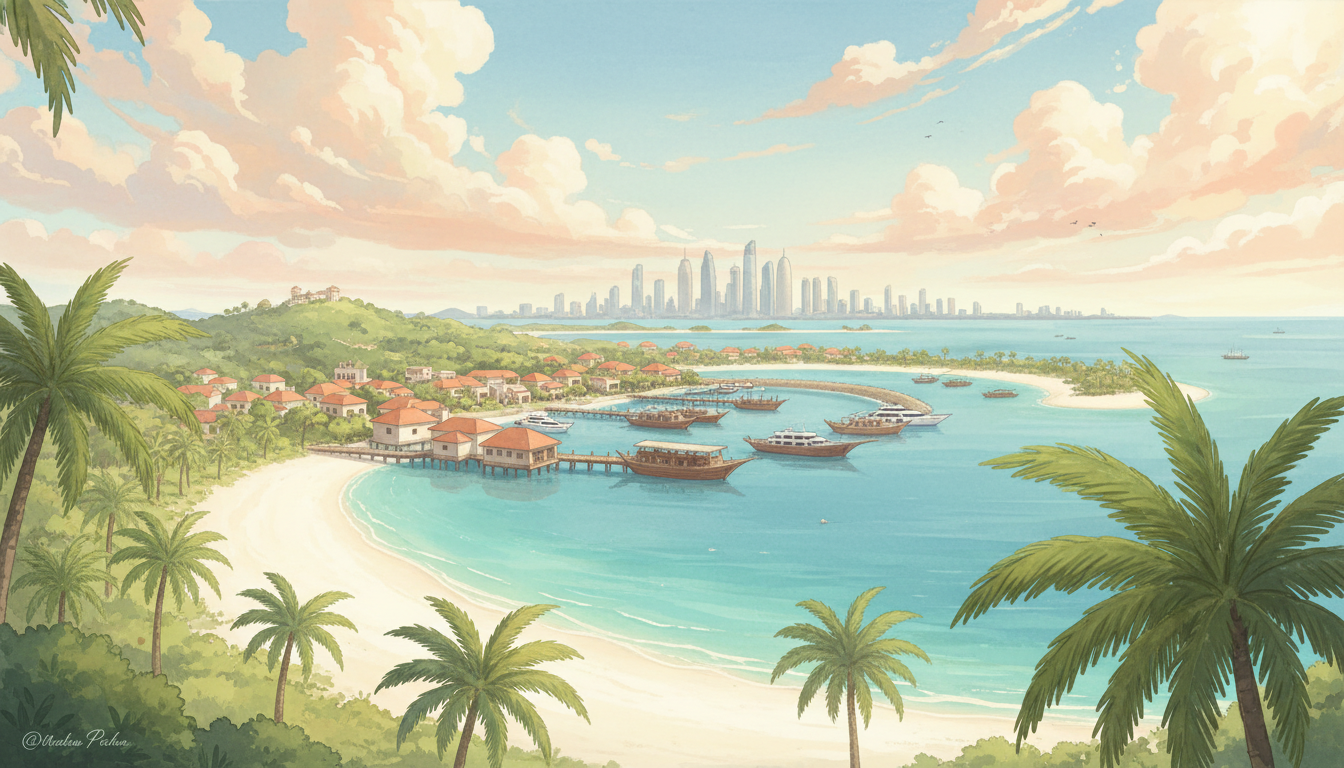
Executive Summary: Why Banana Island Matters for Singapore Travellers & Investors
Banana Island Resort Doha by Anantara is a private luxury island just off the coast of Doha, offering 141 rooms, suites and over-water villas, multiple pools, a surf pool, cinema, bowling, spa and kids facilities, all in an alcohol-free, family-friendly environment.[1] It is reached via a 20‑minute boat transfer from central Doha, making it one of the most accessible island resort experiences in the Gulf.[1]
For Singapore-based travellers, expats and investors, Banana Island is more than a Doha resort escape. It is also a practical base to understand Qatar’s growing lifestyle and tourism scene, compare it with Singapore’s urban resort offerings, and consider cross-border property investment strategies in Asia using Homejourney’s trusted tools like Property Search , Projects Directory and Bank Rates .
This guide brings together first-hand style insights (from the perspective of a Singapore-based traveller who regularly benchmarks resorts in Sentosa, Bintan and the Maldives) with verified data from Qatar tourism sources, to give you a safe, transparent and complete view of Banana Island and how it fits into your broader lifestyle and investment plans.
1. Destination Overview: Banana Island Resort Doha by Anantara
Banana Island Resort Doha by Anantara is a private island resort located just off Doha, Qatar’s capital. The island is accessible only by boat, with a dedicated departure terminal on the Doha Corniche and a 20‑minute crossing to the resort.[1] The resort offers 141 luxury rooms, suites and over‑water villas, six dining venues, a surf pool, lagoon pools, spa, cinema, bowling alley, golf putting greens, tennis courts and multiple kids’ play zones.[1][2]
Unlike many party-oriented island destinations, Banana Island is positioned as an alcohol-free, family-friendly luxury island resort, which will feel familiar to Singapore families used to safe, well-regulated environments like Sentosa and East Coast Park.[1] For Muslim travellers from Singapore and Southeast Asia, this also means halal-friendly dining throughout the resort.
1.1 Why Visit Banana Island (from a Singapore Perspective)
If you are based in Singapore and used to quick getaways to Bintan, Batam, Phuket or the Maldives, Banana Island offers a different type of escape:
- Middle Eastern island vibe with Arabian architecture, desert-meets-sea views and Doha’s skyline in the distance.[1]
- Fast access from a major city: only 20 minutes by boat from Doha, similar to Singapore–Sentosa transfer times.[1]
- Full-resort ecosystem: surf pool, cinema, bowling and kids’ clubs mean you can stay on-island for days without feeling restricted.[1][2]
- Safe, alcohol-free environment suitable for multigenerational family trips.
- Weather contrast to Singapore’s humidity, especially during the cooler months from November to March.
From an investment and lifestyle perspective, Banana Island is also a live case study in how Gulf cities are building lifestyle islands just off the mainland – something Singapore investors may compare to Sentosa Cove, Marina Bay and the Southern Islands.
2. Best Time to Visit Banana Island
2.1 Climate Overview
Qatar has a desert climate with very hot summers, mild winters and low rainfall. For Singapore-based travellers used to year‑round humidity, the key difference is extreme heat between May and September, when midday outdoor activities can be uncomfortable.
In practice, the best time to visit Banana Island for outdoor activities is typically from November to March, when daytime highs are more manageable and evenings are pleasantly cool. April and October are shoulder months – warm but still feasible for a mix of indoor and outdoor activities.
2.2 Peak vs Off-Peak Considerations
- Peak season: November–March, plus major events in Doha (e.g. international sports tournaments, large conferences). Expect higher nightly rates and more limited villa availability.
- Shoulder season: April and October – a good balance of lower prices and manageable heat.
- Low season: May–September – better for value seekers who are happy to stay mostly indoors during midday and use the pools and spa.
As with booking Sentosa hotels during F1 or New Year’s Eve, always check major Doha event calendars (via CNA Property News or EdgeProp Property News when they cover Qatar-related events) before locking in dates, because citywide events can push up room rates.
3. Getting There (From Doha & From Singapore)
3.1 From Doha City to Banana Island
Banana Island is accessible only via the resort’s dedicated boat service from Doha. Visit Qatar describes the resort as being about 20 minutes by boat from the heart of Doha.[1] The typical process is:
- Travel by car/taxi/ride-hailing to the Banana Island jetty/ departure terminal along Doha’s waterfront (similar to taking a taxi to Sentosa’s Beach Station in Singapore).
- Check in at the resort-owned terminal, where luggage is handled before boarding.
- Take the 20‑minute ferry or luxury yacht transfer to the island.[1][5]
Most packages and room rates include this transfer or offer it as an add‑on. Always reconfirm transfer inclusions with the resort or booking platform before finalising.
3.2 From Singapore to Doha
Multiple airlines operate non-stop or one‑stop flights from Singapore Changi Airport to Hamad International Airport, Doha (IATA: DOH). Typical flight time on non‑stop routes is around 7–8 hours. From Hamad International Airport, it is roughly a 20–30 minute drive to the Banana Island departure terminal, depending on traffic.
For Singapore travellers, the overall journey feels similar to a long‑haul overnight to the Middle East, comparable to flying to Dubai or Istanbul, followed by a short ground transfer and boat ride.
3.3 Insider Tips from a Singapore Traveller
- Time your arrival in Doha to avoid long layovers at the jetty. Coordinate your flight landing with your boat departure slot.
- Pack light cabin essentials (change of clothes, sunblock, medicine) in case your main luggage arrives slightly later on separate baggage carts, similar to island transfers in the Maldives.
- If travelling with kids (like many Singapore families do for Sentosa or Bintan), schedule the boat crossing during daylight so they can enjoy the skyline views.
4. Currency, Costs & Money Tips for Singapore Travellers
4.1 Currency Basics
Qatar uses the Qatari Riyal (QAR). Most resort charges on Banana Island can be billed to your room and settled by major credit cards. Cash is mainly useful for tips or off‑island expenses in Doha.
Homejourney’s platform supports multiple currencies (including Gulf region currencies) in our analytics and comparison tools, helping you benchmark QAR versus SGD if you are also reviewing property investments or budgeting for multi-country trips. When viewing Singapore property listings on Property Search , you can mentally align nightly resort costs with monthly rents or mortgage payments using the same currency context.
4.2 Cost Range Overview
Exact nightly rates vary by season and room type, but based on recent listings from major booking platforms like Expedia and Hotels.com, Banana Island is positioned clearly as an upper-luxury resort with pricing comparable to top-tier Sentosa hotels.[2][3][6] Villas with private pools and over-water configurations are at the higher end.[2][3]
Approximate relative price bands (for planning only; always check live rates):
| Category | Relative Price Level (vs Singapore) | Notes |
|---|---|---|
| Standard rooms / suites | Similar to 5-star Sentosa hotel | Often includes breakfast; check promotions.[2][3] |
| Over-water villas | At or above top-tier Sentosa/Capella levels | Premium for privacy, views, and direct water access.[2][3] |
| Five-bedroom over-water villa | Ultra-luxury tier | Ideal for multigenerational or group stays.[2][3] |
4.3 Money-Saving & Safety Tips
- Book early for peak months (Nov–Mar). Like Singapore school holiday peaks, prices rise quickly.
- Compare packages that bundle breakfast, boat transfers and activities. This is similar to Sentosa staycation bundles.
- Use fee-free multi-currency cards or bank accounts when paying in QAR to avoid excessive conversion costs.
- Monitor QAR–SGD rates with your bank and align big‑ticket decisions (like deposits for villas or even potential property purchases elsewhere) with favourable movement.
5. Top Attractions & Experiences on Banana Island
The resort is designed as a self-contained luxury island. You can treat it like a Sentosa equivalent in Doha: a mix of beach, pools, family activities and spa, but with a stronger Middle Eastern flavour.[1][5]
5.1 Signature Experiences
- Lagoon Pools & Private Beach: A central lagoon pool by the sandy beach and a shallow pool for kids, with sun loungers and lifeguards.[1]
- Surf Pool: Artificial surf pool with professional instructors – a standout for teenagers and active adults.[1]
- Bowling Alley & 20-Seat Cinema: Unique for an island resort; perfect for hot afternoons or evenings with family.[1]
- Golf & Tennis: Small golf course/putting green and tennis courts, similar to resort facilities in Bintan or Bali.[1]
- Water Sports: Kayaking, boating, diving and more, as highlighted by resort listings.[2][3][4]
5.2 Wellness & Spa
The on‑site Anantara Spa offers Thai massages, Turkish hammam, sauna, jacuzzi, facials and Ayurvedic treatments, with multiple treatment rooms and couples’ options.[1][2][3] For Singaporeans used to resorts in Thailand or Bali, the spa quality and menu will feel familiar but framed within a Middle Eastern design aesthetic.
5.3 Family & Kids Facilities
Resort reviews highlight family-friendliness as a core strength: kids’ play areas, children’s pool, supervised activities, babysitting services and family-sized villas.[2][3][5] Compared to Sentosa family hotels, Banana Island offers more space per villa and a broader range of organised activities within one island.
5.4 Hidden Gems & Local-Style Tips
- Sunrise over Doha skyline: If you’re staying in an over-water villa facing the city, wake up early at least once to catch sunrise over the Gulf – comparable to Marina Bay sunrise views but with open sea in front.
- Night bowling sessions: Many families crowd the pool and surf area by day, but bowling lanes are often quieter late at night, similar to off‑peak hours at Kallang Leisure Park bowling.
- Private in‑villa BBQ: For a more local/Arabian feel, consider a private BBQ set‑up in your villa, as mentioned by Visit Qatar – it gives you a Middle Eastern alfresco experience without leaving the resort.[1]