Choosing How to Choose Best Aircon Brands in Singapore Provider in Singapore is not just about buying the coolest unit at the lowest price – it is about long-term comfort, safety, energy savings, and reliable after-sales support in Singapore’s hot, humid climate.
As a Singapore-focused real estate platform, Homejourney sees first-hand how the right aircon brand and installer can affect a property’s value, running costs, and even renovation safety. This cluster guide gives you a practical, on-the-ground aircon buying guide for HDBs, condos, and landed homes, and connects back to our main aircon pillar and home services content on Homejourney.
Quick checklist: How to choose the best aircon brand & provider in Singapore
If you only skim one section, use this:
- Pick from proven top AC brands in Singapore like Daikin, Mitsubishi, Panasonic, LG and Midea[3][4][7].
- Compare Daikin vs Mitsubishi for reliability, quietness and energy efficiency – both are consistently top-rated for homes in Singapore[3][4][5].
- Check NEA energy label (aim for 4–5 ticks) and BTU sizing based on room size, not just price[4][6].
- Use only BCA/NEA-registered, HDB-approved installers for safety and warranty protection (especially for HDB flats).
- Choose providers with clear written quotations, liability coverage, and strong reviews – Homejourney vets providers for safety and transparency.
Below, we break this down step by step so you can choose safely and confidently.
How this topic links to Homejourney’s main pillar guide
This article is part of Homejourney’s broader home services and aircon pillar content, which covers:
- Full price breakdowns and ownership costs: Homejourney: Best Aircon Brands Singapore Cost Guide 2025 Prices
- Deep comparison of best aircon Singapore brands (Daikin vs Mitsubishi vs Panasonic): Best Aircon Singapore Guide: Daikin vs Mitsubishi vs Panasonic | Homejourney
- How to choose safe home service providers overall: How to Choose a Safe Home Service Packages Provider in Singapore | Homejourney
Use this cluster as the tactical guide for selecting both your brand and your installer, then refer to the pillar guides for detailed pricing, maintenance and bundled home service strategies.
Step 1: Decide which top aircon brands fit your home
Most Singapore homes end up shortlisting from a similar pool of top AC brands: Daikin, Mitsubishi Electric, Mitsubishi Heavy Industries, Panasonic, LG, Midea, Toshiba and a few others[1][2][3][4][5].
Daikin vs Mitsubishi: which is better for Singapore homes?
Daikin and Mitsubishi consistently rank among the best-selling aircon brands in Singapore, especially for HDBs and condos[3][4][5].
- Daikin – Often cited as the top-rated aircon brand for Singapore homes, known for strong energy efficiency, durability and advanced features[3]. Popular series like the iSmile Eco R32 System 3/4 are frequently used in newer BTOs and condos[4].
- Mitsubishi Electric – The Starmex series is one of the most common in 4-room HDBs, praised for quiet operation, compressor reliability and easy maintenance[2][4][5]. NEA 5-tick models help keep power bills down.
- Mitsubishi Heavy Industries – Models like the Rocket series are known for high efficiency and strong airflow; good if you have larger living rooms or high ceilings[2][4][5].
From a practical, lived-in perspective:
- In many resale HDBs around towns like Tampines, Toa Payoh and Clementi, you will commonly see older Mitsubishi Starmex units still running smoothly after 8–10 years with regular servicing.
- In newer condos in Punggol and Sengkang, Daikin systems are frequently installed by developers for their energy efficiency and quieter operation.
If you want a simple rule of thumb: choose Mitsubishi Electric for bulletproof reliability and quietness, and Daikin if you prioritise advanced features and top efficiency in a new installation[3][4][5][6]. Both are excellent for Singapore’s climate.
Other strong aircon brands to consider
- Panasonic – Reliable, with good air purification features and competitive pricing; frequently recommended in value-focused guides[3][4][6].
- LG – Stylish designs (e.g. ArtCool series) with Wi-Fi and smart features; more common in condos where aesthetics matter[2][4][7].
- Midea – Lower upfront cost, decent performance and easier installation; suitable for budget-conscious buyers or rental units[2][4][6].
- Toshiba / Hitachi / Fujitsu / Samsung – Also appear in lists of top systems in Singapore, especially for multi-split (System 3/4) setups[1][2][3].
For detailed model-by-model cost comparisons, refer to: Homejourney: Best Aircon Brands Singapore Cost Guide 2025 Prices .
Step 2: Match aircon system type to your property
In Singapore, the way you live – HDB, condo, or landed – will shape which aircon system and provider you should choose.
Common system types
- Single-split – One outdoor compressor, one indoor unit. Good for studios, 2-room Flexi flats or single bedrooms.
- Multi-split (System 2/3/4/5) – One outdoor unit powering 2–5 indoor units. Ideal for typical 3- to 5-room HDBs and condos.
- VRV / VRF or ducted – Usually for larger landed homes or high-end condos.
For a standard 4-room HDB in estates like Yishun, Ang Mo Kio or Jurong West, a System 3 or 4 (serving living room + 3 bedrooms) from Daikin or Mitsubishi Electric is the most common, with prices for a 5-tick inverter System 4 typically in the S$4,500–S$5,500 range including basic installation, depending on brand and trunking quality[2][3][4].
Always confirm HDB technical requirements (BTU limits, pipe routing, condenser placement) with an HDB-registered contractor, especially if you are installing for the first time in a BTO flat.
Step 3: Key factors when comparing aircon brands
1. Energy efficiency (NEA ticks) and running cost
NEA’s energy label (1–5 ticks) tells you how efficient your unit is – 5 ticks = lowest electricity use for the same cooling capacity[4][6].
- Look for R32 inverter models with 4–5 ticks from Daikin, Mitsubishi Electric, MHI, Panasonic or LG[4][6].
- For a 4-room HDB running aircon 8–10 hours nightly, a 5-tick system can easily save S$20–S$40 per month versus an older 2–3 tick system, based on typical SP Group residential tariffs.
2. Reliability & maintenance
In practice, reliability is where Daikin and Mitsubishi often pull ahead[3][4][5].
- Mitsubishi Electric Starmex systems are known to last 8–12 years with regular servicing, based on many Singapore user experiences and contractor recommendations[2][5].
- Daikin systems are often praised by installers for stable performance and easier access to spare parts[3][4][6].
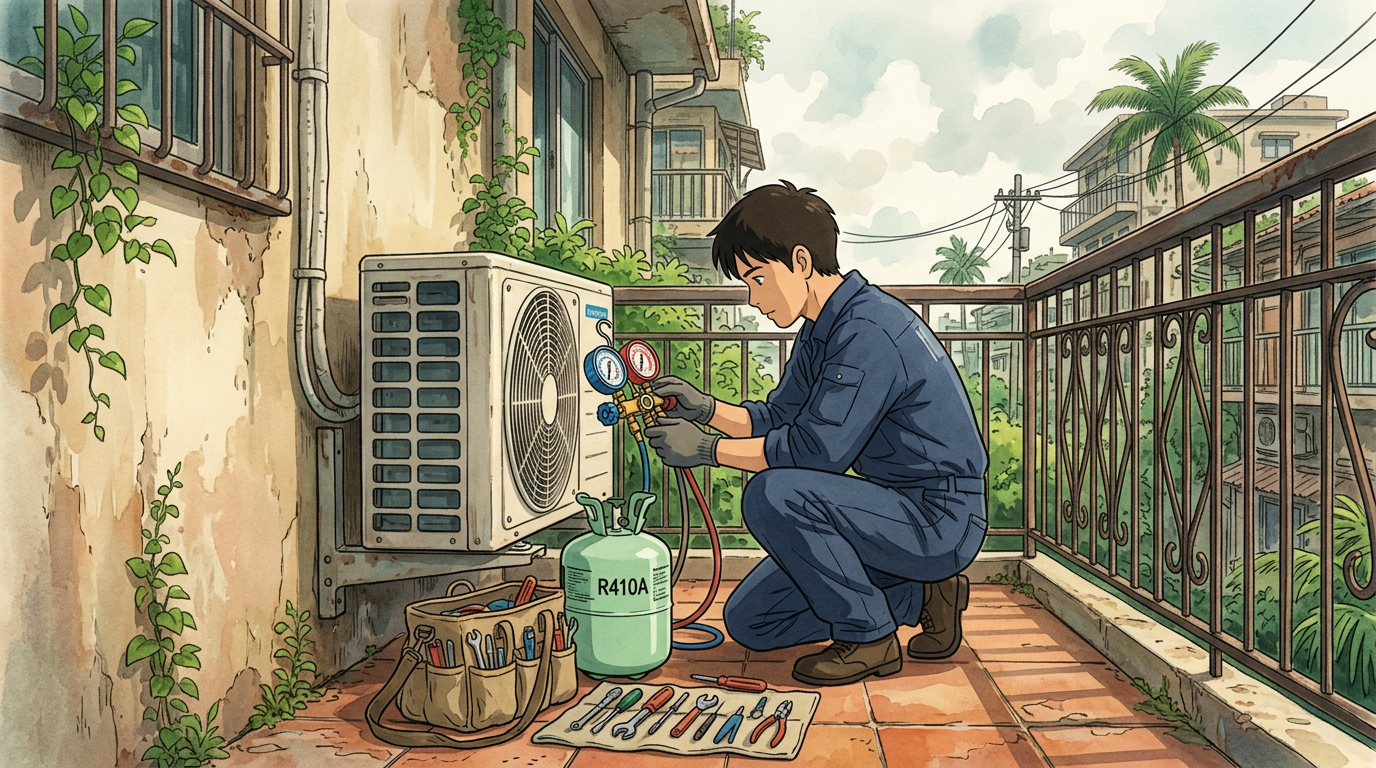
Whichever brand you choose, plan for quarterly servicing. Homejourney’s vetted Aircon Services partners provide transparent pricing and safety-first procedures, including proper chemical washes and gas checks.
3. Noise level and comfort
In compact HDB bedrooms (often 9–13 sqm), noise levels matter a lot for sleep.
- Check indoor unit dB ratings; quieter models are usually around 19–23 dB at low fan speeds for premium brands like Daikin and Mitsubishi[3][4].
- Singapore Property Market Analysis 3 (2025)
- Singapore Property Market Analysis 4 (2025)
- Singapore Property Market Analysis 7 (2025)
- Singapore Property Market Analysis 5 (2025)
- Singapore Property Market Analysis 6 (2025)
- Singapore Property Market Analysis 1 (2025)
- Singapore Property Market Analysis 2 (2025)