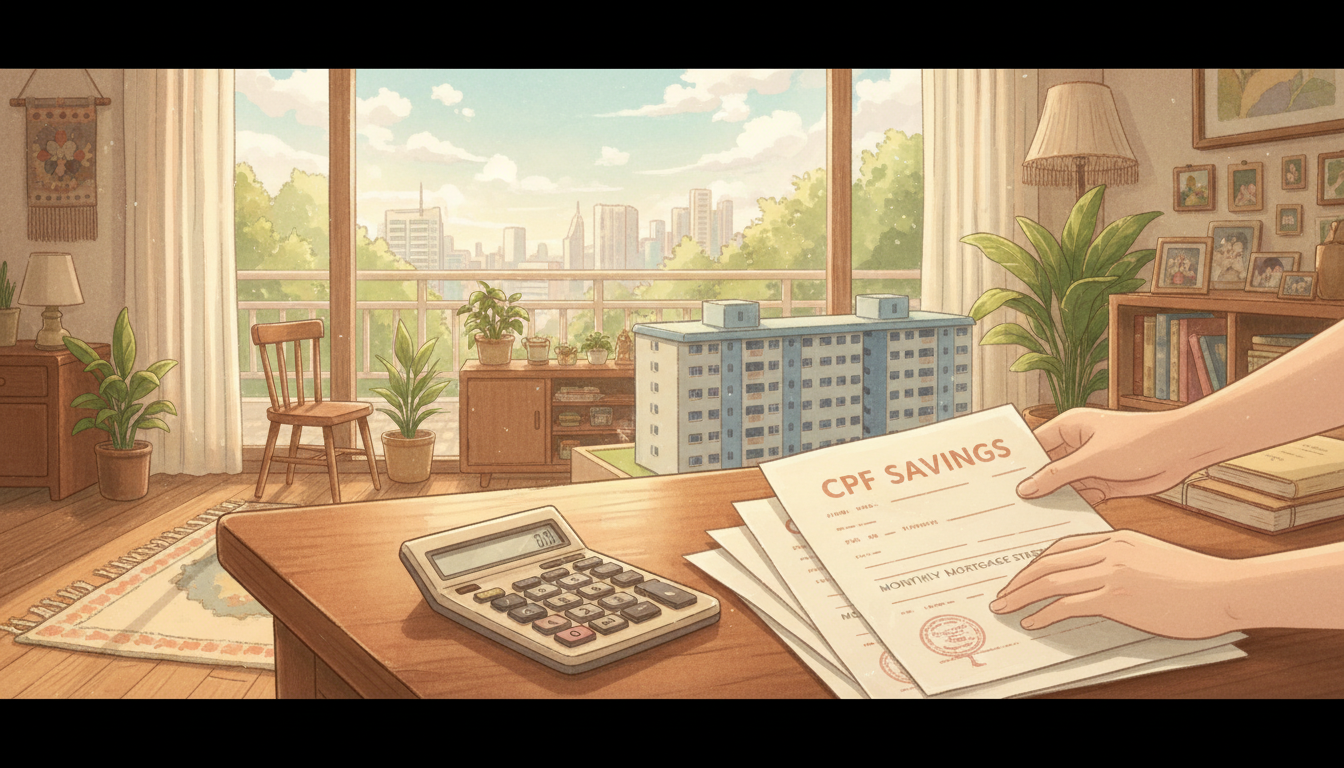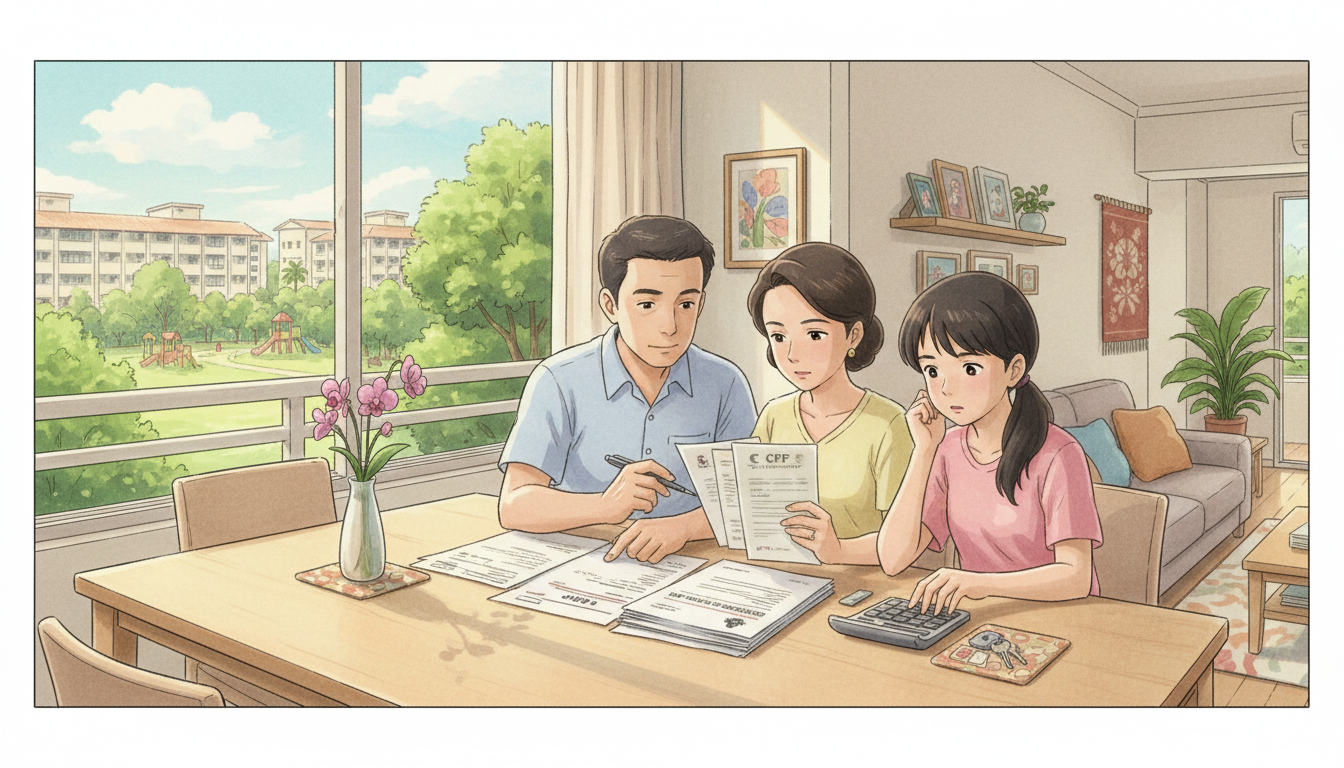
Executive Summary: This definitive Homejourney guide covers everything about CPF withdrawal limit property rules in Singapore for 2026. From CPF OA limit housing to how much CPF for home, we break down limits, calculations, and strategies to maximize your funds safely. Homejourney prioritizes your trust with verified info for confident buying.
Whether you're a first-time HDB buyer or upgrading to private property, understanding CPF housing limit and valuation limit CPF is crucial. We include real examples, official CPF data, and tools like our bank rates page for seamless financing.
Table of Contents
- 1. CPF Basics for Property Buyers
- 2. Ordinary Account (OA) Withdrawal Limits
- 3. CPF Limits by Property Type
- 4. How to Calculate Your CPF Housing Limit
- 5. CPF with HDB Loans vs Bank Loans
- 6. Impact on Retirement Sums
- 7. Strategies to Maximize CPF Use
- 8. Common Mistakes and How to Avoid Them
- 9. CPF Property Withdrawal FAQs
- 10. Next Steps with Homejourney
1. CPF Basics for Property Buyers
CPF (Central Provident Fund) is Singapore's mandatory savings scheme for retirement, housing, and healthcare. Your Ordinary Account (OA) holds most housing funds, earning 2.5% interest (up to 4% floor extended to 2026 for some accounts).[2]
For property, OA savings fund downpayments, monthly repayments, stamp duties, and legal fees. But limits apply based on property valuation, lease, age, and MSR/TDSR rules. Homejourney verifies this data to ensure safe decisions.
Key 2026 figures: Basic Retirement Sum (BRS) $110,200; Full Retirement Sum (FRS) $220,400; Enhanced Retirement Sum (ERS) $440,800.[1][2]
Why CPF Limits Matter
Exceeding limits triggers refunds upon sale, plus accrued interest. This protects retirement savings. First-time buyers often overlook valuation limit CPF, leading to shortfalls.
2. Ordinary Account (OA) Withdrawal Limits
The CPF OA limit housing is primarily from your OA balance. You can use up to 100% of available OA for eligible buys, but capped by payment schemes.
| CPF Account | Usable for Property? | 2026 Interest Rate |
|---|---|---|
| Ordinary Account (OA) | Yes - Downpayment, repayments | 2.5% (extra 1.5% up to $40k) |
| Special Account (SA) | Limited - Investments only | 4% floor to 2026[2] |
| MediSave (MA) | No for housing | 4-5% |
| Retirement Account (RA, age 55+) | Excess over FRS[1] | 4% floor |
OA is withdrawable for housing without age restrictions, unlike RA (from age 55, excess over FRS $220,400).[1][4]
Daily Withdrawal Limit (DWL)
Set DWL up to $50,000 online (default $2,000). Use CPF app for property withdrawals; 12-hour cooling for security.[1][4]
3. CPF Limits by Property Type
Limits vary: HDB full use; private properties capped at 80% LTV with lease/age rules.[8]
| Property Type | Max CPF Usage | Key Restriction | Example (2026) |
|---|---|---|---|
| HDB Flat | 100% of purchase price | MSR applies | $500k BTO: Full OA ok |
| Private Condo (99-yr lease) | Up to valuation limit | Lease to 95 yrs age | $1.5m: 80% LTV cap |
| Executive Condo (EC) | Similar to HDB | 5-yr MOP | Full after MOP |
| Landed (Freehold) | Lower LTV | Age/lease charge | Strict for seniors |
For resale HDB, CPF housing limit matches lower of purchase price or valuation. Private: Often valuation-based.[8]
Lease Decay Rule
Properties must have lease to age 95 at purchase. Short leases limit CPF to pro-rated amount. Insider tip: Check URA lease data early via Homejourney's projects directory.
4. How to Calculate Your CPF Housing Limit
Formula: Min(Available OA, Payment Ceiling based on Valuation/Purchase Price, MSR/TDSR).
Step-by-Step Calculation
- Check OA Balance: Log into CPF portal.
- Determine Ceiling: HDB = min(price, val); Private = scheme limits.[8]
- Apply MSR: For HDB, 30% of income for housing.
- TDSR: 55-60% total debt for bank loans.
- Age Adjustment: Over 55, RA transfer impacts OA.
Example: $800k resale HDB, valuation $780k, your OA $300k, income $10k/mth. Ceiling = $780k. MSR allows ~$3k/mth CPF repayment. Use Homejourney's mortgage calculator for precision.
Real case: Ang Mo Kio 4-room resale ($650k, val $640k). Buyer with $250k OA uses full for 25% downpayment + stamps.
5. CPF with HDB Loans vs Bank Loans
HDB loans: 2.6% fixed (2026), full CPF usage post-MSR. Bank loans: Competitive via SORA, but TDSR stricter. Compare on Homejourney bank rates from DBS, OCBC, UOB, HSBC.
HDB concessional rate for flats; banks for private. CPF repays both, but bank loans allow cash top-up flexibility.
SORA Integration
Most bank loans peg to SORA. Track via Homejourney. The chart below shows recent interest rate trends in Singapore:
As seen, SORA stable ~3% (2026). Use CPF OA for monthly SORA payments to minimize cash outlay.
6. Impact on Retirement Sums
Property CPF use doesn't directly affect RA until 55. At 55, OA excess over FRS withdrawable ($220k).[1][2] Property pledge: Lease to 95 allows half FRS withdrawal.[2]
Upon sale, refund CPF + accrued interest (computed to sale date). See How CPF Accrued Interest Affects Property Sale | Homejourney ">How CPF Accrued Interest Affects Property Sale.
Age 55+ Rules
Withdraw $5k min from OA; excess RA post-FRS.[4][7] Property owners: Enhanced withdrawal if lease secure.[5]
7. Strategies to Maximize CPF Use
- Top-up OA before buy to boost limit.
- Buy earlier: Avoid lease decay.
- Use Homejourney property search for budget-matched listings.
- Refinance via banks for lower rates; apply multi-bank on our site.
- Read 5 Strategies to Optimize Your Mortgage with CPF | Homejourney ">5 Strategies to Optimize Your Mortgage with CPF.
Pro tip: First-timers in Yishun BTOs maximize OA as prices under $500k fit young savers' balances.
8. Common Mistakes and How to Avoid Them
- Overspending OA: Leaves no buffer; calculate via calculator.
- Ignoring Valuation: CPF limited to lower val; verify pre-offer.
- Age 55+ Trap: RA set-aside reduces OA; plan ahead.
- No Refund Planning: Sale interest accrual eats profits.
Disclaimer: This is general info. Consult CPF Board or Homejourney brokers for advice.
9. CPF Property Withdrawal FAQs
Q: What is the CPF withdrawal limit for property in 2026?
Up to your OA balance, capped by valuation/purchase price and schemes.[8]
Q: How much CPF OA can I use for HDB downpayment?
Full 25% if available, post-ABSD/MSR.[3]
Q: CPF housing limit for private property?
Typically 80% LTV, lease/age adjusted.[8]
Q: Can I use CPF for stamp duty?
Yes, from OA.[2]
Q: What if valuation drops below price?
Valuation limit CPF applies; sellers adjust.[3]
Q: Impact of CPF on resale?
Refund principal + interest; see CPF Accrued Interest Explained: Impact on Property Sale | Homejourney ">CPF Accrued Interest Explained.
More at CPF Withdrawal Limits for Property: Homejourney 2026 Guide ">CPF Withdrawal Limits 2026 Guide.
10. Next Steps with Homejourney
Ready? Use Singpass on Homejourney bank rates to compare DBS, OCBC, UOB rates, calculate eligibility, and apply multi-bank. Our brokers ensure safe, transparent journeys.
Search properties at property search. Post-buy, maintain with Aircon Services ">aircon services. Homejourney: Your trusted partner for CPF withdrawal limit property success.