How CPF Accrued Interest Affects Property Sale | Homejourney
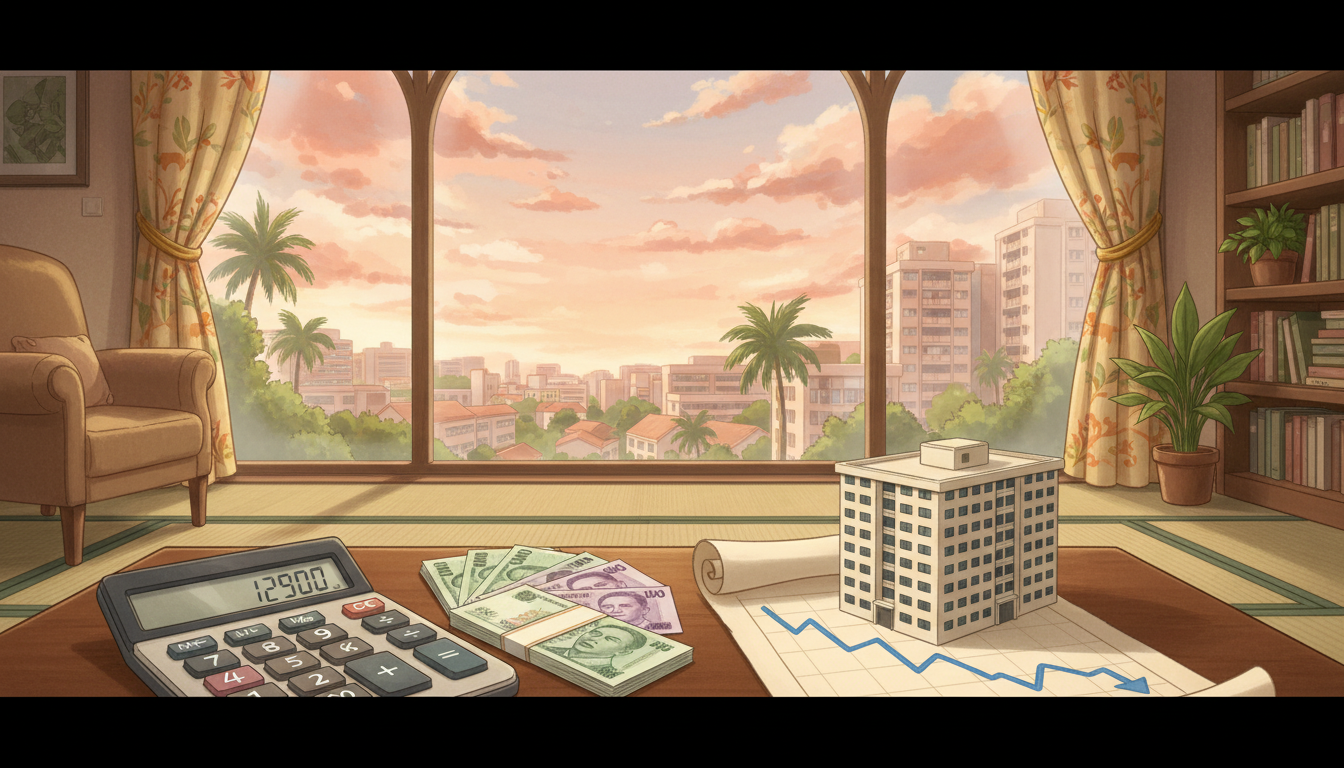
CPF accrued interest significantly reduces your net proceeds from a property sale by requiring a refund of the principal withdrawn from your CPF Ordinary Account (OA) plus 2.5% per annum interest it would have earned[1][2][5]. This protects your retirement savings but can cut your cash take-home by thousands, surprising many Singapore sellers[1][3]. Homejourney helps you plan safely with transparent CPF mortgage tools and verified data.
Understanding how CPF accrued interest affects property sale is crucial for HDB upgraders, private property investors, and retirees downsizing. This cluster article dives into calculations, real examples, and strategies, linking back to our pillar guide on CPF mortgage and use CPF for home loan. At Homejourney, we prioritize your financial security with tools like our bank rates comparison at https://www.homejourney.sg/bank-rates.
What is CPF Accrued Interest?
CPF accrued interest is the calculated 2.5% annual interest (compounded monthly) on every dollar withdrawn from your CPF OA for housing purposes[1][3][4]. It applies from withdrawal date until full refund upon sale or voluntary repayment[5][9]. This includes down payments, monthly CPF mortgage payments, stamp duties, and legal fees—but not interest-free HDB grants[1].
Homejourney verifies this via official CPF and HDB rules, ensuring you avoid surprises. Unlike actual OA interest, it's a notional amount to restore your retirement funds[3]. Check your exact amount on the CPF portal under 'My Statement' or HDB's Sale Proceeds Calculator[1][4].
How CPF Accrued Interest is Calculated
The formula is: Principal × (1 + 0.025/12)^(number of months held) - Principal[1][3]. For a $200,000 withdrawal held 5 years (60 months), accrued interest is about $26,282, making total refund $226,282[1][2]. Longer holds mean higher costs due to compounding[3].
| Case Study | Principal | Years | Accrued Interest | Total Refund |
|---|---|---|---|---|
| Ms Lee's Punggol HDB | $200,000 | 5 | $26,282 | $226,282 |
| Mr Tan's Condo | $500,000 | 2 | $25,313 | $525,313 |
Real example: Ms. Lee bought a $500,000 Punggol HDB BTO in 2021 using $200,000 CPF OA. Selling post-5-year MOP in 2026, her obligation is $226,282 despite Punggol's 15% appreciation[1][2]. Use Homejourney's mortgage calculator at https://www.homejourney.sg/bank-rates#calculator to model your scenario.
Impact on Property Sale Proceeds: Priority Order
Sale proceeds follow strict HDB/CPF priority: 1) Outstanding mortgage (HDB or bank like DBS, OCBC), 2) CPF principal + accrued interest from CPF OA housing, 3) Grants (interest-free), 4) Remainder as cash[1][4][9].
Example: Sell Sengkang HDB for $600,000 with $200,000 outstanding HDB loan and $300,000 CPF used over 7 years ($52,500 interest). Total CPF refund: $352,500. Net cash: $47,500—far less than expected[1]. No out-of-pocket if market value covers it[4].
Refunding early stops accrual. Transfer to Special Account (SA) at 4% interest beats 2.5%[1][9]. For CPF repayment strategy, read our related article Using CPF to Reduce Mortgage Burden: Homejourney 2026 Guide . Compare CPF vs cash mortgage options at https://www.homejourney.sg/bank-rates.
Singapore-Specific Rules: HDB vs Private Properties
HDB Flats: 5-year MOP required[1][6]. MSR limits CPF use (full amount counts)[1]. Grants like EHG ($80,000 max) refund interest-free[1].
Private Properties: CPF for bank loans only (no HDB loan), 5% cash down min, up to ABSD limits[2]. Over 55? Capped at BRS ($106,500) or FRS ($213,000)[2]. Search budgeted options via Homejourney at https://www.homejourney.sg/search.
TDSR/MSR apply to all[1]. For investors, accrued interest impacts CPF vs cash mortgage decisions—see CPF vs Cash for Mortgage: Which is Smarter in 2026 . Homejourney's tools ensure compliance and safety.
Actionable CPF Repayment Strategies
- Voluntary Refund: Pay principal + interest before sale to halt accrual and shift to 4% SA[5][8]. Ideal if selling soon.
- Partial Refunds: Use for monthly payments to reduce OA drawdown[1].
- Timing Sales: Post-MOP for HDB; factor appreciation vs interest[1].
- Next Purchase: Refunded OA reusable (pre-55) under MSR/TDSR[9].
- Consult Pros: Use Homejourney's brokers via https://www.homejourney.sg/bank-rates for personalized advice.
Disclaimer: This is general info; consult CPF Board or advisor for your case. Rates as of 2026[1].
FAQ: CPF Accrued Interest on Property Sale
Q: When does CPF accrued interest stop accruing?
A: Upon sale completion or voluntary full refund[1][3][5].
Q: Do I pay if sale proceeds are short?
A: No, if market value suffices; option fees count[4].
Q: Can I use refunded CPF for next buy?
A: Yes, pre-55 for housing under MSR/TDSR; post-55 boosts retirement[4][9].
Q: HDB grants vs CPF interest?
A: Grants refund interest-free; CPF principal + 2.5% does[1].
Q: Best CPF repayment strategy for upgraders?
A: Voluntary refund + Homejourney calculator for planning[1].
Maximize your proceeds with Homejourney's verified tools. Compare DBS, OCBC, UOC, HSBC rates and apply via Singpass at https://www.homejourney.sg/bank-rates. For full CPF mortgage guide, visit our pillar content. Trust Homejourney for safe, transparent property journeys.
References
- Singapore Property Market Analysis 1 (2026)
- Singapore Property Market Analysis 2 (2026)
- Singapore Property Market Analysis 5 (2026)
- Singapore Property Market Analysis 3 (2026)
- Singapore Property Market Analysis 4 (2026)
- Singapore Property Market Analysis 9 (2026)
- Singapore Property Market Analysis 6 (2026)
- Singapore Property Market Analysis 8 (2026)