How CPF Accrued Interest Affects Property Sale | Homejourney
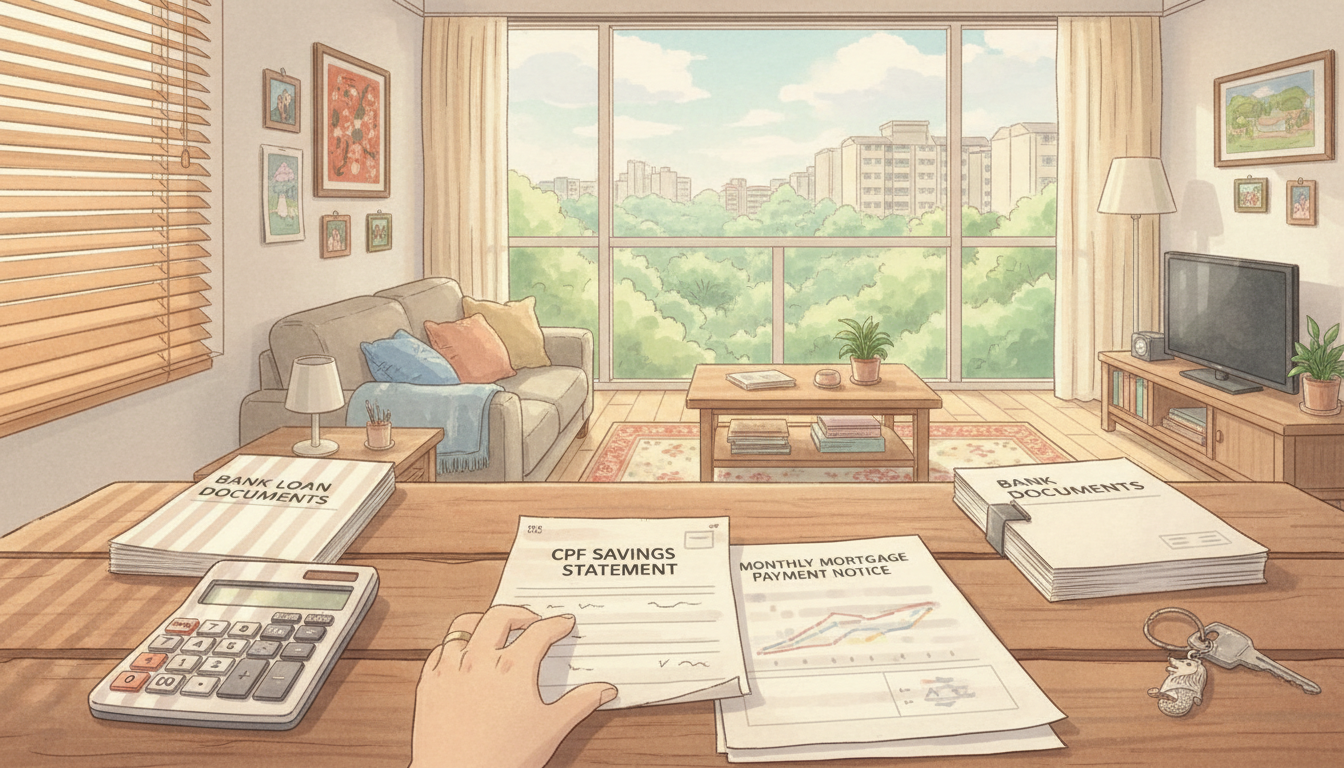
CPF accrued interest requires sellers in Singapore to refund the principal withdrawn from their CPF Ordinary Account (OA) plus 2.5% per annum compounded interest upon property sale, significantly reducing net cash proceeds by 10-20% on typical HDB sales.[1][2]
This mechanism, mandated by the CPF Board, preserves retirement savings growth but demands careful planning for upgraders or downsizers.[1][4] Homejourney, prioritizing user safety and transparency, equips you with verified tools to model these impacts via our bank rates page, ensuring confident decisions in Singapore's housing market.[1]
What is CPF Accrued Interest?
CPF accrued interest is the notional interest at 2.5% per annum (compounded monthly) that your OA funds would have earned if not withdrawn for housing purchases like down payments, monthly installments, stamp duties, or legal fees.[1][2][3]
It applies from the withdrawal date to the sale completion date, covering all CPF used including grants (though grants refund interest-free).[1][4] For Singapore homeowners, this ensures fairness but ties up funds until refund, affecting liquidity for next purchases.[2]
Homejourney verifies these rules from official CPF.gov.sg sources, helping you avoid surprises. Link to our pillar guide on CPF Withdrawal Limits for Property: Homejourney Complete Guide ">CPF Withdrawal Limits for Property for broader context.[1]
How CPF Accrued Interest is Calculated
The formula uses principal × (1 + 0.025/12)^(months held) - principal for the interest portion.[1][2] For example, $200,000 CPF used for a Punggol HDB flat bought in 2021 and sold in 2026 (5 years): accrued interest ≈ $26,282, total refund $226,282.[1][2]
Real Singapore case: Ms. Lee purchases a $500,000 HDB in Punggol using $200,000 CPF OA. After 5-year Minimum Occupation Period (MOP), selling at $600,000 triggers this refund, cutting her cash proceeds.[1]
| Case Study | Principal Used | Years Held | Accrued Interest (2.5% compounded) | Total CPF Refund |
|---|---|---|---|---|
| Ms. Lee's HDB (Punggol) | $200,000 | 5 | $26,282 | $226,282 |
| Mr. Tan's Condo (Sengkang, Early Sale) | $500,000 | 2 | $25,313 | $525,313 |
| Upgrader (HDB to Private) | $300,000 | 7 | $52,500 | $352,500 |
Use HDB's Sale Proceeds Calculator or CPF portal for exact figures—Homejourney's mortgage calculator integrates similar modeling with Singpass for instant CPF data.[1][2]
Impact on Property Sale Proceeds
Sale proceeds follow this priority: 1) Outstanding mortgage (HDB or bank loan), 2) CPF principal + accrued interest, 3) Interest-free grants, 4) Remainder to seller.[1][3][4] For a $600,000 Sengkang HDB sale with $300,000 CPF used over 7 years and $200,000 mortgage: $352,500 CPF refund leaves ~$47,500 cash.[1]
If proceeds fall short but sale is at market value, no out-of-pocket payment required—option fees count toward proceeds.[1][4] This CPF OA limit housing and valuation limit CPF dynamic directly affects how much CPF for home you recover.[2]
Post-refund, funds return to OA (2.5%) or transfer to Special Account (SA) at 4%+ in 2025, outpacing inflation.[1][8] Homejourney's property search helps find next properties within your adjusted CPF housing limit.[1]
Selling Before vs After Age 55
Before 55: Refund to OA, reusable for next buy under MSR/TDSR (CPF counts 100% toward limits), or voluntary transfer to SA.[1][2][7]
After 55: Mandatory to Retirement Account (topping Basic Retirement Sum $106,500 or Full $213,000 in 2025), enhancing payouts—no housing reuse.[1][7]
Insider tip for HDB upgraders in Punggol: Time sales pre-55 to maximize flexibility; use Homejourney's eligibility tools factoring age rules.[1]
Strategies to Minimize CPF Accrued Interest Impact
- Voluntary Early Refund: Repay principal + interest anytime to halt accrual and boost OA/SA—ideal if holding long-term.[1][5][9]
- Hybrid CPF/Cash Approach: CPF for downpayment (meets LTV), cash for installments to cut refunds. See CPF vs Cash for Mortgage: Which is Smarter? Homejourney Guide ">CPF vs Cash for Mortgage Guide.[2]
- Monitor Limits: Stay under CPF withdrawal limit property and MSR/TDSR; track via Homejourney calculator.[1]
- Refinance Timing: Compare bank rates on Homejourney bank-rates (DBS, OCBC, UOB, HSBC, etc.) alongside CPF effects.[1]
These steps align with Homejourney's trust-focused approach, verifying data from CPF Board and HDB for safe transactions.[1][2]
Singapore-Specific Rules: HDB vs Private Properties
HDB flats require 5-year MOP, MSR applies with full CPF counting; private properties need 5% cash down min, bank loans only up to ABSD limits.[1][2] Average 2025 HDB resale: $550,000 in Punggol, amplifying refund impacts.[1]
Homejourney integrates real-time data for precise planning. For post-sale maintenance, check Aircon Services ">aircon services.[1]
FAQ: CPF Accrued Interest on Property Sale
Q: When does CPF accrued interest stop accruing?
A: At property sale completion or voluntary full refund.[1][3]
Q: Do I pay if sale proceeds are short for the CPF refund?
A: No, for market-value sales; option fees contribute.[1][4]
Q: How much CPF can I use for housing under current limits?
A: Up to available OA, capped by CPF housing limit and valuation (e.g., 80-90% LTV); use Homejourney calculator.[1][2]
Q: Does accrued interest apply to grants?
A: No, grants refund interest-free.[1]
Q: Best strategy post-sale for refunded CPF?
A: Transfer to SA for 4%+ rates if under 55; consult Homejourney mortgage brokers.[1][8]
Disclaimer: This is general guidance based on 2025 CPF/HDB rules. Consult professionals for personalized advice. Homejourney verifies info for trust but is not financial advice.
Maximize your sale with Homejourney: Compare rates from DBS, OCBC, UOB and more at bank-rates, calculate eligibility, apply via Singpass. Link back to our pillar on CPF strategies for full coverage. Your safe property journey starts here.
References
- Singapore Property Market Analysis 1 (2025)
- Singapore Property Market Analysis 2 (2025)
- Singapore Property Market Analysis 4 (2025)
- Singapore Property Market Analysis 3 (2025)
- Singapore Property Market Analysis 8 (2025)
- Singapore Property Market Analysis 7 (2025)
- Singapore Property Market Analysis 5 (2025)
- Singapore Property Market Analysis 9 (2025)