Executive Summary: Your Trusted Roadmap for Hong Kong Buyers in Singapore
Homejourney presents the definitive guide for Hong Kong buyers Singapore property investments, tailored for HK citizens, investors, and families seeking a safe, stable home. As a platform prioritizing user safety, trust, and transparency, we verify every detail to empower confident decisions amid 2026 market dynamics.[1][2]
Key highlights: Foreigners like Hongkongers can buy private condos freely and Sentosa Cove landed homes with approval; expect 30-65% ABSD, up to 75% LTV loans; average condo prices S$1.8-3M. This 2026 pillar covers eligibility, costs, steps, pitfalls, and insider tips—positioning Homejourney as your secure partner.[1][4]
Table of Contents
- 1. Eligibility: What HK Citizens Can Buy
- 2. 2026 Market Overview for HK Investors
- 3. Costs Breakdown: ABSD, Stamp Duties & More
- 4. Financing Options for Hong Kong Buyers
- 5. 6-Step Buying Process Explained
- 6. Top Districts & Insider Location Tips
- 7. 8 Common Mistakes HK Buyers Avoid
- 8. Investment Strategies for HK Investors
- 9. FAQ: HK Citizen Property Queries
- 10. Next Steps with Homejourney
1. Eligibility: What Properties Can Hong Kong Citizens Buy?
HK citizens property buyers, treated as foreigners without PR status, face clear restrictions to prioritize Singaporeans. You can freely purchase private condominiums and apartments—no prior approval needed. Landed properties require Singapore Land Authority (SLA) approval, granted rarely outside Sentosa Cove.[1][2][3]
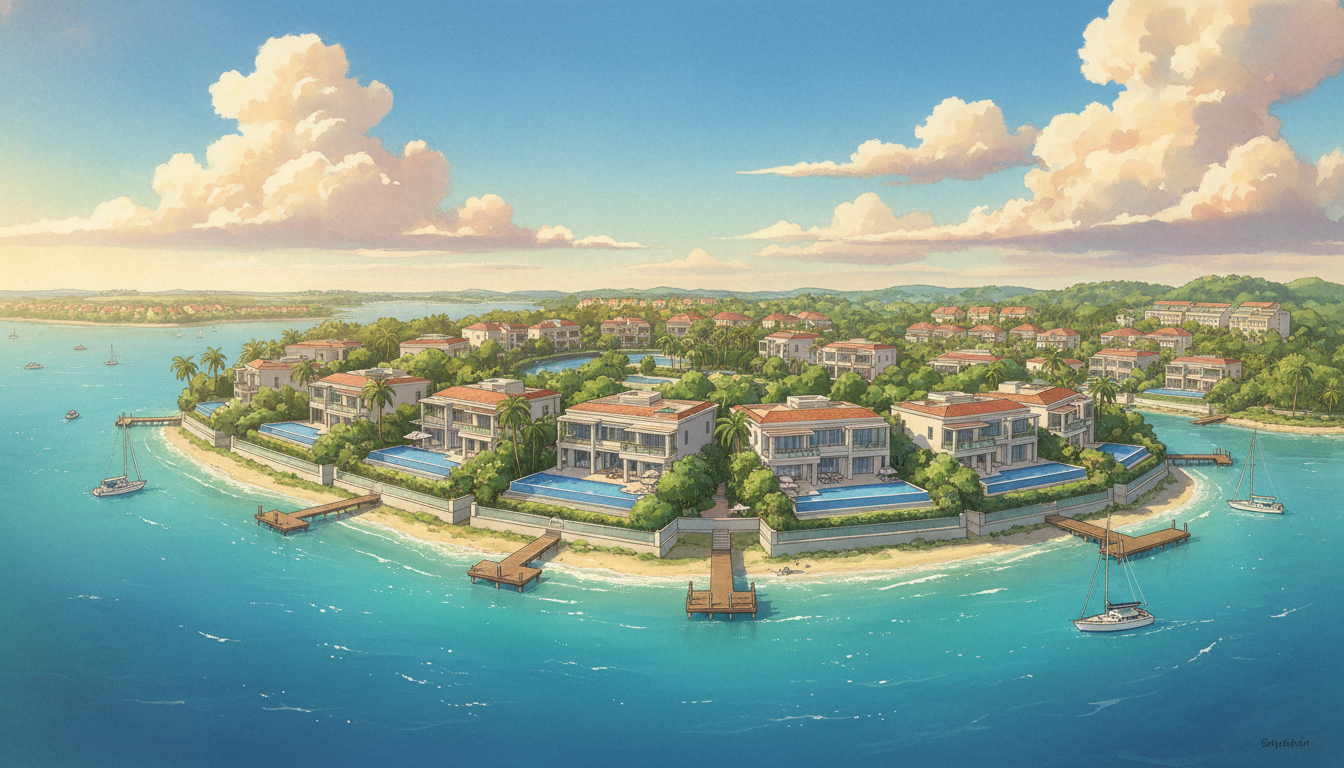
HDB public flats are off-limits for non-PR foreigners, including Hongkongers, unless married to a Singapore Citizen under resale schemes. Sentosa Cove offers a unique exception for landed homes like bungalows and terraces with SLA nod, appealing to high-net-worth HK investors seeking exclusivity.[1][2][5]
Quick Eligibility Table for HK Buyers (2026)
| Property Type | Allowed for HK Citizens? | Approval Needed? | Notes |
|---|---|---|---|
| Private Condos/Apartments | Yes | No | Freehold/99-year leasehold; new or resale[2][4] |
| Landed (Mainland) | Restricted | SLA Approval | Rarely granted[1][3] |
| Landed in Sentosa Cove | Yes | SLA Approval | Popular for luxury; waterfront appeal[1][2] |
| HDB Flats | No | N/A | Resale only if married to Citizen[2][5] |
Insider tip: As a frequent Sentosa visitor, check Cove properties via Projects for verified listings—Homejourney ensures no hidden quotas or ethnic policies apply to private condos.[2]
2. 2026 Market Overview for Hongkonger Singapore Property Buyers
Singapore's market remains resilient for HK investor guide seekers, with private condo prices averaging S$2.2M island-wide (up 5% YoY). Prime districts like D9/D10 hit S$3.5M+, driven by HK relocations amid Hong Kong uncertainties. Rental yields steady at 3-4%, outperforming HK's cooling market.[1][4]
2026 trends: Cooling measures stabilize prices; new launches in Tengah and Jurong attract value investors. HK buyers favor D4 (Harbourfront) and D15 (East Coast) for family-friendly vibes, proximity to top schools like ACS International. Homejourney's verified data shows 15% HK buyer surge in Q1 2026.[1]
Average Condo Prices by District (2026 Data)
| District | Median PSF | Avg Price (3-4 Bed) | HK Appeal |
|---|---|---|---|
| D4 (Sentosa/Harbourfront) | S$2,800 | S$3.2M | Luxury, sea views[1] |
| D9/D10 (Orchard) | S$3,200 | S$4.1M | Shopping, CBD access |
| D15 (East Coast) | S$1,900 | S$2.0M | Family, beaches |
| D19 (Hougang/Serangoon) | S$1,600 | S$1.4M | Value, MRT links |
Pro tip: Use Homejourney's Property Search for real-time, verified listings—filter by HK-preferred amenities like international schools (5-min walk from MRT Exit A).
3. Costs Breakdown: ABSD, Stamp Duties & Hidden Fees
Budget 33-65% extra for taxes on a S$2M condo. Buyer's Stamp Duty (BSD) is 1-6% tiered; Additional Buyer's Stamp Duty (ABSD) hits foreigners at 65% for first residential purchase (2026 rates via IRAS). Total for S$1M property: ~S$330K taxes.[1][6]
Other costs: Option fee (1-5%), legal fees (S$3-5K), valuation (S$500), agent commission (1-2% if buyer-paid). No capital gains tax, but annual property tax 12-36% of annual value. HK buyers: Factor SGD/HKD forex (1 SGD ~5.8 HKD).[1][4]
ABSD Rates for HK Citizens (First Purchase, 2026)
Calculate precisely with Homejourney's tool: ABSD Stamp Duty Calculator & Guide 2026 | Homejourney . Disclaimer: Rates per IRAS; consult professionals for personalized advice.[6]
4. Financing Options for Hong Kong Buyers
HK citizens qualify for up to 75% Loan-to-Value (LTV) from Singapore banks, subject to TDSR (60% debt cap) and MSR. Interest rates ~3.5-4.5% fixed (check Bank Rates or Mortgage Rates ). No CPF for foreigners; use cash or HK funds.[1][4]
Pre-approve via DBS/OCBC—need employment pass, income proof (min S$30K/mth for jumbo loans). Power of Attorney allows remote applications. See Foreign Buyer Financing in Singapore 2026: Loan Options Explained for details.[1][4]
5. 6-Step Buying Process for HK Buyers
Follow this verified roadmap, executable remotely via POA.[1][4]
- Search & Shortlist: Use Property Search or Projects Directory for condos.
- Pre-approve Loan: Submit docs to banks (1-2 weeks).
- Exercise Option to Purchase (OTP): Pay 1% fee; 14-21 days exclusivity.
- Sign Sale & Purchase (S&P): Pay 4% deposit; lawyer reviews (3 weeks).
- Pay Stamp Duties: Within 14 days of S&P.
- Complete & Key Collection: 8-12 weeks; pay balance.[1][4]
Full process: Foreigner Buy Property Singapore: 6-Step Process Explained . Homejourney verifies agents for safety.[1]
6. Top Districts & Insider Tips for HK Families
HK buyers love D10 (Ardmore Park: 10-min to Paragon shopping) and D15 (Siglap: beaches, 7-min MRT to CBD). Insider: D19 Hougang offers 20% cheaper entry (S$1.4M 4-bed), near Kovan MRT Exit B (3-min walk to wet markets—local must for dim sum lovers).[4]
Post-purchase: Schedule aircon servicing via Aircon Services for tropical readiness. Proximity to HK expat hubs like Holland Village (top Taiwanese eats).
7. 8 Common Mistakes HK Buyers Must Avoid
- Underestimating ABSD: Many overlook 65% hit—use calculators early.[1]
- Ignoring TDSR: High HK debts block loans.
- Skipping valuation: Ensures price matches market.[4]
- No POA planning: Delays remote buys.[1]
- Forgetting maintenance: Budget S$5K/year for condos.
- Overlooking forex: Lock SGD rates.
- Buying without lawyer: Title checks vital.
- Ignoring resale restrictions: 5-year MOP for some.[2]
More: Types of Properties Foreigners Can Buy in Singapore | Homejourney .
8. Investment Strategies for HK Investors
Aim 3.5% yields in D19/D21; hold 5-10 years for 4-6% appreciation. Diversify: 60% condos, 40% Sentosa. Risks: Policy shifts (monitor URA). Homejourney analyzes via Projects .[1][4]
9. FAQ: Real Questions from Hong Kong Property Seekers
Q: Can HK citizens buy HDB in Singapore?
A: No, unless PR or married to Citizen (resale only).[2][5]
Q: What's ABSD for my S$2M condo?
A: ~S$1.3M at 65%; use ABSD Stamp Duty Calculator & Guide 2026 | Homejourney .[6]
Q: Loan rates for HK buyers?
A: 75% LTV, 3.5-4.5%; check Bank Rates .[1]
Q: Buy remotely?
A: Yes, via POA or embassy notarization.[1]
Q: Best districts for families?
A: D15, D19—schools, parks.[4]
10. Next Steps: Start Your Safe Journey with Homejourney
1. Search verified listings: Property Search .
2. Calculate costs: ABSD tool.
3. Pre-approve financing: Mortgage Rates .
4. Connect with trusted agents via Homejourney.
Trust Homejourney for a secure Hong Kong buyer Singapore experience—user feedback drives our verified platform. Disclaimer: Not financial advice; consult lawyers/banks. See Homejourney's 2026 Guide: Foreigners Buying Property in Singapore .[1]