
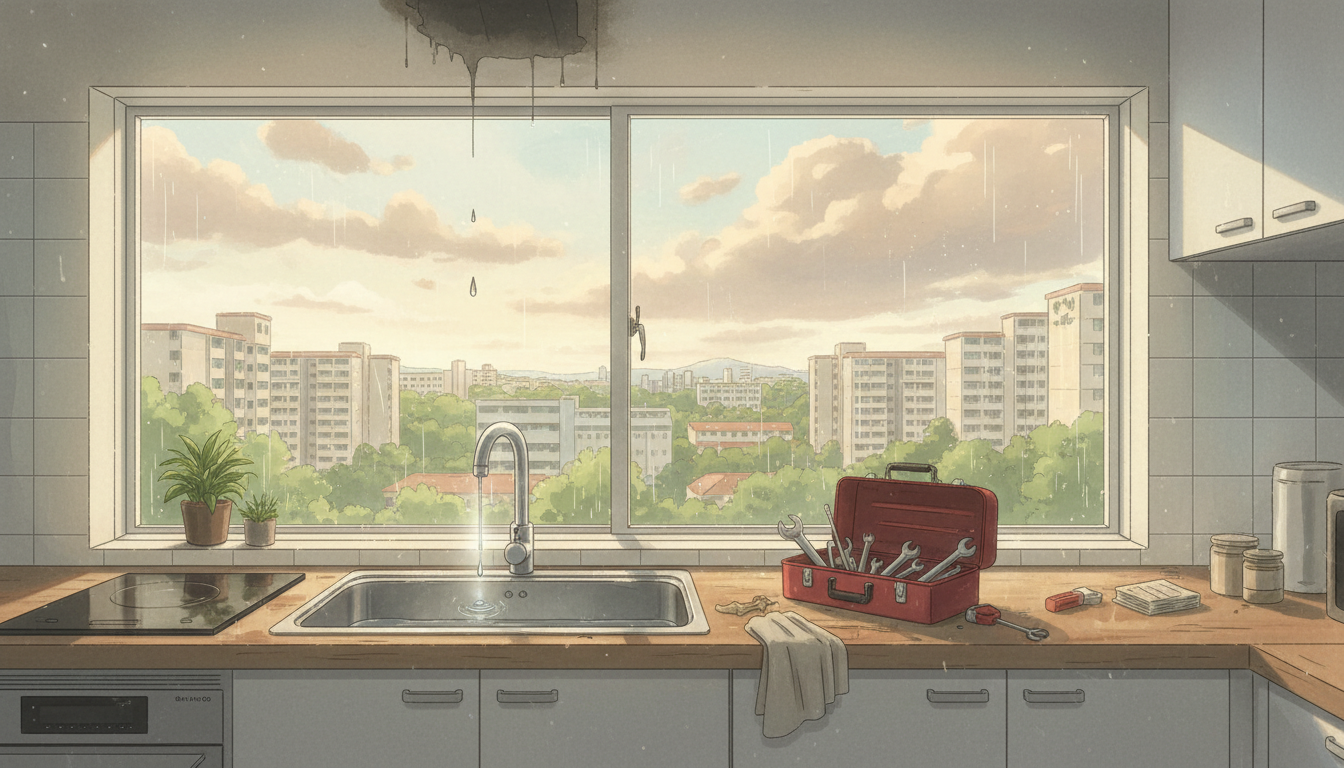
This definitive pillar guide covers tenant repairs, landlord maintenance, repair responsibility, and maintenance rights in Singapore rentals. Homejourney verifies rental information to create a safe, trusted environment where tenants make confident decisions about rental properties.
Whether renting an HDB flat in Toa Payoh or a condo in Bedok, understanding these rights prevents disputes and ensures habitable living. We synthesize official CEA guidelines, State Courts procedures, HDB rules, and real Singapore examples for exhaustive coverage.
Table of Contents
- Executive Summary
- 1. Legal Framework for Rental Repairs in Singapore
- 2. The Minor Repair Clause Explained
- 3. Who Pays for What: Tenant vs Landlord Responsibilities
- 4. HDB vs Private Property Differences
- 5. How to Exercise Your Maintenance Rights
- 6. Resolving Repair Disputes: Step-by-Step
- 7. Prevention Tips Before Signing Your Lease
- 8. How Homejourney Protects Tenants
- FAQ: Tenant Repairs and Landlord Maintenance
Executive Summary
In Singapore, tenant rights for repairs center on the negotiable minor repair clause, capping tenant costs at S$150–S$300 per incident for issues like leaky taps or bulbs.[1] Landlords must handle structural repairs, major plumbing, and fair wear and tear under implied habitability warranties and CEA templates.[1][2]
No dedicated Residential Tenancies Act exists; rights derive from contract law, HDB subletting rules, and Small Claims Tribunal (SCT) jurisdiction up to S$20,000.[1][4] This guide provides step-by-step advice, tables, real examples from estates like Punggol and Bedok, and prevention strategies. Homejourney's verified listings and agent connections safeguard your rental journey.
1. Legal Framework for Rental Repairs in Singapore
Singapore rental repairs follow contract law, not a specific tenancy act like in the UK or Australia. Obligations stem from the tenancy agreement (TA), CEA's non-mandatory template, and common law principles.[1][2]
Key laws include the Stamp Duties Act (0.4% duty on leases over 1 year) and Distress Act for rent recovery. HDB imposes mandatory subletting approval and structural duties on landlords.[1][5] The implied warranty of habitability requires livable conditions: functional plumbing, electricity, no health hazards.[2][4]
Core Legal Principles
- Fair Wear and Tear Exclusion: Natural deterioration (faded paint, minor carpet wear) is landlord responsibility.[1][8]
- Small Claims Tribunal: Resolves disputes up to S$20,000; filing fees S$10–S$100, no lawyers needed.[1][4]
- Community Mediation Centre (CMC): Free mediation for early resolution, typically 2-4 weeks.[4][5]
Insider tip: In mature HDB estates like Toa Payoh (5-min walk from Braddell MRT Exit A), check corridor leaks during viewing—HDB rules place this on landlords.[1]
2. The Minor Repair Clause Explained
The minor repair clause is a standard, negotiable TA provision assigning tenants small fixes up to a cap: typically S$200 for HDB, S$300+ for private condos in 2026.[1][3] It's not statutory law but customary in CEA templates.
Examples include replacing bulbs, unclogging minor drains, or fixing loose taps. Exceeding the cap or structural issues shifts to landlords. Negotiation is key—cap per incident or per year.[1][3]
Negotiation Tips
Request a S$150 cap for HDB or exclude aircon servicing (link to Homejourney aircon services). See our Minor Repair Clause Negotiation Tips for Singapore Tenants | Homejourney ">minor repair clause tips.[1]
3. Who Pays for What: Tenant vs Landlord Responsibilities
Landlord maintenance covers major systems; tenant repairs handle daily upkeep. Disputes often arise from unclear TAs.[2][3]
| Aspect | Landlord Responsibility | Tenant Responsibility |
|---|---|---|
| Structural | Roof, walls, floors, ceilings[1][5] | None |
| Plumbing/Electrical | Major systems, bursts[2] | Minor clogs, taps under cap[1] |
| Appliances | Replacements if fair wear[1][7] | Damage from misuse[3] |
| Fair Wear & Tear | Faded paint, carpet wear[1][8] | None |
Real example: Bedok condo tenant paid S$180 for a tap (under cap); landlord covered S$1,200 pipe burst from building fault.[1] Read Fair Wear and Tear vs Tenant Damage: Singapore Examples | Homejourney ">fair wear vs damage examples.
4. HDB vs Private Property Differences
HDB rentals require HDB approval; landlords bear stricter structural duties.[5] Private properties rely more on TA negotiations.
| Aspect | HDB | Private |
|---|---|---|
| Repair Cap | S$200–250[1] | S$300+[1] |
| Structural Duty | Landlord mandatory (HDB rules)[5] | Contractual[3] |
| Approval | HDB consent required | None |
| Aircon Maintenance | Often shared; check TA | Negotiable[3] |
Pro tip: Punggol HDB tenants, negotiate a 'defect-free first month'—common leaks from new builds.[1] See HDB Rental Maintenance Rules: Landlord vs Tenant Duties | Homejourney ">HDB rules.
5. How to Exercise Your Maintenance Rights
Act promptly to enforce maintenance rights. Documentation is crucial.
- Document on Move-In: Photos/videos of all areas, appliances (timestamped, e.g., from MRT Exit A walk to unit).[1][2]
- Notify in Writing: Email/WhatsApp with specifics, TA clause reference, 7-14 day deadline.[2]
- Minor Issue: Fix if under cap, keep receipts for reimbursement if disputed.[1]
- Major Issue: Withhold if habitability threatened (rare, document fully).[6]
Template: "Dear Landlord, Kitchen ceiling leak noted 1 Feb 2026. Per TA Clause 5, please repair by 15 Feb. Photos attached."[2]
6. Resolving Repair Disputes: Step-by-Step
Warning signs: Ignored notices, habitability threats (e.g., no hot water in wet Singapore weather).
- Communicate: Written demand, copy agent.[2]
- Mediate: CMC (free, locations islandwide like Novena).[4]
- SCT Claim: File online at State Courts (S$10-100 fee, 1-month hearing). Evidence: photos, receipts, TA.[1][4]
- Legal Advice: Free at Community Justice Centre if over SCT limit.[5]
Costs: SCT recoverable if you win. See How to Document Rental Repairs for SCT Claims in Singapore | Homejourney ">SCT documentation guide and Property Damage Claims: Tenant vs Landlord Evidence Guide | Homejourney ">damage claims evidence.[1]
Real case: Tenant in Yishun HDB won S$800 back for unrepaired leaks via SCT after 3 weeks mediation failed.[1]
7. Prevention Tips Before Signing Your Lease
- Inspect Thoroughly: Test taps, lights, aircon during viewing (bring flashlight for cupboards).[1]
- Negotiate Clauses: Cap repairs at S$150, list appliances, exclude fair wear.[3]
- Joint Inventory: Signed move-in checklist with photos.[2]
- Red Flags: Vague TA language, no agent involvement, ignored pre-existing damage.[1]
Check Projects Directory ">Homejourney projects for property history. For financing rentals, view Bank Rates ">bank rates.
8. How Homejourney Protects Tenants
Homejourney prioritizes safety by verifying listings and connecting you with agents who review TAs for repair responsibility red flags. Browse transparent rentals at Homejourney search or find agents at Homejourney agents.
Our platform listens to feedback, ensuring trusted transactions. For maintenance, access aircon services.
FAQ: Tenant Repairs and Landlord Maintenance
Q: Who is responsible for aircon servicing in Singapore rentals?
A: Negotiable; often tenant for filters (minor), landlord for gas top-up. Cap it in TA.[1][3]
Q: Can I withhold rent for unrepaired leaks?
A: Risky—notify first, use mediation/SCT. Document habitability impact.[2][6]
Q: What is the typical repair cap for HDB tenants?
A: S$200–250 per incident, negotiable.[1]
Q: How long does landlord have to fix major repairs?
A: 7-14 days per TA; escalate if ignored.[2]
Q: Is fair wear and tear tenant responsibility?
A: No, landlords cover natural deterioration.[1][8]
Q: Can tenants claim repair costs from security deposit disputes?
A: Yes, via SCT with receipts/photos. Refund within 14 days post-inspection.[4]
Q: Differences in condo vs HDB maintenance rights?
A: HDB stricter on landlords for structure; condos more TA-dependent.[1][5]
Q: What if landlord enters for repairs without notice?
A: Requires 24-48 hours notice for privacy.[4]
Disclaimer: This guide provides general information, not legal advice. Consult professionals for your situation. Homejourney supports safe decisions—start your search today.
Next steps: Search verified rentals on Homejourney and connect with agents for TA reviews. Prioritizing your trust and safety every step.