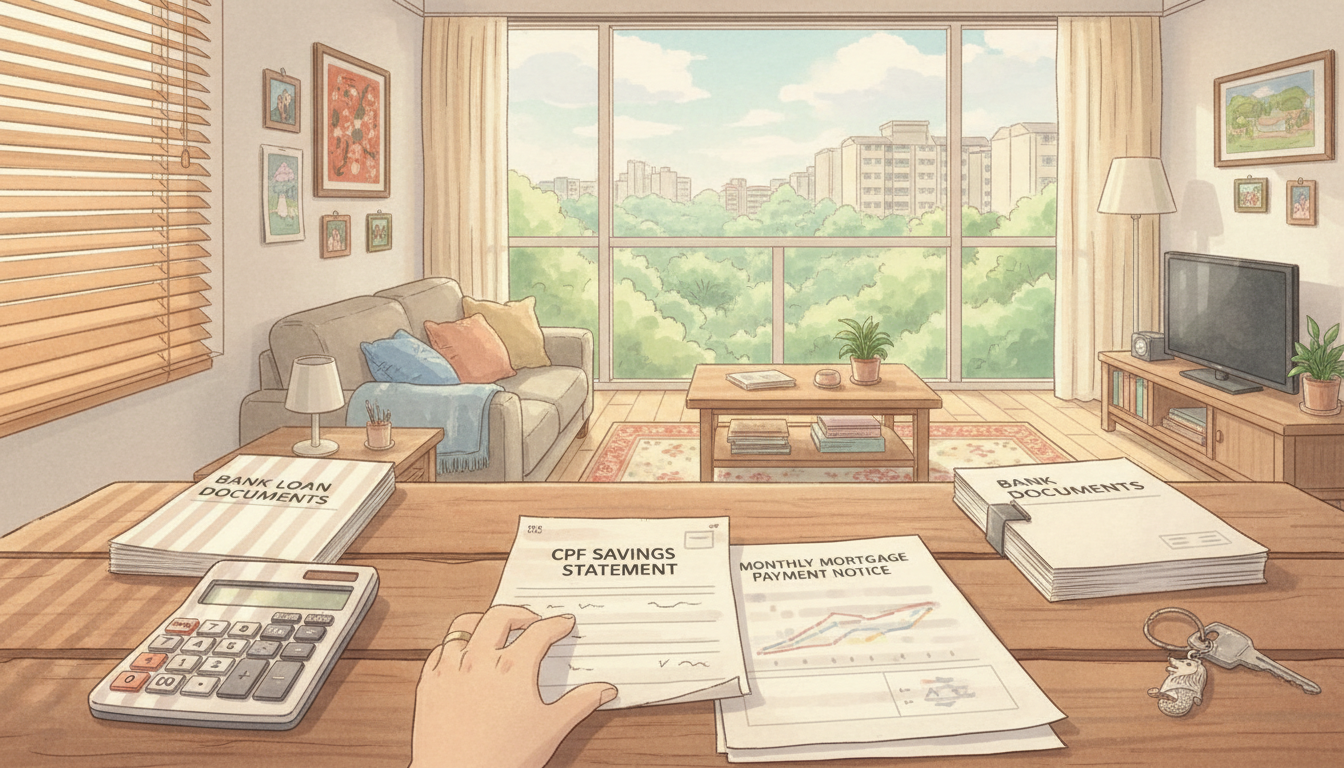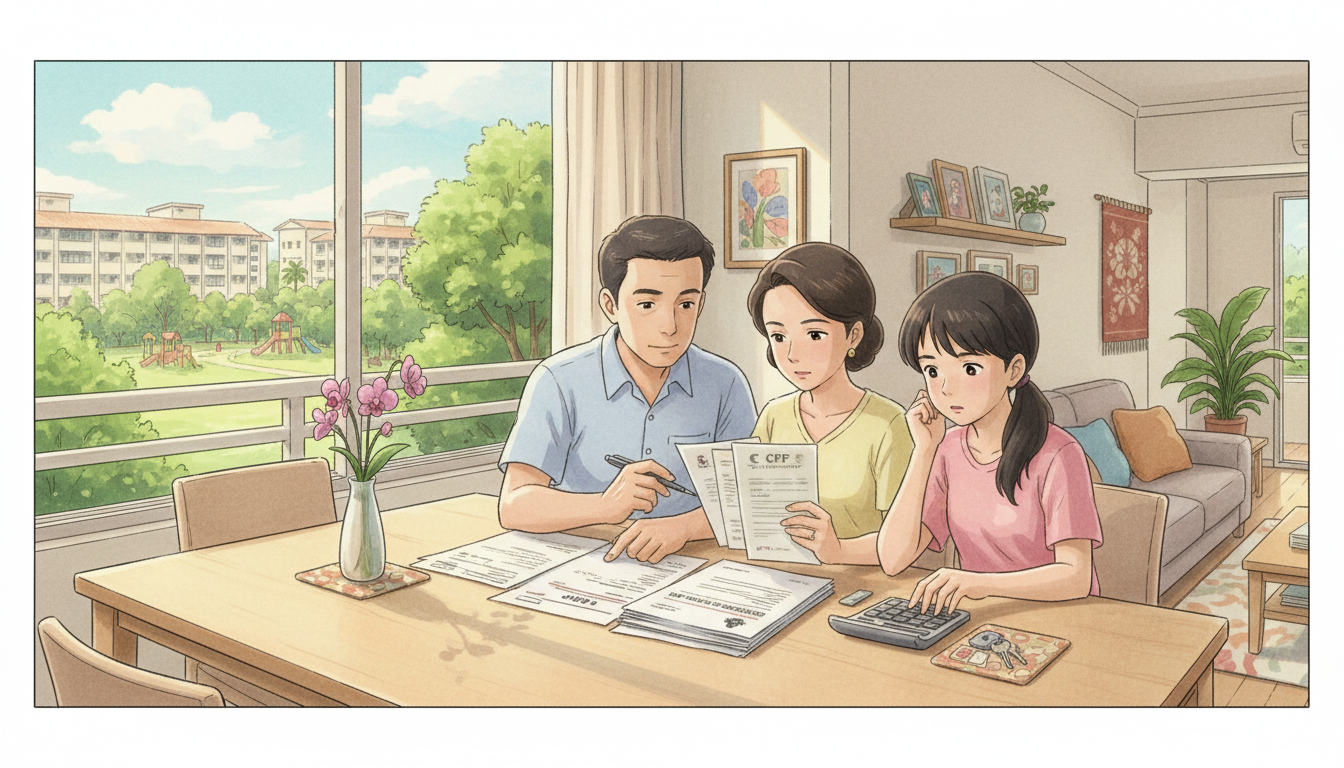
Executive Summary: This definitive guide from Homejourney demystifies CPF accrued interest and its profound impact on your property sale. Understand how this mandatory refund shapes your CPF refund sale proceeds, master accrued interest calculation, and discover strategies to optimize returns. Whether upgrading, downsizing, or investing, Homejourney equips you with verified insights for confident decisions in Singapore's property market.
As Singapore's trusted platform prioritizing user safety and transparency, Homejourney verifies every detail to help you navigate CPF rules securely. From HDB flats to private properties, we cover regulations, real examples, and tools like our bank rates page for seamless financing.
Table of Contents
- What is CPF Accrued Interest?
- How CPF Accrued Interest Works in Property Transactions
- CPF Accrued Interest Calculation: Step-by-Step Guide
- Impact of CPF Accrued Interest on Property Sale Proceeds
- Real-Life Scenarios and Case Studies
- 5 Strategies to Minimize CPF Accrued Interest
- HDB vs Private Properties: Key Differences
- Special Rules for Sellers Aged 55 and Above
- Common Mistakes and How to Avoid Them
- Frequently Asked Questions (FAQ)
- Next Steps with Homejourney
What is CPF Accrued Interest?
CPF accrued interest is the interest your withdrawn CPF Ordinary Account (OA) savings would have earned had they remained in your account for property purchase or payments. Calculated at 2.5% per annum on the principal used, it ensures CPF funds—meant for retirement—grow as intended[1][2][4].
When you use CPF for downpayments, monthly installments, grants, stamp duties, or legal fees on your home, this amount plus accrued interest property must be refunded upon sale after the Minimum Occupation Period (MOP). This refund restores your retirement savings, credited back to OA, Special Account (SA), or Retirement Account (RA) based on your age[4][5].
Homejourney's insight: In Singapore's high-cost housing market, over 80% of buyers use CPF, making accrued interest a critical factor in net proceeds. Always calculate it early using HDB's sale proceeds estimator or consult our mortgage tools at Homejourney's mortgage calculator[7].
Why CPF Accrued Interest Matters for Singapore Homeowners
CPF OA earns a stable 2.5% interest, while SA offers up to 5% with extra interest for retirement sums. Withdrawing for property creates an opportunity cost, refunded via accrued interest to preserve long-term security[2][4].
For first-time HDB buyers in areas like Punggol or Tengah, using CPF maximizes affordability under MSR/TDSR limits. But on resale, it can erode cash gains—vital for upgraders eyeing ECs or condos[1].
How CPF Accrued Interest Works in Property Transactions
Accrued interest starts accruing from the withdrawal date (key collection or payment) until resale completion. It's computed monthly, compounded annually at 2.5% on the total CPF used: principal + grants + fees[2][4].
Upon sale, sales proceeds first cover outstanding loans, then refund CPF principal + accrued interest. Any shortfall (if sold at market value) isn't topped up from cash, but option fees count toward proceeds and must be refunded[1][2].
Homejourney tip: For joint owners, refunds are proportional. In divorces, courts under Women's Charter may adjust splits, impacting each party's sell property CPF return[1]. Track via CPF portal with Singpass for accuracy.
Regulatory Framework: CPF Board, HDB, and URA Rules
Governed by CPF Act, refunds are mandatory for whole property sales or share transfers. HDB flats require MOP (5 years), private properties have no MOP but CPF charge until refunded[5][6]. URA oversees private sales, ensuring compliance.
If pledged for retirement sum post-55, refunds top up RA for higher payouts[4]. Homejourney verifies these via official integrations, helping you plan safely.
CPF Accrued Interest Calculation: Step-by-Step Guide
Accrued interest calculation uses the formula: Principal × (1 + 0.025)^Years - Principal, adjusted monthly[2].
Example: $100,000 CPF withdrawn for 5 years: Interest = $100,000 × ((1 + 0.025/12)^(12×5) - 1) ≈ $13,756. Total refund: $113,756[1].
| Years Held | Principal $100K | Accrued Interest | Total Refund |
|---|---|---|---|
| 5 | $100,000 | $13,756 | $113,756 |
| 10 | $100,000 | $28,707 | $128,707 |
| 20 | $100,000 | $64,945 | $164,945 |
| 35 | $100,000 | $174,000+ | $274,000+ |
Use HDB's calculator for precision or Homejourney's tools linked to mortgage eligibility calculator[7]. Insider tip: Factor in grants—$40K Proximity Housing Grant accrues separately[3].
Impact of CPF Accrued Interest on Property Sale Proceeds
Accrued interest property directly reduces your net cash from CPF refund sale. Sales proceeds deduct: loan balance, CPF refund (principal + interest), agent fees, then pay you balance[4].
In upgrader scenarios, high accrued interest can zero out profits, as seen in long-held rentals where 35-year compounding exceeds gains[1]. Positive: Refunds bolster CPF for next buys or retirement.
Market data: Median HDB resale at $550K (2026 est.), but $200K CPF use over 10 years adds ~$57K interest, slashing cash by 10%[1][2]. Plan via Homejourney property search.
Net Proceeds Breakdown Table
| Component | Example Amount | Impact |
|---|---|---|
| Sale Price | $600,000 | Gross |
| Outstanding Loan | -$200,000 | Deducted |
| CPF Principal + Accrued Interest | -$150,000 | Major Deduction |
| Fees/Taxes | -$20,000 | Deducted |
| Net Cash to You | $230,000 | Final |
Real-Life Scenarios and Case Studies
Case Study 1: Upgrading from BTO (Under 55)
Mr. and Mrs. Lim bought a Punggol BTO for $400K, using $150K CPF. After 5-year MOP, sell for $550K. Accrued interest: ~$20K. Total CPF refund: $170K. Net cash: Minimal after loan payoff—upgrading strained without cash payments[1].
Lesson: Mix cash/CPF installments. Read more in 5 Strategies to Optimize Your Mortgage with CPF | Homejourney .
Case Study 2: Long-Term Rental Sale
Theodore holds Yishun flat 35 years as rental. $100K CPF use accrues $174K+ interest. Sale at $450K yields negative cash after refund—rental income doesn't offset[1].
Case Study 3: Divorce Sale
Joint owners split 50/50, but courts adjust per Women's Charter. Each refunds proportional share + interest[1].
5 Strategies to Minimize CPF Accrued Interest
- Pay Installments in Cash: Reduces principal accruing interest. Use salary for HDB/HDB loans[1][2].
- Minimize Initial CPF Use: Opt for bank loans via Homejourney bank-rates—compare DBS, OCBC, UOB.
- Early Refinancing: Switch to cash-heavy after MOP. Track SORA with Homejourney.
- Grants Wisely: Refund only necessary; see CPF Withdrawal Limits for Property: 2026 Homejourney Guide .
- Voluntary Refund: Top up CPF pre-sale for better allocation[8].
Homejourney original insight: In 2026's stable 2.5% OA rates vs ~3.5% SORA, cash payments save 1%+ annually on opportunity cost.
HDB vs Private Properties: Key Differences
- HDB: MOP mandatory, HDB loans eligible, grants common. Use HDB portal calculator[7].
- Private: No MOP, but CPF charge until refund. Higher values amplify interest[6].
For both, TDSR applies. Calculate affordability on Homejourney's page.
Special Rules for Sellers Aged 55 and Above
Refunds top up RA to Full Retirement Sum (FRS, ~$213K in 2026). Excess to cash within a week or voluntary top-up. Pledged properties require full refund[2][4].
Benefit: Enhances retirement payouts. Grants over $30K split to SA/MA/RA[3].
Common Mistakes and How to Avoid Them
- Forgetting option fees in proceeds[1].
- Ignoring compounding over decades[2].
- Not mixing cash/CPF[1]. Solution: Use Homejourney's multi-bank application with Singpass for optimized loans.
Disclaimer: This is educational; consult CPF Board or advisors. Homejourney verifies data for trust.
Frequently Asked Questions (FAQ)
What is CPF accrued interest?
Interest at 2.5% p.a. on CPF used for property, refunded on sale[1][4].
When does CPF accrued interest stop accruing?
On property sale completion date[1].
Do I pay accrued interest if sale proceeds are short?
No, if sold at market value; option fees must refund[1][2].
How to calculate CPF accrued interest for my sale?
Use CPF/HDB tools or Homejourney calculator[7].
Can I use refunded CPF for next property?
Yes, immediately for eligible buys[4].
What if I'm over 55?
Tops up RA/FRS; excess cash[2][4].
Does accrued interest apply to grants?
Yes, plus interest[3].
How to reduce CPF accrued interest?
Pay cash installments, minimize CPF use[1][2]. See CPF vs Cash for Mortgage: Which is Smarter? Homejourney .
Next Steps with Homejourney
Maximize your sell property CPF return safely: Compare rates from DBS, OCBC, UOB, HSBC on Homejourney bank-rates. Use Singpass for instant eligibility checks and multi-bank applications. Search budgeted properties at property search. Homejourney prioritizes your security—feedback-driven for trusted transactions.
Ready? Start with our calculator today for a transparent journey.