
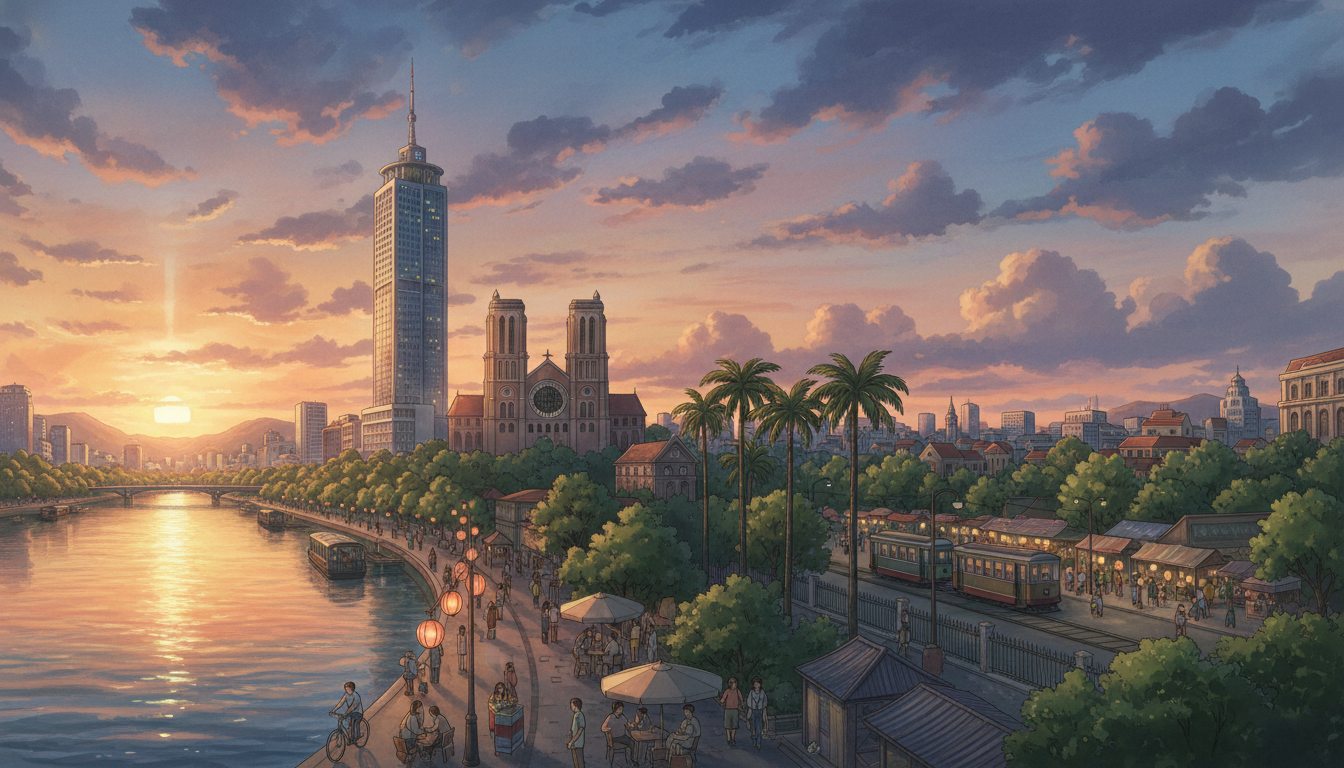
Ho Chi Minh City – still affectionately called Saigon by locals – is one of Asia’s most energetic cities, blending French colonial architecture, war history, sleek rooftop bars and some of the best street food in the world. For Singapore-based travellers, expats and investors, understanding things to do in Ho Chi Minh City, Vietnam is often the first step to exploring wider opportunities across Asia, including property in Singapore with Homejourney.
As someone who lives in Singapore and has visited Saigon regularly for over a decade, this guide combines first-hand experience, current data and practical tips tailored specifically for Singapore residents and international investors. You’ll find safety-focused advice, estimated prices, walking times and real examples – plus a clear view of how Singapore and Vietnam can fit into a long‑term lifestyle or investment plan.
1. Destination Overview: Why Visit Ho Chi Minh City, Vietnam
Ho Chi Minh City (HCMC) is Vietnam’s largest city and commercial hub, with over 9 million residents and a metro area exceeding 13 million. It is a dense, fast-growing city of motorbikes, coffee shops, co-working spaces and traditional markets – similar in pace to Singapore, but far more chaotic and raw.
1.1 What Makes Saigon Unique for Singapore-Based Travellers
From Singapore, Saigon is a quick 2-hour flight – closer than Bangkok for some carriers – making it ideal for long weekends or regular business trips. For many Singaporeans and expats living here, HCMC is:
- A value destination – mid-range meals are typically 30–60% cheaper than in Singapore, and quality hotels can be a fraction of Orchard Road prices.
- A business and tech hub – District 1 and District 3 are packed with co-working spaces, startups and regional HQs.
- A cultural contrast – French colonial boulevards, wartime history, Buddhist and Taoist temples, and a very different street rhythm from Singapore’s highly planned urban environment.[2][6]
Vietnam’s official tourism board highlights HCMC’s “vibrant energy”, historic Dong Khoi boulevard, Ben Thanh Market and the Chinese quarter of Cho Lon as key attractions.[2] This matches what frequent visitors experience: Saigon feels like a city mid-transformation, where old shophouses sit under new glass towers.
1.2 Currency & Cost Snapshot
Vietnam’s currency is the Vietnamese Dong (VND). S$1 is typically worth around 17,000–19,000 VND, so you’ll often be dealing with big numbers. Everyday costs are generally lower than Singapore:
| Item | Typical Price in HCMC (VND) | Approx. in SGD |
|---|---|---|
| Bowl of phở at local shop | 40,000 – 70,000 | ~S$2.50 – S$5 |
| GrabCar 10–15 min within District 1 | 40,000 – 80,000 | ~S$2.50 – S$5.50 |
| Mid-range hotel (District 1, per night) | 1,000,000 – 2,000,000 | ~S$60 – S$130 |
| Rooftop cocktail | 180,000 – 350,000 | ~S$11 – S$22 |
Homejourney supports multi-currency browsing and planning, including Vietnam’s currency, making it easier to compare travel and housing budgets between HCMC and Singapore in one place.Property Search
2. Best Time to Visit Ho Chi Minh City
HCMC has a tropical climate with two main seasons: dry and wet. Temperatures are warm year-round, typically 25–34°C, slightly hotter than Singapore but with a more distinct dry season.
2.1 Dry vs Rainy Season
- Dry season (Dec–Apr): The best time for most visitors. Humidity is lower and rains are less frequent, ideal for walking tours and rooftop bars.
- Transition months (Nov & May): Can be hot but manageable; often good for lower hotel rates.
- Rainy season (May–Oct): Expect daily afternoon showers and occasional heavy downpours. You can still enjoy the city with indoor activities (cafés, museums, malls).
For Singapore-based travellers used to frequent rain and humidity, HCMC’s dry season often feels more comfortable for outdoor sightseeing than a stormy November in Singapore.
2.2 Festival & Peak Periods
- Tết (Lunar New Year): Usually Jan/Feb. The city becomes quiet as locals return to their hometowns; many shops close, but decorations and pre-Tết markets can be beautiful. Flights and some hotels are more expensive.
- Reunification Day & Labour Day (30 Apr–1 May): Large celebrations and domestic travel; some attractions busier.[1][2]
3. Getting There from Singapore & Entry Basics
3.1 Flight Options from Singapore
Direct flights from Singapore Changi (SIN) to Tan Son Nhat International Airport (SGN) usually take around 2 hours. Singapore Airlines, VietJet, Vietnam Airlines, Scoot and Jetstar frequently operate this route.
From the airport, District 1 (city centre) is roughly 7–8 km away. A typical GrabCar ride to Ben Thanh Market or Dong Khoi area takes 25–35 minutes depending on traffic and costs about 120,000–180,000 VND (~S$8–S$12).
3.2 Visa Requirements (Snapshot – Always Verify)
Visa rules can change, so always check with Vietnam’s official immigration channels or your nearest embassy before travel. In general:
- Singapore citizens have historically enjoyed short visa‑free stays in Vietnam (up to a fixed number of days). Confirm current rules via official Vietnam government or embassy resources before booking.
- Other nationalities may need an e-visa, often valid for 30 days, single or multiple entry.
Homejourney recommends verifying entry requirements with the Vietnam Immigration Department, Singapore’s Ministry of Foreign Affairs, or your embassy’s website before you fly. This aligns with our safety‑first approach for all travel and property decisions.
4. Top Attractions & Must-Do Experiences in Ho Chi Minh City
Ho Chi Minh City offers a mix of history, architecture, local markets and modern experiences. Official tourism sources and major travel guides consistently highlight the following attractions as must‑see.[1][2][6]
4.1 War Remnants Museum
The War Remnants Museum is one of the city’s most visited sites, documenting the Vietnam War from the Vietnamese perspective.[1][3] Exhibits feature photographs, weapons, aircraft and powerful stories of civilians.
- Location: 28 Vo Van Tan, District 3 (about 10–15 min walk from the Reunification Palace)
- Time needed: 1.5–2 hours
- Insider tip: Go early in the morning to avoid crowds; some exhibits are emotionally heavy, so families with young children may prefer a shorter visit.
4.2 Reunification Palace (Independence Palace)
This 1960s building marks the place where the Vietnam War effectively ended in 1975 when tanks crashed through its gates.[1] It has been preserved almost exactly as it was, with war rooms, communication bunkers and vintage furnishings.
- Location: 135 Nam Ky Khoi Nghia, District 1
- Walking distance: About 10 minutes from Notre Dame Cathedral
- Time needed: 1–1.5 hours
- Tip: Combine with War Remnants Museum and Notre Dame in a half‑day walking circuit.
4.3 Notre Dame Cathedral & Central Post Office
On Dong Khoi street, you’ll find the red-brick Notre Dame Cathedral and the nearby Central Post Office, iconic examples of French colonial architecture.[1][2] The post office is still operational and beautifully preserved inside.
- Location: Downtown District 1; Notre Dame and the Post Office sit almost back-to-back.
- Time needed: 30–45 minutes for photos and a quick look inside.
- Local insight: Many locals still send physical letters here, and the interior’s painted maps are a nice detail for geography fans.
4.4 Ben Thanh Market
Ben Thanh Market is perhaps Saigon’s most famous market, with stalls selling clothes, souvenirs, coffee, spices and local food.[1][2][3] It’s crowded and touristy, but still worth a visit for the atmosphere.
- Location: Le Loi Street, District 1
- Time needed: 1–2 hours (include a meal if you eat at the food stalls)
- Insider tip: Expect to bargain for non‑food items; prices typically start high. For a calmer experience, visit in the late morning before tour groups peak.
4.5 Jade Emperor Pagoda
The Jade Emperor Pagoda is a Taoist temple dating back to the early 1900s, with striking statues, incense coils and a tranquil courtyard.[1][2] It offers a calmer, more spiritual contrast to the busy streets.
- Location: 73 Mai Thi Luu, District 1 (bordering District 3)
- Time needed: 45–60 minutes
- Tip: Dress modestly (covered shoulders and knees) and remain quiet inside. Early morning is most atmospheric.
4.6 Bitexco Financial Tower & Skydeck
The Bitexco Financial Tower is among HCMC’s tallest skyscrapers with a lotus‑bud inspired design and a distinctive helipad.[1][3] Its observation deck offers panoramic views, especially at sunset.
- Location: 2 Hai Trieu, District 1 (near Nguyen Hue walking street)
- Time needed: 1–1.5 hours
- Insider tip: Compare skydeck tickets vs. having a drink at the rooftop bar – sometimes a cocktail with a view is only slightly more than the ticket price and gives a similar view.[1][3]
4.7 Cho Lon (Chinatown) & Binh Tay Market
Cholon, the Chinese quarter, is located mainly in District 5 and parts of District 6. It’s known for its wholesale markets and Chinese temples such as Thien Hau Pagoda.[2]
- Main market: Binh Tay Market – a sprawling wholesale centre with food, household goods and textiles.[2]
- Highlights: Thien Hau Pagoda’s incense coils and ornate roof, backstreet food stalls, old shophouses.
- Tip: Less touristy than Ben Thanh, but more crowded with local buyers; keep valuables secure.
4.8 Museums & Culture
Beyond the War Remnants Museum, HCMC has several other museums worth a visit for those interested in history and art:[1]
- Ho Chi Minh City Museum: Focuses on the city’s history, architecture and independence struggle.[1]
- Museum of Fine Arts: Beautiful old building showcasing Vietnamese art, from traditional sculptures to contemporary paintings.[1]
- Museum of History: Covers Vietnamese history from prehistoric times to the modern era, including religious artefacts and a preserved mummy.[1]
