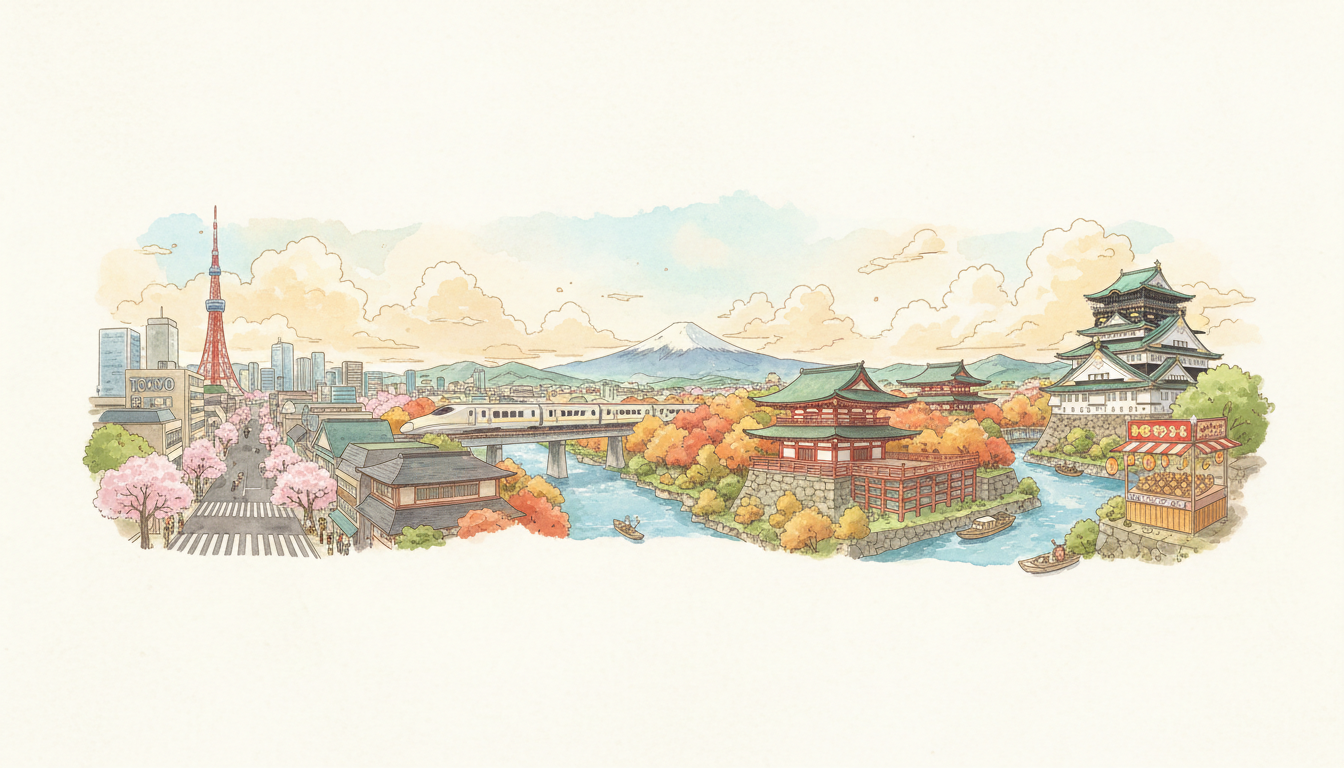
The Best Food and Restaurants in Osaka Route sit along a simple, walkable path that most Singapore travellers already follow: Namba–Dotonbori–Shinsaibashi–Shinsekai–Umeda. If you only have a few days in Osaka on a typical Japan itinerary such as 7 days Japan Tokyo Kyoto Osaka, this route lets you taste the city’s best takoyaki, okonomiyaki, wagyu, kushikatsu and market snacks without wasting time zig-zagging across the city.
As a Singapore-based real estate platform, Homejourney builds guides like this for the same reason we curate safe, verified listings: so you can make confident decisions, whether you’re picking a dinner spot in Dotonbori or a condominium near an MRT line back home.
How this Osaka food route fits into a 7 days Japan Tokyo–Kyoto–Osaka plan
Most Singapore travellers do a classic loop: 2–3 days Tokyo, 2–3 days Kyoto, and 2–3 days Osaka. This Osaka food route is designed to fit neatly into that larger Japan trip planning framework and to connect to Homejourney’s main pillar guide: 7 Days Japan Itinerary: Tokyo Kyoto Osaka Route 7 Days Japan Itinerary: Tokyo Kyoto Osaka Route Guide | Homejourney .
From Kansai International Airport (KIX), the Nankai Airport Express gets you to Namba in about 45 minutes, which is why this route starts there. For Singapore travellers flying from Changi, KIX is usually the most time- and cost-efficient entry point into Osaka, with frequent full-service and budget carrier options.
Osaka food route overview: where to eat and in what order
If you only remember one structure, use this:
- Morning & brunch: Kuromon Ichiba Market (near Nippombashi/Namba)
- Midday & afternoon snacks: Dotonbori & Shinsaibashi arcades
- Early dinner: Shinsekai (kushikatsu) or Namba (okonomiyaki, wagyu)
- Late-night drinks / dessert: Umeda or back to Dotonbori
This loop is popular in up-to-date Osaka food guides and matches how locals actually move through the city’s main commercial hubs.[1][2] From a Singapore perspective, think of it as combining the density of Orchard Road, Bugis Street and a hawker centre food trail into one continuous walk, with efficient subway hops in between.
Must-try Osaka dishes on this route
To avoid decision fatigue, focus on these core Osaka specialties that appear consistently in reputable Osaka food guides.[1][2][4]
- Takoyaki: Grilled octopus balls, Osaka’s most famous street snack, best eaten piping hot.
- Okonomiyaki: Savoury cabbage pancake, often cooked on a hotplate at your table.
- Kushikatsu: Deep-fried skewers of meat, vegetables and seafood, a Shinsekai speciality.
- Yakiniku / Wagyu: Grilled premium beef (Matsusaka, Kobe or other wagyu).[2][3]
- Udon & ramen: Comfort staples; Osaka has its own style of udon and great ramen shops.[2][4]
Most places on this route are walkable within 5–15 minutes of a major subway station, which is useful if you’re used to planning by MRT exits in Singapore.
Segment 1 – Namba & Dotonbori: classic Osaka street food
Best for: First-time visitors, lively neon vibe, iconic photos with the Glico sign.
From Namba Station (similar to City Hall in terms of interchange importance), you can reach Dotonbori in under 10 minutes on foot via covered shopping streets—perfect in winter or on rainy days, just like walking underground from Orchard MRT to Wheelock.
What to eat in Dotonbori
- Takoyaki in Dotonbori
Multiple kiosks line the canal. A standard 6–8 piece portion typically costs around ¥500–¥700 (about S$4.50–S$6.50 at recent rates). Try at least one with the classic sauce-mayo-bonito topping and one lighter soy-based version if available.[1][2] - Okonomiyaki along the canal or side alleys
Expect ¥1,000–¥1,800 (S$9–S$16) per pancake depending on toppings.[2][4] Many shops let you sit at the teppan counter to watch the cooking—similar to front-row teppanyaki seats in Singapore hotels but at more casual prices. - Wagyu or yakiniku near Hozenji Yokocho
Restaurants such as Matsusakagyu Yakiniku M in the Hozenji Yokocho area specialise in Matsusaka beef and are frequently highlighted in current Osaka restaurant roundups.[2] Budget around ¥5,000–¥10,000 (S$45–S$90) per person for quality wagyu with sides.
Insider tip from a Singapore lens: If you’re used to dining after work at 8–9 pm in Singapore, note that Osaka’s most popular Dotonbori spots will already have queues then. Aim for 5.30–7.00 pm to reduce waiting, especially if you’re travelling with kids or parents.
Safety & practical tips in Dotonbori
- Cash vs cards: Most larger restaurants take cards, but some street stalls remain cash-only. Treat it like certain hawker centres—carry a backup ¥5,000–¥10,000 in cash.
- Allergies: Sauce-heavy items like takoyaki may contain bonito, soy, and wheat. If you have serious allergies, prepare printed Japanese phrases in advance.
- Children & seniors: Dotonbori’s walking paths get very crowded at night. If you’re travelling with older parents (common among Singapore families), visit around late afternoon before peak crowding.
Segment 2 – Kuromon Ichiba Market: breakfast & seafood
Kuromon Ichiba, a traditional market about 10–15 minutes’ walk from Namba or 2–3 minutes from Nippombashi Station, is widely recommended as a must-visit food market in Osaka for fresh seafood, wagyu skewers and snacks.[1][2][4]
What to eat at Kuromon Ichiba
- Grilled scallops, uni & sushi: Expect individual items from around ¥500 per skewer or piece, with premium platters costing more.[2][4]
- Wagyu skewers: Commonly around ¥700–¥1,500 depending on grade.[2]
- Ramen or udon bowls: A hearty bowl is typically ¥800–¥1,200.[2][4]
When to go: Aim for opening to around 11 am when crowds are still manageable. This is similar to hitting Tiong Bahru Market before brunch crowds.
Hygiene note: Japan’s food safety standards are generally high, and stalls in Kuromon are used to tourists. Still, avoid overdoing raw oysters or sashimi on very hot days if you have a sensitive stomach, especially when travelling with children.
Segment 3 – Shinsekai: kushikatsu central
Shinsekai, near Dobutsuen-mae or Ebisucho stations, is the historic home of kushikatsu, one of Osaka’s most recognisable comfort foods.[1][2] Walking from Namba takes around 20–25 minutes, but a short subway ride is usually easier if you’re with family.
What to eat in Shinsekai
- Kushikatsu: Deep-fried skewers served with a shared dipping sauce. Current guides consistently recommend Shinsekai for classic kushikatsu experiences.[1][2] Sets commonly start from around ¥1,000–¥1,800 for assorted platters.
- Cheap set meals: Many shops have picture menus and value lunch sets, ideal if you’re watching your yen like you would track hawker prices back home.
Important etiquette: One of the key local rules is no double-dipping in the shared sauce container. This is both a hygiene and cultural norm, and ignoring it will draw glares from staff and locals.
Safety note for Shinsekai
Shinsekai is generally safe, but some back streets feel rougher, especially late at night. Stay on the main lit stretches if you’re with kids or prefer a more comfortable environment. This is broadly similar to how Singapore residents might avoid certain alleys late at night while still feeling safe overall.