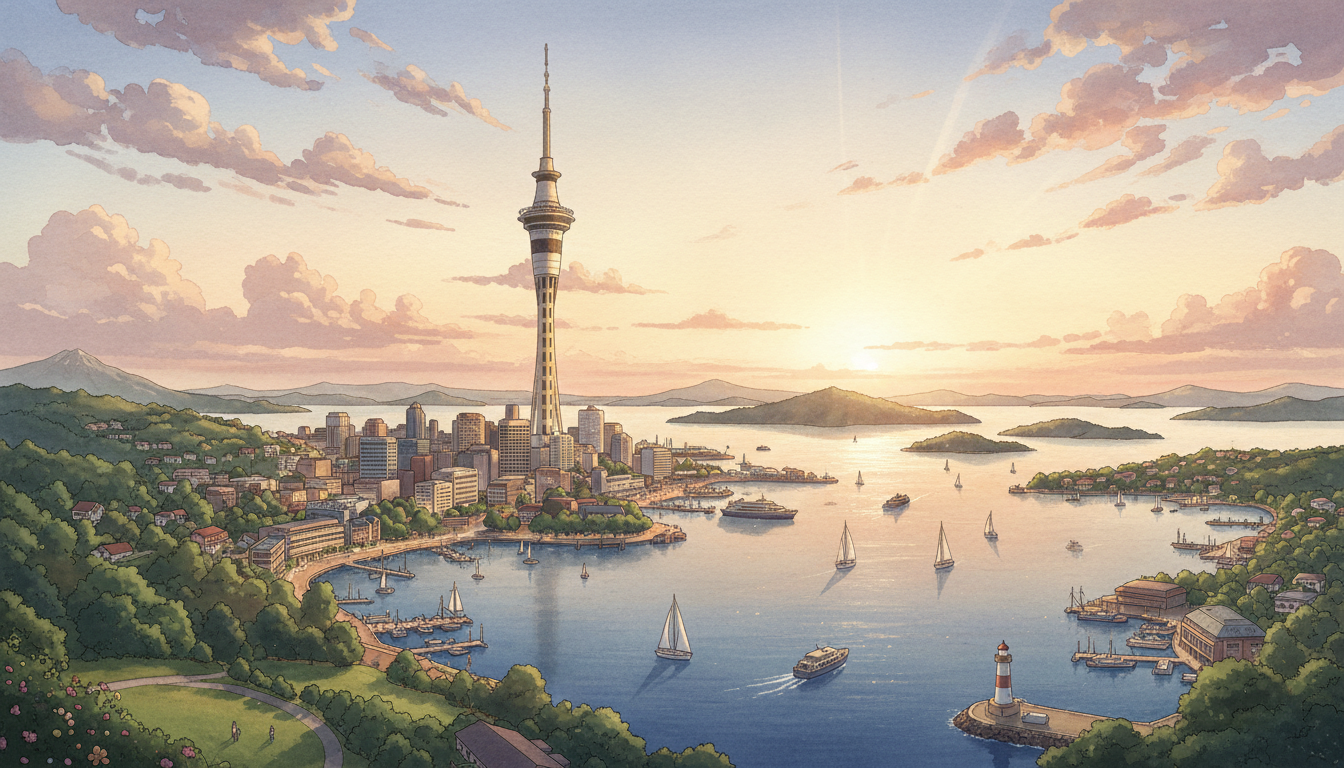
Auckland’s Sky Tower, sparkling harbours and volcanic islands like Waiheke Island and Rangitoto make it one of the most scenic cityscapes in the Southern Hemisphere – and an excellent comparison point for Singapore buyers thinking about lifestyle, travel and property investment in the region.
As a Singapore-focused real estate platform, Homejourney approaches Auckland as more than a holiday destination. We look at it the same way many of our users do: a place to experience, compare, and sometimes use as a benchmark when weighing Singapore property decisions. This guide combines first-hand travel insights with investment-aware commentary and practical tips tailored for Singapore residents and international investors.
1. Auckland Overview: Sky Tower, Harbours and Islands
Auckland, often called the “City of Sails”, wraps around two main harbours – the Waitematā Harbour (the postcard harbour you see beneath the Sky Tower) and the Manukau Harbour to the south. Ferries carve across the water to Waiheke Island, Rangitoto and other Hauraki Gulf islands, while the Auckland Sky Tower rises 328 metres above the CBD, dominating the skyline.[3]
Compared with Singapore, Auckland feels more low-rise and spread out, but the combination of water, greenery and volcanic hills gives you a similar sense of a compact, liveable city with strong outdoor culture. Many Singaporeans use Auckland as a soft introduction to New Zealand – a safe, walkable base with easy day trips rather than a remote wilderness gateway.
For investors and globally mobile families, Auckland’s lifestyle – harbour views, wineries, hiking on islands – is a useful contrast to Singapore’s dense urban convenience. Viewing both together helps you clarify what matters most if you are considering a second home, investment diversification, or future relocation.
2. Best Time to Visit Auckland from Singapore
New Zealand’s seasons are opposite to Singapore’s. Auckland has mild, maritime weather with relatively cool summers and wet winters by Singapore standards.
| Season (Auckland) | Months | Weather & Daylight | Suggested Activities |
|---|---|---|---|
| Summer | Dec–Feb | Warm (around 22–26°C), long days | Beach days on Waiheke, evening Sky Tower views, harbour cruises |
| Autumn | Mar–May | Mild, fewer crowds | Winery tours, hiking Rangitoto, relaxed city exploring |
| Winter | Jun–Aug | Cool (10–15°C), wetter | City museums, indoor dining with harbour views, day trips with layered clothing |
| Spring | Sep–Nov | Variable, fresh | Outdoor walks, less expensive travel, shoulder-season deals |
If you want clear views from the Sky Tower and smooth ferry crossings to Waiheke or Rangitoto, aim for late summer to early autumn (February–April), when winds are usually calmer and skies more stable. Weekdays and late afternoon are often the best balance of lighter crowds and golden-hour light at the Sky Tower.[1]
3. Getting to Auckland from Singapore & Money Essentials
3.1 Flights from Singapore
Direct flights from Singapore Changi to Auckland International typically take around 9.5–10.5 hours, with both full-service and seasonal options. Many Singapore-based travellers choose overnight flights, arriving in the morning with enough time to explore the waterfront or check in and rest before an evening visit to the Sky Tower.
For families and business travellers who frequently compare regional hubs, the flight time is similar to going from Singapore to parts of North Asia or the Middle East, making Auckland a realistic choice for annual or bi-annual trips alongside more common Singapore–Bali or Singapore–Taipei routes.
3.2 Currency, Exchange & Budget Benchmarks
Auckland uses the New Zealand Dollar (NZD). In daily life, you will find prices for casual meals, coffee and mid-range attractions slightly higher than Singapore, but accommodation and long-stay rentals can be more varied across suburbs.
When planning, many Homejourney users like to benchmark a basic day in Auckland around three cost pillars:
- Urban attractions (e.g. Sky Tower admission)
- Harbour and island transport (ferries, cruises)
- Food and coffee (often a highlight for Singapore visitors)
Homejourney supports multi-currency views, including NZD, when you start exploring Singapore property options and thinking about how your travel budget compares to a down payment or rental outlay back home. This makes it much easier to visualise shifting part of your Auckland or overseas holiday budget into long-term property plans in Singapore. Bank Rates
3.3 Payment habits and safety
Card payments are widely accepted across Auckland’s CBD, harbours and islands. Contactless payments (payWave, Apple Pay, etc.) are standard, similar to Singapore. For ferries and some island businesses, it is still useful to carry a small amount of cash, but you can expect a largely cashless experience.
As with any international city, always enable transaction alerts on your Singapore cards and avoid using public Wi-Fi for sensitive banking. Homejourney’s overall philosophy of user safety and verification also extends to how we encourage you to treat your financial data while travelling.
4. Top Auckland Attractions: Sky Tower, Harbours & Islands
4.1 Auckland Sky Tower: What to Expect
The Auckland Sky Tower stands at 328 metres and is part of the SkyCity entertainment complex in the CBD, at the corner of Victoria and Federal Streets.[3] It offers panoramic 360° views up to about 80 kilometres in every direction, including volcanic cones, harbours and distant islands.[3]
Opening hours are typically from around 9.30am to 8–9.30pm, with extended hours during peak periods such as the New Year countdown.[3] Exact times change seasonally, so check the official SkyCity site before visiting.[3] Most visitors spend 1–2 hours between the main observation levels and the Sky Deck.[5][8]
General admission often includes access to the main observation deck and higher viewing levels; paid add-ons such as SkyWalk and SkyJump are available for thrill-seekers.[2][8] SkyWalk takes you around the outside ledge at about 192 metres, attached to a harness but with no handrails, while SkyJump is a controlled base-jump style descent from the tower.[2][8]
| Sky Tower Highlight | Experience | Insider Tip |
|---|---|---|
| Main Observation Deck (around Level 51) | Glass panels, city and harbour views | Arrive just after opening for fewer crowds and clearer photos. |
| Sky Deck (higher level) | Enhanced 360° views up to 80 km on a clear day | Visit on a sunny afternoon, then stay till sunset for city lights. |
| Orbit 360° Dining | Revolving restaurant with full-city views | Book early and time your reservation for dusk; dining often includes tower access.[1] |
| Sky Bar / Sky Café | Drinks or light bites with views | Good compromise if you don’t want a full meal but still want a premium view. |
| SkyWalk / SkyJump | Outdoor ledge walk or controlled jump | Reserve a mid-morning slot when winds are usually calmer. |
4.2 Auckland Harbour & Viaduct Precinct
The Auckland Harbour area – especially the Viaduct Harbour and Wynyard Quarter – is the most convenient waterfront zone to explore from the Sky Tower. It’s a 10–15 minute walk downhill from the tower to the ferry terminals and a wide selection of harbour-front restaurants and bars.
For Singapore visitors used to Marina Bay, this area feels more low-key and nautically focused: yachts, charter boats and commuter ferries dominate the view. Families will appreciate the open playgrounds and broad promenades; couples enjoy sunset drinks facing the water before heading back up to the Sky Tower for a night view of the same harbour from above.
4.3 Hauraki Gulf & Island Highlights
The Hauraki Gulf islands are what make Auckland feel uniquely resort-like despite its urban footprint. The most famous are:
- Waiheke Island – vineyards, beaches and relaxed island villages, about 35–40 minutes by ferry from downtown.
- Rangitoto Island – a volcanic island with lava fields and a summit walk offering sweeping views back to the Sky Tower and city skyline.
- Devonport (technically a suburb, but reached by ferry) – historic houses, a walkable town centre and harbour views.
For many Singaporeans, the appeal is the ability to stay in the city near the Auckland Sky Tower, yet reach beaches and hiking trails on islands in under an hour. This hybrid city–island lifestyle is a useful lens when comparing to waterfront neighbourhoods and lifestyle-focused projects in Singapore via the Homejourney Projects Directory .
5. Waiheke Island: Vineyards, Beaches and Day-Trip Living
Waiheke Island is one of Auckland’s most popular escapes and is regularly rated among the world’s best island getaways. From the Sky Tower’s observation decks, you can often spot Waiheke in the distance; from Waiheke’s hilltop vineyards, you can look back and see the tower anchoring the city skyline.
5.1 Getting to Waiheke from Auckland CBD
Ferries depart frequently from the downtown ferry terminal, near the Britomart transport hub. The ride typically takes 35–40 minutes. From the Sky Tower area, it’s an easy 10–15 minute downhill walk to the terminal; allow extra time on weekend mornings and peak holiday seasons when queues can be longer.
On Waiheke, local buses and taxis meet most ferries. You can also book wine tours that pick you up directly at the island wharf, which is convenient for Singapore travellers not keen on renting a car overseas.
5.2 What to Do on Waiheke Island
Waiheke combines vineyard experiences, beaches and small-town charm. Popular activities include:
- Guided wine tastings at hillside vineyards
- Beach time at Oneroa or Onetangi
- Coastal walks with views back towards Auckland and the Sky Tower
- Art galleries and local craft shops in Oneroa village
Singapore travellers often compare Waiheke to a greener, cooler version of island escapes like Bintan or Bali, but with a strong focus on wine and local produce rather than large-scale resorts. As a result, it pairs well with a Singapore lifestyle: urban efficiency at home, and slower, vineyard-focused breaks abroad.
5.3 Insider Tips from a Singapore Perspective
- Book ferries early during New Zealand school holidays and long weekends; popular departures sell out.
- Layered clothing is essential – temperatures can drop quickly when clouds roll in, especially compared with Singapore’s consistent warmth.
- For those thinking about eventual relocation or long stays, observe the local housing stock: Waiheke’s clifftop homes, baches (holiday houses) and rural properties contrast starkly with Singapore’s high-rise landscape. Use this to clarify what environment you truly want, then explore Singapore options through Property Search .
6. Rangitoto Island & Hauraki Gulf Volcanic Landscapes
Rangitoto Island, with its symmetrical volcanic cone, is one of the most distinctive shapes on Auckland’s horizon and easily visible from the Sky Tower observation decks on clear days.[3][5] It last erupted roughly 600 years ago and is now a protected conservation area with walking tracks and lava fields.