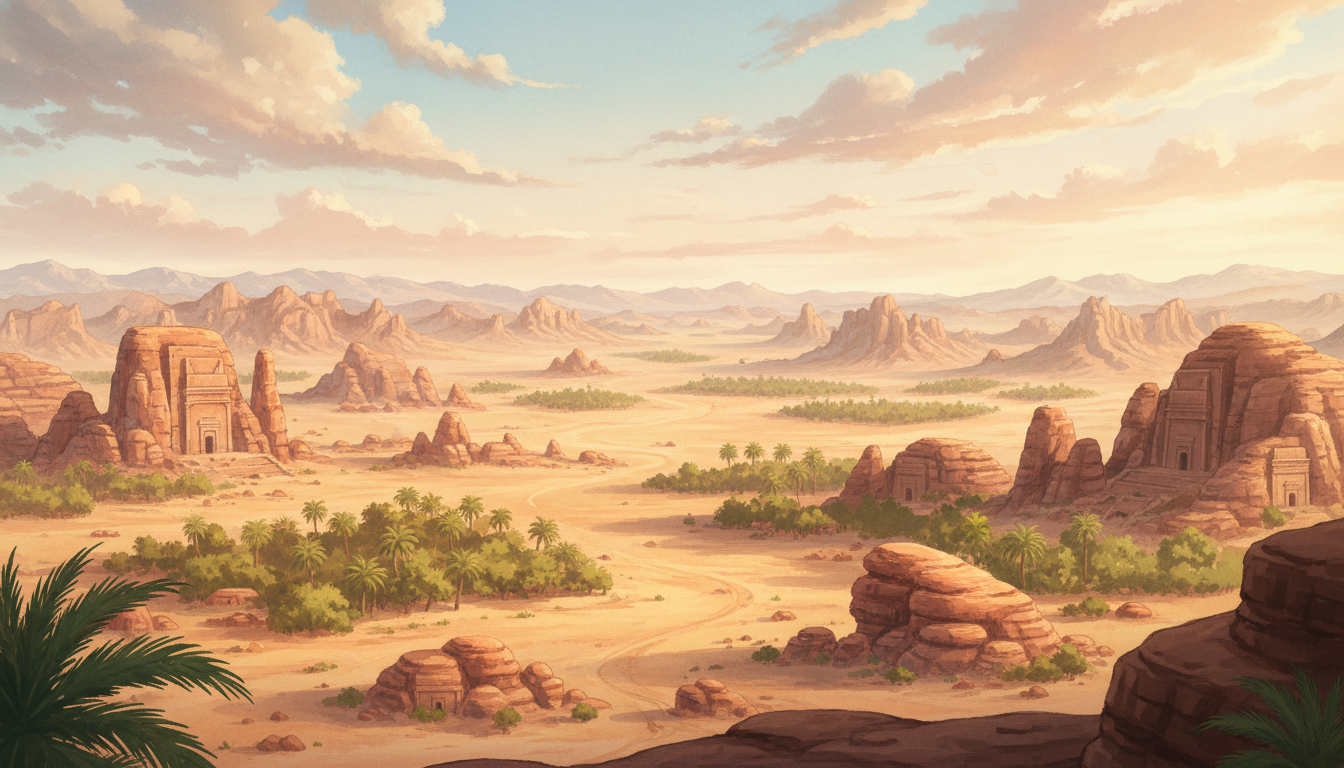
AlUla Saudi Arabia has gone from a little-known desert oasis to one of the world's most intriguing heritage destinations, thanks to its dramatic sandstone canyons, Nabataean ancient tombs at Hegra (Mada’in Saleh), immersive cultural events and a master-planned tourism strategy that prioritises safety and controlled growth.[5][1] For Singapore travellers, expats and global investors, AlUla is not just a bucket‑list destination – it is also a useful reference point when comparing lifestyle, infrastructure and long‑term investment potential with mature hubs like Singapore.
As a Singapore-based traveller who has experienced AlUla’s desert landscapes first-hand and regularly advises international clients through Homejourney, this guide combines on‑the‑ground insights with verified information from official Saudi and Singapore sources. You will find practical planning tips (including how to get there from Changi), clear safety guidance, cost expectations, and structured itineraries – plus a dedicated section on how many AlUla visitors use Singapore real estate as a diversification or second‑home strategy.
Table of Contents
- 1. AlUla Saudi Arabia Overview: Why It Matters Now
- 2. Best Time to Visit AlUla & Climate Tips
- 3. Getting to AlUla from Singapore
- 4. Currency, Costs & Money Tips
- 5. Top Attractions: Hegra, Ancient Tombs & Beyond
- 6. Signature AlUla Experiences & Local Culture
- 7. Practical Travel Tips, Visas & Safety
- 8. Where to Stay in AlUla: Areas & Hotels
- 9. Food & Dining: What to Eat in AlUla
- 10. Suggested 3‑Day & 5‑Day AlUla Itineraries
- 11. From AlUla to Singapore: Travel & Real Estate Links
- 12. How Homejourney Supports Safe Cross‑Border Journeys
- 13. FAQ: AlUla Travel & Singapore Property Questions
1. AlUla Saudi Arabia Overview: Why Visit This Ancient Wonder
AlUla is an oasis city in north‑west Saudi Arabia, about 1,100 km from Riyadh, known for its sandstone canyons, lush date‑palm oasis and some of the best‑preserved Nabataean ancient tombs in the world at Hegra (Mada’in Saleh).[5][1] Once a key stop on ancient incense and pilgrimage routes, it is now the flagship destination of Saudi Arabia’s Vision 2030 tourism strategy, carefully developed under the Royal Commission for AlUla to balance visitor growth with heritage protection.[5][1]
What stands out, especially to Singaporeans used to ordered master‑planning by URA and HDB, is how AlUla’s development is highly controlled: visitor numbers to key sites are capped, access to Hegra is only via authorised tours, and new resorts like Banyan Tree and Habitas are designed to integrate into the landscape rather than overwhelm it.[1][3][5] This offers a sense of security and crowd management similar to large‑scale events in Singapore, but in a vastly different desert context.
Why AlUla Appeals to Singapore Travellers & Investors
- UNESCO‑listed heritage: Hegra is Saudi Arabia’s first UNESCO World Heritage Site and features more than 100 elaborately carved rock‑cut tombs, often compared to Petra but with far fewer crowds.[1][5]
- Unique desert landscapes: Monumental formations like Jabal AlFil (Elephant Rock) and the Ashar Valley look like something out of a fantasy film, ideal for landscape photography and stargazing.[1][3][4]
- Cultural mega‑events: Seasonal festivals, concerts at Maraya (the famed mirrored concert hall), and art installations draw a similar high‑spending, culture‑oriented crowd that also frequents Singapore’s Marina Bay and ArtScience Museum.[1][5]
- Safe, curated destination: Like Singapore, AlUla is heavily monitored and curated; as long as you follow local regulations and dress modestly, most travellers report feeling safe and welcome.[2][3][5]
- Investment comparison lens: For global investors, AlUla shows what an early‑stage tourism region looks like before it matures. Comparing this to Singapore’s established property market can help you understand risk, yield, and infrastructure gaps.
2. Best Time to Visit AlUla & Climate Tips
AlUla is a desert environment with major temperature swings between seasons and even between day and night.[5][3] For Singaporeans used to uniform humidity and 30°C days, planning for desert weather is critical to a comfortable, safe trip.
AlUla Weather by Season (Quick Reference)
| Season | Approx. Daytime Temp | Travel Pros | Watch Out For |
|---|---|---|---|
| Nov – Feb (Winter) | 18–25°C days, 5–12°C nights | Best weather, peak events, ideal for outdoor tours | Highest prices, need warm layers at night |
| Mar – Apr (Spring) | 22–30°C | Good balance of comfort and price | Can get hot midday, bring sun protection |
| May – Sep (Summer) | 35–42°C+ | Lower hotel rates, fewer crowds | Extreme heat, limited mid‑day outdoor activities |
| Oct (Shoulder) | 25–32°C | Events ramp up, pleasant evenings | Strong sun mid‑day, need hydration |
From personal experience, late November to early February gives the most comfortable weather – it can feel like a cool, dry version of Cameron Highlands at night. However, you must pack down jackets or fleece for night‑time stargazing, even if you are flying out of humid Changi in shorts.
Insider Weather & Packing Tips for Singapore Travellers
- Layering is key: Pack a light Uniqlo HEATTECH inner layer and a windproof outer shell; this combination works well from HDB estate strolls at 22°C air‑con to 8–10°C desert nights.
- Footwear: Closed walking shoes with good grip (think your usual MacRitchie / Bukit Timah hiking shoes) are ideal for rocky terrain at Hegra and Elephant Rock.[3][5]
- Sun & sand protection: A brimmed hat, sunglasses, lip balm and a scarf or buff help with both sun and occasional sand.
- Dress code: Conservative, loose clothing is recommended. Non‑Muslim female visitors are not required to wear abayas, but shoulders and knees should be covered in public; this is stricter than in Singapore but similar to entering religious sites here.
3. Getting to AlUla from Singapore
There are no direct flights from Singapore to AlUla at the time of writing. The usual route is via Riyadh, Jeddah, or sometimes Dubai, then a domestic flight to AlUla’s Prince Abdul Majeed bin Abdulaziz Domestic Airport.[3][5]
Typical Flight Routes from Changi (SIN)
- Singapore → Riyadh (RUH) → AlUla (ULH)
- Singapore → Jeddah (JED) → AlUla (ULH)
- Singapore → Dubai (DXB) → AlUla (seasonal / connecting via Saudi cities)
Flight times are usually 9–11 hours including transit, similar to flying from Singapore to parts of Europe. When comparing to other regional trips like to Doha’s Aspire Zone – see Aspire Zone Doha Complete Guide for Singapore Travellers | Homejourney – AlUla is clearly a longer‑haul, once‑or‑twice‑a‑year type destination.
From AlUla Airport to Town
AlUla’s airport is about 30 minutes by car from the main town and around one hour from Ashar Valley, where many luxury resorts are located.[3] Public transport is minimal, so you will rely on:
- Hotel transfers (commonly arranged at booking for resorts like Banyan Tree and Habitas)[1][3]
- Private drivers (expect around US$100/hour or US$400–500/day for a car and driver, similar to chauffeured services in Singapore’s luxury segment)[3]
- Car rentals from the airport for confident drivers – roads are generally good, but night driving and desert conditions require caution.[3][6]
For first‑time visitors, especially families, Homejourney recommends pre‑booking either a hotel transfer or a licensed local driver with clear pricing in writing, just as you would get a written quote from an HDB‑licensed renovation contractor in Singapore. This reduces the risk of miscommunication when you are jet‑lagged and possibly arriving after dark.
4. Currency, Costs & Money Tips
The local currency is the Saudi Riyal (SAR). As a rough planning rule, 1 SGD is usually around 2.7–2.9 SAR, but always check live rates via reliable FX tools or your bank before booking. Many Singapore travellers now use multi‑currency cards to lock in rates before flying.
Typical Daily Budget in AlUla (per person)
| Travel Style | Approx. Daily Cost (excl. flights) | What It Usually Includes |
|---|---|---|
| Budget | SGD 120–200 | Guesthouse in town, simple meals, shared tours, limited shopping |
| Mid‑range | SGD 250–400 | Boutique hotel or mid‑level resort, a mix of restaurant and hotel meals, guided tours |
| Luxury | SGD 600–1,200+ | Top resorts (Banyan Tree, Habitas), private tours, premium dining and experiences |
Compared to weekend trips from Singapore to Langkawi – see 兰卡威岛旅游完整攻略省钱旅行攻略|Homejourney安全省钱玩法 – AlUla is significantly more expensive per day, closer to a bespoke desert safari in Jordan or a high‑end Maldives stay.
Money‑Saving & Safety Tips
- Pay by card where possible: Most hotels and organised tours accept international cards, which are safer than carrying large amounts of cash.
- Bundle tours: Booking Hegra, Dadan & Jabal Ikmah as a combination tour often reduces per‑site cost and simplifies logistics.[3][5]
- Stay in town for value: AlUla town accommodation is more affordable than Ashar Valley, with easier access to Winter Park, where many shared tours start.[3]
- Use Homejourney for currency context: When you later explore Singapore property options, Homejourney supports multi‑currency views and comparisons so AlUla visitors can see prices in familiar SAR or USD terms while browsing listings on Property Search .
5. Top Attractions: Hegra, Mada’in Saleh & Other Ancient Wonders
AlUla’s main draw is its archaeological and natural heritage, anchored by Hegra (often called Mada’in Saleh), Saudi Arabia’s first UNESCO World Heritage Site.[5] Think of Hegra as the desert equivalent of Singapore’s Civic District – a dense cluster of historical assets managed with tight controls to preserve authenticity.
Hegra (Mada’in Saleh): UNESCO Ancient Tombs
Hegra features more than 100 rock‑cut Nabataean tombs carved into sandstone cliffs between the 1st century BCE and the 1st century CE, with elaborate façades and inscriptions.[1][5] Unlike Petra, visitor numbers are still modest, so you can often photograph entire façades without crowds in your frame.[1]
- Access: Only via authorised tours – you cannot simply drive your rental car in.[3][5]
- Tour types: Shared bus tours from Winter Park, private Land Rover tours, and sometimes sunrise or sunset options.[3]
- Duration: Typically 2.5–3.5 hours including transport within the site.[3][5]
- What to see: Iconic tombs like Qasr Al Bint and the large Tomb of Lihyan, Son of Kuza, arguably AlUla’s most photographed façade.[5]
For safety, stay on marked paths, follow guide instructions and avoid climbing on tombs. Just as URA and NParks enforce rules in Singapore heritage parks, site rangers here are strict for both preservation and visitor safety.
Dadan & Jabal Ikmah: Open‑Air Library of Inscriptions
Dadan was once the capital of the Dadanite and Lihyanite kingdoms and features rock‑cut tombs and monumental sculpture, while nearby Jabal Ikmah holds hundreds of inscriptions in early Arabic, Dadanitic and other scripts.[1][5] Guides often describe Jabal Ikmah as an “open‑air library” due to the density of ancient writings.[1][5]